First Lady of the United States from 1797 to 1801
Abigail Adams
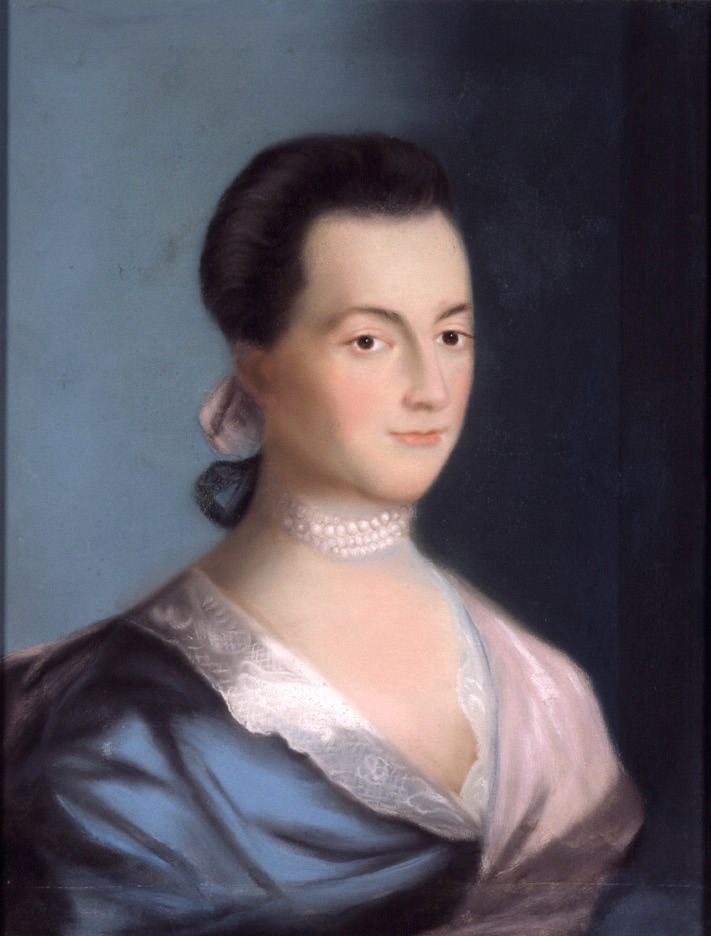
Abigail Adams was the wife and closest advisor of John Adams, the second president of the United States, and the mother of John Quincy Adams, the sixth president of the United States.
By globalcelebwiki Editorial Desk, adapted from Wikipedia · Published 29 September 2026
- Profession
- First Lady of the United States from 1797 to 1801
- Born
- 22 November 1744
- Birthplace
- Weymouth
- Nationality
- American
Overview
Abigail Adams (née Smith; 22 November [O.S. 11 November] 1744 – October 28, 1818) was the wife and closest advisor of John Adams, the second president of the United States, and the mother of John Quincy Adams, the sixth president of the United States. She is widely considered to be an influential figure in the founding of the United States, and was both the first second lady and second first lady of the United States, although such titles were not used at the time. She and Barbara Bush are the only two women in American history who were both the wife of a U.S. president and the mother of another U.S. president.
Adams's life is one of the most documented of the first ladies. Many of the letters she wrote to John Adams while he was in Philadelphia as a delegate in the Continental Congress, prior to and during the Revolutionary War, document the closeness and versatility of their relationship. John Adams frequently sought the advice of Abigail on many matters, and their letters are filled with intellectual discussions on government and politics. Her letters also serve as eyewitness accounts of the home front of the Revolutionary War.
Surveys of historians conducted periodically by the Siena College Research Institute since 1982 have consistently found Adams to rank as one of the three most highly regarded first ladies by historians.
Early life and family (1744–1759)
Abigail Adams was born on November 22, 1744, at the North Parish Congregational Church in Weymouth, Massachusetts, to William Smith and Elizabeth (née Quincy) Smith. On her mother's side, she was descended from the Quincy political family, a well-known political family in the Massachusetts colony. Through her mother she was a cousin of Dorothy Quincy, who was married to John Hancock. Adams was also the great-granddaughter of John Norton, founding pastor of Old Ship Church in Hingham, Massachusetts, the only remaining 17th-century Puritan meetinghouse in Massachusetts. Smith married Elizabeth Quincy in 1740, and together they had three daughters and a son; Abigail was the second child. As with several of her ancestors, Adams's father was a liberal Congregational minister: a leader in a Yankee society that held its clergy in high esteem. Smith did not focus his preaching on predestination or original sin; instead he emphasized the importance of reason and morality. In October 1775 his wife Elizabeth, with whom he had been married for 35 years, died. In 1784, at age 77, Smith died.
The Smith family were slaveholders and are known to have owned at least four people. A slave named Phoebe took a caretaking role to Abigail and other children; later on she would work as a paid servant for Abigail after she became free. Abigail would come to express anti-slavery beliefs as an adult.
Marriage and children (1759–1783)
Abigail Smith first met John Adams when she was 15 years old in 1759. John accompanied his friend Richard Cranch to the Smith household. Cranch was engaged to Abigail's older sister, Mary Smith, and they would be the parents of federal judge William Cranch. Adams reported finding the Smith sisters neither "fond, nor frank, nor candid."
Although Abigail's father approved of the match, her mother was appalled that her daughter would marry a country lawyer whose manner still reeked of the farm. Eventually, she gave in, and the couple married on October 25, 1764, in the Smiths' home in Weymouth. William Smith, Abigail's father, presided over the marriage. After the reception, the couple mounted a single horse and rode off to their new home, the saltbox house and farm John had inherited from his father in Braintree, Massachusetts (a location that is now part of Quincy). The couple welcomed their first child nine months into their marriage.
Europe (1784–1788)
In 1784, Abigail and her daughter Nabby joined her husband and her eldest son, John Quincy, at her husband's diplomatic post in Paris. Abigail had dreaded the thought of the long sea voyage, but in fact found the journey interesting. At first, she found life in Paris difficult and was rather overwhelmed by the novel experience of running a large house with a retinue of servants. However, as the months passed, she began to enjoy herself: she made numerous friends, discovered a fondness for the theatre and opera, and was fascinated by Parisian women's fashions, although she ruefully admitted that she "would never be in the mode."
After 1785, she filled the role of wife of the first U.S. minister to the Court of St James's (Britain). In contrast to Paris, Abigail disliked London, where she had few friends and was, in general, cold-shouldered by polite society. One pleasant experience was her temporary guardianship of Thomas Jefferson's young daughter Mary (Polly), for whom Abigail came to feel a deep and lifelong love.
She and John returned in 1788 to their home in Quincy, Peacefield (also known as the "Old House"), which she set about vigorously enlarging and remodeling. It still stands and is open to the public as part of Adams National Historical Park.
First Lady (1797–1801)
John Adams was inaugurated as the second president of the United States on March 4, 1797, in Philadelphia at the age of 61. Abigail was not present at her husband's inauguration as she was tending to his dying 89-year-old mother. When John was elected President of the United States, Abigail continued a formal pattern of entertaining. She held a large dinner each week, made frequent public appearances, and provided for entertainment for the city of Philadelphia each Fourth of July.
She took an active role in politics and policy, unlike the quiet presence of Martha Washington. Abigail was so politically active, her political opponents came to refer to her as "Mrs. President". As John's confidant, Abigail was often well informed on issues facing her husband's administration, at times including details of current events not yet known to the public in letters to her sister Mary and her son John Quincy. Some people used Abigail to contact the president. At times Abigail planted favorable stories about her husband in the press. Abigail remained a staunch supporter of her husband's political career, supporting his policies, such as passing the Alien and Sedition Acts.
Adams brought the children of her brother William Smith, her brother-in-law John Shaw, and her son Charles to live in the President's House during her husband's presidency because the children's fathers all struggled with alcoholism. Charles's daughter, Susanna, was just 3 years old in 1800 when Adams brought her to live in the President's House in Philadelphia days before Charles's death.
With the relocation of the capital to Washington, D.C. in 1800, she became the first First Lady to reside at the White House, or President's House as it was then known. Adams moved into the White House in November 1800, living there for only the last four months of her husband's term. At this time, the city of Washington D.C. was wilderness, with the President's House far from completion. She found the unfinished mansion in Washington "habitable" and the location "beautiful"; but she complained that, despite the thick woods nearby, she could find no one willing to chop and haul firewood for the First Family. Abigail used the East Room of the White House to hang up the laundry. Adams's health, never robust, suffered in Washington.
Later life (1801–1818)
After John's defeat in his presidential re-election campaign, the family retired to Peacefield in Quincy in 1800. Abigail followed her son's political career earnestly, as her letters to her contemporaries show. In later years, she renewed correspondence with Thomas Jefferson, having reached out to him upon the death of his daughter Maria Jefferson Eppes (Polly), whom Abigail had cared for and come to love when Polly was a small child in London, even though Jefferson's political opposition to her husband had hurt her deeply. She continued to raise her granddaughter Susanna. She also raised her elder grandchildren, including George Washington Adams and a younger John Adams, while their father John Quincy Adams was minister to Russia. Adams's 48-year-old daughter, Nabby, died of breast cancer in 1813, after having endured three years of severe pain.
Death
Abigail Adams became ill during her final years. She died in her home on October 28, 1818, of typhoid fever. She was buried in what was to become the family crypt, which now also holds her husband John, their son John Quincy, and John Quincy's wife Louisa, located in the United First Parish Church (also known as the "Church of the Presidents") in Quincy, Massachusetts. She was 73 years old, exactly two weeks shy of her 74th birthday. Her last words were, "Do not grieve, my friend, my dearest friend. I am ready to go. And John, it will not be long." Less than eight years later, on July 4, 1826, the fiftieth anniversary of the Declaration of Independence, her husband died of heart failure at the age of 90. He was buried next to her in the family crypt in the United First Parish Church.
Political viewpoints
Biographer Lynne Withey argues for her conservatism because she: "feared revolution; she valued stability, believed that family and religion were the essential props of social order, and considered inequality a social necessity". Her 18th-century mindset held that "improved legal and social status for women was not inconsistent with their essentially domestic role."
Despite believing firmly in women's domestic role, Abigail Adams advocated for women's rights in her letters to John Adams without reservation. Historian Edith Gelles writes, “she was venturing to use her influence as wife of an important politician to impact policy.” Elaine Forman Crane writes that Abigail "hesitated to confront her husband directly with the logical implications of his ideology… [but] did so circumspectly, surreptitiously, and with covert humor." Crane sees her confident tone as allowing her to discuss gender inequality while commanding respect and credibility within the patriarchal structure of the eighteenth century.
Furthermore, Abigail Adams was a firm believer that women are as qualified for political positions as men. Her letters demonstrate the belief that women have a mind just like men and should have a voice in politics. Abigail did not make comments about women in passing; rather, she understood the social standing and value of women and believed that by writing letters about her experiences, she was raising awareness for other women.
Sources and references
Spotted something wrong? Report a correction.
Related profiles
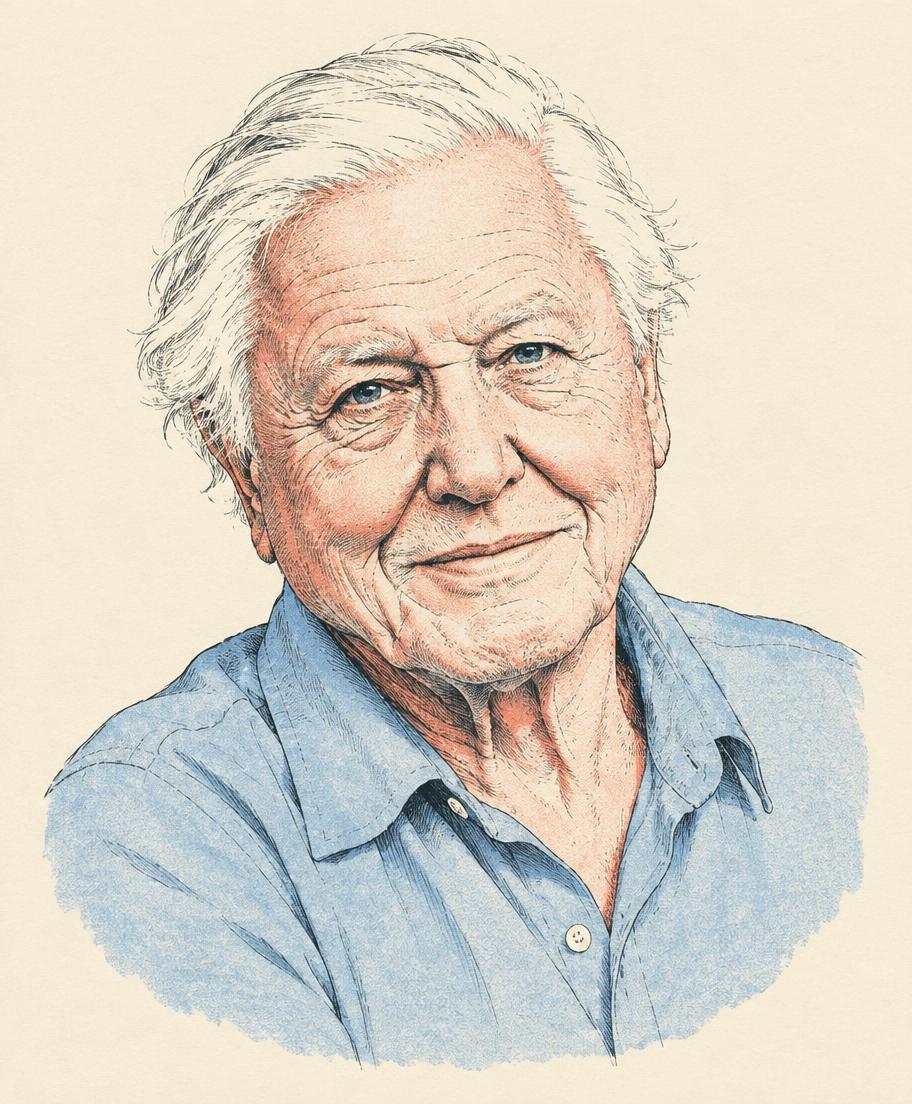
Broadcaster and natural historian
David Attenborough
The broadcaster whose natural history series have shaped how audiences understand life on Earth.
Read biography ↗
Animator and film director
Hayao Miyazaki
The animator and co-founder of Studio Ghibli whose hand-drawn films reached audiences worldwide.
Read biography ↗
Pope
Benedict I
Pope Benedict I was the bishop of Rome from 2 June 575 to his death on 30 July 579.
Read biography ↗