English writer and philosopher (1894–1963)
Aldous Huxley
Aldous Leonard Huxley was an English writer and philosopher.
By globalcelebwiki Editorial Desk, adapted from Wikipedia · Published 29 September 2026
- Profession
- English writer and philosopher (1894–1963)
- Born
- 26 July 1894
- Birthplace
- Godalming
- Nationality
- British
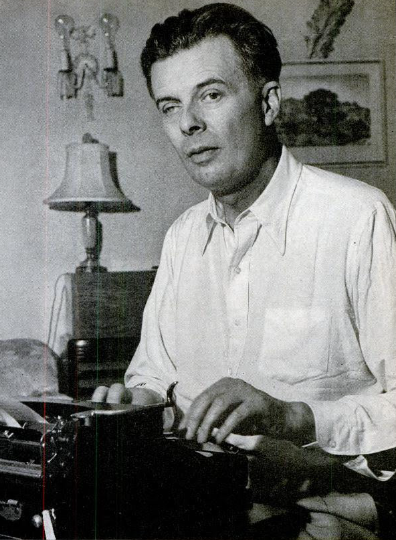
Overview
Aldous Leonard Huxley ( AWL-dəs; 26 July 1894 – 22 November 1963) was an English writer and philosopher. His bibliography spans nearly 50 books, including non-fiction works, as well as essays, narratives and poems.
Born into the prominent Huxley family, he graduated from Balliol College, Oxford, with a degree in English literature. Early in his career, he published short stories and poetry and edited the literary magazine Oxford Poetry, before going on to publish novels (witty social-satirical novels and grimly serious ones), travel writing, and screenplays. He spent the latter part of his life in the United States, living in Los Angeles from 1937 until his death. By the end of his life, Huxley was widely acknowledged as one of the foremost intellectuals of his time. He was nominated for the Nobel Prize in Literature nine times, and was elected Companion of Literature by the Royal Society of Literature in 1962.
Huxley was a pacifist. He grew interested in philosophical mysticism, as well as universalism, addressing these subjects in his works such as The Perennial Philosophy (1945), which illustrates commonalities between Western and Eastern mysticism, and The Doors of Perception (1954), which interprets his own psychedelic experience with mescaline. In his most famous novel, Brave New World (1932), and his final novel, Island (1962), he presented his visions of dystopia and utopia, respectively.
Early life
Huxley was born in Godalming, Surrey, England, on 26 July 1894. He was the third son of the writer and schoolmaster Leonard Huxley, who edited The Cornhill Magazine, and his first wife, Julia Arnold, who founded Prior's Field School. Julia was the niece of the poet and critic Matthew Arnold and the sister of the novelist Mrs Humphry Ward. Julia named him Aldous after a character in one of her sister's novels. Aldous was the grandson of Thomas Henry Huxley, the zoologist, agnostic and controversialist who had often been called "Darwin's Bulldog". His brother Julian Huxley and half-brother Andrew Huxley also became outstanding biologists. Aldous had another brother, Noel Trevenen Huxley (1889–1914), who took his own life after a period of clinical depression.
As a child, Huxley's nickname was "Ogie", diminutive for "Ogre". He was described by his brother Julian as someone who frequently contemplated "the strangeness of things". According to his cousin and contemporary Gervas Huxley, he had an early interest in drawing.
Huxley's education began in his father's well-equipped botanical laboratory, after which he enrolled at Hillside School near Godalming. He was taught there by his own mother for several years until she became terminally ill. After Hillside he went on to Eton College. His mother died in 1908, when he was 14 (his father later remarried). He contracted the eye disease keratitis punctata in 1911; this "left [him] practically blind for two to three years" and "ended his early dreams of becoming a doctor". In October 1913, Huxley entered Balliol College, Oxford, where he studied English literature. He volunteered for the British Army in January 1916 amidst the First World War; however, he was rejected on health grounds, being half-blind in one eye. His eyesight later partly recovered. He edited Oxford Poetry in 1916, and in June of that year graduated BA with first class honours. His brother Julian wrote:
I believe his blindness was a blessing in disguise. For one thing, it put paid to his idea of taking up medicine as a career ... His uniqueness lay in his universalism. He was able to take all knowledge for his province.
Following his years at Balliol, Huxley, being financially indebted to his father, decided to find employment. He taught French for a year at Eton College, where Eric Blair (who was to take the pen name George Orwell) and Steven Runciman were among his pupils. He was mainly remembered as being an incompetent schoolmaster unable to keep order in class. Nevertheless, Blair and others spoke highly of his excellent command of language.
Career
Huxley completed his first (unpublished) novel at the age of 17 and began writing seriously in his early twenties, establishing himself as a successful writer and social satirist. His first published novels were social satires, Crome Yellow (1921), Antic Hay (1923), Those Barren Leaves (1925) and Point Counter Point (1928). Brave New World (1932) was his fifth novel and first dystopian work. In the 1920s, he was also a contributor to Vanity Fair and British Vogue magazines.
During the First World War Huxley spent much of his time at Garsington Manor near Oxford, home of Lady Ottoline Morrell, working as a farm labourer. While at the Manor, he met several Bloomsbury Group figures, including Bertrand Russell, Alfred North Whitehead and Clive Bell. Later, in Crome Yellow (1921), he caricatured the Garsington lifestyle. Jobs were very scarce, but in 1919 John Middleton Murry was reorganising the Athenaeum and invited Huxley to join the staff. He accepted immediately, and quickly married the Belgian refugee Maria Nys (1899–1955), also at Garsington. They lived with their young son in Italy part of the time during the 1920s, where Huxley would visit his friend D. H. Lawrence. Following Lawrence's death in 1930 (he and Maria were present at his death in Provence), Huxley edited Lawrence's letters (1932). Very early in 1929, in London, Huxley met Gerald Heard, a writer and broadcaster, philosopher and interpreter of contemporary science. Heard was nearly five years older than Huxley, and introduced him to a variety of profound ideas, subtle interconnections, and various emerging spiritual and psychotherapy methods.
Works of this period included novels about the dehumanising aspects of scientific progress, (his magnum opus Brave New World), and on pacifist themes (Eyeless in Gaza). In Brave New World, set in a dystopian London, Huxley portrays a society operating on the principles of mass production and Pavlovian conditioning. Huxley was strongly influenced by F. Matthias Alexander, on whom he based a character in Eyeless in Gaza.
During this period, Huxley began to write and edit non-fiction works on pacifist issues, including Ends and Means (1937), An Encyclopedia of Pacifism and Pacifism and Philosophy, and was an active member of the Peace Pledge Union (PPU).
In 1937 Huxley moved to Hollywood, Los Angeles, United States, with his wife Maria, son Matthew Huxley, and friend Gerald Heard. Cyril Connolly wrote, of the two intellectuals (Huxley and Heard) in the late 1930s, "all European avenues had been exhausted in the search for a way forward – politics, art, science – pitching them both toward the US in 1937." Huxley lived in the U.S., mainly southern California, until his death, and for a time in Taos, New Mexico, where he wrote Ends and Means (1937). The book contains tracts on war, inequality, religion and ethics.
Heard introduced Huxley to Vedanta (Upanishad-centered philosophy), meditation and vegetarianism through the principle of ahimsa. In 1938 Huxley befriended Jiddu Krishnamurti, whose teachings he greatly admired. Huxley and Krishnamurti entered into an enduring exchange (sometimes edging on debate) over many years, with Krishnamurti representing the more rarefied, detached, ivory-tower perspective and Huxley, with his pragmatic concerns, the more socially and historically informed position. Huxley wrote a foreword to Krishnamurti's quintessential statement, The First and Last Freedom (1954).
Huxley and Heard became Vedantists in the group formed around Hindu Swami Prabhavananda, and subsequently introduced Christopher Isherwood to the circle. Not long afterwards, Huxley wrote his book on widely held spiritual values and ideas, The Perennial Philosophy, which discussed the teachings of renowned mystics of the world.
Huxley became a close friend of Remsen Bird, president of Occidental College. He spent much time at the college in the Eagle Rock neighbourhood of Los Angeles. The college appears as "Tarzana College" in his satirical novel After Many a Summer (1939). The novel won Huxley a British literary award, the 1939 James Tait Black Memorial Prize for fiction. Huxley also incorporated Bird into the novel.
During this period Huxley earned a substantial income as a Hollywood screenwriter; Christopher Isherwood, in his autobiography My Guru and His Disciple, states that Huxley earned more than US$3,000 per week (approximately $50,000 in 2020 dollars) as a screenwriter, and that he used much of it to transport Jewish and left-wing writer and artist refugees from Hitler's Germany to the US. In March 1938 Huxley's friend Anita Loos, a novelist and screenwriter, put him in touch with Metro-Goldwyn-Mayer (MGM), which hired him for Madame Curie which was originally to star Greta Garbo and be directed by George Cukor. (Eventually, the film was completed by MGM in 1943 with a different director and cast.) Huxley received screen credit for Pride and Prejudice (1940) and was paid for his work on a number of other films, including Jane Eyre (1944). He was commissioned by Walt Disney in 1945 to write a script based on Alice's Adventures in Wonderland and the biography of the story's author, Lewis Carroll. The script was not used, however.
Late-in-life perspectives
Biographer Harold H. Watts wrote that Huxley's writings in the "final and extended period of his life" are "the work of a man who is meditating on the central problems of many modern men". Huxley had deeply felt apprehensions about the future the developed world might make for itself. From these, he made some warnings in his writings and talks. In a 1958 televised interview conducted by journalist Mike Wallace, Huxley outlined several major concerns: the difficulties and dangers of world overpopulation; the tendency towards distinctly hierarchical social organisation; the crucial importance of evaluating the use of technology in mass societies susceptible to persuasion; the tendency to promote modern politicians to a naive public as well-marketed commodities. In a December 1962 letter to brother Julian, summarizing a paper he had presented in Santa Barbara, he wrote, "What I said was that if we didn't pretty quickly start thinking of human problems in ecological terms rather than in terms of power politics we should very soon be in a bad way."
Huxley's engagement with Eastern wisdom traditions was entirely compatible with a strong appreciation of modern science. Biographer Milton Birnbaum wrote that Huxley "ended by embracing both science and Eastern religion". In his last book, Literature and Science, Huxley wrote that "The ethical and philosophical implications of modern science are more Buddhist than Christian...." In "A Philosopher's Visionary Prediction", published one month before he died, Huxley endorsed training in general semantics and "the nonverbal world of culturally uncontaminated consciousness", writing that "We must learn how to be mentally silent, we must cultivate the art of pure receptivity.... [T]he individual must learn to decondition himself, must be able to cut holes in the fence of verbalized symbols that hems him in."
Spiritual views
For much of his life Huxley described himself as agnostic, a word coined by his grandfather Thomas Henry Huxley, a scientist who championed the scientific method and was a major supporter of Darwin's theories. This is the definition he gave, “…it is wrong for a man to say that he is certain of the objective truth of any proposition unless he can produce evidence which logically justifies that certainty.” Aldous Huxley's agnosticism, together with his speculative propensity, made it difficult for him to fully embrace any form of institutionalised religion. Over the last 30 years of his life, he accepted and wrote about concepts found in Vedanta and was a leading advocate of the Perennial Philosophy, which holds that the same metaphysical truths are found in all the major religions of the world.
In the 1920s Huxley was sceptical of religion. "Earlier in his career he had rejected mysticism, often poking fun at it in his novels..." according to his biographer Dana Sawyer. Gerald Heard became an influential friend of Huxley, and since the mid-1920s had been exploring Vedanta, as a way of understanding individual human life and the individual's relationship to the universe. Heard and Huxley both saw the political implications of Vedanta, which could help bring about peace, specifically that there is an underlying reality that all humans and the universe are a part of. In the 1930s, Huxley and Gerald Heard both became active in the effort to avoid another world war, writing essays and eventually publicly speaking in support of the Peace Pledge Union. But, they remained frustrated by the conflicting goals of the political left – some favouring pacifism (as did Huxley and Heard), while other wanting to take up arms against fascism in the Spanish Civil War.
After joining the PPU, Huxley expressed his frustration with politics in a letter from 1935, “…the thing finally resolves itself into a religious problem — an uncomfortable fact which one must be prepared to face and which I have come during the last year to find it easier to face.” Huxley and Heard turned their attention to addressing the big problems of the world through transforming the individual, "[...] a forest is only as green as the individual trees of the forest is green [...]" This was the genesis of the Human Potential Movement, that gained traction in the 1960s.
In the late 1930s Huxley and Heard emigrated to the United States, and beginning in 1939 and continuing until his death in 1963, Huxley had an extensive association with the Vedanta Society of Southern California, founded and headed by Swami Prabhavananda. Together with Heard, Isherwood and other followers, he was initiated by the Swami and was taught meditation and spiritual practices. From 1941 until 1960, Huxley contributed 48 articles to Vedanta and the West, published by the society. He also served on the editorial board with Isherwood, Heard, and playwright John Van Druten from 1951 through 1962.
In 1942 The Gospel of Ramakrishna was published by the Ramakrishna-Vivekananda Center in New York. The book was translated by Swami Nikhilananda, with help from Joseph Campbell and Margaret Woodrow Wilson, a daughter of Woodrow Wilson, the 28th president of the United States. Huxley wrote in the foreword, "...a book unique, so far as my knowledge goes, in the literature of hagiography. Never have the small events of a contemplative's daily life been described with such a wealth of intimate detail. Never have the casual and unstudied utterances of a great religious teacher been set down with so minute a fidelity."
Psychedelic drug use and mystical experiences
In early 1953 Huxley had his first experience with the psychedelic drug mescaline. Huxley had initiated a correspondence with Humphry Osmond, a British psychiatrist then employed in a Canadian institution, and eventually asked him to supply a dose of mescaline; Osmond obliged and supervised Huxley's session in southern California. After the publication of The Doors of Perception, in which he recounted this experience, Huxley and Swami Prabhavananda disagreed about the meaning and importance of the psychedelic drug experience, which may have caused the relationship to cool, but Huxley continued to write articles for the society's journal, lecture at the temple, and attend social functions. Huxley later had an experience on mescaline that he considered more profound than those detailed in The Doors of Perception.
Huxley wrote that "The mystical experience is doubly valuable; it is valuable because it gives the experiencer a better understanding of himself and the world and because it may help him to lead a less self-centered and more creative life."
Having tried LSD under the supervision of Oscar Janiger in the 1950s, he became an advisor to Timothy Leary and Richard Alpert in their early-1960s research work with psychedelic drugs at Harvard University. Personality differences led Huxley to distance himself from Leary, when Huxley grew concerned that Leary had become too keen on indiscriminately promoting the drugs.
Eyesight
Differing accounts exist about the details of the quality of Huxley's eyesight at specific points in his life. Circa 1939 Huxley encountered the Bates method, in which he was instructed by Margaret Darst Corbett. In 1940 Huxley relocated from Hollywood to a 40-acre (16 ha) ranchito in the high desert hamlet of Llano, California, in northern Los Angeles County. Huxley then said that his sight improved dramatically with the Bates method and the extreme and pure natural lighting of the southwestern American desert. He reported that, for the first time in more than 25 years, he was able to read without glasses and without strain. He even tried driving a car along the dirt road beside the ranch. He wrote a book about his experiences with the Bates method, The Art of Seeing, which was published in the US in 1942 and in Britain in 1943. The book contained some generally disputed theories, and after its publication there was a growing popular controversy about Huxley's eyesight.
It was, and is, widely believed that Huxley was nearly blind since the illness in his teens, despite the partial recovery that had enabled him to study at Oxford. For example, some ten years after publication of The Art of Seeing, in 1952, Bennett Cerf was present when Huxley spoke at a Hollywood banquet, wearing no glasses and apparently reading his paper from the lectern without difficulty: Then suddenly he faltered—and the disturbing truth became obvious. He wasn't reading his address at all. He had learned it by heart. To refresh his memory he brought the paper closer and closer to his eyes. When it was only an inch or so away he still couldn't read it, and had to fish for a magnifying glass in his pocket to make the typing visible to him. It was an agonising moment.
The Brazilian author João Ubaldo Ribeiro, who as a young journalist spent several evenings in the Huxleys' company in the late 1950s, wrote that Huxley had said to him, with a wry smile: "I can hardly see at all. And I don't give a damn, really."
On the other hand, Huxley's second wife Laura later emphasised in her biographical account, This Timeless Moment: "One of the great achievements of his life: that of having regained his sight." After revealing a letter she wrote to the Los Angeles Times disclaiming the label of Huxley as a "poor fellow who can hardly see" by Walter C. Alvarez, she tempered her statement: Although I feel it was an injustice to treat Aldous as though he were blind, it is true there were many indications of his impaired vision. For instance, although Aldous did not wear glasses, he would quite often use a magnifying lens. Laura Huxley proceeded to elaborate a few nuances of inconsistency peculiar to Huxley's vision. Her account, in this respect, agrees with the following sample of Huxley's own words from The Art of Seeing: The most characteristic fact about the functioning of the total organism, or any part of the organism, is that it is not constant, but highly variable. Nevertheless, the topic of Huxley's eyesight has continued to endure similar, significant controversy. The American popular science author Steven Johnson, in his book Mind Wide Open, quotes Huxley about his difficulties with visual encoding: I am and, for as long as I can remember, I have always been a poor visualizer. Words, even the pregnant words of poets, do not evoke pictures in my mind. No hypnagogic visions greet me on the verge of sleep. When I recall something, the memory does not present itself to me as a vividly seen event or object. By an effort of the will, I can evoke a not very vivid image of what happened yesterday afternoon ...
Personal life
Huxley was married on 10 July 1919 to Maria Nys (10 September 1899 – 12 February 1955), a Belgian refugee from Bellem, a village near Aalter, whom he met at Garsington, Oxfordshire, in 1919. They had one child, Matthew Huxley (19 April 1920 – 10 February 2005), who had a career as an author, anthropologist and a prominent epidemiologist. Maria died of cancer in 1955.
In 1956 Huxley married Laura Archera (1911–2007), also an author, as well as a violinist and psychotherapist. She wrote This Timeless Moment, a biography of Huxley. She told the story of their marriage through Mary Ann Braubach's 2010 documentary, Huxley on Huxley.
Sources and references
Spotted something wrong? Report a correction.
Related profiles
Broadcaster and natural historian
David Attenborough
The broadcaster whose natural history series have shaped how audiences understand life on Earth.
Read biography ↗
Animator and film director
Hayao Miyazaki
The animator and co-founder of Studio Ghibli whose hand-drawn films reached audiences worldwide.
Read biography ↗
Pope
Benedict I
Pope Benedict I was the bishop of Rome from 2 June 575 to his death on 30 July 579.
Read biography ↗