British writer and physician (1859–1930)
Arthur Conan Doyle
Sir Arthur Ignatius Conan Doyle was a British writer and physician.
By globalcelebwiki Editorial Desk, adapted from Wikipedia · Published 29 September 2026
- Profession
- British writer and physician (1859–1930)
- Born
- 22 May 1859
- Birthplace
- Edinburgh
- Nationality
- British
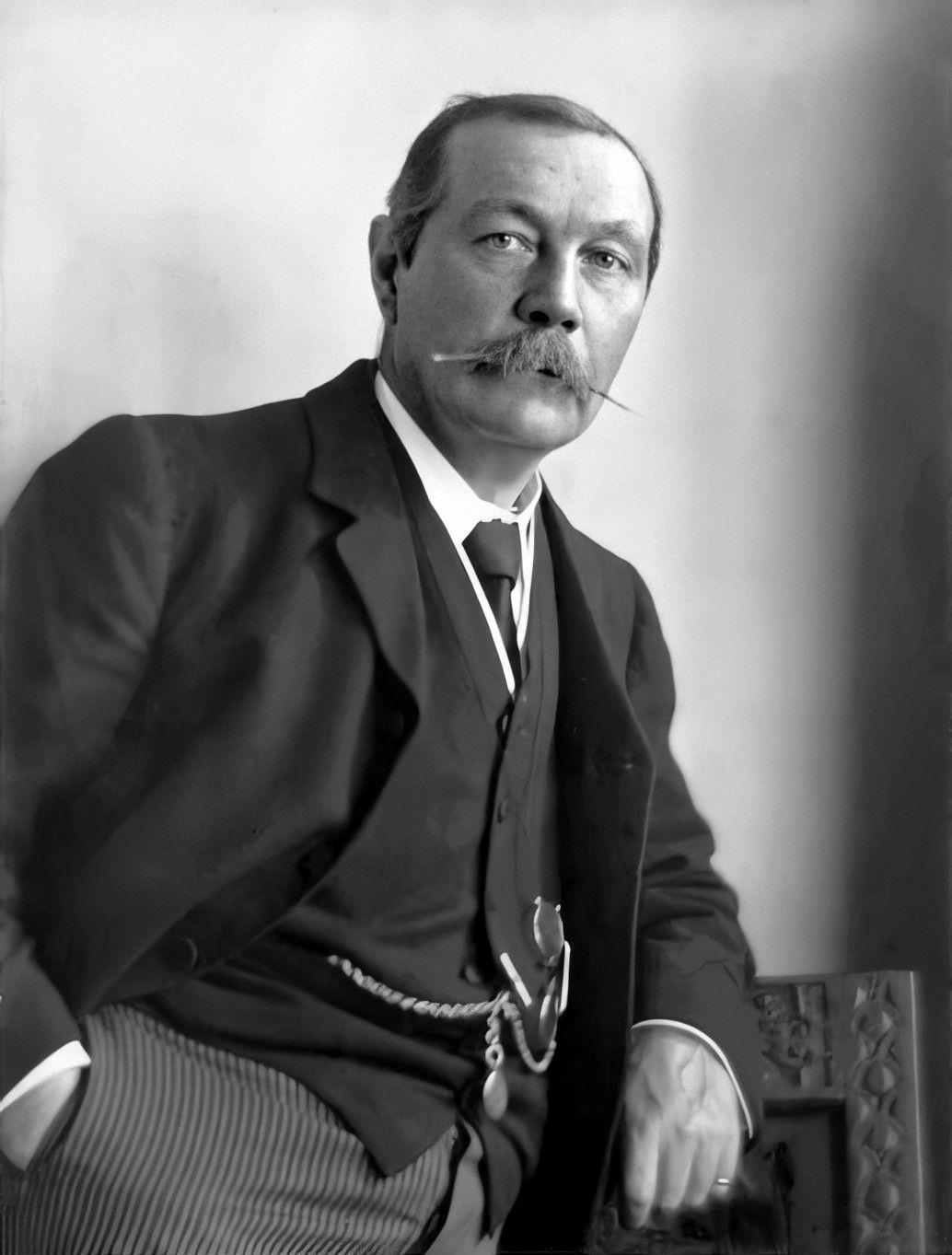
Overview
Sir Arthur Ignatius Conan Doyle (22 May 1859 – 7 July 1930) was a British writer and physician. He is best known for his four novels and fifty-six short stories about the fictional consulting detective Sherlock Holmes and his assistant Dr. Watson, which are milestones in crime fiction, and for his first work featuring Professor Challenger, The Lost World (1912), which gave its name to a subgenre of speculative fiction. He was a prolific writer who produced over 200 stories and articles, four volumes of poetry, and a number of works for the stage. He was knighted by King Edward VII in the 1902 Coronation Honours.
Born in Edinburgh, Doyle published his earliest stories whilst studying medicine at the University of Edinburgh Medical School, and he served as a doctor and surgeon on two sea voyages before establishing an unsuccessful medical practice in Portsmouth. His time at sea inspired the short story "J. Habakuk Jephson's Statement" (1884), which popularised the mystery of the Mary Celeste. His first Sherlock Holmes work, the novel A Study in Scarlet, was published in 1887, and the short story "A Scandal in Bohemia" (1891) was the first of twenty-four monthly Holmes stories published in The Strand Magazine, for which Doyle became one of the most famous and well-paid authors of his time. His ambivalence towards the character led to Holmes's being killed off in "The Final Problem" (1893); but public outcry resulted in his return in The Hound of the Baskervilles (1901), and Doyle continued to write stories featuring him up to 1927. He was also known for his humorous stories about the Napoleonic soldier Brigadier Gerard.
Doyle was involved in political activism throughout his life and twice stood unsuccessfully for Parliament. He wrote in support of compulsory vaccination, the British causes in the Second Boer War and First World War and the reform of the Congo Free State. He was a fervent advocate of justice who personally investigated two closed cases, both resulting in the exoneration of the accused men and setting precedent which partially led to the establishment of the Court of Criminal Appeal in 1907. He was noted for his skill as an architect and was involved in several sports as a player and judge.
Doyle was raised a Catholic but was agnostic as a young adult, later becoming a spiritualist mystic as a result of family tragedies, and was a Freemason for two separate periods. He embraced supernatural phenomena, including psychics, telepathy, mentalism and spirit photography, and publicly supported the Cottingley Fairies, later confirmed to be a hoax, which led to a public falling-out with his friend, the American magician Harry Houdini. Doyle's works are still widely read and adapted in the 21st century, with Sherlock Holmes being recognised as the single most portrayed literary character in film and television history, and a number of fictional works have depicted or been inspired by his life.
Early life
Doyle was born on 22 May 1859 at 11 Picardy Place, Edinburgh, Scotland. His father, Charles Altamont Doyle, was born in England, of Irish Catholic descent, and his mother, Mary (née Foley), was Irish Catholic. His parents married in 1855. In 1864, the family scattered because of Charles's growing alcoholism. The children were temporarily housed across Edinburgh. Arthur lodged with Mary Burton, the aunt of a friend, at Liberton Bank House on Gilmerton Road, while studying at Newington Academy.
In 1867, the family came together again and lived in squalid tenement flats at 3 Sciennes Place. Doyle's father died in 1893, in the Crichton Royal, Dumfries, after many years of psychiatric illness. Beginning at an early age, throughout his life Doyle wrote letters to his mother. Many of them were preserved.
Supported by wealthy uncles, Doyle was sent to England, to the Jesuit preparatory school Hodder Place, Stonyhurst in Lancashire, at the age of nine (1868–70). He went on to Stonyhurst College, which he attended until 1875. While Doyle was not unhappy at Stonyhurst, he said he did not have any fond memories of it because the school was run on medieval principles: the only subjects covered were rudiments, rhetoric, Euclidean geometry, algebra, and the classics. Doyle commented later in his life that this academic system could be excused only "on the plea that any exercise, however stupid in itself, forms a sort of mental dumbbell by which one can improve one's mind". He found the school harsh, noting that, instead of compassion and warmth, it favoured the threat of corporal punishment and ritual humiliation.
From 1875 to 1876, he was educated at the Jesuit school Stella Matutina in Feldkirch, Austria. His family decided that he would spend a year there in order to perfect his German and broaden his academic horizons. He was raised Catholic but later rejected the faith and became an agnostic. One source attributed his drift away from religion to the time he spent in the less strict Austrian school. He also later became a spiritualist mystic.
Doyle is often referred to as "Sir Arthur Conan Doyle" or "Conan Doyle", implying that "Conan" is part of a compound surname rather than a middle name. However, his baptism entry in the register of St Mary's Cathedral, Edinburgh, gives "Arthur Ignatius Conan" as his given names and "Doyle" as his surname. It also names Michael Conan as his godfather. The catalogues of the British Library and the Library of Congress treat "Doyle" alone as his surname.
Steven Doyle, publisher of The Baker Street Journal, wrote: "Conan was Arthur's middle name. Shortly after he graduated from high school he began using Conan as a sort of surname. But technically his last name is simply 'Doyle'." When knighted, he was gazetted as Doyle, not under the compound Conan Doyle.
Medical career
From 1876 to 1881, Doyle studied medicine at the University of Edinburgh Medical School; during this period he spent time working in Aston (then a town in Warwickshire, now part of Birmingham), Sheffield and Ruyton-XI-Towns, Shropshire. Also during this period, he studied practical botany at the Royal Botanic Garden in Edinburgh. While studying, Doyle began writing short stories. His earliest extant fiction, "The Haunted Grange of Goresthorpe", was unsuccessfully submitted to Blackwood's Magazine. His first published piece, "The Mystery of Sasassa Valley", a story set in South Africa, was printed in Chambers's Edinburgh Journal on 6 September 1879. On 20 September 1879, he published his first academic article, "Gelsemium as a Poison" in the British Medical Journal, a study which The Daily Telegraph regarded as potentially useful in a 21st-century murder investigation.
Doyle was the doctor on the Greenland whaler Hope of Peterhead in 1880. On 11 July 1880, John Gray's Hope and David Gray's Eclipse met up with the Eira and Leigh Smith. The photographer W. J. A. Grant took a photograph aboard the Eira of Doyle along with Smith, the Gray brothers, and ship's surgeon William Neale, who were members of the Smith expedition. That expedition explored Franz Josef Land, and led to the naming, on 18 August, of Cape Flora, Bell Island, Nightingale Sound, Gratton ("Uncle Joe") Island, and Mabel Island.
After graduating with Bachelor of Medicine and Master of Surgery (M.B. C.M.) degrees from the University of Edinburgh in 1881, he was ship's surgeon on the SS Mayumba during a voyage to the West African coast. He completed his Doctor of Medicine (M.D.) degree (an advanced degree beyond the basic medical qualification in the UK) with a dissertation on tabes dorsalis in 1885.
In 1882, Doyle partnered with his former classmate George Turnavine Budd in a medical practice in Plymouth, but their relationship proved difficult, and Doyle soon left to set up an independent practice. Arriving in Portsmouth in June 1882, with less than £10 (£1400 in 2024) to his name, he set up a medical practice at 1 Bush Villas in Elm Grove, Southsea. The practice was not successful. While waiting for patients, Doyle returned to writing fiction.
Doyle was a staunch supporter of compulsory vaccination and wrote several articles advocating the practice and denouncing the views of anti-vaccinators.
Doyle initially struggled to find a publisher. His first work featuring Sherlock Holmes and Dr. Watson, A Study in Scarlet, was written in three weeks when he was 27 and was accepted for publication by Ward Lock & Co on 20 November 1886, which gave Doyle £25 (equivalent to £3,500 in 2024) in exchange for all rights to the story. The piece appeared a year later in the Beeton's Christmas Annual and received good reviews in The Scotsman and the Glasgow Herald.
Holmes was partially modelled on Doyle's former university teacher Joseph Bell. In 1892, in a letter to Bell, Doyle wrote, "It is most certainly to you that I owe Sherlock Holmes ... round the centre of deduction and inference and observation which I have heard you inculcate I have tried to build up a man", and in his 1924 autobiography, he remarked, "It is no wonder that after the study of such a character [viz., Bell] I used and amplified his methods when in later life I tried to build up a scientific detective who solved cases on his own merits and not through the folly of the criminal." Robert Louis Stevenson was able to recognise the strong similarity between Joseph Bell and Sherlock Holmes: "My compliments on your very ingenious and very interesting adventures of Sherlock Holmes. ... can this be my old friend Joe Bell?" Other authors sometimes suggest additional influences—for instance, Edgar Allan Poe's character C. Auguste Dupin, who is mentioned disparagingly by Holmes in A Study in Scarlet. Dr. (John) Watson owes his surname, but not any other obvious characteristic, to a Portsmouth medical colleague of Doyle's, Dr. James Watson.
A sequel to A Study in Scarlet was commissioned, and The Sign of the Four appeared in Lippincott's Magazine in February 1890, under agreement with the Ward Lock company. Doyle felt grievously exploited by Ward Lock as an author new to the publishing world, and so, after this, he left them. Short stories featuring Sherlock Holmes were published in the Strand Magazine. Doyle wrote the first five Holmes short stories from his office at 2 Devonshire Place.
Doyle's attitude towards his most famous creation was ambivalent. In November 1891, he wrote to his mother: "I think of slaying Holmes, ... and winding him up for good and all. He takes my mind from better things." His mother responded, "You won't! You can't! You mustn't!" In an attempt to deflect publishers' demands for more Holmes stories, he raised his price to a level intended to discourage them, but found they were willing to pay even the large sums he asked. As a result, he became one of the best-paid authors of his time.
In December 1893, to dedicate more of his time to his historical novels, Doyle had Holmes and Professor Moriarty plunge to their deaths together down the Reichenbach Falls in the story "The Final Problem". Public outcry, however, led him to feature Holmes in 1901 in the novel The Hound of the Baskervilles. Holmes's fictional connection with the Reichenbach Falls is celebrated in the nearby town of Meiringen.
Doyle's first novels were The Mystery of Cloomber, not published until 1888, and the unfinished Narrative of John Smith, published only posthumously, in 2011. He amassed a portfolio of short stories, including "The Captain of the Pole-Star" and "J. Habakuk Jephson's Statement", both inspired by Doyle's time at sea. The latter popularised the mystery of the Mary Celeste and added fictional details such as that the ship was found in perfect condition (it had actually taken on water by the time it was discovered), and that its boats remained on board (the single boat was in fact missing). These fictional details have come to dominate popular accounts of the incident, and Doyle's alternative spelling of the ship's name as the Marie Celeste has become more commonly used than the original spelling.
Between 1888 and 1906, Doyle wrote seven historical novels, which he and many critics regarded as his best work. He also wrote nine other novels, and—later in his career (1912–29)—five narratives (three of novel or novella length) featuring the irascible scientist Professor Challenger. The Challenger stories include his best-known work after the Holmes oeuvre, The Lost World. His historical novels include The White Company and its prequel Sir Nigel, set in the Middle Ages. He was a prolific author of short stories, including two collections set in Napoleonic times and featuring the French character Brigadier Gerard.
Doyle's works for the stage include Waterloo, which centres on the reminiscences of an English veteran of the Napoleonic Wars and features a character Gregory Brewster, written for Henry Irving; The House of Temperley, the plot of which reflects his abiding interest in boxing; The Speckled Band, adapted from his earlier short story "The Adventure of the Speckled Band"; and an 1893 collaboration with J. M. Barrie on the libretto of Jane Annie.
Sporting career
While living in Southsea, the seaside resort near Portsmouth, Doyle played football as a goalkeeper for Portsmouth Association Football Club, an amateur side, under the pseudonym A. C. Smith.
Doyle was a keen cricketer, and between 1899 and 1907 he played 10 first-class matches for the Marylebone Cricket Club (MCC). He also played for the amateur cricket teams the Allahakbarries and the Authors XI, which consisted of some of the best-known British authors from the era, including Doyle, J. M. Barrie, P. G. Wodehouse and A. A. Milne. His highest score, in 1902 against London County, was 43. He was an occasional bowler who took one first-class wicket, W. G. Grace, and wrote a poem about the achievement. His captaincy of the Authors XI lasted from 1899 to 1912, during which time his cricket scores were by far the most common entries in his diary.
In 1900, Doyle founded the Undershaw Rifle Club at his home, constructing a 100-yard range and providing shooting for local men, as the poor showing of British troops in the Boer War had led him to believe that the general population needed training in marksmanship. He was a champion of "miniature" rifle clubs, whose members shot small-calibre firearms on local ranges. These ranges were much cheaper and more accessible to working-class participants than large "fullbore" ranges, such as Bisley Camp, which were necessarily remote from population centres. Doyle went on to sit on the Rifle Clubs Committee of the National Rifle Association.
In 1901, Doyle was one of three judges for the world's first major bodybuilding competition, which was organised by the "Father of Bodybuilding", Eugen Sandow. The event was held in London's Royal Albert Hall. The other two judges were the sculptor Sir Charles Lawes-Wittewronge and Eugen Sandow himself.
Doyle was an amateur boxer. In 1909, he was invited to referee the James Jeffries–Jack Johnson heavyweight championship fight in Reno, Nevada. Doyle wrote: "I was much inclined to accept ... though my friends pictured me as winding up with a revolver at one ear and a razor at the other. However, the distance and my engagements presented a final bar."
Personal life
In 1885, Doyle married Louisa (sometimes called "Touie") Hawkins (1857–1906). She was the youngest daughter of J. Hawkins, of Minsterworth, Gloucestershire, and the sister of one of Doyle's patients. Louisa had tuberculosis. In 1907, the year after Louisa's death, he married Jean Elizabeth Leckie (1874–1940). He had met and fallen in love with Jean in 1897, but had maintained a platonic relationship with her while his first wife was still alive, out of loyalty to her. Most of Doyle's family, including his mother, were aware of the relationship, but it appears to have remained unknown to Louisa. Jean outlived her husband and died during wartime on 27 June 1940.
Doyle fathered five children. He had two with his first wife: Mary Louise (1889–1976) and Arthur Alleyne Kingsley, known as Kingsley (1892–1918). He had an additional three with his second wife: Denis Percy Stewart (1909–1955), who became the second husband of the Georgian noblewoman Nina Mdivani; Adrian Malcolm (1910–1970); and Jean Lena Annette (1912–1997). None of Doyle's five children had children of their own, so he has no living direct descendants.
Political campaigning
Doyle served as a volunteer physician in the Langman Field Hospital at Bloemfontein between March and June 1900, during the Second Boer War in South Africa (1899–1902). Later that year, he wrote a book on the war, The Great Boer War, as well as a short work titled The War in South Africa: Its Cause and Conduct, in which he responded to critics of the United Kingdom's role in that war, and argued that its role was justified. The latter work was widely translated, and Doyle believed it was the reason he was knighted (given the rank of Knight Bachelor) by King Edward VII in the 1902 Coronation Honours. He received the accolade from the King in person at Buckingham Palace on 24 October of that year.
He stood for Parliament twice as a Liberal Unionist: in 1900 in Edinburgh Central, and in 1906 in the Hawick Burghs, but was not elected. He served as a Deputy-Lieutenant of Surrey beginning in 1902, and was appointed a Knight of Grace of the Order of the Hospital of Saint John of Jerusalem in 1903.
Doyle was a supporter of the campaign for the reform of the Congo Free State that was led by the journalist E. D. Morel and diplomat Roger Casement. In 1909, he wrote The Crime of the Congo, a long pamphlet in which he denounced the horrors of that colony. He became acquainted with Morel and Casement, and it is possible that, together with Bertram Fletcher Robinson, they inspired several characters that appear in his 1912 novel The Lost World. Later, after the Irish Easter Rising, Casement was found guilty of treason against the Crown, and was sentenced to death. Doyle tried, unsuccessfully, to save him, arguing that Casement had been driven mad and therefore should not be held responsible for his actions.
As the First World War loomed, and having been caught up in a growing public swell of Germanophobia, Doyle gave a public donation of 10 shillings to the anti-immigration British Brothers' League. In 1914, Doyle was one of fifty-three leading British authors—including H. G. Wells, Rudyard Kipling and Thomas Hardy—who signed their names to the "Authors' Declaration", justifying Britain's involvement in the First World War. This manifesto declared that the German invasion of Belgium had been a brutal crime, and that Britain "could not without dishonour have refused to take part in the present war".
Freemasonry and spiritualism
Doyle had a longstanding interest in mystical subjects and remained fascinated by the idea of paranormal phenomena, even though the strength of his belief in their reality waxed and waned periodically over the years.
In 1887, in Southsea, influenced by Major-General Alfred Wilks Drayson, a member of the Portsmouth Literary and Philosophical Society, Doyle began a series of investigations into the possibility of psychic phenomena and attended about 20 seances, experiments in telepathy, and sittings with mediums. Writing to spiritualist journal Light that year, he declared himself to be a spiritualist, describing one particular event that had convinced him psychic phenomena were real. Also in 1887 (on 26 January), he was initiated as a Freemason at the Phoenix Lodge No. 257 in Southsea. (He resigned from the Lodge in 1889, returned to it in 1902, and resigned again in 1911.)
In 1889, he became a founding member of the Hampshire Society for Psychical Research; in 1893, he joined the London-based Society for Psychical Research; and in 1894, he collaborated with Sir Sidney Scott and Frank Podmore in a search for poltergeists in Devon. Some claim that Doyle was also a member of the Hermetic Order of the Golden Dawn; others, such as the biographer Christopher Sandford, dispute this, saying that while he knew members of the order and was invited to join, he most likely declined, being already too busy with other organisations and pursuits.
Doyle and the spiritualist William Thomas Stead (who would die on the Titanic) were led to believe that Julius and Agnes Zancig had genuine psychic powers, and they claimed publicly that the Zancigs used telepathy. However, in 1924, the Zancigs confessed that their mind reading act had been a trick; they published the secret code and all other details of the trick method they had used under the title "Our Secrets!!" in a London newspaper. Doyle also praised the psychic phenomena and spirit materialisations that he believed had been produced by Eusapia Palladino and Mina Crandon, both of whom were also later exposed as frauds.
In 1916, at the height of the First World War, Doyle's belief in psychic phenomena was strengthened by what he took to be the psychic abilities of his children's nanny, Lily Loder Symonds. This and the constant drumbeat of wartime deaths inspired him with the idea that spiritualism was what he called a "New Revelation" sent by God to bring solace to the bereaved. He wrote a piece in Light magazine about his faith and began lecturing frequently on spiritualism. In 1918, he published his first spiritualist work, The New Revelation.
Doyle and the Piltdown hoax
Richard Milner, an American historian of science, argued that Doyle may have been the perpetrator of the Piltdown Man hoax of 1912, creating the counterfeit hominid fossil that fooled the scientific world for over 40 years. Milner noted that Doyle had a plausible motive—namely, revenge on the scientific establishment for debunking one of his favourite psychics—and said that The Lost World appeared to contain several clues referring cryptically to his having been involved in the hoax. Samuel Rosenberg's 1974 book Naked Is the Best Disguise purports to explain how, throughout his writings, Doyle had provided overt clues to otherwise hidden or suppressed aspects of his way of thinking that seemed to support the idea that Doyle would be involved in such a hoax.
However, more recent research suggests that Doyle was not involved. In 2016, researchers at the Natural History Museum and Liverpool John Moores University analyzed DNA evidence showing that responsibility for the hoax lay with the amateur archaeologist Charles Dawson, who had originally "found" the remains. He had initially not been considered the likely perpetrator, because the hoax was seen as being too elaborate for him to have devised. However, the DNA evidence showed that a supposedly ancient tooth he had "discovered" in 1915 (at a different site) came from the same jaw as that of the Piltdown Man, suggesting that he had planted them both. That tooth, too, was later proven to have been planted as part of a hoax.
Chris Stringer, an anthropologist from the Natural History Museum, was quoted as saying: "Conan Doyle was known to play golf at the Piltdown site and had even given Dawson a lift in his car to the area, but he was a public man and very busy[,] and it is very unlikely that he would have had the time [to create the hoax]. So there are some coincidences, but I think they are just coincidences. When you look at the fossil evidence[,] you can only associate Dawson with all the finds, and Dawson was known to be personally ambitious. He wanted professional recognition. He wanted to be a member of the Royal Society and he was after an MBE [sic]. He wanted people to stop seeing him as an amateur".
Sources and references
Spotted something wrong? Report a correction.
Related profiles
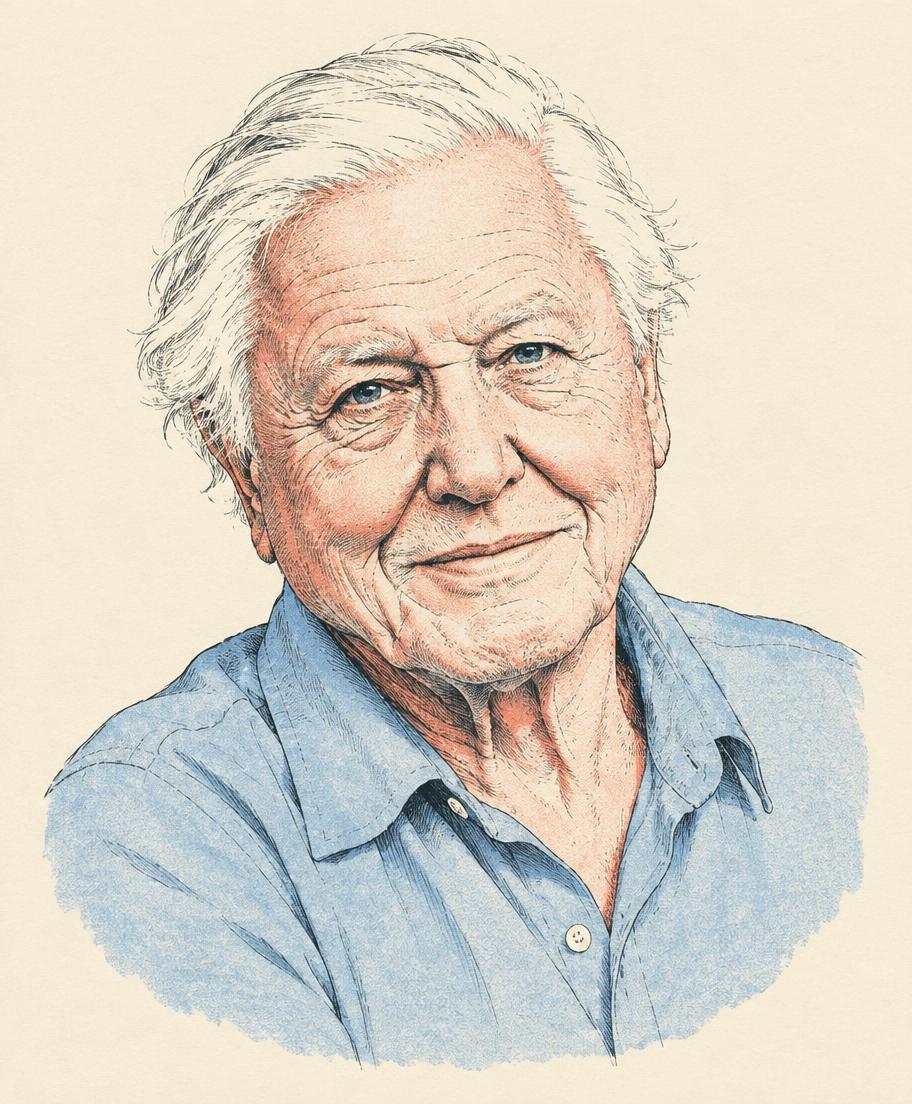
Broadcaster and natural historian
David Attenborough
The broadcaster whose natural history series have shaped how audiences understand life on Earth.
Read biography ↗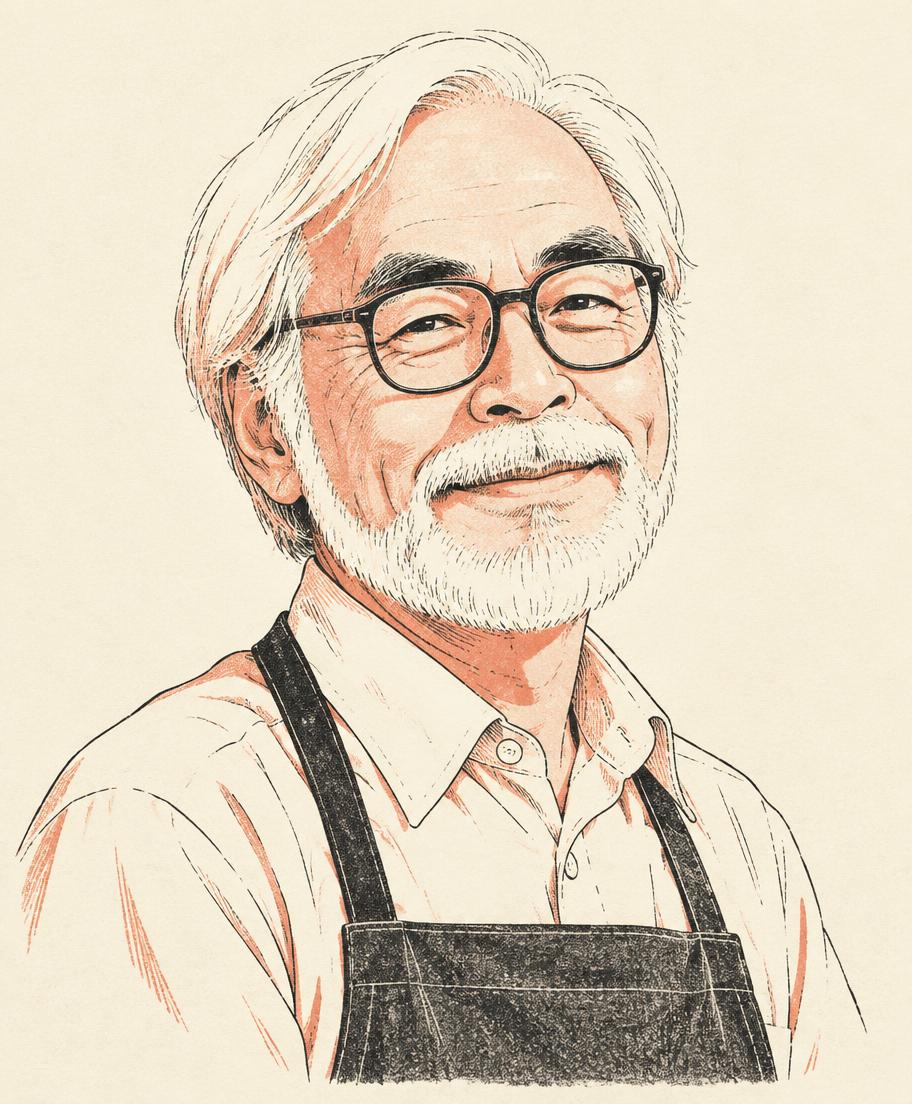
Animator and film director
Hayao Miyazaki
The animator and co-founder of Studio Ghibli whose hand-drawn films reached audiences worldwide.
Read biography ↗
Pope
Benedict I
Pope Benedict I was the bishop of Rome from 2 June 575 to his death on 30 July 579.
Read biography ↗