Italian writer, literary critic, and translator (1908–1950)
Cesare Pavese
Cesare Pavese was an Italian novelist, poet, short story writer, translator, literary critic, and essayist.
By globalcelebwiki Editorial Desk, adapted from Wikipedia · Published 29 September 2026
- Profession
- Italian writer, literary critic, and translator (1908–1950)
- Born
- 9 September 1908
- Birthplace
- Santo Stefano Belbo
- Nationality
- Italian

Overview
Cesare Pavese (UK: pav-AY-zay, -zee, Italian: [ˈtʃeːzare paˈveːze, ˈtʃɛː-, -eːse]; 9 September 1908 – 27 August 1950) was an Italian novelist, poet, short story writer, translator, literary critic, and essayist. He is often referred to as one of the most influential Italian writers of his time.
Pavese was reportedly apolitical in the 1930s, but he was moving in antifascist circles. He served a short sentence as a political prisoner. Though eligible for drafting into the Italian Armed Forces during World War II, he did not see any active service. He spent part of the war hospitalized due to asthma. Many of his friends in Turin joined the partisans, but Pavese took no part in the armed struggle in the vicinity of the city. After the war, Pavese joined the Italian Communist Party and worked on the party's newspaper, L'Unità. Toward the end of his life, he was suffering from depression and political disillusionment. He committed suicide by an overdose of barbiturates.
Early life and education
Cesare Pavese was born in Santo Stefano Belbo, in the province of Cuneo. It was the village where his father was born and where the family returned for the summer holidays each year. He started primary school in Santo Stefano Belbo, but the rest of his education was in schools in Turin.
He attended Liceo Classico Massimo d'Azeglio in Turin for his sixth form/senior high school studies. His most important teacher at the time was Augusto Monti, writer and educator, whose writing style attempted to be devoid of all rhetoric.
As a young man of letters, Pavese had a particular interest in English-language literature, graduating from the University of Turin with a thesis on the poetry of Walt Whitman. Among his mentors at the university was Leone Ginzburg, an expert on Russian literature and literary critic, husband of the writer Natalia Ginzburg and father of the future historian Carlo Ginzburg. In those years, Pavese translated both classic and recent American and British authors that were then new to the Italian public.
After the war
After World War II, Pavese joined the Italian Communist Party and worked on the party's newspaper, L'Unità. The bulk of his work was published during this time. Toward the end of his life, he would frequently visit Le Langhe, the area where he was born, where he found great solace. Depression, the failure of a brief love affair with the actress Constance Dowling, to whom his last novel and one of his last poems ("Death will come and she'll have your eyes") were dedicated, and political disillusionment led him to his suicide by an overdose of barbiturates in 1950. That year, he had won the Strega Prize for La bella estate (The Beautiful Summer), comprising three novellas: "La tenda", written in 1940, "Il diavolo sulle colline" (1948) and "Tra donne sole" (1949).
Leslie Fiedler wrote of Pavese's death "...for the Italians, his death has come to have a weight like that of Hart Crane for us, a meaning that penetrates back into his own work and functions as a symbol in the literature of an age." The circumstances of his suicide, which took place in a hotel room, mimic the last scene of Tra donne sole (Among Single Women), his penultimate book. His last book was La luna e i falò, published in Italy in 1950 and translated into English as The Moon and the Bonfires by Louise Sinclair in 1952.
Themes in Pavese's works
The typical protagonist in the works of Pavese is a loner, through choice or circumstances. Their relationships with men and women tend to be temporary and superficial. They may wish to have more solidarity with other people, but they often end up betraying their ideals and friends; for example, in The Prison, the political exile in a village in Southern Italy receives a note from another political confinato living nearby, who suggests a meeting. The protagonist rejects a show of solidarity and refuses to meet him. This short novel appeared in a collection entitled Before the Cock Crows referencing Peter's betrayal of Christ before his death.
The Langhe, the area where he spent his summer holidays as a boy, had a great hold on Pavese. It is a land of rolling hills covered in vineyards. It is an area where he felt at home, but he recognised the harsh and brutal lives that poor peasants had, making a living from the land. Bitter struggles took place between Germans and partisans in this area. The land became part of Pavese's personal mythology.
In The Moon and the Bonfires, the protagonist tells a story of drinking beer in a bar in America. A man comes in whom he recognizes as being from the valleys of Le Langhe by his way of walking and his outlook. He speaks to him in dialect, suggesting a bottle of their local wine would be better than the beer. After some years in America, the protagonist returns to his home village. He explores Le Langhe with a friend who had remained in the area. He finds out that so many of his contemporaries have died in sad circumstances, some as partisans shot by the Germans, while a notable local beauty had been executed by partisans as a fascist spy.
Books
Lavorare stanca (Hard Labor) – poems, 1936; expanded edition 1943.
See also: McGlazer, Ramsey (May 2017). "The Decay of Sighing: Cesare Pavese's Lavorare stanca". differences: A Journal of Feminist Cultural Studies. 28 (1). Duke University Press: 94–123. doi:10.1215/10407391-3821712.
Paesi tuoi (Your Villages) – novel, 1941.
Dialoghi con Leucò (The Leucothea Dialogues) – philosophical dialogues between classical Greek characters, 1947.
Il diavolo sulle colline (The Devil in the Hills) – novel, 1948.
Sources and references
Spotted something wrong? Report a correction.
Related profiles
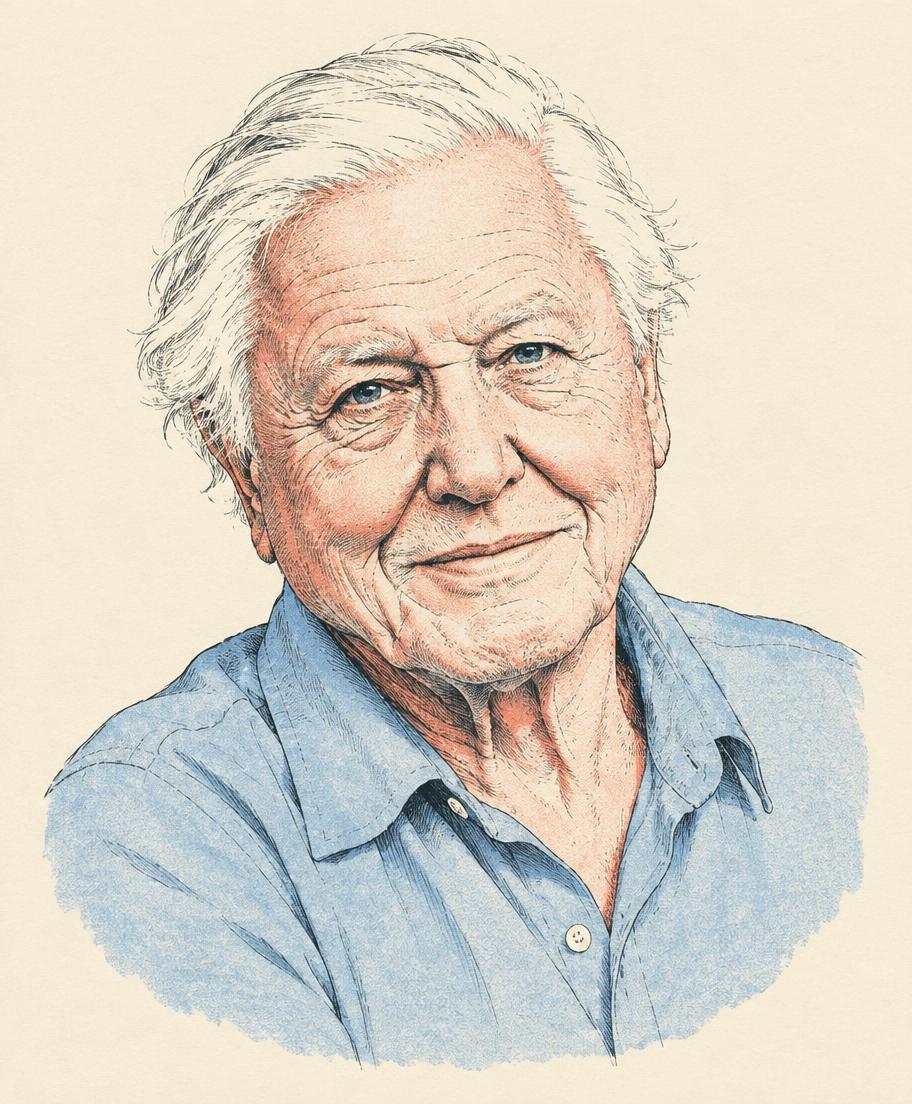
Broadcaster and natural historian
David Attenborough
The broadcaster whose natural history series have shaped how audiences understand life on Earth.
Read biography ↗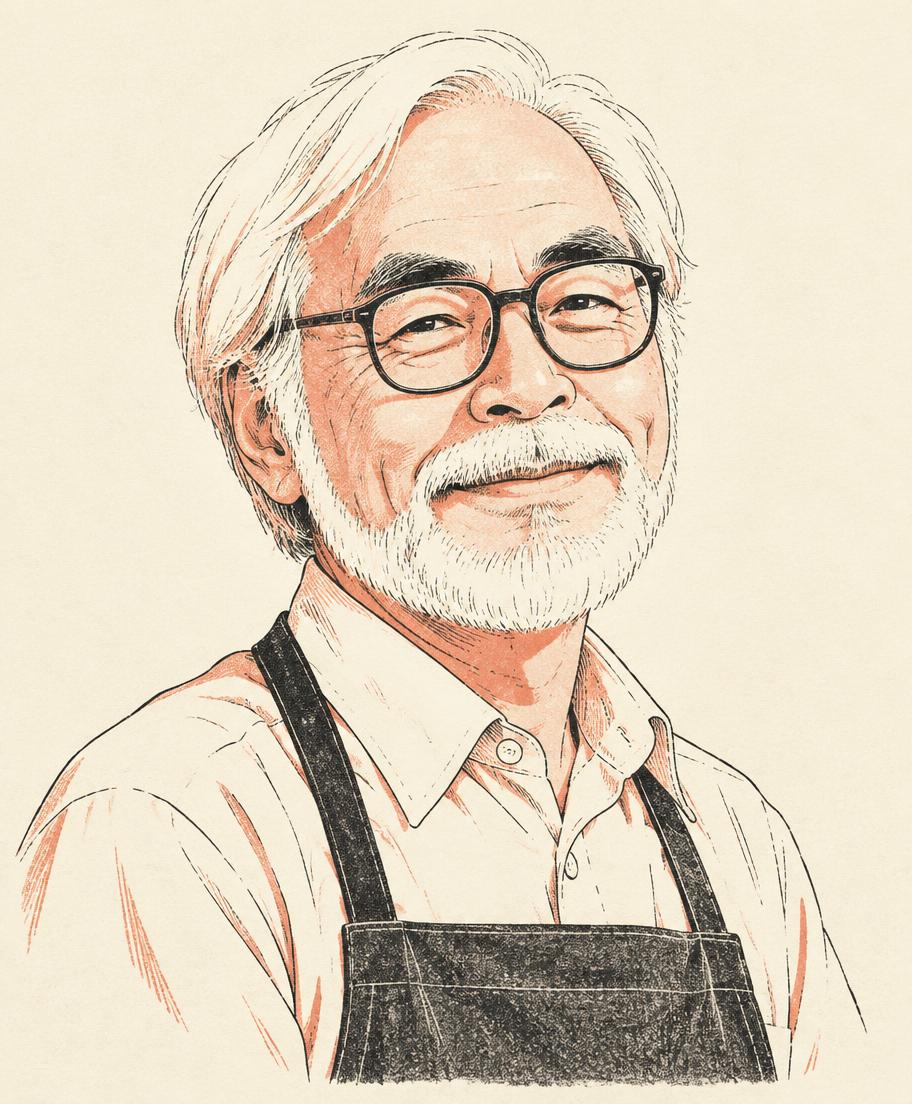
Animator and film director
Hayao Miyazaki
The animator and co-founder of Studio Ghibli whose hand-drawn films reached audiences worldwide.
Read biography ↗
Pope
Benedict I
Pope Benedict I was the bishop of Rome from 2 June 575 to his death on 30 July 579.
Read biography ↗