Vice president of the United States from 1925 to 1929
Charles G. Dawes
Charles Gates Dawes was the 30th vice president of the United States from 1925 to 1929 under President Calvin Coolidge.
By globalcelebwiki Editorial Desk, adapted from Wikipedia · Published 29 September 2026
- Profession
- Vice president of the United States from 1925 to 1929
- Born
- 27 August 1865
- Birthplace
- Marietta
- Nationality
- American

Overview
Charles Gates Dawes (August 27, 1865 – April 23, 1951) was the 30th vice president of the United States from 1925 to 1929 under President Calvin Coolidge. He was a co-recipient of the Nobel Peace Prize in 1925 for his work on the Dawes Plan for World War I reparations, and a member of the Republican Party.
Born in Marietta, Ohio, Dawes attended Cincinnati Law School before beginning a legal career in Lincoln, Nebraska. After serving as a gas plant executive, he managed William McKinley's 1896 presidential campaign in Illinois. After the election, McKinley appointed Dawes as the Comptroller of the Currency. He remained in that position until 1901 before forming the Central Trust Company of Illinois. Dawes served as a general during World War I and was the chairman of the general purchasing board for the American Expeditionary Forces. In 1921, President Warren G. Harding appointed Dawes as the first director of the Bureau of the Budget. Dawes served on the Allied Reparations Commission, where he helped formulate the Dawes Plan to aid the struggling German economy.
The 1924 Republican National Convention nominated President Calvin Coolidge without opposition. After former governor of Illinois Frank O. Lowden declined the vice-presidential nomination, the convention chose Dawes as Coolidge's running mate. The Republican ticket won the 1924 presidential election, and Dawes was sworn in as vice president in 1925. Dawes helped pass the McNary–Haugen Farm Relief Bill in Congress, but President Coolidge vetoed it. Dawes was a candidate for renomination at the 1928 Republican National Convention, but Coolidge's opposition to Dawes helped ensure that Charles Curtis was nominated instead. In 1929, President Herbert Hoover appointed Dawes to be the ambassador to the United Kingdom. Dawes also briefly led the Reconstruction Finance Corporation, which organized a government response to the Great Depression. He resigned from that position in 1932 to return to banking, and died in 1951 of coronary thrombosis.
Early life and family
Dawes was born in Marietta, Ohio, in Washington County, on August 27, 1865, the son of Civil War General Rufus Dawes and his wife Mary Beman Gates. Rufus had commanded the 6th Wisconsin Regiment of the Iron Brigade from 1863 to 1864 during the American Civil War. His uncle Ephraim C. Dawes was a major who served under Ulysses S. Grant at the Shiloh and Siege of Vicksburg, and was severely wounded at the Battle of Dallas, Georgia, in May 1864.
Dawes's brothers were Rufus C. Dawes, Beman Gates Dawes, and Henry May Dawes, all prominent businessmen or politicians. He had two sisters, Mary Frances Dawes Beach, and Betsey Gates Dawes Hoyt.
Education
He graduated from Marietta College in 1884 and Cincinnati Law School in 1886. His fraternity was Delta Upsilon.
Early business career
Dawes was admitted to the bar in Nebraska, and he practiced in Lincoln, Nebraska, from 1887 to 1894. When Lieutenant John Pershing, the future army general, was military instructor at the University of Nebraska he and Dawes met and formed a lifelong friendship. Pershing also received a law degree at Nebraska and proposed leaving the army to go into private practice with Dawes, who cautioned him against giving up the regular army pay for the uncertainty of legal remuneration. Dawes also met Democratic Congressman William Jennings Bryan. The two became friends despite their disagreement over free silver policies.
Dawes relocated from Lincoln to Chicago during the Panic of 1893. In 1894, Dawes acquired interests in several Midwestern gas plants. He became the president of both the La Crosse Gas Light Company in La Crosse, Wisconsin, and the Northwestern Gas Light and Coke Company in Evanston, Illinois.
Interest in music
Dawes was a self-taught pianist, flutist and composer. His composition Melody in A Major became a well-known piano and violin piece in 1912. Marie Edwards made a popular arrangement of the work in 1921. Also, in 1921, it was arranged for a small orchestra by Adolf G. Hoffmann. Melody in A Major was played at many official functions that Dawes attended.
In 1951, Carl Sigman added lyrics to Melody in A Major, transforming it into the song "It's All in the Game". Tommy Edwards's recording of "It's All in the Game" was a number-one hit on the American Billboard record chart for six weeks in 1958. Edwards's version of the song became number one on the United Kingdom chart that year.
Since then, it has become a pop standard. Numerous artists have recorded versions, including Cliff Richard, the Four Tops, Isaac Hayes, Jackie DeShannon, Van Morrison, Nat "King" Cole, Brook Benton, and Keith Jarrett.
Dawes is the only U.S. vice president to be credited with a number-one pop hit. Dawes and Bob Dylan (as a writer) are the only persons credited with a number-one pop hit to have also won a Nobel Prize.
Dawes was a brother of Phi Mu Alpha Sinfonia.
Early political career
Dawes's prominent positions in business caught the attention of Republican party leaders. They asked Dawes to manage the Illinois portion of William McKinley's bid for the Presidency of the United States in 1896. Following McKinley's election, Dawes was named Comptroller of the Currency, United States Department of the Treasury. Serving in that position from 1898 to 1901, he collected more than $25 million from banks that had failed during the Panic of 1893 and changed banking practices to try to prevent another panic.
In October 1901, Dawes left the Department of the Treasury to pursue a U.S. Senate seat from Illinois. He thought that, with the help of the McKinley Administration, he could win it. McKinley was assassinated and his successor, President Theodore Roosevelt, preferred Dawes's opponent, Albert J. Hopkins. In 1902, following this unsuccessful attempt at legislative office, Dawes declared that he was done with politics. He organized the Central Trust Company of Illinois, where he served as its president until 1921.
On September 5, 1912, Dawes's 21-year-old son Rufus drowned in Geneva Lake, while on summer break from Princeton University. In his memory, Dawes created homeless shelters in both Chicago and Boston and financed the construction of a dormitory at his son's alma mater, the Lawrenceville School in Lawrenceville, New Jersey.
World War I
Dawes helped support the first Anglo-French Loan to the Entente powers of $500 million. Dawes's support was important because the House of Morgan needed public support from a non-Morgan banker. The Morgan banker Thomas W. Lamont said that Dawes's support would "make a position for him in the banking world such as he otherwise could never hope to make". (Loans were seen as possibly violating neutrality, and Wilson was still resisting permitting loans.)
During WWI, Dawes was commissioned as a major on June 11, 1917, in the 17th Engineers. He was subsequently promoted to lieutenant colonel (July 17, 1917), and colonel (January 16, 1918). In October 1918, he was promoted to brigadier general. From August 1917 to August 1919, Dawes served in France during WWI as chairman of the general purchasing board for the American Expeditionary Forces (AEF). His proposal to Gen. Pershing was adopted informed the Military Board of Allied Supply, on which he served as the American delegate in 1918. When the war ended in November, he became a member of the Liquidation Commission of the United States War Department. He was decorated with the Distinguished Service Medal and the French Croix de Guerre in recognition of his service. He returned to the US aboard the SS Leviathan in August 1919. Dawes published a memoir of his World War I service, A Journal of the Great War, 1921.
In February 1921, the U.S. Senate held hearings on war expenditures. During heated testimony, Dawes burst out, "Hell and Maria, we weren't trying to keep a set of books over there, we were trying to win a war!" He was later known as "Hell and Maria Dawes" (although he always insisted the expression was "Helen Maria", an exclamation he claimed was common in Nebraska). Dawes resigned from the Army in 1919 and became a member of the American Legion.
1920s: Financing Europe and the Nobel Peace Prize
He supported Frank O. Lowden at the 1920 Republican National Convention, but the presidential nomination went to Warren G. Harding. When the Bureau of the Budget was created, he was appointed in 1921 by President Harding as its first director. Secretary of Commerce Herbert Hoover appointed him to the Allied Reparations Commission in 1923. Dawes chaired the group that devised the solution to the European crisis: through the Dawes Plan, American banks loaned large sums of money to Germany. The loans helped Germany's industrial production to recover and the government to make reparation payments to France and Belgium as required by the Versailles Treaty. France and Belgium in turn agreed to withdraw the troops that had been occupying the Ruhr since January 1923. In 1929 the Reparations Commission under Owen Young replaced the plan with the more permanent Young Plan, which reduced the total amount of reparations and called for the removal of occupying forces from the Rhineland. For his work on the Dawes Plan and the resulting reduction of tensions between France and Germany, Dawes shared the Nobel Peace Prize in 1925.
Sources and references
Spotted something wrong? Report a correction.
Related profiles

Singer and songwriter
Beyoncé
A singer, songwriter and performer whose career spans Destiny's Child and a run of genre-shifting solo albums.
Read biography ↗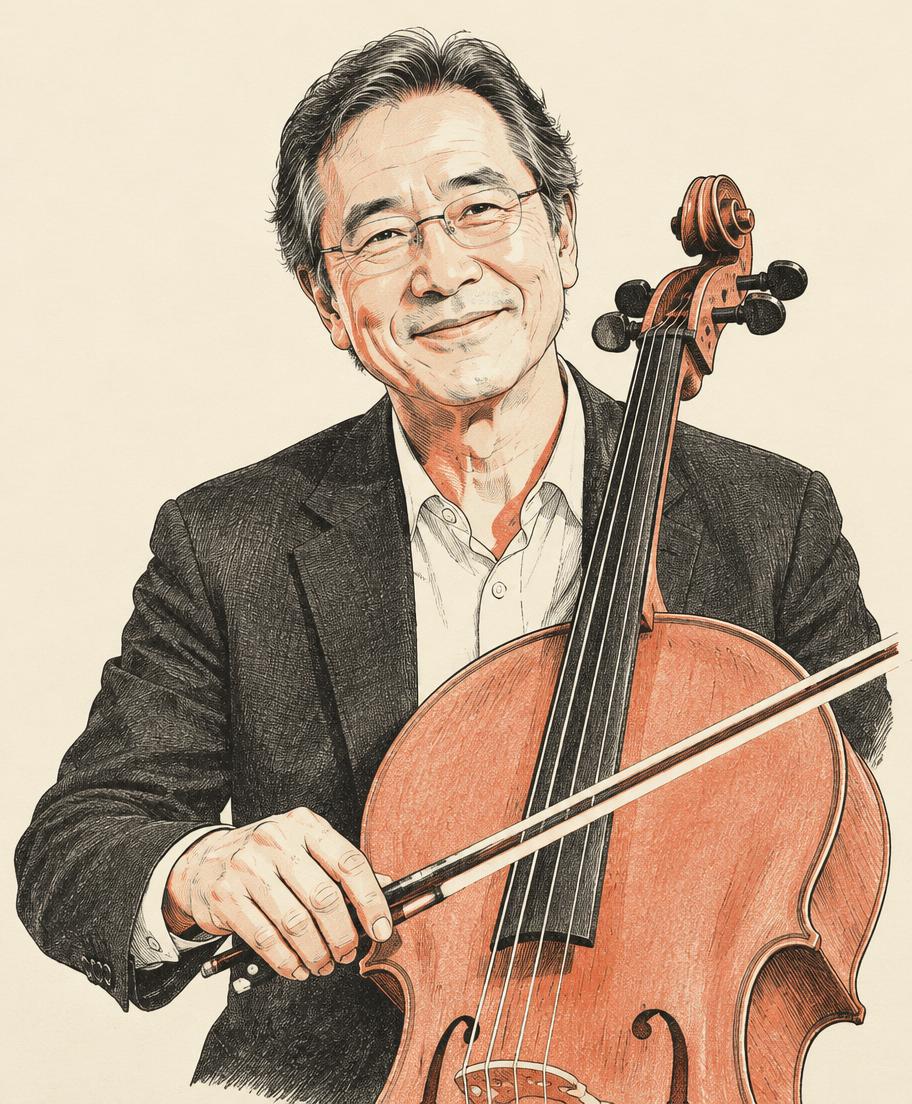
Cellist
Yo-Yo Ma
A cellist known for his recordings of the Bach cello suites and for decades of cross-cultural musical collaboration.
Read biography ↗
British singer (1949–2012)
Robin Gibb
Robin Hugh Gibb was a British singer and songwriter.
Read biography ↗