Soviet and Kyrgyz author (1928–2008)
Chingiz Aĭtmatov
Chinghiz Torekulovich Aitmatov was a Kyrgyz author who wrote mainly in Russian, but also in Kyrgyz.
By globalcelebwiki Editorial Desk, adapted from Wikipedia · Published 29 September 2026
- Profession
- Soviet and Kyrgyz author (1928–2008)
- Born
- 12 December 1928
- Birthplace
- Sheker
- Nationality
- Kyrgyzstani

Overview
Chinghiz Torekulovich Aitmatov (12 December 1928 – 10 June 2008) was a Kyrgyz author who wrote mainly in Russian, but also in Kyrgyz. He is one of the best-known figures in Kyrgyz literature.
Life
He was born to a Kyrgyz father and Tatar mother. Aitmatov's parents were civil servants in Sheker. In 1937, his father was charged with "bourgeois nationalism" in Moscow, arrested, and executed in 1938.
Aitmatov lived at a time when Kyrgyzstan was being transformed from one of the most remote lands of the Russian Empire to a republic of the USSR. The future author studied at a Soviet school in Sheker. He also worked from an early age. At fourteen, he was an assistant to the Secretary at the Village Soviet. He later held jobs as a tax collector, a loader, and an engineer's assistant and continued with many other types of work.
In 1946, he began studying at the Animal Husbandry Division of the Kirghiz Agricultural Institute in Frunze, but later switched to literary studies at the Maxim Gorky Literature Institute in Moscow, where he lived from 1956 to 1958. For the next eight years he worked for Pravda. He joined the Soviet Communist Party in 1959, at the time of de-Stalinization, and later was a member of the Supreme Soviet. He endorsed the glasnost policies of Mikhail Gorbachev.
By 1990 he fulfilled a number of board and administrative positions including on the Supreme Soviet's Committee for Culture and National Languages and the Union of Soviet Writers.
He was a member of the jury at the 2nd Moscow International Film Festival, in 1961; at the 7th Moscow International Film Festival, in 1971; and in 2002 was president of the jury at the 24th Moscow International Film Festival. In 1994, he was a member of the jury at the 44th Berlin International Film Festival.
Literary career
Chinghiz Aitmatov belonged to the post-war generation of writers. His output before his well-known work Jamila in 1958 was not significant. Aitmatov's first two publications appeared in 1952 in Russian: "Газетчик Дзюйо" ("The Newspaper Boy Dziuio") and "Ашым" ("Ashim"). His first work published in Kyrgyz was "Ак Жаан" ("White Rain", 1954). Two other short novels from that period are "Трудная переправа" ("A Difficult Passage", 1956) and "Лицом к лицу" ("Face to Face", 1957). But it was Jamila that came to prove the author's work. Seen through the eyes of an adolescent boy, it tells of how Jamila, a village girl, separated from her soldier husband by the war, falls in love with a disabled former soldier staying in their village as they all work to bring in and transport the grain crop.
1980 saw his novel The Day Lasts More Than a Hundred Years; his next significant novel, The Place of the Skull, was published in 1987. The Day Lasts More than a Hundred Years and other writings were translated into several languages.
Aitmatov's art was glorified by admirers. But even critics of Aitmatov mentioned the high quality of his work. Aitmatov's writing has some elements that are unique specifically to his creative process. His work drew on folklore, not in the ancient sense of it; rather, he tried to recreate and synthesize oral tales in the context of contemporary life. This is prevalent in his work; in nearly every story he refers to a myth, a legend, or a folktale. In The Day Lasts More Than a Hundred Years, a poetic legend about a young captive turned into a "mankurt" serves as a tragic allegory and becomes a significant symbolic expression of the philosophy of the novel.
His work also touches on Kyrgyzstan’s transformation from the Russian empire to a republic of the USSR and the lives of its people during the transformation. This is prevalent in Farewell, Gyulsary! Although the short story touches on the idea of friendship and loyalty between a man and his stallion, it also serves a tragic allegory of the political and USSR government. It explores the loss and grief that many Kyrgyz faced through the protagonist character in the short story.
A second aspect of Aitmatov's writing is his ultimate closeness to our "little brothers" the animals, for their and our lives are intimately and inseparably connected. The two central characters of Farewell, Gyulsary! are a man and his stallion. A camel plays a prominent role in The Day Lasts More Than a Hundred Years; one of the key turns of the novel which decides the fate of the main character is narrated through the story of the camel's rut and riot. The Place of the Skull starts off and finishes with the story of a wolf pack and the great wolf-mother Akbara and her cub; human lives enter the narrative but interweave with the lives of the wolves.
Diplomatic career
In addition to his literary work, Chinghiz Aitmatov was a diplomat who was accredited by 3 countries.
From 1990 to 1993, he was ambassador for the Soviet Union to Luxembourg, but at the collapse of the Union, he was re-accredited by Russia to Luxembourg. Then from 2000 to 2008, he was accredited by Kyrgyzstan to be its ambassador to the European Union, NATO, UNESCO and the Benelux countries, then France.
Two Order of Lenin (2 July 1971, 31 July 1978)
Order of the October Revolution (12 December 1988)
Two Order of the Red Banner of Labor (4 May 1962 and 28 October 1967)
Medal "For Distinguished Labour" (1 November 1958)
Hero of the Kyrgyz Republic (4 February 1997)
Commemorative gold order "Manas-1000" and commemorative gold medal (15 August 1995)
Russia – Order of Friendship (8 December 1998)
Uzbekistan – Order of Friendship (30 August 1995)
Uzbekistan – Order of Outstanding Merit (11 December 1998)
Kazakhstan – Order of Fatherland (23 January 1999)
Azerbaijan – Order of Friendship (25 February 2008)
Major works in English translation
in compilation Tales of the Mountains and Steppes, Progress Publishers (1969). ("Jamila", translated by Fainna Glagoleva)
Telegram Books (2007). ISBN 978-1-846-59032-0 ("Jamilia", translated by James Riordan)
To Have and to Lose («Тополек мой в красной косынке», 1961). in compilation Short Novels, Progress Publishers (1965). (translated by Olga Shartse)
Camel's Eye / Camel Eye («Верблюжий глаз», 1961)
in compilation Anthology of Soviet Short Stories, two volumes, compiled by Nikolai Atarov, Volume 2, pp. 54–86, Progress Publishers (1976). ("Camel's Eye", translated by Olga Shartse)
Sources and references
Spotted something wrong? Report a correction.
Related profiles
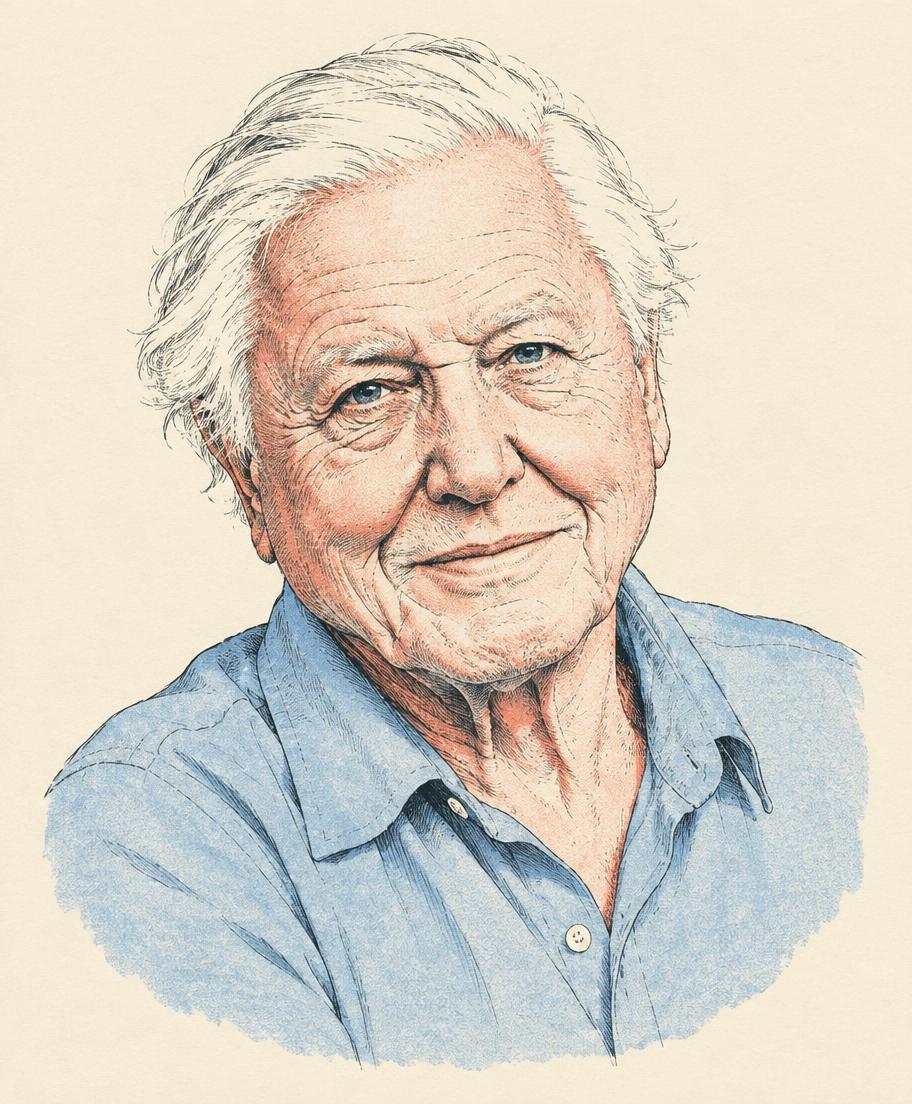
Broadcaster and natural historian
David Attenborough
The broadcaster whose natural history series have shaped how audiences understand life on Earth.
Read biography ↗
Animator and film director
Hayao Miyazaki
The animator and co-founder of Studio Ghibli whose hand-drawn films reached audiences worldwide.
Read biography ↗
Pope
Benedict I
Pope Benedict I was the bishop of Rome from 2 June 575 to his death on 30 July 579.
Read biography ↗