American poet, short story writer, critic and satirist (1893-1967)
Dorothy Parker
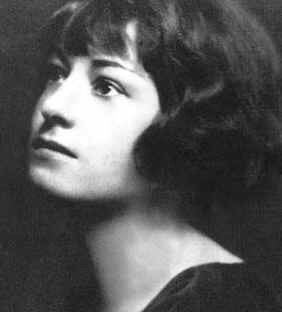
Dorothy Parker was an American poet, literary critic and writer of fiction.
By globalcelebwiki Editorial Desk, adapted from Wikipedia · Published 29 September 2026
- Profession
- American poet, short story writer, critic and satirist (1893-1967)
- Born
- 22 August 1893
- Birthplace
- West End
- Nationality
- American
Overview
Dorothy Parker (née Rothschild; August 22, 1893 – June 7, 1967) was an American poet, literary critic and writer of fiction. Based in New York, she was known for her caustic wisecracks, and eye for 20th-century urban foibles.
Parker rose to acclaim, both for her literary works published in magazines, such as The New Yorker, and for her role as a founding member of the Algonquin Round Table. In the early 1930s, Parker traveled to Hollywood to pursue screenwriting. Her successes there, including two Academy Award nominations, were curtailed when her involvement in left-wing politics resulted in her being placed on the Hollywood blacklist.
Dismissive of her own talents, she deplored her reputation as a "wisecracker". Nevertheless, both her literary output and reputation for sharp wit have endured. Some of her works have been set to music.
Early life and education
Dorothy Parker, also known as 'Dot' or 'Dottie', was born Dorothy Rothschild in 1893, the youngest of four children of Jacob Henry Rothschild and his wife Elizabeth Annie (née Marston) (1851–1898), at 732 Ocean Avenue in Long Branch, New Jersey. Her mother was of Scottish descent. Her father was the son of Sampson Jacob Rothschild (1818–1899) and Mary Greissman (b. 1824), both Prussian-born Jews. Sampson Jacob Rothschild was a merchant who immigrated to the United States around 1846, settling in Monroe County, Alabama. Dorothy's father was one of five known siblings: Simon (1854–1908); Samuel (b. 1857); Hannah (1860–1911), later Mrs. William Henry Theobald; and Martin, born in Manhattan on December 12, 1865, who perished in the sinking of the Titanic in 1912.
Her mother died in Manhattan in July 1898, a month before Parker's fifth birthday. In 1900, her father married Eleanor Frances Lewis (1851–1903), a Protestant. Author Dorothy Herrmann claimed that Parker hated both her father, who allegedly physically abused her, and her stepmother, whom she refused to call "mother", "stepmother", or "Eleanor", instead referring to her as "the housekeeper". However, her biographer Marion Meade refers to this account as "largely false", stating that the atmosphere in which Parker grew up was indulgent, affectionate, supportive and generous. Eleanor died in 1903, when Parker was nine.
Parker was raised on the Upper West Side and attended a Roman Catholic elementary school at the Convent of the Blessed Sacrament on West 79th Street; Parker joked that she was asked to leave following her characterization of the Immaculate Conception as "spontaneous combustion".
She later attended Miss Dana's School, a finishing school in Morristown, New Jersey, graduating in 1911, at the age of 18, according to Arthur F. Kinney, although Rhonda Pettit and Marion Meade state she never graduated from high school. Following her father's death in 1913, she played piano at a dancing school to earn a living while she worked on her poetry. She sold her first poem to Vanity Fair magazine in 1914 and some months later was hired as an editorial assistant for Vogue. She moved to Vanity Fair as a staff writer after two years at Vogue.
In the winter of 1916, Parker and the writer Thorne Smith lived at the same New York boarding house. They were friends and reportedly had a sexual relationship. At the 1916 wedding of her friend Frances Heywood Billings, with whom she lived after her father's death, Parker met a Wall Street stockbroker, Edwin Pond Parker II
Algonquin Round Table years
Parker's career took off in 1918 while she was writing theater criticism for Vanity Fair, filling in for the vacationing P. G. Wodehouse. At the magazine, she met Robert Benchley, who became a close friend, and Robert E. Sherwood. The trio lunched at the Algonquin Hotel almost daily. They were founding members of what became known as the Algonquin Round Table. Among its members were newspaper columnists Franklin P. Adams and Alexander Woollcott, as well as the editor Harold Ross, the novelist Edna Ferber, the reporter Heywood Broun, and the comedian Harpo Marx. Through their publication of her lunchtime remarks and short verses, particularly in Adams' column "The Conning Tower", Parker began developing a national reputation as a wit.
Even though many found Parker's caustic theater reviews very entertaining, she was dismissed by Vanity Fair on January 11, 1920, after her criticisms had too often offended the playwright–producer David Belasco, the actress Billie Burke, the impresario Florenz Ziegfeld, and others. Benchley, who was also a Vanity Fair columnist, resigned in protest. (Sherwood is sometimes reported to have done so too but conflicts between management and staff had been ongoing and he was fired in December 1919.) Parker soon started working for Ainslee's Magazine, which had a higher circulation. Her poems and short stories were published widely, "not only in upscale places like Vanity Fair (which was happier to publish her than employ her), The Smart Set, and The American Mercury, but also in the popular Ladies' Home Journal, Saturday Evening Post, and Life".
When Harold Ross founded The New Yorker in 1925, Parker and Benchley were part of a board of editors he established to allay the concerns of his investors. The magazine's first issue was published on February 21, 1925 and Parker wrote drama reviews for the first two issues. Her first poem in the New Yorker, "A Certain Lady", appeared in the February 28th issue. She became famous for her short, viciously humorous poems, many highlighting ludicrous aspects of her numerous and largely unsuccessful romantic affairs, and others wistfully considering the appeal of suicide.
The next 15 years were Parker's period of greatest productivity and success. In the 1920s alone she published some 300 poems and free verses in Vanity Fair, Vogue, "The Conning Tower" column, and The New Yorker as well as in Life, McCall's and The New Republic. Her poem "Song in a Minor Key" was included as part of a candid 1922 interview with N.E.A. writer Josephine Van de Grift.
Parker published her first volume of poetry, Enough Rope, in 1926. It sold 47,000 copies and garnered impressive reviews. The Nation described her verse as "caked with a salty humor, rough with splinters of disillusion, and tarred with a bright black authenticity". Enough Rope included Parker's two-line poem "News Item" – "Men seldom make passes / At girls who wear glasses" – that would remain among her most remembered epigrams. She amused readers with poems that had a surprise or trick ending, akin to an O. Henry short story, such as:
Hollywood
In February 1932, after a breakup with boyfriend John McClain, Parker attempted suicide by swallowing barbiturates.
In 1932, she met Alan Campbell, an actor hoping to become a screenwriter. They married two years later in Raton, New Mexico. Campbell's mixed parentage was the reverse of Parker's: he had a German-Jewish mother and a Scottish father. She learned that he was bisexual and subsequently proclaimed in public that he was "queer as a billy goat". The pair moved to Hollywood and signed ten-week contracts with Paramount Pictures, with Campbell (also expected to act) earning $250 per week and Parker earning $1,000 per week. They would eventually earn $2,000 and sometimes more than $5,000 per week as freelancers for various studios. She and Campbell "[received] writing credit for over 15 films between 1934 and 1941".
In 1933, when informed that famously taciturn former president Calvin Coolidge had died, Parker remarked, "How could they tell?"
In 1935, Parker contributed lyrics for the song "I Wished on the Moon", with music by Ralph Rainger. The song was introduced in The Big Broadcast of 1936 by Bing Crosby.
With Campbell and Robert Carson, she wrote the script for the 1937 film A Star Is Born, for which they were nominated for an Academy Award for Best Writing—Screenplay. She wrote additional dialogue for The Little Foxes (1941), and did an uncredited "dialogue polish" of It's a Wonderful Life (1946). Together with Frank Cavett, she received a "Writing (Motion Picture Story)" Oscar nomination for Smash-Up, the Story of a Woman (1947), starring Susan Hayward.
Later life and death
Following Campbell's death, Parker returned to New York City and the Volney apartments on East 74th Street. In her later years, she denigrated the Algonquin Round Table, although it had brought her such early notoriety:These were no giants. Think who was writing in those days—Lardner, Fitzgerald, Faulkner and Hemingway. Those were the real giants. The Round Table was just a lot of people telling jokes and telling each other how good they were. Just a bunch of loudmouths showing off, saving their gags for days, waiting for a chance to spring them ... There was no truth in anything they said. It was the terrible day of the wisecrack, so there didn't have to be any truth ...
Parker occasionally participated in radio programs, including Information Please (as a guest) and Author, Author (as a regular panelist). She wrote for the Columbia Workshop, and both Ilka Chase and Tallulah Bankhead used her material for radio monologues.
Parker died on June 7, 1967, at age 73, of a heart attack. At the time of her death, she was still residing at the Volney building. In her will, she bequeathed her estate to Martin Luther King Jr., and upon King's death, to the NAACP.
Following her cremation, Parker's ashes were unclaimed for several years. Finally, in 1973, the crematorium sent them to her lawyer's office; by then he had retired, and the ashes remained in his colleague Paul O'Dwyer's filing cabinet for about 17 years. In 1988, O'Dwyer brought this to public attention, with the aid of celebrity columnist Liz Smith; after some discussion, the NAACP claimed Parker's remains and designed a memorial garden for them outside its Baltimore headquarters. The plaque read:
Here lie the ashes of Dorothy Parker (1893–1967) humorist, writer, critic. Defender of human and civil rights. For her epitaph she suggested, 'Excuse my dust'. This memorial garden is dedicated to her noble spirit which celebrated the oneness of humankind and to the bonds of everlasting friendship between Black and Jewish people. Dedicated by the National Association for the Advancement of Colored People. October 28, 1988.
In early 2020, the NAACP moved its headquarters to downtown Baltimore and how this might affect Parker's ashes became the topic of much speculation, especially after the NAACP formally announced it would later move to Washington, D.C.
The NAACP restated that Parker's ashes would ultimately be where her family wished. "It’s important to us that we do this right," said the NAACP.
Relatives called for the ashes to be moved to the family's plot in Woodlawn Cemetery, in the Bronx, where a place had been reserved for Parker by her father. On August 18, 2020, Parker's urn was exhumed. "Two executives from the N.A.A.C.P. spoke, and a rabbi who had attended her initial burial said Kaddish." On August 22, 2020, Parker was re-buried privately in Woodlawn, with the possibility of a more public ceremony later. "Her legacy means a lot," added representatives from the NAACP.
Honors
On August 22, 1992, the 99th anniversary of Parker's birth, the United States Postal Service issued a 29¢ U.S. commemorative postage stamp in the Literary Arts series. The Algonquin Round Table, as well as the number of other literary and theatrical greats who lodged at the hotel, contributed to the Algonquin Hotel's being designated in 1987 as a New York City Historic Landmark. In 1996, the hotel was designated as a National Literary Landmark by the Friends of Libraries USA, based on the contributions of Parker and other members of the Round Table. The organization's bronze plaque is attached to the front of the hotel. Parker's birthplace at the Jersey Shore was also designated a National Literary Landmark by Friends of Libraries USA in 2005 and a bronze plaque marks the former site of her family house.
In 2014, Parker was elected to the New Jersey Hall of Fame.
In popular culture
Parker inspired a number of fictional characters in several plays of her day. These included "Lily Malone" in Philip Barry's Hotel Universe (1932), "Mary Hilliard" (played by Ruth Gordon) in George Oppenheimer's Here Today (1932), "Paula Wharton" in Gordon's 1944 play Over Twenty-one (directed by George S. Kaufman), and "Julia Glenn" in the Kaufman–Moss Hart collaboration Merrily We Roll Along (1934). Kaufman's representation of her in Merrily We Roll Along led Parker, once his Round Table compatriot, to despise him. She also was portrayed as "Daisy Lester" in Charles Brackett's 1934 novel Entirely Surrounded. She is mentioned in the original introductory lyrics in Cole Porter's song "Just One of Those Things" from the 1935 Broadway musical Jubilee, which have been retained in the standard interpretation of the song as part of the Great American Songbook. Additionally, she was mentioned in the title and lyrics of Prince's song "The Ballad of Dorothy Parker" on his 1987 album Sign o' The Times.
Parker is a character in the novel The Dorothy Parker Murder Case by George Baxt (1984), in a series of Algonquin Round Table Mysteries by J. J. Murphy (2011– ), and in Ellen Meister's novel Farewell, Dorothy Parker (2013). She is the main character in "Love for Miss Dottie", a short story by Larry N Mayer, which was selected by writer Mary Gaitskill for the collection Best New American Voices 2009 (Harcourt).
She has been portrayed on film and television by Dolores Sutton in F. Scott Fitzgerald in Hollywood (1976), Rosemary Murphy in Julia (1977), Bebe Neuwirth in Dash and Lilly (1999), and Jennifer Jason Leigh in Mrs. Parker and the Vicious Circle (1994). Neuwirth was nominated for an Emmy Award for her performance, and Leigh received a number of awards and nominations, including a Golden Globe nomination.
Television creator Amy Sherman-Palladino named her production company 'Dorothy Parker Drank Here Productions' in tribute to Parker.
Tucson actress Lesley Abrams wrote and performed the one-woman show Dorothy Parker's Last Call in 2009 in Tucson, Arizona, presented by the Winding Road Theater Ensemble. She reprised the role at the Live Theatre Workshop in Tucson in 2014. The play was selected to be part of the Capital Fringe Festival in DC in 2010.
Adaptations
In 1982, Anni-Frid Lyngstad recorded "Threnody", produced by Phil Collins and set to music by Per Gessle, for her third solo album Something's Going On, after she offered him a book of poems by Dorothy Parker.
In the 2010s some of her poems from the early 20th century have been set to music by the composer Marcus Paus as the operatic song cycle Hate Songs for Mezzo-Soprano and Orchestra (2014); Paus's Hate Songs was described by musicologist Ralph P. Locke as "one of the most engaging works" in recent years; "the cycle expresses Parker's favorite theme: how awful human beings are, especially the male of the species".
With the authorization of the NAACP, lyrics taken from her book of poetry Not So Deep as a Well were used in 2014 by Canadian singer Myriam Gendron to create a folk album of the same title. Also in 2014, Chicago jazz bassist/singer/composer Katie Ernst issued her album Little Words, consisting of her authorized settings of seven of Parker's poems.
In 2021 her book Men I'm Not Married To was adapted as an opera of the same name by composer Lisa DeSpain and librettist Rachel J. Peters. It premiered virtually as part of Operas in Place and Virtual Festival of New Operas commissioned by Baldwin Wallace Conservatory Voice Performance, Cleveland Opera Theater, and On Site Opera on February 18, 2021.
Sources and references
Spotted something wrong? Report a correction.
Related profiles
Singer and songwriter
Beyoncé
A singer, songwriter and performer whose career spans Destiny's Child and a run of genre-shifting solo albums.
Read biography ↗
Cellist
Yo-Yo Ma
A cellist known for his recordings of the Bach cello suites and for decades of cross-cultural musical collaboration.
Read biography ↗
British singer (1949–2012)
Robin Gibb
Robin Hugh Gibb was a British singer and songwriter.
Read biography ↗