Bulgarian-born Swiss and British Jewish modernist novelist, playwright, memoirist, and non-fiction writer (1905–1994)
Elias Canetti
Elias Canetti was a German-language writer, known as a modernist novelist, playwright, memoirist, and nonfiction writer.
By globalcelebwiki Editorial Desk, adapted from Wikipedia · Published 29 September 2026
- Profession
- Bulgarian-born Swiss and British Jewish modernist novelist, playwright, memoirist, and non-fiction writer (1905–1994)
- Born
- 25 July 1905
- Birthplace
- Ruse
- Nationality
- British

Overview
Elias Canetti (25 July 1905 – 14 August 1994; ; German: [eˈliːas kaˈnɛti]) was a German-language writer, known as a modernist novelist, playwright, memoirist, and nonfiction writer.
Born in Ruse, Bulgaria, to a Sephardic Jewish family, he later lived in England, Austria, Germany, and Switzerland. He won the 1981 Nobel Prize in Literature, "for writings marked by a broad outlook, a wealth of ideas and artistic power".
He is noted for his nonfiction book Crowds and Power, among other works.
Early life
He was born in 1905 to businessman Jacques Canetti and Mathilde (née Arditti) in Ruse, a city on the Danube in Bulgaria.
He was the eldest of three sons. His ancestors were Sephardic Jews. His paternal ancestors settled in Ruse from Ottoman Adrianople. The original family name was Cañete, named after Cañete, Cuenca, a village in Spain.
In Ruse, Canetti's father and grandfather were successful merchants who operated out of a commercial building, which they had built in 1898. Canetti's mother descended from the Arditti family, one of the oldest Sephardic families in Bulgaria, who were among the founders of the Ruse Jewish colony in the late 18th century.
The Ardittis can be traced to the 14th century, when they were court physicians and astronomers to the Aragonese royal court of Alfonso IV and Peter IV. Before settling in Ruse, they had migrated to Italy and lived in Livorno in the 17th century.
Canetti spent his childhood years, from 1905 to 1911, in Ruse until the family moved to Manchester, England, where Canetti's father joined a business established by his wife's brothers.
Career
Introduced into the literary circles of First Republic Vienna, he started writing. Politically left-leaning, he was present at the July Revolt of 1927, accidentally came near to the action, was most impressed by the burning of books (recalled frequently in his writings), and left the place quickly with his bicycle.
He received a doctorate in chemistry from the University of Vienna in 1929 but never worked as a chemist.
In Vienna, he published two works, Komödie der Eitelkeit 1934 (The Comedy of Vanity) and Die Blendung 1935 (Auto-da-Fé, 1935), before escaping to Great Britain. He reflected on the experiences of Nazi Germany and political chaos in his works, especially exploring mob action and group thinking in the novel Die Blendung and in the non-fiction Crowds and Power (1960). He wrote several volumes of memoirs, in which he contemplated the influence of his multilingual background and childhood.
Personal life
In 1934 in Vienna he married Veza (Venetiana) Taubner-Calderon (1897–1963), who acted as his muse and devoted literary assistant. Canetti remained open to relationships with other women. He had a short affair with sculptor Anna Mahler, the daughter of composer Gustav Mahler.
In 1938, after the Anschluss with Germany, the Canettis moved to London. He became closely involved with painter Marie-Louise von Motesiczky, who was to remain a close companion for many years.
Awards
A writer in the German language, Canetti won the Nobel Prize in Literature in 1981, "for writings marked by a broad outlook, a wealth of ideas and artistic power". He is known chiefly for his celebrated trilogy of autobiographical memoirs of his childhood and of pre-Anschluss Vienna: Die Gerettete Zunge (The Tongue Set Free); Die Fackel im Ohr (The Torch in My Ear), and Das Augenspiel (The Play of the Eyes); for his modernist novel Auto-da-Fé (Die Blendung); and for Crowds and Power, a psychological study of crowd behaviour as it manifests itself in human activities ranging from mob violence to religious congregations.
Death
In the 1970s, Canetti began to travel more frequently to Zurich, where he eventually settled and lived for his last 20 years. He died in Zürich in 1994.
Honours and awards
Grand Austrian State Prize for Literature (1967)
Literature Award of the Bavarian Academy of the Fine Arts (1969)
Austrian Decoration for Science and Art (1972)
Georg Büchner Prize (German Academy for Language and Literature, 1972)
German recording prize, for reading "Ohrenzeuge" (Deutscher Schallplattenpreis) (1975)
Works
Komödie der Eitelkeit 1934 (The Comedy of Vanity)
Die Blendung 1935 (Auto-da-Fé, novel, tr. by Cicely Wedgwood (Jonathan Cape, Ltd., 1946). The first American edition of Wedgwood's translation was titled The Tower of Babel (Alfred A. Knopf, 1947).
Die Befristeten 1956 (1956 premiere of the play in Oxford) (Their Days are Numbered)
Masse und Macht 1960 (Crowds and Power, study, tr. 1962 by Carol Stewart, published in Hamburg)
Aufzeichnungen 1942 – 1948 (1965) (Sketches)
Sources and references
Spotted something wrong? Report a correction.
Related profiles
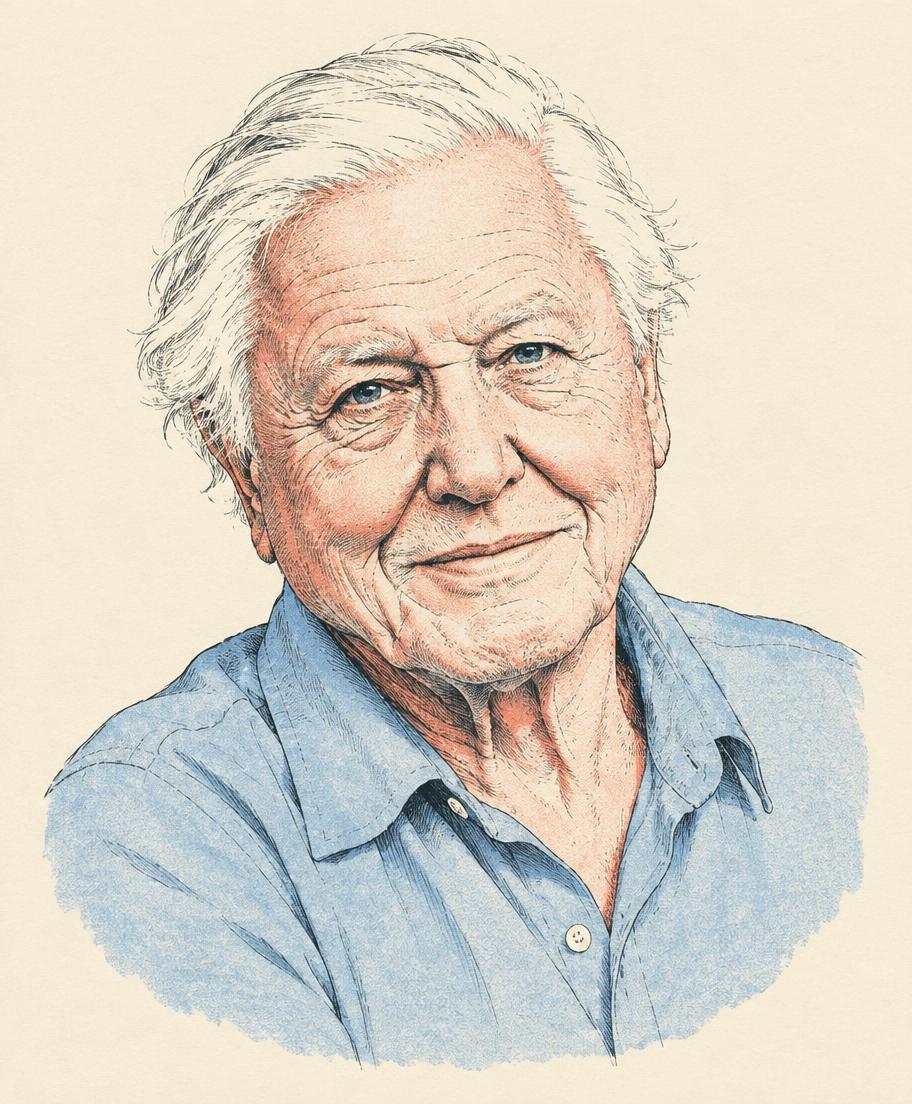
Broadcaster and natural historian
David Attenborough
The broadcaster whose natural history series have shaped how audiences understand life on Earth.
Read biography ↗
Animator and film director
Hayao Miyazaki
The animator and co-founder of Studio Ghibli whose hand-drawn films reached audiences worldwide.
Read biography ↗
Pope
Benedict I
Pope Benedict I was the bishop of Rome from 2 June 575 to his death on 30 July 579.
Read biography ↗