American author and journalist (1899–1961)
Ernest Hemingway
Ernest Miller Hemingway was an American novelist, short-story writer, and journalist.
By globalcelebwiki Editorial Desk, adapted from Wikipedia · Published 29 September 2026
- Profession
- American author and journalist (1899–1961)
- Born
- 21 July 1899
- Birthplace
- Oak Park
- Nationality
- American

Overview
Ernest Miller Hemingway ( HEM-ing-way; July 21, 1899 – July 2, 1961) was an American novelist, short-story writer, and journalist. Known for an economical, understated style that influenced later 20th-century writers, he has been romanticized for his adventurous lifestyle and outspoken, blunt public image. Some of his seven novels, six short-story collections and two non-fiction works have become classics of American literature, and he was awarded the 1954 Nobel Prize in Literature.
Hemingway was raised in Oak Park, Illinois. After high school, he spent six months as a reporter for The Kansas City Star before enlisting in the Red Cross. He served as an ambulance driver on the Italian Front in World War I and was seriously wounded by shrapnel in 1918. In 1921, Hemingway moved to Paris, where he worked as a foreign correspondent for the Toronto Star and was influenced by the modernist writers and artists of the "Lost Generation" expatriate community. His debut novel, The Sun Also Rises, was published in 1926. In 1928, Hemingway returned to the U.S., where he settled in Key West, Florida. His experiences during the war supplied material for his 1929 novel A Farewell to Arms.
In 1937, Hemingway went to Spain to cover the Spanish Civil War, which formed the basis for his 1940 novel For Whom the Bell Tolls, written in Havana, Cuba. During World War II, Hemingway was present with Allied troops as a journalist at the Normandy landings and the liberation of Paris. His novella The Old Man and the Sea was published in 1952 to widespread acclaim and won the Pulitzer Prize for Fiction. Hemingway was seriously injured in two plane crashes during a trip to Africa in 1954, leaving him in pain and ill health for much of the rest of his life. He died by suicide at his house in Ketchum, Idaho, in 1961.
Early life
Ernest Miller Hemingway was born on July 21, 1899, in Oak Park, Illinois, an affluent suburb just west of Chicago. He was the second of six children born to Clarence Edmonds Hemingway, a physician, and Grace Hall Hemingway, a musician. When Clarence and Grace Hemingway married in 1896, they lived with Grace's father, Ernest Miller Hall, after whom they named their first son. His parents were well-educated and well-respected in Oak Park, a conservative community about which its resident Frank Lloyd Wright said, "So many churches for so many good people to go to." The family's seven-bedroom home in the respectable neighborhood contained a music studio for Grace and a medical office for Clarence. His sister Marcelline preceded him in 1898, and his younger siblings were Ursula in 1902, Madelaine in 1904, Carol in 1911, and Leicester in 1915.
Grace Hemingway was a well-known local musician, and taught her reluctant son to play the cello. Later he said music lessons contributed to his writing style, as evidenced in the "contrapuntal structure" of For Whom the Bell Tolls. As an adult Hemingway professed to hate his mother, despite sharing similar enthusiastic energies. His father, Dr. Clarence Hemingway, taught him woodcraft during the family's summer sojourns at Windemere on Walloon Lake, near Petoskey, Michigan, where Ernest learned to hunt, fish and camp in the woods and lakes of Northern Michigan. These early experiences instilled in him a life-long passion for outdoor adventure and living in remote or isolated areas.
Hemingway went to Oak Park and River Forest High School in Oak Park between 1913 and 1917, where he competed in boxing, track and field, water polo, and football. He performed in the school orchestra for two years with his sister Marcelline, and received good grades in English. During his last two years at high school he edited the school's newspaper and yearbook (the Trapeze and Tabula); he imitated the language of popular sportswriters and contributed under the pen name Ring Lardner, Jr.—a nod to Ring Lardner of the Chicago Tribune whose byline was "Line O'Type". After leaving high school, he went to work for The Kansas City Star as a cub reporter. Although he stayed there only for six months, the Star's style guide, which stated "Use short sentences. Use short first paragraphs. Use vigorous English. Be positive, not negative", became a foundation for his prose.
World War I
Hemingway wanted to go to war and tried to enlist in the U.S. Army but was not accepted because he had poor eyesight. Instead he volunteered to a Red Cross recruitment effort in December 1917 and signed on to be an ambulance driver with the American Red Cross Motor Corps in Italy. In May 1918, he sailed from New York, and arrived in Paris as the city was under bombardment from German artillery. That June he arrived at the Italian Front as a volunteer with the A.R.C.. He held the ranks of second lieutenant (A.R.C.) and sottotenente (Italian Army) simultaneously (but was never a commissioned officer in the United States Armed Forces).
On his first day in Milan, he was sent to the scene of a munitions factory explosion to join rescuers retrieving the shredded remains of female workers. He described the incident in his 1932 non-fiction book Death in the Afternoon: "I remember that after we searched quite thoroughly for the complete dead we collected fragments." A few days later, he was stationed at Fossalta di Piave.
On July 8, right after bringing chocolate and cigarettes from the canteen to the men at the front line, the group came under mortar fire. Hemingway was seriously wounded. Despite his wounds, he assisted Italian soldiers to safety, for which he was decorated with the Italian War Merit Cross (Croce al Merito di Guerra) and with the Italian Silver Medal of Military Valor (Medaglia d'argento al valor militare). For his deed, he was promoted to first lieutenant (A.R.C.) and tenente (Italian Army).
He was only 18 at the time. Hemingway later said of the incident: "When you go to war as a boy you have a great illusion of immortality. Other people get killed; not you ... Then when you are badly wounded the first time you lose that illusion and you know it can happen to you." He sustained severe shrapnel wounds to both legs, underwent an immediate operation at a distribution center, and spent five days at a field hospital, before he was transferred for recuperation to the Red Cross hospital in Milan. He spent six months at the hospital, where he met "Chink" Dorman-Smith. The two formed a strong friendship that lasted for decades.
While recuperating, Hemingway fell in love with Agnes von Kurowsky, a Red Cross nurse seven years his senior. When Hemingway returned to the United States in January 1919, he believed Agnes would join him within months, and the two would marry. Instead, he received a letter from her in March with news that she was engaged to an Italian officer. Biographer Jeffrey Meyers writes Agnes's rejection devastated and scarred the young man. In future relationships Hemingway followed a pattern of abandoning a wife before she abandoned him.
Paris
Anderson suggested Paris because it was inexpensive and where "the most interesting people in the world" resided. There Hemingway met writers such as Gertrude Stein, James Joyce and Ezra Pound who "could help a young writer up the rungs of a career".
Hemingway was a "tall, handsome, muscular, broad-shouldered, brown-eyed, rosy-cheeked, square-jawed, soft-voiced young man." He lived with Hadley in a small walk-up at 74 rue du Cardinal Lemoine in the Latin Quarter, and rented a room nearby for work.
Stein was a bastion of modernism in Paris and became Hemingway's mentor and godmother to his son Jack; she introduced him to the expatriate artists and writers of the Montparnasse Quarter, whom she referred to as the "Lost Generation"—a term Hemingway popularized with the publication of The Sun Also Rises. A regular at Stein's salon, Hemingway met influential painters such as Pablo Picasso, Joan Miró, Juan Gris and Luis Quintanilla. He eventually withdrew from Stein's influence, and their relationship deteriorated into a literary quarrel that spanned decades.
Pound was older than Hemingway by 14 years when they met by chance in 1922 at Sylvia Beach's bookstore Shakespeare and Company. They visited Italy in 1923 and lived on the same street in 1924. The two forged a strong friendship; in Hemingway Pound recognized and fostered a young talent. Pound—who had just finished editing T. S. Eliot's The Waste Land—introduced Hemingway to the Irish writer James Joyce, with whom Hemingway frequently embarked on "alcoholic sprees".
During his first 20 months in Paris, Hemingway filed 88 stories for the Toronto Star newspaper. He covered the Greco-Turkish War, where he witnessed the burning of Smyrna, and wrote travel pieces such as "Tuna Fishing in Spain" and "Trout Fishing All Across Europe: Spain Has the Best, Then Germany". Almost all his fiction and short stories were lost, when in December 1922 as she was traveling to join him in Geneva, Hadley lost a suitcase filled with his manuscripts at the train station Gare de Lyon. He was devastated and furious. Nine months later, the couple returned to Toronto, where their son John Hadley Nicanor was born on October 10, 1923. During their absence, Hemingway's first book, Three Stories and Ten Poems, was published in Paris. After the loss of the suitcase, only two of the stories remained; he wrote the third early in 1923 while in Italy. A few months later, in our time (without capitals) was produced in Paris. The small volume included 18 vignettes, a dozen of which had been written the previous summer during his first visit to Spain, where he discovered the thrill of the corrida. He considered Toronto boring, missed Paris, and wanted to return to life as a writer rather than live as a journalist.
Key West
Hemingway and Pauline went to Kansas City, Missouri, where their son Patrick was born on June 28, 1928, at Bell Memorial Hospital. Pauline had a difficult delivery; Hemingway wrote a fictionalized version of the event in A Farewell to Arms. After Patrick's birth, they traveled to Wyoming, Massachusetts, and New York. On December 6, Hemingway was in New York visiting Bumby, about to board a train to Florida, when he received the news that his father Clarence had killed himself. Hemingway was devastated, having earlier written to his father telling him not to worry about financial difficulties; the letter arrived minutes after the suicide. He realized how Hadley must have felt after her own father's suicide in 1903, and said, "I'll probably go the same way."
Upon his return to Key West in December, Hemingway worked on the draft of A Farewell to Arms. The completed novel was published on September 27, 1929. Biographer James R. Mellow believes A Farewell to Arms established Hemingway's stature as a major American writer and displayed a level of complexity not apparent in The Sun Also Rises. In Spain in mid-1929, Hemingway researched his next work, Death in the Afternoon. He wanted to write a comprehensive treatise on bullfighting, explaining the toreros and corridas complete with glossaries and appendices, because he believed bullfighting was "of great tragic interest, being literally of life and death."
During the early 1930s, Hemingway spent his winters in Key West and summers in Wyoming, where he found "the most beautiful country he had seen in the American West" and hunted deer, elk, and grizzly bear. He was joined there by Dos Passos. In November 1930, after taking Dos Passos to the train station in Billings, Montana, Hemingway broke his arm in a car accident. He was hospitalized for seven weeks, with Pauline tending to him. The nerves in his writing hand took as long as a year to heal, during which time he suffered intense pain.
His third child, Gloria Hemingway, was born a year later on November 12, 1931, in Kansas City as "Gregory Hancock Hemingway". Pauline's uncle bought the couple a house in Key West with a carriage house, the second floor of which was converted into a writing studio. He invited friends—including Waldo Peirce, Dos Passos, and Max Perkins—to join him on fishing trips and on an all-male expedition to the Dry Tortugas. He continued to travel to Europe and to Cuba, and—although in 1933 he wrote of Key West, "We have a fine house here, and kids are all well"—Mellow believes he "was plainly restless".
In 1933, Hemingway and Pauline went on safari to Kenya. The 10-week trip provided material for Green Hills of Africa, as well as for the short stories "The Snows of Kilimanjaro" and "The Short Happy Life of Francis Macomber". The couple visited Mombasa, Nairobi, and Machakos in Kenya; then moved on to Tanganyika Territory, where they hunted in the Serengeti, around Lake Manyara, and west and southeast of present-day Tarangire National Park. Their guide was the noted "white hunter" Philip Percival who had guided Theodore Roosevelt on his 1909 safari. During these travels, Hemingway contracted amoebic dysentery that caused a prolapsed intestine, and he was evacuated by plane to Nairobi, an experience reflected in "The Snows of Kilimanjaro". On Hemingway's return to Key West in early 1934, he began work on Green Hills of Africa, which he published in 1935 to mixed reviews.
Spanish Civil War
Hemingway had been following developments in Spain since early in his career and from 1931 it became clear that there would be another European war. Hemingway predicted war would happen in the late 1930s. Baker writes that Hemingway did not expect Spain to "become a sort of international testing-ground for Germany, Italy, and Russia before the Spanish Civil War was over". Despite Pauline's reluctance, he signed with North American Newspaper Alliance to cover the Spanish Civil War, and sailed from New York on February 27, 1937. Journalist and writer Martha Gellhorn accompanied Hemingway. He had met her in Key West a year earlier. Like Hadley, Martha was a St. Louis native and, like Pauline, had worked for Vogue in Paris. According to Kert, Martha "never catered to him the way other women did".
He arrived in Spain in March with Dutch filmmaker Joris Ivens. Ivens, who was filming The Spanish Earth, intended to replace John Dos Passos with Hemingway as screenwriter. Dos Passos had left the project when his friend and Spanish translator José Robles was arrested and later executed. The incident changed Dos Passos's opinion of the leftist republicans, and caused a rift with Hemingway. Back in the U.S. that summer, Hemingway prepared the soundtrack for the film. It was screened at the White House in July.
In late August he returned to France and flew from Paris to Barcelona and then to Valencia. In September he visited the front in Belchite and then on to Teruel. On his return to Madrid Hemingway wrote his only play, The Fifth Column, as the city was being bombarded by the Francoist army. He went back to Key West for a few months in January 1938. It was a frustrating time: he found it hard to write, fretted over poor reviews for To Have and Have Not, bickered with Pauline, followed the news from Spain avidly and planned the next trip. He took two trips to Spain in 1938. In November he visited the location of the Battle of the Ebro, the last republican stand, along with other British and American journalists. They arrived to find the last bridge destroyed and had to retreat across the turbulent Ebro in a rowboat, Hemingway at the oars, "pulling for dear life".
In early 1939, Hemingway crossed to Cuba in his boat to live in the Hotel Ambos Mundos in Havana. This was the separation phase of a slow and painful split from Pauline, which began when Hemingway met Martha Gellhorn. Martha soon joined him and they rented Finca Vigía ("Lookout Farm"), a 15-acre (61,000 m2) property 15 miles (24 km) from Havana. That summer he visited Pauline and the children in Wyoming, when she took the children and left him. Once his divorce from Pauline was finalized he married Martha on November 20, 1940, in Cheyenne.
Hemingway followed the pattern established after his divorce from Hadley and moved again. He split his time between Cuba and the newly established resort Sun Valley. He was at work on For Whom the Bell Tolls, which he began in March 1939 and finished in July 1940. His pattern was to move around while working on a manuscript, and he wrote For Whom the Bell Tolls in Cuba, Wyoming, and Sun Valley. Published that October, it became a book-of-the-month choice, sold half a million copies within months, was nominated for a Pulitzer Prize, and as Meyers describes, "triumphantly re-established Hemingway's literary reputation".
World War II
The United States entered the war after the attack on Pearl Harbor in December 1941. Back in Cuba, Hemingway refitted the Pilar as a Q-boat and went on patrol for German U-boats as a member of the Coastal Picket Force. He also created a counterintelligence unit headquartered in his guesthouse to surveil Falangists, and Nazi sympathizers. Martha and his friends thought his activities "little more than a diverting racket", but the FBI began watching him and compiled a 124-page file on the belief that he was a communist. Martha wanted Hemingway in Europe as a journalist and failed to understand his reticence to take part in another European war. They fought frequently and bitterly, and he drank too much, until she left for Europe to report for Collier's in September 1943. On a visit to Cuba in March 1944, Hemingway was bullying and abusive with Martha. Reynolds writes that "looking backward from 1960–61 [anyone] might say that his behavior was a manifestation of the depression that eventually destroyed him". A few weeks later, he contacted Collier's who made him their front-line correspondent. He was in Europe from May 1944 to March 1945.
When he arrived in London, he met Time magazine correspondent Mary Welsh, with whom he became infatuated. Martha had been forced to cross the Atlantic in a ship filled with explosives because Hemingway refused to help her get a press pass on a plane, and she arrived in London to find him hospitalized with a concussion from a car accident. She was unsympathetic to his plight; she accused him of being a bully and told him that she was "through, absolutely finished". The last time that Hemingway saw Martha was in March 1945 as he prepared to return to Cuba; their divorce was finalized later that year. Meanwhile, he had asked Mary Welsh to marry him on their third meeting.
Hemingway sustained a severe head wound that required 57 stitches. Still suffering symptoms of the concussion, he accompanied troops to the Normandy landings wearing a large head bandage. The military treated him as "precious cargo", and he was not allowed ashore. The landing craft he was on came within sight of Omaha Beach before coming under enemy fire when it turned back. Hemingway later wrote in Collier's that he could see "the first, second, third, fourth and fifth waves of [landing troops] lay where they had fallen, looking like so many heavily laden bundles on the flat pebbly stretch between the sea and first cover". Mellow explains that, on that first day, none of the correspondents were allowed to land and Hemingway was returned to the Dorothea Dix. Late in July, he attached himself to "the 22nd Infantry Regiment commanded by Col. Charles 'Buck' Lanham, as it drove toward Paris", and Hemingway became de facto leader to a small band of village militia in Rambouillet, outside of Paris. Paul Fussell remarks: "Hemingway got into considerable trouble playing infantry captain to a group of Resistance people that he gathered because a correspondent is not supposed to lead troops, even if he does it well." This was in contravention of the Geneva Convention, and Hemingway was brought up on formal charges; he said that he "beat the rap" by claiming that he only offered advice.
He was present at the liberation of Paris by the French on August 25; however, contrary to legend he was not the first into the city nor did he liberate the Hôtel Ritz. While there, he visited Sylvia Beach and met Picasso with Mary Welsh, and in a spirit of happiness, forgave Gertrude Stein. Later that year, he observed heavy fighting at the Battle of Hürtgen Forest. On December 17, 1944, he traveled to Luxembourg, in spite of illness, to report on the Battle of the Bulge. As soon as he arrived, however, Lanham referred him to the doctors, who hospitalized him with pneumonia; he recovered a week later, but most of the fighting was over. He was awarded a Bronze Star for bravery in 1947, in recognition for having been "under fire in combat areas in order to obtain an accurate picture of conditions".
Cuba
Hemingway said he "was out of business as a writer" from 1942 to 1945. In 1946 he married Mary, who had an ectopic pregnancy five months later. The Hemingway family suffered a series of accidents and health problems in the years following the war: in a 1945 car accident, he injured his knee and sustained another head wound. A few years later Mary broke first her right ankle and then her left in successive skiing accidents. A 1947 car accident left Patrick with a head wound, severely ill and delirious. The doctor in Cuba diagnosed schizophrenia, and sent him for 18 sessions of electroconvulsive therapy.
Hemingway sank into depression as his literary friends began to die: in 1939 W. B. Yeats and Ford Madox Ford; in 1940 F. Scott Fitzgerald; in 1941 Sherwood Anderson and James Joyce; in 1946 Gertrude Stein; and the following year in 1947, Max Perkins, Hemingway's long-time Scribner's editor, and friend. During this period, he suffered from severe headaches, high blood pressure, weight problems, and eventually diabetes—much of which was the result of previous accidents and many years of heavy drinking.
He began work on The Garden of Eden in January 1946, and had finished 800 pages by June. During the post-war years, he also began work on a trilogy tentatively titled "The Land", "The Sea" and "The Air", which he wanted to combine in one novel titled The Sea Book. Both projects stalled. Mellow writes that Hemingway's inability to write was "a symptom of his troubles" during these years.
In 1948, Hemingway and Mary traveled to Europe, staying in Venice for several months. While there, Hemingway fell in love with the then 19-year-old Adriana Ivancich. The platonic love affair inspired the novel Across the River and into the Trees, written in Cuba during a time of strife with Mary, and published in 1950 to negative reviews. The following year, furious at the critical reception of Across the River and Into the Trees, Hemingway wrote the draft of The Old Man and the Sea in eight weeks, saying that it was "the best I can write ever for all of my life". Published in September 1952, The Old Man and the Sea became a book-of-the-month selection, made Hemingway an international celebrity, and won the Pulitzer Prize in May 1953. In June, he departed Cuba for his second trip to Africa. During that trip, he officially became a member of the Kamba tribe; he had identified himself with the tribe for decades.
Sources and references
Spotted something wrong? Report a correction.
Related profiles
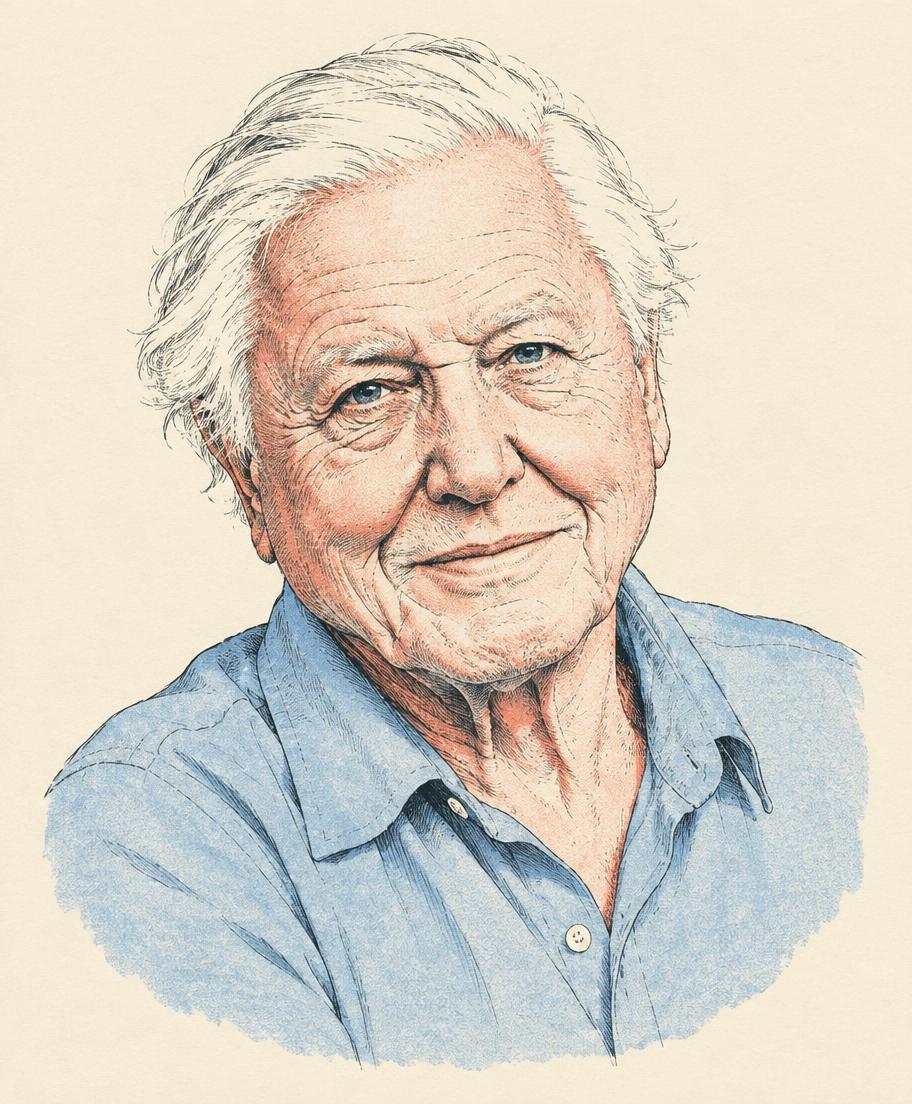
Broadcaster and natural historian
David Attenborough
The broadcaster whose natural history series have shaped how audiences understand life on Earth.
Read biography ↗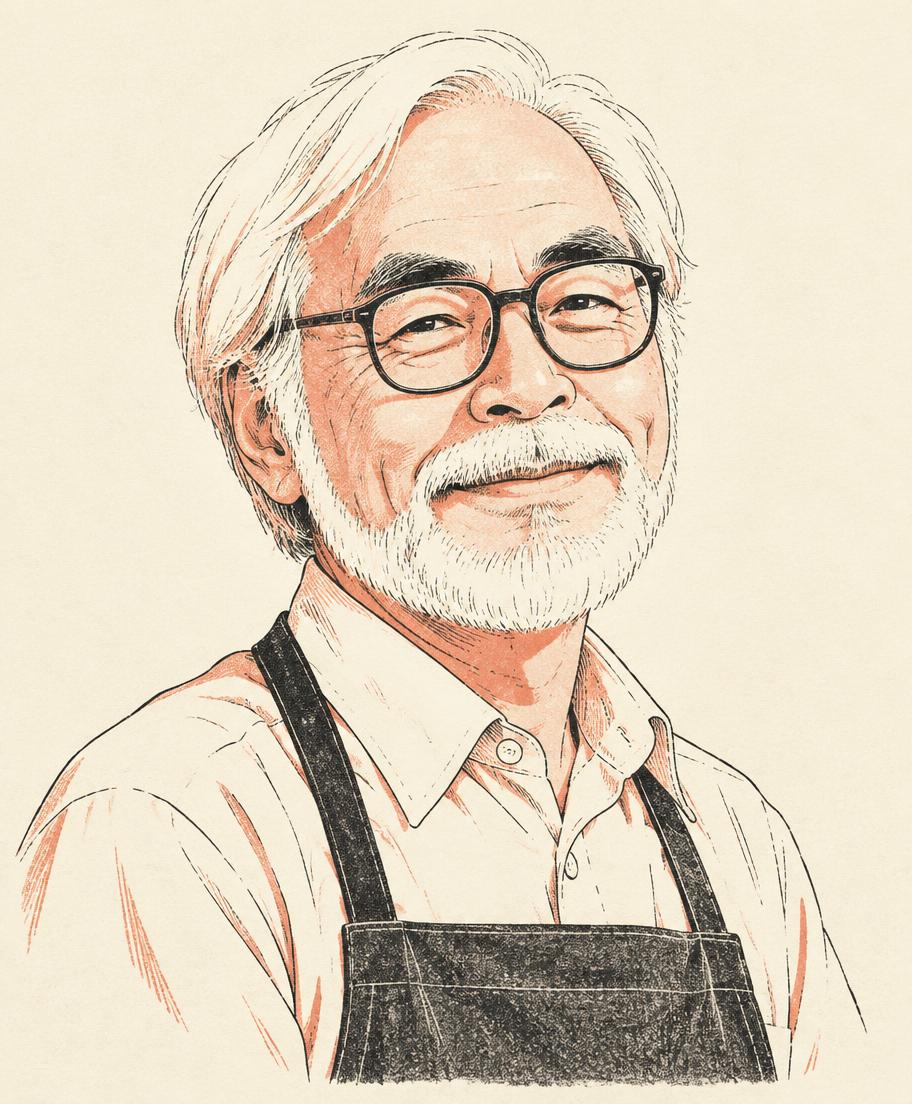
Animator and film director
Hayao Miyazaki
The animator and co-founder of Studio Ghibli whose hand-drawn films reached audiences worldwide.
Read biography ↗
Pope
Benedict I
Pope Benedict I was the bishop of Rome from 2 June 575 to his death on 30 July 579.
Read biography ↗