Icelandic author (1902-1998)
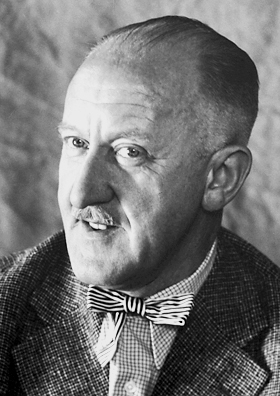
Halldór Laxness
Halldór Kiljan Laxness was an Icelandic writer and winner of the 1955 Nobel Prize in Literature.
By globalcelebwiki Editorial Desk, adapted from Wikipedia · Published 29 September 2026
- Profession
- Icelandic author (1902-1998)
- Born
- 23 April 1902
- Birthplace
- Reykjavík
- Nationality
- Iceland
Overview
Halldór Kiljan Laxness (Icelandic: [ˈhaltour ˈcʰɪljan ˈlaxsnɛs] ; born Halldór Guðjónsson; 23 April 1902 – 8 February 1998) was an Icelandic writer and winner of the 1955 Nobel Prize in Literature. He wrote novels, poetry, newspaper articles, essays, plays, travelogues and short stories. Writers who influenced Laxness include August Strindberg, Sigmund Freud, Knut Hamsun, Sinclair Lewis, Upton Sinclair, Bertolt Brecht, and Ernest Hemingway.
Early life
Halldór Guðjónsson was born in Reykjavík in 1902. When he was three, his family moved to the Laxnes farm in Mosfellssveit parish. He was brought up and enormously influenced by his grandmother, Guðný Klængsdóttir, who "sang me ancient songs before I could talk, told me stories from heathen times and sang me cradle songs from the Catholic era". He started to read books and write stories at an early age and attended the technical school in Reykjavík from 1915 to 1916. His earliest published writings appeared in 1916 in Morgunblaðið and in the children's periodical Æskan. The same year, two letters-to-the-editor Halldór wrote also appeared in the North American-Icelandic children's newspapers Sólskin, which was published in Winnipeg, Manitoba. Laxness then attended and in 1918 graduated from the Reykjavík Lyceum. By the time his first novel, Barn náttúrunnar (Child of Nature, 1919), was published he had already begun his travels on the European continent.
In 1922, Halldór moved into and considered joining the Abbaye Saint-Maurice et Saint-Maur in Clervaux, Luxembourg, where the monks followed the rules of Saint Benedict of Nursia. In 1923 he was baptized and confirmed in the Catholic Church, adopting the surname Laxness after the homestead on which he was raised and adding the name Kiljan (the Icelandic name of Irish martyr Saint Killian); Laxness practiced self-study, read books, and studied French, Latin, theology and philosophy. He became a member of a group that prayed for reversion of the Nordic countries to Catholicism. Laxness wrote of his experiences in the essay Kaþólsk viðhorf (1925) and published (in fragmentary form) the novel Undir Helgahnúk (1924, revised 1967). In 1927, he published Vefarinn mikli frá Kasmír, a novel about a young man's conflicts with religion and identity in his quest to become "the most perfect person in the world". Icelandic critic Kristján Albertsson wrote of it:
Finally, finally, a grand novel which towers like a cliff above the flatland of contemporary Icelandic poetry and fiction! Iceland has gained a new literary giant—it is our duty to celebrate the fact with joy!
Laxness's religious period did not last long. He lived in the United States from 1927 to 1929, giving lectures on Iceland and attempting to write screenplays for Hollywood films. During this time he became attracted to socialism:
[Laxness] did not become a socialist in America from studying manuals of socialism but from watching the starving unemployed in the parks.
Laxness joined the socialist bandwagon... with a book Alþýðubókin (The Book of the People, 1929) of brilliant burlesque and satirical essays
By the 1930s Laxness "had become the apostle of the younger generation" of Icelandic writers.
Salka Valka (1931–32) began the great series of sociological novels, often coloured with socialist ideas, continuing almost without a break for nearly twenty years. This was probably the most brilliant period of his career, and it is the one which produced those of his works that have become most famous. But Laxness never attached himself permanently to a particular dogma. In addition to the two parts of Salka Valka, Laxness published Fótatak manna (Steps of Men) in 1933, a collection of short stories, as well as other essays, notably Dagleið á fjöllum (A Day's Journey in the Mountains) in 1937.
Laxness's next novel was Sjálfstætt fólk (Independent People) (1934 and 1935), which has been called "one of the best books of the twentieth century."
When Salka Valka was published in English in 1936 a reviewer at the Evening Standard wrote: "No beauty is allowed to exist as ornamentation in its own right in these pages; but the work is replete from cover to cover with the beauty of its perfection."
In 1937 Laxness wrote the poem Maístjarnan (The May Star), which was set to music by Jón Ásgeirsson and became a socialist anthem.
In 1941 Laxness translated Hemingway's A Farewell to Arms into Icelandic, which caused controversy because of his use of neologisms. He continued to court controversy over the next few years through the publication of new editions of several Icelandic sagas using modern Icelandic rather than the Old Norse orthography that had become customary. Laxness and his publishing partners were taken to court after the publication of his edition of Hrafnkels saga in 1942. They were found guilty of violating a recent copyright law, but eventually acquitted when the copyright law was deemed a violation of the freedom of the press.
Laxness's "epic" three-part work of historical fiction, Íslandsklukkan (Iceland's Bell), was published between 1943 and 1946. It has been described as a novel of broad "geographical and political scope… expressly concerned with national identity and the role literature plays in forming it… a tale of colonial exploitation and the obdurate will of a suffering people." "Laxness’s three-volume Íslandsklukkan … is probably the most significant [Icelandic] novel of the 1940s."
In 1946 the English translation of Independent People was published as a Book of the Month Club selection in the U.S. and sold over 450,000 copies.
In 1945 Halldór and his second wife, Auður Sveinsdóttir, moved into Gljúfrasteinn, a new house built in the countryside near Mosfellsbær, where they started a family. In addition to her domestic duties, Auður assumed the roles of personal secretary and business manager.
In response to the establishment of a permanent U.S. military base in Keflavík, Halldór wrote the satire Atómstöðin (The Atom Station), which may have contributed to a blacklisting of his novels in the U.S.The demoralization of the occupation period is described ... nowhere as dramatically as in Halldór Kiljan Laxness' Atómstöðin (1948)... [where he portrays] postwar society in Reykjavík, completely torn from its moorings by the avalanche of foreign gold.
In 1952 Laxness published Gerpla (The Happy Warriors, Wayward Heroes) a novel based on the Fóstbræðra saga. It deals with Vikings of around the year 1000.
As a work of art Gerpla is an unusually powerful achievement. Laxness has not transposed his subject into a modern key; he has chosen to preserve a close link to the style of the ancient sagas.
Laxness was awarded the Soviet-sponsored World Peace Council literary prize in 1952. [Laxness] ...was a mediator between the cultural figures of the USSR and Iceland, even in times when relations between Moscow and Reykjavik were in deep crisis due to the Cold War. The active position of the writer and his activities as chairman of The Society for Cultural Relations between Iceland and the Soviet Union (MÍR) significantly contributed to the development of the bilateral relations between the Soviet Union and Iceland.
A Swedish film adaptation of his novel Salka Valka, directed by Arne Mattsson and filmed by Sven Nykvist, was released in 1954.
In 1955 Laxness was awarded the Nobel Prize in Literature "for his vivid epic power, which has renewed the great narrative art of Iceland".
In the 1960s Laxness was very active in Icelandic theater. He wrote and produced plays, the most successful of which was The Pigeon Banquet (Dúfnaveislan, 1966).
In 1968 Laxness published the "visionary novel" Kristnihald undir Jökli (Under the Glacier / Christianity at the Glacier).
Laxness was awarded the Sonning Prize in 1969.
In 1970 Laxness published an influential ecological essay, Hernaðurinn gegn landinu (The War Against the Land). In the 1970s he published what he called "essay novels": Innansveitarkronika (A Parish Chronicle, 1970) and Guðsgjafaþula (A Narration of God's Gifts, 1972). Guðsgjafaþula has not yet been translated into English. Laxness continued to write essays and memoirs into the 1980s. As he grew older he began to suffer from Alzheimer's disease and eventually moved into a nursing home, where he died on 8 February 1998, at the age of 95.
Family and legacy
In 1922, Laxness met Málfríður Jónsdóttir (29 August 1896 – 7 November 2003), who gave birth to his first daughter, María, on 10 April 1923.
In 1930, he married Ingibjörg Einarsdóttir (3 May 1908 – 22 January 1994), who gave birth to his son Einar on 9 August 1931. In 1940 they divorced.
Sources and references
Spotted something wrong? Report a correction.
Related profiles
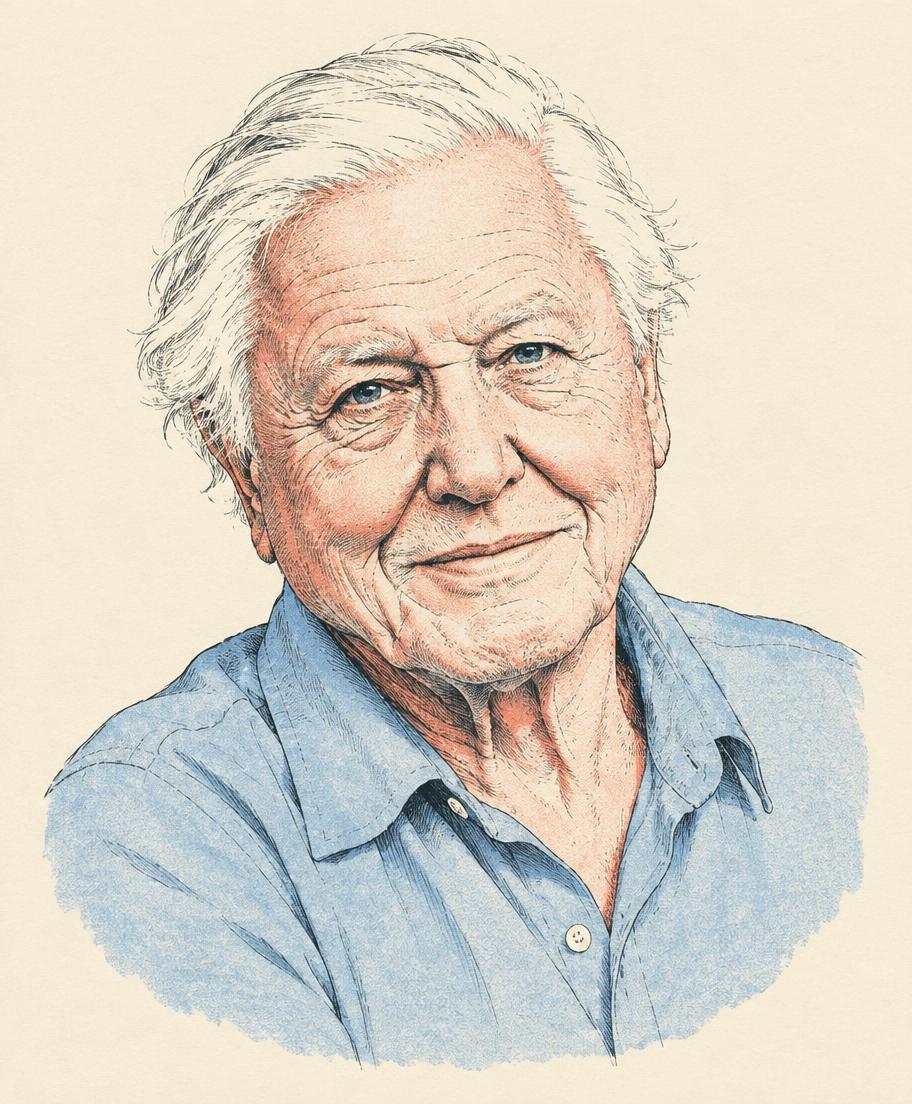
Broadcaster and natural historian
David Attenborough
The broadcaster whose natural history series have shaped how audiences understand life on Earth.
Read biography ↗
Animator and film director
Hayao Miyazaki
The animator and co-founder of Studio Ghibli whose hand-drawn films reached audiences worldwide.
Read biography ↗
Pope
Benedict I
Pope Benedict I was the bishop of Rome from 2 June 575 to his death on 30 July 579.
Read biography ↗