South Korean writer
Han Kang
Han Kang is a South Korean writer.
By globalcelebwiki Editorial Desk, adapted from Wikipedia · Published 29 September 2026
- Profession
- South Korean writer
- Born
- 27 November 1970
- Birthplace
- Gwangju
- Nationality
- South Korean

Overview
Han Kang (Korean: 한강; born 27 November 1970) is a South Korean writer. From 2007 to 2018, she taught creative writing at the Seoul Institute of the Arts. Han rose to international prominence for her novel The Vegetarian, which became the first Korean language novel to win the International Booker Prize for fiction in 2016. Han is the first Asian woman and Korean to be a recipient of the Nobel Prize in Literature, receiving the award in 2024 in recognition of her "intense poetic prose that confronts historical traumas and exposes the fragility of human life".
Early life and education
Han Kang was born on 27 November 1970 in Gwangju, South Korea. According to her father, she is named for the Han River (Korean: 한강; RR: Hangang). Her family is noted for its literary background. Her father is novelist Han Seung-won. Her older brother, Han Dong-rim, is also a novelist, while her younger brother, Han Kang-in, is a novelist and cartoonist.
At the age of nine, Han moved to Suyu-ri in Seoul, when her father quit his teaching job to become a full-time writer, four months before the Gwangju Uprising, a pro-democracy movement that ended in the military's massacre of students and civilians. She first learned about the massacre when she was 12, after discovering at home a secretly circulated memorial album of photographs taken by a German journalist, Jürgen Hinzpeter. This discovery deeply influenced her view on humanity and her literary works.
Han's father struggled to make ends meet with his writing career, which negatively impacted his family. Han later described her childhood as "too much for a little child"; however, being surrounded by books gave her comfort. In 1988, she graduated from Poongmoon Girls' High School, now Poongmoon High School, where she had been a class president. In 1993, Han graduated from Yonsei University, where she majored in Korean language and literature. In 1998, she participated in the University of Iowa International Writing Program for three months with support from the Arts Council Korea.
Career
After graduating from Yonsei University, Han briefly worked as a reporter for the monthly Saemteo magazine. Han's literary career began the same year when five of her poems, including "Winter in Seoul", were featured in the Winter 1993 issue of the quarterly Literature and Society. She made her fiction debut the next year, under the name Han Kang-hyun, when her short story "The Scarlet Anchor" won the New Year's Literary Contest held by the Seoul Shinmun. Her first short story collection, A Love of Yeosu, was published in 1995 and attracted attention for its precise and tightly narrated structure. After the publication, she quit her magazine job to solely focus on writing literature.
In 2007, Han published a book, A Song to Sing Calmly (가만가만 부르는 노래), that was accompanied by a music album. At first she did not intend to sing, but Han Jeong-rim, a musician and music director, insisted that Han Kang record the songs herself. The same year, she started working as a professor in the Department of Creative Writing at the Seoul Institute of the Arts until 2018.
In her college years Han became obsessed with a line of poetry by the Korean modernist poet Yi Sang: "I believe that humans should be plants." She understood Yi's line to imply a defensive stance against the violence of Korea's colonial history under Japanese occupation and took it as an inspiration to write her most successful work, The Vegetarian. The second part of the three-part novel, Mongolian Mark, won the Yi Sang Literary Award. The rest of the series (The Vegetarian and Fire Tree) was delayed by contractual problems.
The Vegetarian was Han's first novel translated into English, although she had already attracted worldwide attention by the time Deborah Smith translated it. The translated work won the International Booker Prize 2016 for both Han and Smith. Han was the first Korean writer to be nominated for the award, and The Vegetarian was the first Korean language novel to win the International Booker Prize for fiction. The Vegetarian was also chosen as one of "The 10 Best Books of 2016" by The New York Times Book Review.
Han's novel Human Acts was released in January 2016 by Portobello Books. Han received the Premio Malaparte for the Italian translation of Human Acts, Atti Umani, by Adelphi Edizioni, in Italy on 1 October 2017. The English translation of the novel was shortlisted for the 2018 International Dublin Literary Award.
Personal life
Han was married to Hong Yong-hee, a literary critic and professor at Kyung Hee Cyber University. In 2024, Han stated that they had been divorced for many years. Han has a son, and they ran a bookstore in Seoul together from 2018 until November 2024, when she stepped down from its management.
Han has said that she suffers from periodic migraines and credits them with "keeping her humble".
Awards and recognition
Han won the Yi Sang Literary Award (2005) for Mongolian Mark (the second part of The Vegetarian), the 25th Korean Novelist Award for her novella Baby Buddha in 1999, the 2000 Today's Young Artist Award from the Korean Ministry of Culture, and the 2010 Dongri Literary Award for The Wind is Blowing.
In 2018, Han became the fifth writer chosen to contribute to the Future Library project. Katie Paterson, the project's organizer, said that Han had been chosen because she "expands our view of the world". Han delivered the manuscript, Dear Son, My Beloved, in May 2019. In the handover ceremony, she dragged a white cloth through the forest and wrapped it around the manuscript. She explained this as a reference to Korean culture, in which a white cloth is used both for babies and for mourning gowns, describing the event as "like a wedding of my manuscript with this forest. Or a lullaby for a century-long sleep".
Han was elected a Royal Society of Literature International Writer in 2023, recognizing her significant contributions to global literature and the impact of her works beyond South Korea.
The Vegetarian placed 49th in The New York Times's "100 Best Books of the 21st century" in July 2024.
In 2024, Han was awarded the Nobel Prize in Literature by the Swedish Academy for her "intense poetic prose that confronts historical traumas and exposes the fragility of human life". This made her the first Korean writer and the first female Asian writer to be awarded the Nobel Prize in Literature. The awarding was widely celebrated in South Korea, while international reactions were mixed. Han herself said she was surprised but honoured by the recognition. Han delivered her Nobel lecture, titled Light and Thread, on 7 December 2024 at the Swedish Academy in Stockholm.
1999 – Korean Novel Award for Baby Buddha
2000 – Korean Ministry of Culture Today's Young Artist Award – Literature Section
2005 – Yi Sang Literary Award for Mongolian Mark
2010 – Dongri Literary Award for The Wind is Blowing
2014 – Manhae Literary Award for Human Acts
여수의 사랑 [Love in Yeosu] (in Korean). Moonji. 1995. ISBN 9788932007502.
검은 사슴 [Black Deer] (in Korean). Munhakdongne. 1998. ISBN 9788982811333.
내 여자의 열매 [My Woman's Fruits] (in Korean). Changbi. 2000. ISBN 9788936436575.
그대의 차가운 손 [Your Cold Hands] (in Korean). Moonji. 2002. ISBN 9788932013046.
채식주의자 [The Vegetarian] (in Korean). Changbi. 2007. ISBN 9788936433598.
The Vegetarian. Translated by Deborah Smith. London: Portobello Books. 2015. ISBN 9781846275623. UK
Greek Lessons. Translated by Deborah Smith and Emily Yae Won. London/New York: Hogarth. 2023. ISBN 9780593595275. UK US
Human Acts. Translated by Deborah Smith. London: Portobello Books. 2016. ISBN 9781846275968. UK
The White Book. Translated by Deborah Smith. London: Portobello Books. 2017. ISBN 9781846276958. UK
We Do Not Part. Translated by Emily Yae Won and Paige Aniyah Morris. London/New York: Hogarth. 2025. ISBN 9780593595459. UK US
내 이름은 태양꽃 ("My name is Sunflower"), Munhakdongne, 2002, ISBN 9788982814792.
붉은 꽃 이야기 ("The red flower story"), Yolimwon, 2003, ISBN 9788970633336.
천둥 꼬마 선녀 번개 꼬마 선녀 ("Thunder little fairy, lightning little fairy"), Munhakdongne, 2007, ISBN 9788954602792.
눈물상자 ("Tear box"), Munhakdongne, 2008, ISBN 9788954605816.
서랍에 저녁을 넣어 두었다 ("I put dinner in the drawer"), Moonji, 2013, ISBN 9788932024639.
사랑과, 사랑을 둘러싼 것들 ("Love and things surrounding love"), Yolimwon, 2003, ISBN 9788970633695.
가만가만 부르는 노래 ("A song to sing calmly"), Bichae, 2007, ISBN 9788992036276.
Light and Thread by Moonji Publishing Co., 2025
Adaptations
Baby Buddha and The Vegetarian have been made into films. Lim Woo-Seong wrote and directed Vegetarian, which was released in 2009. It was one of only 14 selections (out of 1,022 submissions) included in the World Narrative Competition of the North American Film Fest, and was noticed at the Busan International Film Festival.
Lim also adapted Baby Buddha into a screenplay, in collaboration with Han, and directed the film version. Titled Scars, it was released in 2011.
Sources and references
Spotted something wrong? Report a correction.
Related profiles
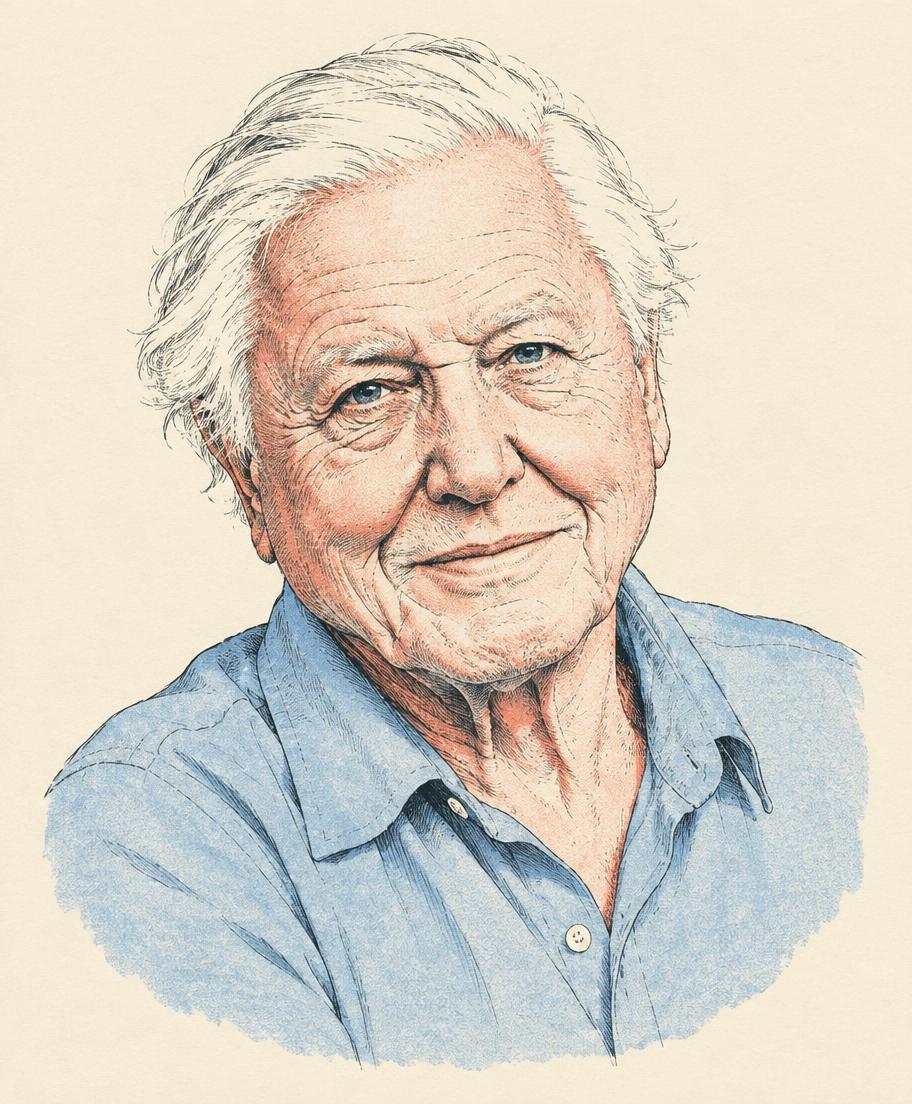
Broadcaster and natural historian
David Attenborough
The broadcaster whose natural history series have shaped how audiences understand life on Earth.
Read biography ↗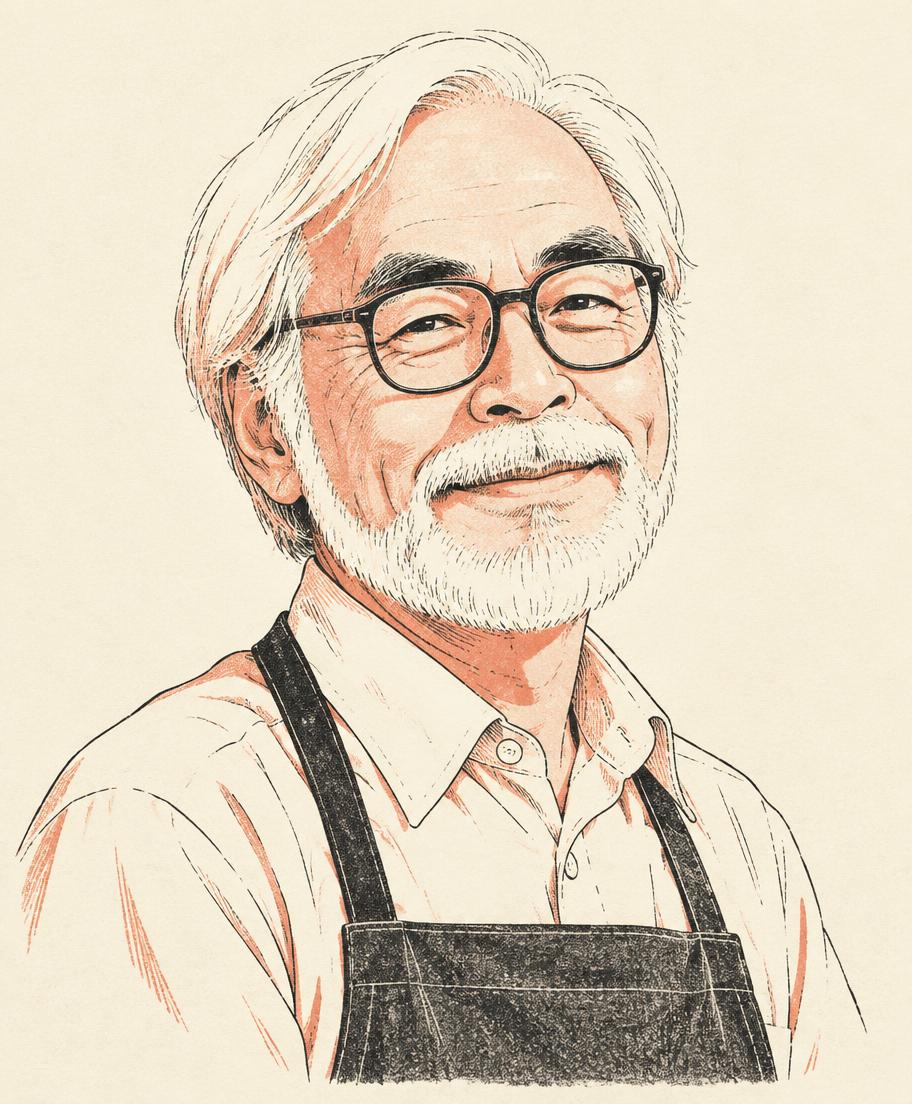
Animator and film director
Hayao Miyazaki
The animator and co-founder of Studio Ghibli whose hand-drawn films reached audiences worldwide.
Read biography ↗
Pope
Benedict I
Pope Benedict I was the bishop of Rome from 2 June 575 to his death on 30 July 579.
Read biography ↗