Brazilian composer (1887–1959)
Heitor Villa-Lobos
Heitor Villa-Lobos was a Brazilian composer, conductor, cellist, and classical guitarist described as "the single most significant creative figure in 20th-century Brazilian art music".
By globalcelebwiki Editorial Desk, adapted from Wikipedia · Published 29 September 2026
- Profession
- Brazilian composer (1887–1959)
- Born
- 5 March 1887
- Birthplace
- Rio de Janeiro
- Nationality
- Brazilian

Overview
Heitor Villa-Lobos (March 5, 1887 – November 17, 1959) was a Brazilian composer, conductor, cellist, and classical guitarist described as "the single most significant creative figure in 20th-century Brazilian art music". Villa-Lobos has globally become one of the most recognizable South American composers in music history. A prolific composer, he wrote many orchestral, chamber, instrumental and vocal works, totaling over 2,000 pieces by his death in 1959. His music was influenced by both Brazilian folk music and stylistic elements from the European classical tradition, as exemplified by his Bachianas Brasileiras (Brazilian Bach-pieces) and his Chôros. His Etudes for classical guitar (1929), dedicated to Andrés Segovia, and his 5 Preludes (1940), dedicated to his spouse Arminda Neves d'Almeida, a.k.a. "Mindinha", are important works in the classical guitar repertory.
Youth and exploration
Villa-Lobos was born in Rio de Janeiro. His father, Raúl, was a civil servant, an educated man of Spanish extraction, a librarian, and an amateur astronomer and musician. In Villa-Lobos's early childhood, Brazil underwent a period of social revolution and modernisation, abolishing slavery in 1888 and overthrowing the Empire of Brazil in 1889. The changes in Brazil were reflected in its musical life: previously European music had been the dominant influence, and the courses at the Conservatório de Música were grounded in traditional counterpoint and harmony. Villa-Lobos underwent very little of this formal training. After a few abortive harmony lessons, he learnt music by illicit observation from the top of the stairs of the regular musical evenings at his house arranged by his father. He learned to play the cello, clarinet, and classical guitar. When his father died suddenly in 1899, he earned a living for his family by playing in cinema and theatre orchestras in Rio.
Around 1905 Villa-Lobos started explorations of Brazil's "dark interior", absorbing the native Brazilian musical culture. Serious doubt has been cast on some of Villa-Lobos's tales of the decade or so he spent on these expeditions, and about his capture and near escape from cannibals, with some believing them to be fabrications or wildly embellished romanticism. After this period, he gave up any idea of conventional training and instead absorbed the musical influences of Brazil's indigenous cultures, as well as traditions based on Portuguese, African, and American Indian elements. His earliest compositions were the result of improvisations on the classical guitar from this period.
Villa-Lobos played with many local Brazilian street-music bands; he was also influenced by the cinema and Ernesto Nazareth's improvised tangos and polkas. For a time Villa-Lobos became a cellist in a Rio opera company, and his early compositions include attempts at Grand Opera. Encouraged by Arthur Napoleão, a pianist and music publisher, he decided to compose seriously.
On November 12, 1913, Villa-Lobos married the pianist Lucília Guimarães, ended his travels, and began his career as a serious musician. Up until his marriage, he had not learned to play the piano, so his wife taught him the rudiments of the instrument. His music began to be published in 1913. He introduced some of his compositions in a series of occasional chamber concerts (later also orchestral concerts) from 1915–1921, mainly in Rio de Janeiro's Salão Nobre do Jornal do Comércio.
The music presented at these concerts shows his coming to terms with the conflicting elements in his experience, and overcoming a crisis of identity, as to whether European or Brazilian music would dominate his style. This was decided by 1916, the year in which he composed the symphonic poems Amazonas and Tédio de alvorada, the first version of what would become Uirapurú (although Amazonas was not performed until 1929, and Uirapurú was only completed in 1934 and first performed in 1935). These works drew from native Brazilian legends and the use of "primitive" folk material.
European influences did still inspire Villa-Lobos. In 1917 Sergei Diaghilev made an impact on tour in Brazil with his Ballets Russes. That year Villa-Lobos also met the French composer Darius Milhaud, who was in Rio as secretary to Paul Claudel at the French Legation. Milhaud brought the music of Claude Debussy, Erik Satie, and possibly Igor Stravinsky; in return Villa-Lobos introduced Milhaud to Brazilian street music. In 1918, he also met the pianist Arthur Rubinstein, who became a lifelong friend and champion; this meeting prompted Villa-Lobos to write more piano music.
In about 1918 Villa-Lobos abandoned the use of opus numbers for his compositions as a constraint to his pioneering spirit. With the piano suite Carnaval das crianças (Children's carnival) of 1919–20, Villa-Lobos liberated his style altogether from European Romanticism: the suite, in eight movements with the finale written for piano duet, depicts eight characters or scenes from Rio's Lenten Carnival.
In February 1922, a festival of modern art took place in São Paulo and Villa-Lobos contributed performances of his own works. The press were unsympathetic and the audience were not appreciative; their mockery was encouraged by Villa-Lobos's being forced by a foot infection to wear one carpet slipper. The festival ended with Villa-Lobos's Quarteto simbólico, composed as an impression of Brazilian urban life.
In 1930, Villa-Lobos, who was in Brazil to conduct, planned to return to Paris. One of the consequences of the revolution of that year was that money could no longer be taken out of the country, and so he had no means of paying any rents abroad. Thus forced to stay in Brazil, he arranged concerts instead around São Paulo, and composed patriotic and educational music. In 1932, he became director of the Superintendência de Educação Musical e Artística (SEMA), and his duties included arranging concerts including the Brazilian premieres of Ludwig van Beethoven's Missa Solemnis and Johann Sebastian Bach's Mass in B minor as well as Brazilian compositions. His position at SEMA led him to compose mainly patriotic and propagandist works. His series of Bachianas Brasileiras were a notable exception.
In 1936, at the age of forty-nine, Villa-Lobos left his wife, and became romantically involved with Arminda Neves d'Almeida, who remained his companion until death. Arminda eventually took on the name Villa-Lobos, though Villa-Lobos never divorced his first wife. After Villa-Lobos' death, Arminda became the Director of the Museu Villa-Lobos in 1960, until her death in 1985. Arminda was herself a musician and a significant influence on Villa-Lobos. He also dedicated a good number of works to her, including the Ciclo brasileiro and many of the Chôros.
Villa-Lobos's writings during the presidency of Getúlio Vargas (1930–1945) include propaganda for Brazilian nationhood (brasilidade), and teaching and theoretical works. His Guia Prático ran to 11 volumes, Solfejos (two volumes, 1942 and 1946) contained vocal exercises, and Canto Orfeônico (1940 and 1950) contained patriotic songs for schools and for civic occasions. His music for the film O Descobrimento do Brasil (The Discovery of Brazil) of 1936, which included versions of earlier compositions, was arranged into orchestral suites, and includes a depiction of the first mass in Brazil in a setting for double choir.
Villa-Lobos published A Música Nacionalista no Govêrno Getúlio Vargas c.1941, in which he characterised the nation as a sacred entity whose symbols (including its flag, motto and national anthem) were inviolable. Villa-Lobos was the chair of a committee whose task was to define a definitive version of the Brazilian national anthem.
After 1937, during the Estado Novo period when Vargas seized power by decree, Villa-Lobos continued producing patriotic works directly accessible to mass audiences. Independence Day on September 7, 1939, involved 30,000 children singing the national anthem and items arranged by Villa-Lobos. For the 1943 celebrations he also composed the ballet Dança da terra, which the authorities deemed unsuitable until it was revised. The 1943 celebrations did include Villa-Lobos's hymn Invocação em defesa da pátria shortly after Brazil's declaring war on Germany and its allies.
Vargas fell from power in 1945. Villa-Lobos was able, after the end of the war, to travel abroad again; he returned to Paris, and also made regular visits to the United States as well as travelling to Great Britain, and Israel. He received a huge number of commissions, and fulfilled many of them despite failing health. He recommended American pianist, musicologist, educator, and composer Jeanne Behrend for sponsorship, and under this sponsorship she toured giving lectures and concerts in South America from 1945-46. He composed concertos for piano, cello (the second one in 1953), classical guitar (in 1951 for Segovia, who refused to play it until the composer provided a cadenza in 1956), harp (for Nicanor Zabaleta in 1953) and harmonica (for John Sebastian, Sr. in 1955–56). Other commissions included his Symphony No. 11 (for the Boston Symphony Orchestra in 1955), and the opera Yerma (1955–56) based on the play by Federico García Lorca. His prolific output of this period prompted criticisms of note-spinning and banality: critical reactions to his Piano Concerto No. 5 included the comments "bankrupt" and "piano tuners' orgy", "raked the very depths of banality", "nothing ... but soupy textures or a bedraggled romantic idea", and "truly the kind of music that should never get written, still less performed".
His music for the film Green Mansions starring Audrey Hepburn and Anthony Perkins, commissioned by MGM in 1958, earned Villa-Lobos US$25,000, and he conducted the soundtrack recording himself. The film was in production for many years. Originally to be directed by Vincente Minnelli, it was taken over by Hepburn's husband Mel Ferrer. MGM decided to use only part of Villa-Lobos's music in the actual film, turning instead to Bronisław Kaper for the rest of the music. From the score, Villa-Lobos compiled a work for soprano soloist, male chorus, and orchestra, which he titled Forest of the Amazon and recorded in 1959 in stereo with Brazilian soprano Bidu Sayão, an unidentified male chorus, and the Symphony of the Air for United Artists Records. The recording was issued both on LP and reel-to-reel tape (United Artist UAC 8007, stereo 7 1/2 IPS).
In June 1959, Villa-Lobos alienated many of his fellow musicians by expressing disillusionment, saying in an interview that Brazil was "dominated by mediocrity". In November he died in Rio; his state funeral was the final major civic event in that city before the capital transferred to Brasília. He is buried in the Cemitério São João Batista in Rio de Janeiro.
Music
His earliest pieces originated in guitar improvisations, for example Panqueca (Pancake) of 1900. The concert series of 1915–21 included first performances of pieces demonstrating originality and virtuosic technique. Some of these pieces are early examples of elements of importance throughout his œuvre. His attachment to the Iberian Peninsula is demonstrated in Canção Ibéria of 1914 and in orchestral transcriptions of some of Enrique Granados' piano Goyescas (1918, now lost). Other themes that were to recur in his later work include the anguish and despair of the piece Desesperança – Sonata Phantastica e Capricciosa no. 1 (1915), a violin sonata including "histrionic and violently contrasting emotions", the birds of L'oiseau blessé d'une flèche (1913), the mother–child relationship (not usually a happy one in Villa-Lobos's music) in Les mères of 1914, and the flowers of Suíte floral for piano of 1916–18 which reappeared in Distribuição de flores for flute and classical guitar of 1937.
Reconciling European tradition and Brazilian influences was also an element that bore fruit more formally later. His earliest published work Pequena suíte for cello and piano of 1913 shows a love for the cello, but is not notably Brazilian, although it contains elements that were to resurface later. His three-movement Suíte graciosa of 1915 (expanded to six movements c. 1947 to become his String Quartet No. 1) is influenced by European opera, while Três danças características (africanas e indígenas) of 1914–16 for piano, later arranged for octet and subsequently orchestrated, is radically influenced by the tribal music of the Caripunas Indians of Mato Grosso.
With his tone poems Amazonas (1917, first performed in Paris in 1929) and Uirapurú (1917, first performed 1935) he created works dominated by indigenous Brazilian influences. The works use Brazilian folk tales and characters, imitations of the sounds of the jungle and its fauna, imitations of the sound of the nose-flute by the violinophone, and not least imitations of the uirapuru bird itself.
His meeting with Arthur Rubinstein in 1918 prompted Villa-Lobos to compose piano music such as Simples coletânea of 1919—which was possibly influenced by Rubinstein's playing of Ravel and Scriabin on his South American tours—and Bailado infernal of 1920. The latter piece includes the tempi and expression markings "vertiginoso e frenético", "infernal" and "mais vivo ainda" (faster still).
Carnaval das crianças of 1919–20 saw Villa-Lobos's mature style emerge; unconstrained by the use of traditional formulae or any requirement for dramatic tension, the piece at times imitates a mouth organ, children's dances, a harlequinade, and ends with an impression of the carnival parade. This work was orchestrated in 1929 with new linking passages and a new title, Momoprecoce. Naïveté and innocence is also heard in the piano suites A Prole do Bebê (The Baby's Family) of 1918–21.
Recordings
Villa-Lobos plays Villa-Lobos (SCSH 010, SanCtuS Recordings) (audio)
Villa-Lobos par lui-même (EMI Classics 0077776722924) (archive from September 26, 2011, accessed November 19, 2015).
Villa-Lobos: Bachianas Brasileiras Nos. 1, 2, 5 & 9 Angel 0724356696426; EMI Classics CD 724356696457 (archive from September 26, 2011, accessed November 19, 2015). (EMI Classics)
A database of available Villa-Lobos recordings (archive)
Sources and references
Spotted something wrong? Report a correction.
Related profiles

Singer and songwriter
Beyoncé
A singer, songwriter and performer whose career spans Destiny's Child and a run of genre-shifting solo albums.
Read biography ↗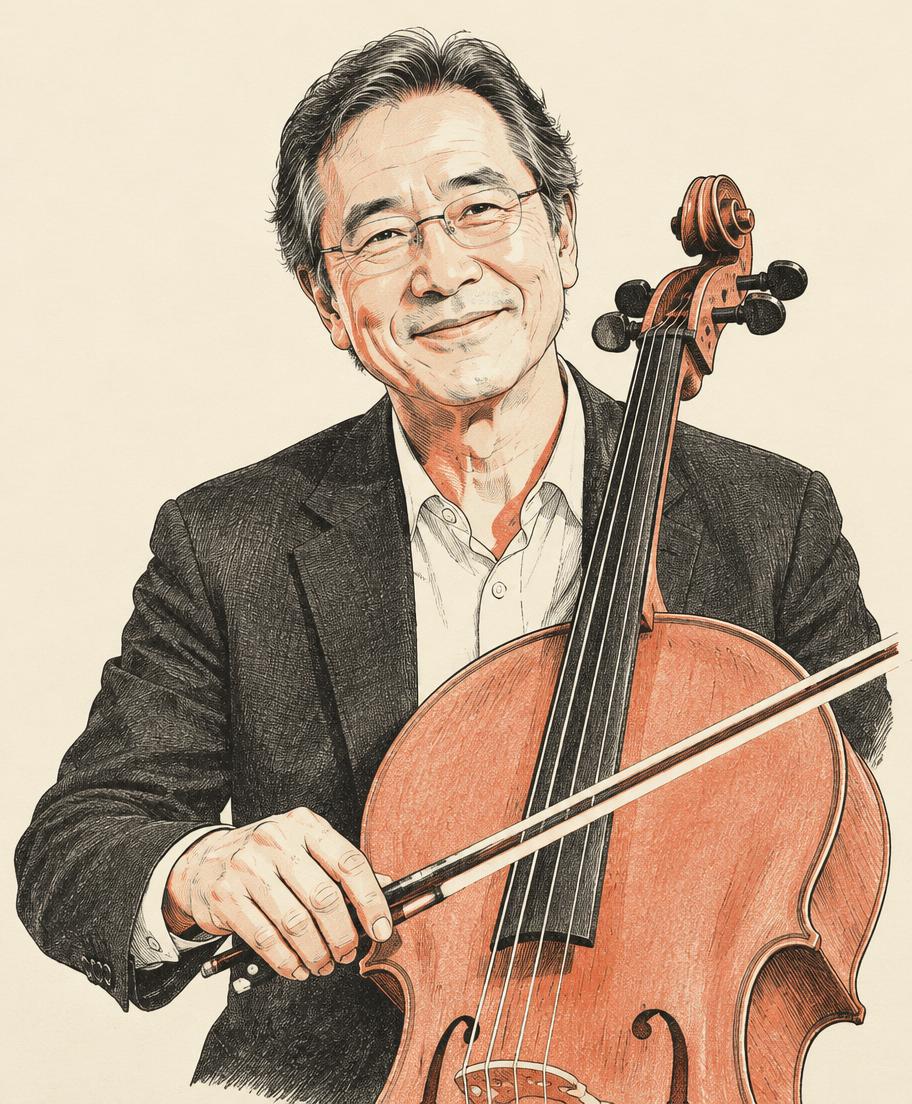
Cellist
Yo-Yo Ma
A cellist known for his recordings of the Bach cello suites and for decades of cross-cultural musical collaboration.
Read biography ↗
British singer (1949–2012)
Robin Gibb
Robin Hugh Gibb was a British singer and songwriter.
Read biography ↗