Albanian writer (1936–2024)
Ismail Kadare
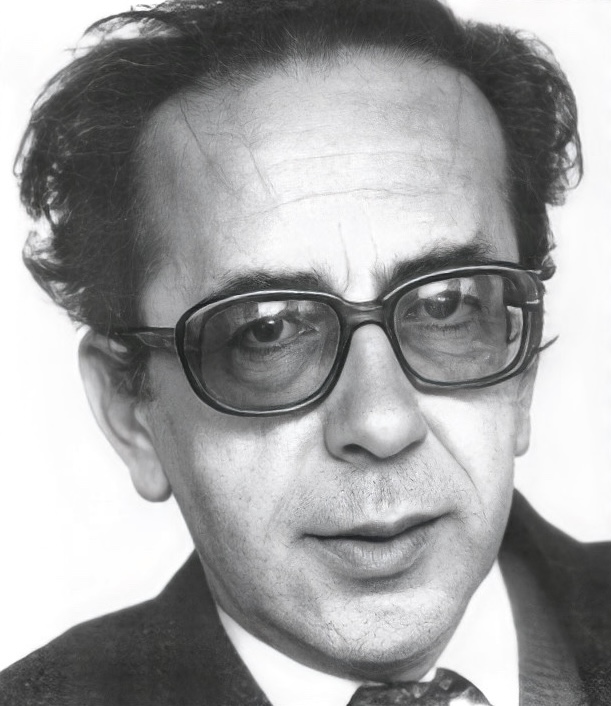
Ismail Kadare was an Albanian novelist, poet, essayist, screenwriter and playwright.
By globalcelebwiki Editorial Desk, adapted from Wikipedia · Published 29 September 2026
- Profession
- Albanian writer (1936–2024)
- Born
- 28 January 1936
- Birthplace
- Gjirokastër
- Nationality
- French
Overview
Ismail Kadare (Albanian: [ismaˈil kadaˈɾe]; 28 January 1936 – 1 July 2024) was an Albanian novelist, poet, essayist, screenwriter and playwright. He was a leading international literary figure and intellectual, focusing on poetry until the publication of his first novel, The General of the Dead Army, which made him famous internationally.
Kadare is regarded by some as one of the greatest writers and intellectuals of the 20th and 21st centuries, and as a universal voice against totalitarianism. Living in Albania during a time of strict censorship, he devised stratagems to outwit Communist censors who had banned three of his books, using devices such as parable, myth, fable, folk-tale, allegory, and legend, sprinkled with double-entendre, allusion, insinuation, satire, and coded messages. In 1990, to escape the Communist regime and its Sigurimi secret police, he defected to Paris. From the 1990s he was asked by both major political parties in Albania to become a consensual President of the country, but declined. In 1996, France made him a foreign associate of the Académie des Sciences Morales et Politiques, and in 2016, he was a Commandeur de la Légion d'Honneur recipient.
Kadare was nominated for the Nobel Prize in Literature 15 times. In 1992, he was awarded the Prix mondial Cino Del Duca; in 1998, the Herder Prize; in 2005, the inaugural Man Booker International Prize; in 2009, the Prince of Asturias Award of Arts; and in 2015, the Jerusalem Prize. He was awarded the Park Kyong-ni Prize in 2019, and the Neustadt International Prize for Literature in 2020. His nominating juror for the Neustadt Prize wrote: "Kadare is the successor of Franz Kafka. No one since Kafka has delved into the infernal mechanism of totalitarian power and its impact on the human soul in as much hypnotic depth as Kadare." His writing has also been compared to that of Nikolai Gogol, George Orwell, Gabriel García Márquez, Milan Kundera, and Balzac. His works have been published in 45 languages. The New York Times wrote that he was a national figure in Albania comparable in popularity perhaps to Mark Twain in the United States, and that "there is hardly an Albanian household without a Kadare book".
He was the husband of author Helena Kadare and the father of United Nations Ambassador and UN General Assembly Vice-president Besiana Kadare. In 2023 he was granted citizenship of Kosovo, by president Vjosa Osmani.
Early life and education
Ismail Kadare was born on 28 January 1936, in the Kingdom of Albania during the reign of King Zog I. He was born in Gjirokastër, a historic Ottoman fortress–city in the mountains, made up of tall stone houses in what is today southern Albania, a dozen miles from the border with Greece. He lived there on a crooked, narrow street known as Lunatics' Lane.
Ismail's parents were Halit Kadare, a post office employee, and Hatixhe Dobi, a homemaker, who had married in 1933 when she was 17. On his mother's side, his great-grandfather was a Bejtexhi of the Bektashi Order, known as Hoxhë Dobi. Though he was born into a Muslim family, he was an atheist.
Three years after Kadare was born, Italian Prime Minister Benito Mussolini's troops invaded Albania and ousted the king. Italian rule followed. He was nine years old when the Italian troops were withdrawn, and the communist-led People's Socialist Republic of Albania was established.
Kadare attended primary and secondary schools in Gjirokastër. He then studied Languages and Literature at the Faculty of History and Philology of the University of Tirana. In 1956, he received a teacher's diploma. He received further education at Gorky Institute of World Literature in Moscow before returning to Tirana in 1960. He lived in Tirana until moving to France in 1990.
At age 11, Kadare read William Shakespeare's play Macbeth. He recalled years later: "Because I did not yet understand that I could simply purchase it in a bookstore, I copied much of it by hand and took it home. My childhood imagination pushed me to feel like a co-author of the play."
He soon became entranced by literature. At age 12, Kadare wrote his first short stories, which were published in the Pionieri (Pioneer) journal in Tirana, a communist magazine for children. In 1954 he published his first collection of poems, Frymëzime djaloshare (Boyish inspirations). In 1957 he published a poetry collection entitled Ëndërrimet (Dreams).
At 17, Kadare won a poetry contest in Tirana, which allowed him to travel to Moscow to study at the Maxim Gorky Literature Institute. He studied literature during the Khrushchev era, doing post-graduate work from 1958 to 1960. His training had as its goal for him to become a communist writer and "engineer of human souls", to help construct a culture of the new Albania. In Moscow he met writers united under the banner of Socialist Realism—a style of art characterized by the idealized depiction of revolutionary communist values, such as the emancipation of the proletariat. Kadare also had the opportunity to read contemporary Western literature, including works by Jean Paul Sartre, Albert Camus, and Ernest Hemingway. He rejected the canons of Socialist Realism and committed himself internally to writing as opposed to dogmatism. He also cultivated contempt for the nomenklatura, an attitude which, he later wrote, was the product of his youthful arrogance rather than of considered political opposition. During his time in the Soviet Union, Kadare published a collection of poetry in Russian, and in 1959 also wrote his first novel, Qyteti pa reklama (The City Without Signs), a critique of socialist careerism in Albania.
Kadare returned home in October 1960 on Albanian orders, before Albania's breaking of political and economic ties with the USSR. He lived for the next 30 years in Tirana, in an apartment which now houses the Ismail Kadare House museum and archives. He worked as a journalist, became editor-in-chief of the literary periodical Les Lettres Albanaises (Albanian Letters; published simultaneously in Albanian and French), and then contributed to the literary review Drita for five years, while embarking on a literary career of his own.
At that time Kadare had a reputation for poetry. In 1961 he published a volume of poetry entitled Shekulli im (My Century). His work was particularly popular with Albanian youth. His future wife Helena, then a schoolgirl, wrote a fan letter to the young writer, which eventually led to their marriage in 1963.
The General of the Dead Army was Kadare's first great success outside Albania. The French translation by Isuf Vrioni, published in 1970 in Paris by publisher Albin Michel, led to Kadare's international breakthrough. In the ironic novel, an Italian general and an Italian Army priest return to Albania 20 years after World War II, to find and bring back to Italy for final burial there the bodies of Italian soldiers killed in the war. The French publishing house published the novel without Kadare's knowledge or permission, as Albania at the time was not a signatory to the Universal Copyright Convention and there was no copyright protection on the text. Once the book appeared in France, it was translated into most European languages. By 1977 it had been translated into over 20 languages, with the Albanian communist press hailing it as "one of the most successful translations of the world of the 70s".
After the success of the novel in the West in 1970, the older generation of Albanian writers and dogmatic literary critics became extremely embittered against the "darling of the West": "This novel was published by the bourgeoisie and this cannot be accepted", said a report by the Albanian secret police. Kadare's enemies in the secret police and the old guard of the Albanian Politburo referred to him as an agent of the West, which was one of the most dangerous accusations that could be made in Albania. He continued to publish in his home country and became widely promoted there, with frequent references in the Albanian press to new releases and translations of his work, being hailed as a "hero of the new Albanian literature". Kadare's work was described as "treat[ing] many problems preoccupying" Albanian society, and as "mak[ing] use of the revolution as the organizing element of his writing". He was also lauded as having a "revolutionary drive" which "keeps pace with life and fights against old ideas".
In 1971 Kadare published the novel Chronicle in Stone, in which the narrator is a young Albanian boy whose old stone city hometown is caught up in World War II, and successively occupied by Greek, Italian, and German forces. The novel has been described as magic realism. John Updike wrote in The New Yorker, that it was "a thoroughly enchanting novel — sophisticated and accomplished in its poetic prose and narrative deftness, yet drawing resonance from its roots in one of Europe's most primitive societies". The book was heavily publicized in the Albanian press, both domestically and in magazines aimed at promoting Albanian socialism and culture to an international audience, such as New Albania.
Throughout the 1970s, Kadare began to work more with myths, legends, and the distant past, often drawing allusions between the Ottoman Empire and present-day Albania. At this time, he also worked as an editor and contributor to New Albania, an arts and culture magazine which sought to promote Albanian socialism to a worldwide audience.
In 1970, Kadare published Kështjella (The Castle or The Siege) which was celebrated in both Albania and Western Europe, seeing a translation into French in 1972. It detailed the war between Albanians and Ottomans during the time of Skanderbeg.
In October 1990, after he criticized the Albanian government, urged democratization of isolationist Albania – Europe's last Communist-ruled country, then with a population of 3.3 million – and facing the ire of its authorities and threats from the Sigurimi secret police, Kadare sought and received political asylum in France. He defected to Paris, where he thereafter primarily lived, except for a time in Tirana. He decided to defect because he had become disillusioned with the government of Ramiz Alia, legal opposition was not allowed in Albania, and he was convinced "that more than any action [he] could take in Albania, [his] defection would help the democratization of [his] country". The New York Times wrote that he was a national figure in Albania comparable in popularity perhaps to Mark Twain in the United States, and that "there is hardly an Albanian household without a Kadare book, and even foreign visitors are presented with volumes of his verse as souvenirs".
The official Albanian press agency reacted by issuing a statement on, what they called, "this ugly act", saying Kadare had placed himself "in the services of the enemies of Albania". Some intellectuals, at great personal risk, publicly supported Kadare, whom the authorities had declared a traitor. Poet Dritero Agolli, who headed the Albanian Writers' Union, said: "I continue to have great respect for his work." Despite this, his books were not fully banned by the Communist authorities, and he remained a popular and celebrated author.
After receiving political asylum and settling in France, Kadare continued to write. His exile in Paris was fruitful and enabled him to succeed further, writing both in Albanian and in French.
His 1992 novel The Pyramid is a political allegory set in Egypt in the 26th century BC, focusing on intrigues behind the construction of the Great Pyramid of Cheops. In it, Kadare mocked any dictator's love for hierarchy and useless monuments. In some of Kadare's novels, comprising the so-called "Ottoman Cycle", the Ottoman Empire is used as the archetype of a totalitarian state. In 1993, the novel was awarded the Prix Méditerranée Étranger in France.
In 1994 he began to work on the first bilingual volume of his work with the French publishing house Fayard. The same year, at the request of the French publisher Flammarion, he wrote the essay "La légende des légendes" ("The legend of legends"), which was immediately translated to French and published in 1995.
Later life and death
Kadare married Albanian author Helena Gushi and had two daughters. Besiana Kadare is the Albanian ambassador to the United Nations, its ambassador to Cuba and a vice president of the United Nations General Assembly for its 75th session.
Kadare returned to Albania in his later years. After suffering from ill health for several years, he died from a heart attack at a Tirana hospital, on 1 July 2024, at the age of 88. He was granted a state funeral on 3 July at the National Theatre of Opera and Ballet in Tirana, but was buried in a private ceremony shortly afterwards. Two days of mourning were declared in Albania, while one day of mourning was declared in neighboring Kosovo.
Awards
In 1992, Kadare was awarded the Prix mondial Cino Del Duca international literary award in France. In 1996 he was made a lifetime member of the Academy of Moral and Political Sciences of France (Académie des Sciences Morales et Politiques), one of the five academies that make up the Institut de France learned society, in the chair vacated by the recently deceased philosopher Karl Popper. In 1998 he was awarded the international Herder Prize in Austria. In 2003 he received the Ovid Prize international award in Romania, and the Presidential Gold Medal of the League of Prizren from the President of Kosovo.
In 2005 Kadare received the inaugural Man Booker International Prize in the United Kingdom for the full body of his work. In his acceptance speech, he said: "We propped each other up as we tried to write literature as if that regime did not exist. Now and again we pulled it off. At other times we didn't."
In 2008 Kadare received the Flaiano Prize international award in Italy. In 2009, Kadare was awarded the Prince of Asturias Award for Literature in Spain, for his literary works.
In 2015, Kadare was awarded the bi-annual Jerusalem Prize in Israel. Speaking of the relationship between Albania and the Jews, he said: "I come from one of the few countries in the world which helped the Jews during World War II. I believe the number of Jews there grew from 200 at the start of the war to 2,000 by the end. The population always defended the Jews, whether during the kingdom, under Communism, or after it." He noted that during the Holocaust Albanians refused to hand Jews over to the Nazis, and many Albanians went to great lengths to protect Jewish refugees who had fled to Albania. He also noted that Albania and Israel share in common the experience of fighting for survival in a sometimes hostile neighbourhood.
In 2016, Kadare became the first Albanian Commandeur de la Légion d'Honneur recipient, with the award being given to him by French president François Hollande. That year he was also awarded the Albanian National Flag Decoration, Albania's highest decoration, by President Bujar Nishani. He won the 2018 International Nonino Prize in Italy.
Legacy
Kadare was considered to be one of the greatest writers in the world. The London newspaper The Independent said of Kadare: "He has been compared to Gogol, Kafka and Orwell. But Kadare's is an original voice, universal but deeply rooted in his own soil." The New York Times said his fiction has been compared with that of Gabriel García Márquez, as well as Milan Kundera, and The Christian Science Monitor wrote he has also been compared with Dostoevsky and Isak Dinesen. Translator and biographer David Bellos wrote: "In some ways, he's like Balzac." Critic Richard Eder called him "a supreme fictional interpreter of the psychology and physiognomy of oppression".
Kadare's literary works were conceived in the bedrock of tiny Albanian literature, almost unknown before in Europe or the rest of the world. With Kadare it became known, read, and appreciated. For the first time in its history, through Kadare, Albanian literature has been integrated into wider European and world literature.
Kadare's oeuvre is a literature of resistance. He managed to write normal literature in an abnormal country – a Communist dictatorship. He had to struggle to get his literary works published, going against state policy. At times even putting his life at risk. Dissent was not allowed in Albania. Kadare noted: "That was not possible. You risked being shot. Not condemned, but shot for a word against the regime. A single word."
Under Hoxha, at least 100,000 people were imprisoned for political reasons or for a word they said or wrote; 5,000, including many writers, were executed.
Kadare devised numerous subtle stratagems to outwit Communist censors. He used old devices such as parable, myth, fable, folk-tale, allegory, and legend, and sprinkled them with double-entendre, allusion, insinuation, satire, and coded messages.
Works
Kadare's works have been published in 45 languages. By 2020 most of his approximately 80 novels, plays, screenplays, poetry, essays, and story collections had been translated into different languages.
Among Kadare's best-known books are The General of the Dead Army (1963), The Siege (1970), The Ghost Rider (1980), Broken April (1980; blood feuds in the highlands of north Albania), The Palace of Dreams (1981), The Pyramid (1992), and The Successor (2003; regarding the mysterious death of Hoxha's handpicked successor, Mehmet Shehu).
Some Kadare books were translated into English by David Bellos, from French translations rather than the Albanian originals.
The following Kadare novels have been translated into English:
Kadare's complete works (other than essays, poetry, and short stories) were published by Fayard, simultaneously in French and Albanian, between 1993 and 2004. His original Albanian-language works have been published exclusively by Onufri Publishing House since 1996, as single works or entire sets. Published in 2009, the set of complete works constituted 20 volumes.
The dates of publication given here are those of the first publication in Albanian, unless stated otherwise.
Sources and references
Spotted something wrong? Report a correction.
Related profiles
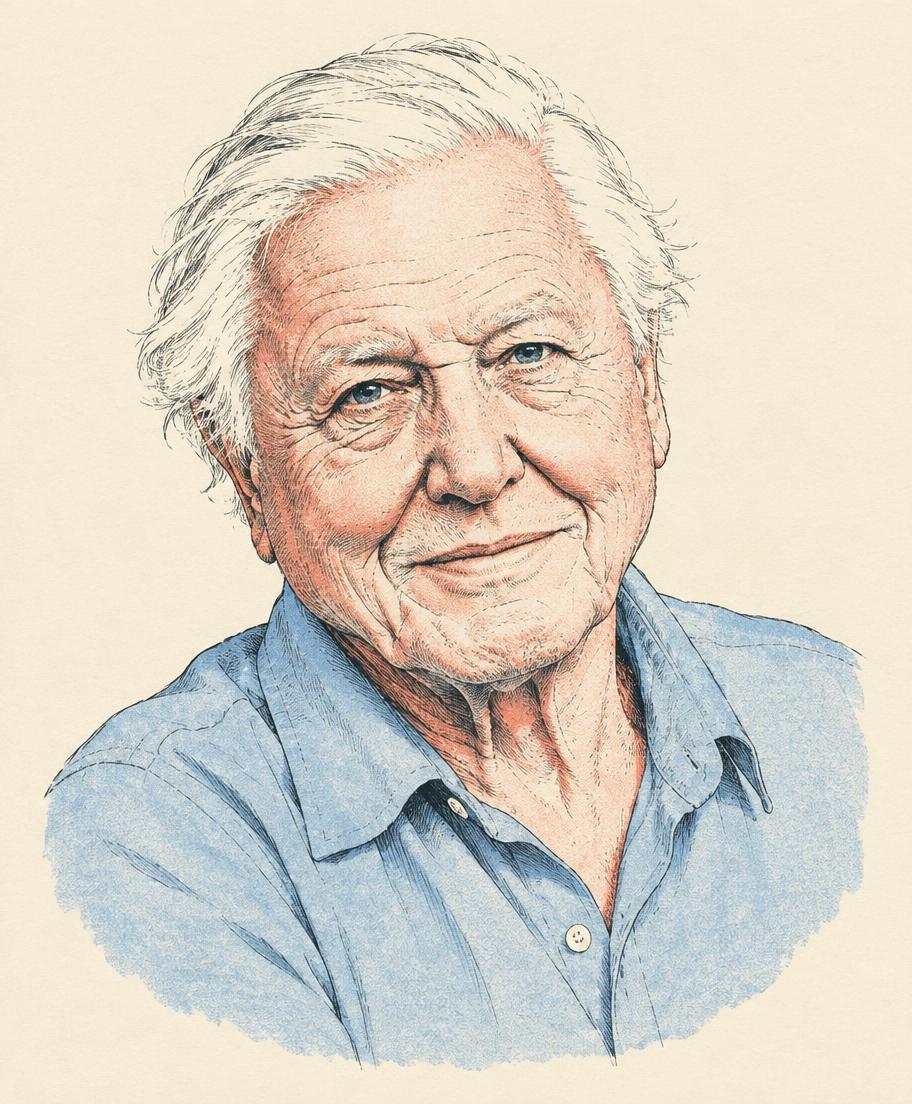
Broadcaster and natural historian
David Attenborough
The broadcaster whose natural history series have shaped how audiences understand life on Earth.
Read biography ↗
Animator and film director
Hayao Miyazaki
The animator and co-founder of Studio Ghibli whose hand-drawn films reached audiences worldwide.
Read biography ↗
Pope
Benedict I
Pope Benedict I was the bishop of Rome from 2 June 575 to his death on 30 July 579.
Read biography ↗