Czech humorist, satirist, writer and anarchist (1883-1923)
Jaroslav Hašek
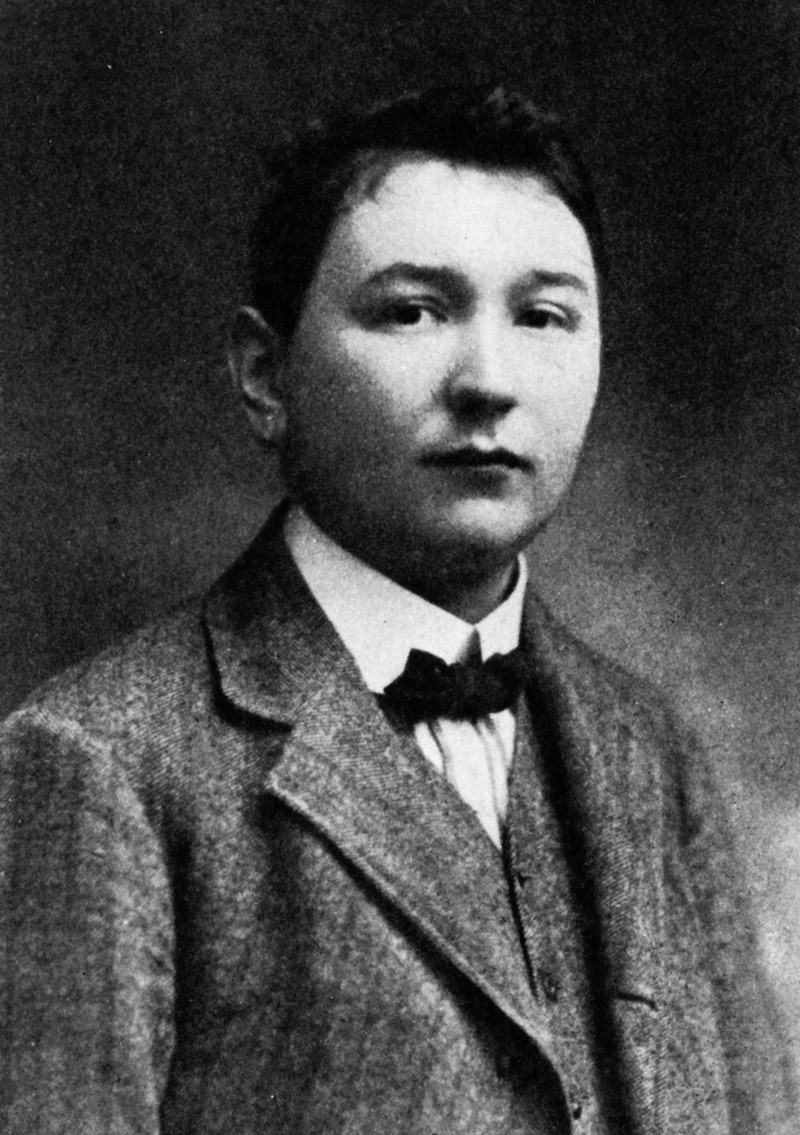
Jaroslav Hašek was a Czech writer, humorist, satirist, journalist, bohemian, first anarchist and then communist, and commissar of the Red Army against the Czechoslovak Legion.
By globalcelebwiki Editorial Desk, adapted from Wikipedia · Published 29 September 2026
- Profession
- Czech humorist, satirist, writer and anarchist (1883-1923)
- Born
- 30 April 1883
- Birthplace
- Prague
- Nationality
- Czechoslovak
Overview
Jaroslav Hašek (Czech: [ˈjaroslaf ˈɦaʃɛk]; 30 April 1883 – 3 January 1923) was a Czech writer, humorist, satirist, journalist, bohemian, first anarchist and then communist, and commissar of the Red Army against the Czechoslovak Legion. He is best known for his novel The Fateful Adventures of the Good Soldier Švejk During the World War, an unfinished novel about a soldier in World War I and a satire on the ineptitude of authority figures. The novel has been translated into about 60 languages, making it the most translated novel in Czech literature.
Life
Jaroslav Hašek's paternal ancestors were farmers rooted in Mydlovary in South Bohemia. Hašek's grandfather from his father's side, František Hašek, was a member of the Czech Landtag and later also the so-called Kromeriz convention. He was also involved in barricade fights in Prague in 1848. According to some rumors, he worked with Mikhail Bakunin during his stay in Bohemia in 1849.
The family of his mother, Katherine, née Jarešová, was also from South Bohemia. His grandfather Antonín Jareš and his great-grandfather Matěj Jareš were pond-keepers of the Schwarzenberg princes in Krč village No. 32.
His father, Josef Hašek, a deeply religious mathematics teacher, died early of alcohol intoxication. He put an end to himself due to pain caused by cancer. Poverty then forced his mother Kateřina with three children to move more than fifteen times.
At the age of four, the doctor diagnosed a heart defect and "stunted thyroid gland" in little Jaroslav. Because of this, he spent a lot of time in the country, with his grandfather from his mother's side, in the so-called Ražice dam-house, especially with his younger brother Bohuslav. In his childhood, Jaroslav was jealous of Bohuslav and even tried several times to hurt him as a baby. Later they had an extremely strong relationship and traveled together a lot on foot. Bohuslav drank himself to death one year after Jaroslav's death.
Hašek's childhood was ordinary, boyish, imbued with adventures with peers and reading Karl May and Jules Verne. However, this changed when Hašek was eleven: the retired sailor Němeček moved to Lipová Street, where the Hašeks lived at that time. Němeček wrapped the teenage Hašek around his little finger, pilfered the money that Hašek had stolen at home, and began to lead him into bars, including the infamous Jedová chýše (Poison Hut) on Apolinářská Street, where he taught him to drink alcohol. In addition, he intentionally had sex with his girlfriend in front of the boy. It was traumatic for Hašek. He later remembered these experiences with disgust and remorse. It probably influenced Hašek's relationship with women. In his discussions with his comrades in the Russian legions, it is said that he said the following about women:"Can there be anything worse in the world than such a human pig? I didn't know anything about these things, and yet I felt such disgust and revulsion that it was enough to poison my whole life. I could never look at the woman again, and I have also been afraid of women since then."Some theories about Hašek's homosexuality, spread mainly by the literary historian Jindřich Chalupecký (the essay "Podivný Hašek" in the book Expresionisté), have also originated here, as well as in the testimony of Hašek's friend Rudolf Šimanovský.
Contradictions and points of interest
In the Czech and Slovak public imagination Jaroslav Hašek is fixed as a bohemian, perhaps even the prototypical bohemian of the early twentieth century. In fact, this is largely a legend and represents Hašek's self-stylization. An internally disciplined author, Hašek was very productive. From his works it is also apparent that he had an extensive (perhaps a little unsystematic) humanistic education.
It is most instructive to consider Hašek's work in Russia during 1916 to 1920. He has never been and still is not perceived as a mere bohemian or humorist writer in Russia, but, on the contrary, as a very responsible Bolshevik army official and a respected intellectual. He was also a relatively skilled soldier. In 1918 he distinguished himself as a courageous commander of the Czechoslovak Red Army troops in the defense of Samara. Samara was at that time threatened from the direction of Lipyagi station by the Czechoslovak legions, which were fighting alongside the White troops to restore the imperial regime, although the legionnaires tried to maintain essential neutrality and fight against the Bolsheviks only when inevitable. On 8 June 1918, Samara was conquered by the legions. It is possible that at this time, Jaroslav Hašek met with Czech "brothers" and may have encouraged them to leave the White-Russian party. After the fall of Samara, he was in hiding in a territory controlled by White troops (and Czechoslovak legions) for several months.
It is possible that in specific revolutionary Russian conditions, Hašek was given the opportunity to assert those aspects of his character that could not manifest themselves in stabilized and essentially small-town Czech conditions. It was also important that Hašek was banned by his Party organization from drinking alcohol. He was basically sent to Czechoslovakia with the aim of organizing the communist movement, which also supports the thesis that he had to be perceived as a responsible person and a capable organizer in Soviet Russia.
A subject of debate and speculation is how Hašek behaved in the Red Army, especially at a time when he was a Commissioner – and deputy commander – of Bugulma.
Hašek had close contact with a number of revolutionaries including Leon Trotsky. Hašek's closest collaborators in Russia – Nikolai Ivanovich Kochkurov ("Artem Vesely") or Vladimir Yakovlevich Zazubrin – later became victims of Stalin's repression.
Works
Initially Hašek wrote mainly travel stories, features and humoresques, which he published in magazines. He wrote most of his works in Prague pubs.
His prose was based on his own real experiences, confusing investigation of his actual life, because it is not always clear what is true and what is only poetic hyperbole.
Hašek hated pretense, sentimentality, settled life, to which he ironically reacted in satiric verse. Another characteristic feature of his work is resistance to moral and literary conventions.
In his life, he wrote about 1,200 short stories. Most of his short prose is scattered throughout various magazines and newspapers. Over the years nearly all the stories have been collected and printed in book's form. Some texts may however have been lost, for example, the story "The History of the Ox." There is also a number of texts of which Hašek's authorship is likely, but not confirmed.
Words flowed easily from his pen, but this does not mean that he was not creative. František Langer stated that "he was attracted, controlled, absorbed by writing, driven by his almost passionate passion for his writing."
Tributes
On 30 April 2013, Google celebrated Jaroslav Hasek's 130th Birthday with a doodle.
Sources and references
Spotted something wrong? Report a correction.
Related profiles
Broadcaster and natural historian
David Attenborough
The broadcaster whose natural history series have shaped how audiences understand life on Earth.
Read biography ↗
Animator and film director
Hayao Miyazaki
The animator and co-founder of Studio Ghibli whose hand-drawn films reached audiences worldwide.
Read biography ↗
Pope
Benedict I
Pope Benedict I was the bishop of Rome from 2 June 575 to his death on 30 July 579.
Read biography ↗