French playwright (1910–1987)
Jean Anouilh
Jean Marie Lucien Pierre Anouilh was a French dramatist and screenwriter whose career spanned five decades.
By globalcelebwiki Editorial Desk, adapted from Wikipedia · Published 29 September 2026
- Profession
- French playwright (1910–1987)
- Born
- 23 June 1910
- Birthplace
- Bordeaux
- Nationality
- French
Overview
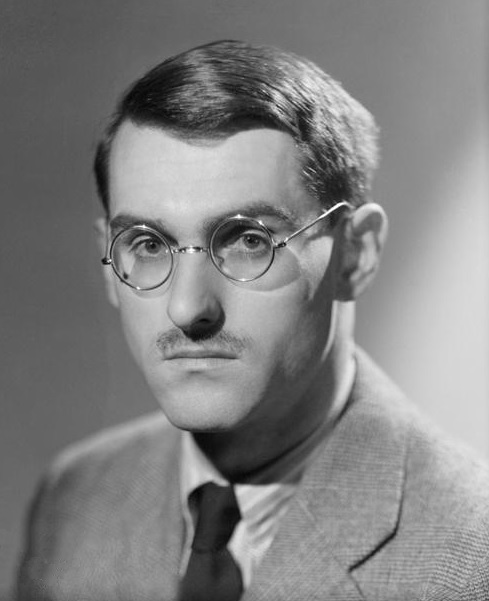
Jean Marie Lucien Pierre Anouilh (; French: [ʒɑ̃ anuj]; 23 June 1910 – 3 October 1987) was a French dramatist and screenwriter whose career spanned five decades. Though his work ranged from high drama to absurdist farce, Anouilh is best known for his 1944 production of Sophocles's Antigone, which, though performed without objection by censors, was nevertheless seen as an attack on Marshal Pétain's Vichy government. His plays are less experimental than those of his contemporaries, having clearly organized plot and eloquent dialogue. One of France's most prolific writers after World War II, much of Anouilh's work deals with themes of maintaining integrity in a world of moral compromise.
Early life
Anouilh was born in Cérisole, a small village on the outskirts of Bordeaux, France, and had Basque ancestry. His father, François Anouilh, was a tailor, and Anouilh maintained that he inherited from him a pride in conscientious craftmanship. He may owe his artistic bent to his mother, Marie-Magdeleine, a violinist who supplemented the family's meager income by playing summer seasons in the casino orchestra in the nearby seaside resort of Arcachon. Marie-Magdeleine worked the night shifts in the music-hall orchestras and sometimes accompanied stage presentations, affording Anouilh ample opportunity to absorb the dramatic performances from backstage. He often attended rehearsals and solicited the resident authors to let him read scripts until bedtime. He first tried his hand at playwriting here at the age of 12, though his earliest works do not survive.
In 1918 the family moved to Paris where the young Anouilh received his secondary education at the Lycée Chaptal. Jean-Louis Barrault, later a major French director, was a pupil there at the same time and recalls Anouilh as an intense, rather dandified figure who hardly noticed a boy some two years younger than himself. He earned acceptance into the law school at the Sorbonne, but, unable to support himself financially, he left after just 18 months to seek work as a copywriter at the advertising agency Publicité Damour. He liked the work and spoke more than once with wry approval of the lessons in the classical virtues of brevity and precision of language he learned while he drafted advertising copy.
Anouilh's financial troubles continued after he was called up to military service in 1929. Supported by only his meager conscription salary, Anouilh married the actress Monelle Valentin in 1931. Though Valentin starred in many of his plays, Anouilh's daughter Caroline (from his second marriage), says the marriage was not a happy one. Anouilh's youngest daughter Colombe even says there was never an official marriage between Anouilh and Valentin. She allegedly had multiple extramarital affairs, which caused Anouilh much pain and suffering. The infidelity weighed heavily on the dramatist as a result of the uncertainty about his own parentage. According to Caroline, Anouilh had learned that his mother had had a lover at the theatre in Arcachon who was actually his biological father. In spite of this, Anouilh and Valentin had a daughter, Catherine, in 1934 who followed the pair into theatre work at an early age. Anouilh's growing family placed further strain on his already limited finances. Determined to break into writing full time, he began to write comic scenes for the cinema to supplement their income.
Theatre work
At the age of 25 Anouilh found work as a secretary to the French actor and director Louis Jouvet at the Comédie des Champs-Elysées. Though Anouilh's boss had happily lent him some of the set furniture left over from the production of Jean Giraudoux's play Siegfried to furnish his modest home, the director was not interested in encouraging his assistant's attempts at playwriting. Jouvet had risen to fame in the early 1930s through his collaborations with the playwright Giraudoux, and together the two worked to shift focus from the authorial voice of the director (which had dominated the French stage since the early twentieth century) back to the playwright and his text.
Giraudoux was an inspiration to Anouilh, and with the encouragement of the acclaimed playwright he began writing again in 1929. Before the end of the year he made his theatrical debut with Humulus le muet, a collaborative project with Jean Aurenche. It was followed by his first solo projects, L'Hermine (The Ermine) in 1932 and Mandarine in 1933, both produced by Aurélien Lugné-Poe, an innovative actor and stage manager who was then head of the Théâtre de l'Œuvre. Ruled by the philosophy, "the word creates the decor," Lugné-Poe let Anouilh's lyrical prose shine in front of a backdrop of simple compositions of line and color that created a unity of style and mood.
The plays were not great successes, closing after 37 and 13 performances, respectively, but Anouilh persevered, following up with a string of productions, most notably Y'avait un prisonnier (1935). These works, most in collaboration with the experimental Russian director Georges Pitoëff, were considered promising despite their lack of commercial profits, and the duo continued to work together until they had their first major success in 1937 with Le voyageur sans bagage (Traveller Without Luggage). In subsequent years there was rarely a season in Paris that did not prominently feature a new Anouilh play, and many of these were also being exported to England and America. After 1938, however, much of Anouilh's later work was directed by the prominent Paris scenic designer André Barsacq, who had taken over as director of the Théâtre de l'Atelier after Charles Dullin's retirement in 1940. Barsacq was a champion for Anouilh, and their affiliation was a major factor in the playwright's continued success after the war.
Playwright
In the 1940s, Anouilh turned from contemporary tales to more mythical, classic, and historic subjects. With protagonists who asserted their independence from the fated past, themes during this period are more closely related to the existential concerns of such writers as Jean-Paul Sartre and Albert Camus. The most famous play of this group is Antigone, which "established Anouilh as a leading dramatist, not only because of the power with which he drew the classic confrontation between the uncompromising Antigone and the politically expedient Creon, but also because French theatre-goers under the occupation read the play as a contemporary political parable." His post-war plays dealt with similar concerns and included Roméo et Jeannette, Médée (Medea), and Anouilh's Joan of Arc story L'Alouette (The Lark), which, in its distinct optimism, rivalled the commercial success of Antigone.
Anouilh himself grouped his plays of this period on the basis of their dominant tone, publishing his later works in collected volumes to reflect what he felt "represented the phases of his evolution and loosely resembled the distinction between comedy and tragedy." Pièces noires or "Black plays" were tragedies or realistic dramas and included Antigone, Jézabel, and La Sauvage (The Restless Heart). This category typically featured "young, idealistic, and uncompromising protagonists [who] are able to maintain their integrity only by choosing death." By contrast, Anouilh's pièces roses or "pink plays" were comedies where fantasy dominated with an atmosphere similar to that of fairy tales. In these plays such as Le Bal des voleurs (Carnival of Thieves), Le Rendez-vous de Senlis (Dinner with the Family) and Léocadia (Time Remembered), the focus is on "the burden of the environment and especially of the past on a protagonist seeking a happier, freer existence."
Most of Anouilh's plays of the late 1940s and into the 1950s become darker and distinctly cruel and, in contrast with his earlier works, begin to feature middle-aged characters who must view life more practically than Anouilh's former idealistic youths. The playwright divided the works of this period into pièces brillantes ("brilliant plays") and pièces grinçantes ("grating plays"). The first group includes works such as L'Invitation au château (Ring Round the Moon) and Colombe, and are typified by aristocratic settings and witty banter. The grating plays like La Valse des toréadors (Waltz of the Toreadors) and Le Réactionnaire amoureux (The Fighting Cock) are more bitterly funny, trading clever word play for a darker tone of disillusionment.
Another category Anouilh specifies are his pièces costumées ("costume plays") which include The Lark, La Foire d'Empoigne (Catch as Catch Can), and Becket, an international success, depicting the historical martyr Thomas Becket, the Archbishop of Canterbury who sought to defend the church against the monarch (and his friend), Henry II of England, who had appointed him to his see. So classified because they share historical "costumed" settings, Anouilh also specifies that these plays must also prominently feature an enlightened protagonist seeking "a moral path in a world of corruption and manipulation."
Anouilh's final period begins with La Grotte (The Cavern), in which he comments on his own progress as a writer and a theatre artist. The central character is a playwright suffering from writer's block who in his frustration recalls the foibles of Luigi Pirandello's Six Characters in Search of an Author. Anouilh's work had always contained hints of metatheatricality, or commentary on the business of theatre within the world of the play, but in his late works these structures became more fully developed as he begins to write primarily about characters who are dramatists or theatre directors. There is also a pronounced link, during this time, of Anouilh's emphasis of theatre and the family, displaying intimate relationships that are "more profound and more important than the traditional heightened action of 'theatre'". Antoine, the playwright-protagonist of Cher Antoine; ou, L'Amour raté (Dear Antoine; or, The Love That Failed), asserts that the world must take notice of these pièces secrètes (secret dramas) and Anouilh scholars have proposed this name, pièces secrètes, to classify the collected works of his latest period."
Awards and recognition
In 1970 his work was recognized with the Prix mondial Cino Del Duca. In 2012, the Nobel Records were opened after 50 years and it was revealed that Anouilh was among a shortlist of authors considered for the 1962 Nobel Prize in Literature, along with John Steinbeck (winner), Robert Graves, Lawrence Durrell and Karen Blixen. According to a report in The Guardian, "It is not clear why Anouilh was passed over, but the French poet Saint-John Perse had taken the Nobel in 1960, meaning that France was well represented on the roster of winners, and Svenska Dagbladet reveals that Jean-Paul Sartre, who won the prize in 1964, was starting to be seriously considered as a candidate."
In 1980, Anouilh was the first recipient of the Grand Prix du Théâtre de l'Académie française established that year.
L'Hermine. Théâtre de l'Œuvre: 26 April 1932. Directed by Paulette Pax. With Pierre Fresnay, Paulette Pax, Marie Reinhardt.
Mandarine. Théâtre de l'Athénée: 17 January 1933. Directed by Gérard Batbedat. With Paul Lalloz, Milly Mathis, Madeleine Ozeray.
Y'avait un prisonnier. Théâtre des Ambassadeurs: 21 March 1935. Presented by Marie Bell. With Aimé Clariond, Marguerite Pierry, André Alerme.
Le Voyageur sans bagage. Théâtre des Mathurins: 16 February 1937. Directed by Georges Pitoëff. With Georges Pitoëff, Marthe Mellot, Louis Salou, Madeleine Milhaud.
La Sauvage. Théâtre des Mathurins: 10 January 1938. Directed by Georges Pitoëff. With Ludmilla Pitoëff, Georges Pitoëff, Louis Salou, Madeleine Milhaud.
Identity Unknown (Le Voyageur sans bagage). Duke of York's Theatre, London: 5 December 1937. Presented by the London International Theatre Club. With Bernard Lee, Mary Merrall, Alan Napier, Catherine Lacey.
Antigone. New Theatre, London: 10 February 1949. Directed by Laurence Olivier. With Laurence Olivier, Vivien Leigh, George Relph, Terence Morgan.
Fading Mansion (Roméo et Jeanette). Duchess Theatre, London: 31 August 1949. Directed by Anthony Bushell. With Siobhan McKenna, George Relph, Michael Gough.
Ring Round the Moon (L'Invitation au château). Globe Theatre, London: 26 January 1950. Directed by Peter Brook. With Paul Scofield, Claire Bloom, Margaret Rutherford, Cecil Trouncer, Mona Washbourne.
Point of Departure (Eurydice). Duke of York's Theatre, London: 26 December 1950. Directed by Peter Ashmore. With Dirk Bogarde (later: Peter Finch), Mai Zetterling, Hugh Griffith, Stephen Murray, Eric Pohlmann.
Antigone. Cort Theatre, New York City: 18 February 1946. Directed by Guthrie McClintic. With Katharine Cornell, Cedric Hardwicke.
Cry of the Peacock (Ardèle ou la Marguerite). Mansfield Theatre, New York City: 11 April 1950. Directed by Martin Ritt. With Raymond Lovell, Oscar Karlweis, Marta Linden.
Ring Round the Moon (L'Invitation au château). Martin Beck Theatre, New York City: 23 November 1950. Directed by Gilbert Miller. With Denholm Elliott, Stella Andrew, Lucile Watson, Oscar Karlweis, Brenda Forbes.
Legend of Lovers (Eurydice). Plymouth Theatre, New York City: 26 December 1951. Directed by Peter Ashmore. With Richard Burton, Dorothy McGuire, Hugh Griffith, Noel Willman.
Mademoiselle Colombe. Longacre Theatre, New York City: 6 January 1954. Directed by Harold Clurman. With Edna Best, Julie Harris, Eli Wallach.
Les Dégourdis de la onzième by Jean Anouilh et al. 1936.
Vous n'avez rien à déclarer? by Jean Anouilh et al. 1937.
La Citadelle du silence by Jean Anouilh et al. Impérial Film, 1937.
Les Otages by Jean Anouilh et al. Nero-Film AG, 1938.
Calvacade d'amour by Jean Anouilh and Jean Aurenche. Pressburger Films, 1940.
Catch as Catch Can (aka) 'The Rehearsal', or 'Le Balcon' ('The Balcony'), Wednesday Play, 1964 (30th. Sept.). Kenneth Williams as Napoleon.
The Lark, translated from L'Alouette. BBC Saturday-Night Theatre, 1956.
Histoire du chevalier des Grieux et de Manon Lescaut. Hungarian TV/ Télécip, 1978.
Le Diable amoureux by Jean Anouilh et al. Bayerischer Rundfunk/France2/ Radiotelevisão Portuguesa/Telmondis/Westdeutscher Rundfunk, 1991.
Y'avait un prisonnier (Paris: L'Illustration, 1935).
Le Voyageur sans bagage (Paris: L'Illustration, 1937); translated by John Whiting as Traveler without Luggage (London: Methuen, 1959).
Les Bal des voleurs (Paris: Fayard, 1938).
Antigone (Paris: Didier, 1942); translated by Lewis Galantière as Antigone (New York: Random House, 1946).
Pièces roses (Paris: Calmann-Lévy, 1942) – comprises Le Bal des voleurs, Le Rendez-vous de Senlis, and Léocadia; Le Bal des voleurs translated by Lucienne Hill as Thieves' Carnival (London: Methuen, 1952); Le Rendez-vous de Senlis translated by Edwin O. Marsh as Dinner with the Family (London: Methuen, 1958); Léocadia translated by Patricia Moyes as Time Remembered (London: S. French, 1954).
Jean Anouilh ... Plays, translated by Lewis Galantière et al., 3 volumes (New York: Hill & Wang, 1958–1967).
Collected Plays, 2 volumes translated by Lucienne Hill et al. (London: Methuen, 1966, 1967).
Five Plays by Jean Anouilh, introduction by Ned Chaillet translated by Timberlake Wertenbaker et al., (London: Methuen, 1987).
Anouilh Plays: Two, introduction by Ned Chaillet translated by Jeremy Sams et al., (London: Methuen, 1997).
William Shakespeare, Trois comédies: Comme il vous plaira, La Nuit des rois, Le Conte d'hiver, [Three Comedies: As You like It, Twelfth Night, and The Winter's Tale] translated by Anouilh and Claude Vincent (Paris: La Table Ronde, 1952).
Graham Greene, L'Amant complaisant, translated by Anouilh and Nicole Anouilh (Paris: Laffont, 1962).
Oscar Wilde, Il est important d'être aimé, [The Importance of Being Earnest] translated by Anouilh and Nicole Anouilh (Paris: Papiers, 1985).
Michel-Marie Poulain, by Anouilh, Pierre Imbourg, and André Warnod, preface by Michel Mourre (Paris: Braun, 1953).
Le Loup, ballet scenario by Anouilh and Georges Neveux, music by Henri Dutilleux (Paris: Ricordi, 1953).
Sources and references
Spotted something wrong? Report a correction.
Related profiles
Broadcaster and natural historian
David Attenborough
The broadcaster whose natural history series have shaped how audiences understand life on Earth.
Read biography ↗
Animator and film director
Hayao Miyazaki
The animator and co-founder of Studio Ghibli whose hand-drawn films reached audiences worldwide.
Read biography ↗
Pope
Benedict I
Pope Benedict I was the bishop of Rome from 2 June 575 to his death on 30 July 579.
Read biography ↗