French physicist (1870–1942)
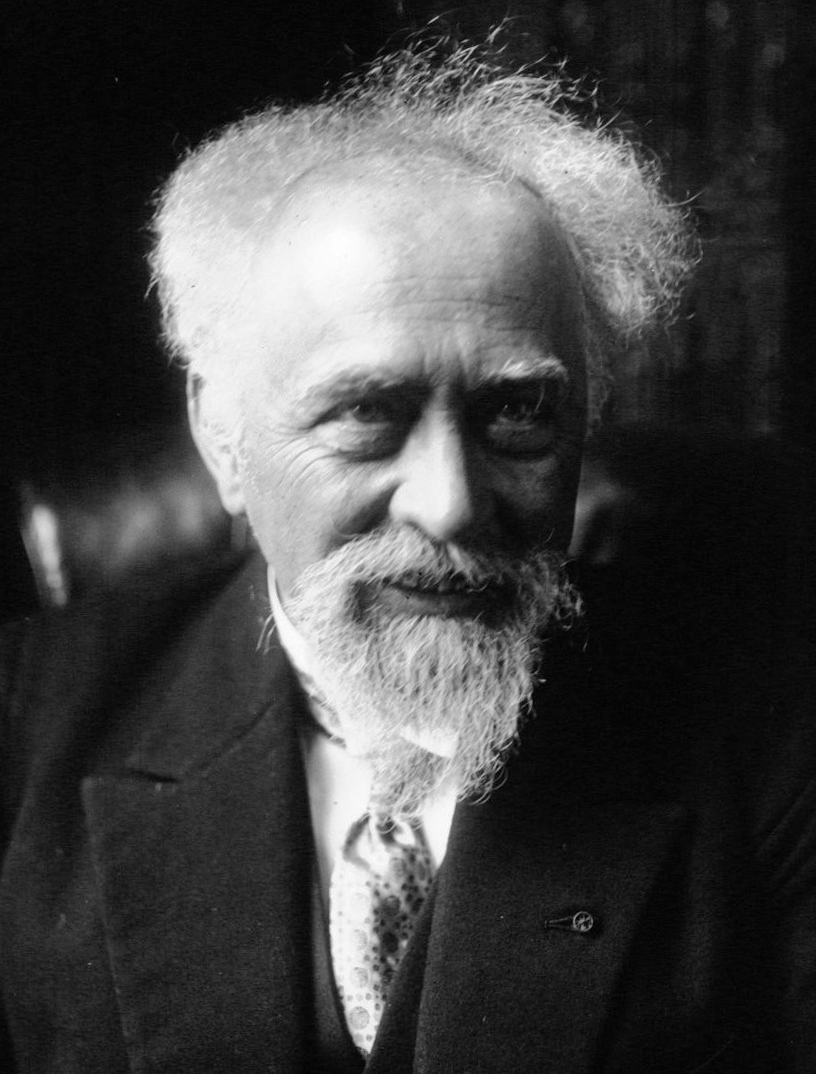
Jean-Baptiste Perrin
Jean Baptiste Perrin was a French physicist who, in his studies of the Brownian motion of minute particles suspended in liquids, verified Albert Einstein's explanation of this phenomenon and thereby confirmed the atomic nature of matter.
By globalcelebwiki Editorial Desk, adapted from Wikipedia · Published 29 September 2026
- Profession
- French physicist (1870–1942)
- Born
- 30 September 1870
- Birthplace
- Lille
- Nationality
- French
Overview
Jean Baptiste Perrin (French: [ʒɑ̃ batist pɛʁɛ̃]; 30 September 1870 – 17 April 1942) was a French physicist who, in his studies of the Brownian motion of minute particles suspended in liquids (sedimentation equilibrium), verified Albert Einstein's explanation of this phenomenon and thereby confirmed the atomic nature of matter. For this work, he was awarded the Nobel Prize in Physics in 1926.
Education and career
Jean Baptiste Perrin was born on 30 September 1870 in Lille, France. Perrin attended the École normale supérieure, where he became an assistant in 1894. In 1897, he received his D.Sc. from the University of Paris for a thesis on cathode rays and X-rays. In the same year, he was appointed a lecturer in physical chemistry at the University, and in 1910 became a professor.
Research
In 1895, Perrin showed that cathode rays were of negative electric charge. He determined the Avogadro constant by several methods. He explained solar energy as due to the thermonuclear reactions of hydrogen.
In 1901, Perrin proposed a hypothesis that each atom has a positively charged nucleus, similarly to Hantaro Nagaoka later, but never developed it further. It came to be known the Rutherford model.
By the late-1900s, Perrin was interested in statistical mechanics questions, which are close to the study of Brownian motion. Following Albert Einstein's publication (1905) of a theoretical explanation of Brownian motion in terms of atoms, Perrin (along with Joseph Ulysses Chaudesaigues who was working in Perrin's lab) did the experimental work to test and verify Einstein's predictions, thereby providing data that would settle the century-long dispute about John Dalton's atomic theory, before the end of the decade. Carl Benedicks argued Perrin should receive the Nobel Prize in Physics; Perrin received the prize in 1926 for this and other work on the discontinuous structure of matter, which put a definite end to the long struggle regarding the question of the physical reality of molecules.
Perrin was the author of a number of books and dissertations. Most notable of his publications were: "Les Principes, Exposé de thermodynamique" (Gauthier-Villars, 1901) - "Les Atomes" (Félix Alcan, 1913), translated into English, German, Polish, Russian…- "Matière et lumière - Essai de synthèse de la mécanique chimique", Ann. Physique, v9(11), 1919 - "La Recherche scientifique" (1933) - "Grains de matière et grains de lumière" (Hermann, Paris, 1935) - "Rayons cathodiques et rayons X" - "Electrisation de contact" - "Réalité moléculaire" - "Lumière et Reaction chimique".
Perrin was also the recipient of numerous prestigious awards including the Joule Prize of the Royal Society in 1896 and the La Caze Prize of the French Academy of Sciences. He was twice appointed a member of the Solvay Committee at Brussels in 1911 and in 1921. He also held memberships with the Royal Society of London and with the Academies of Sciences of Belgium, China, Prague, Romania, Soviet Unio, Sweden and Turin. He was Docteur honoris causa at the universities of Berlin, Columbia, Ghent, Oxford and Princeton. In 1926, he was made Commander of the Order of Léopold (Belgium) and of the French Legion of Honour, then Grand officier in 1937.
Personal life and death
Perrin was an officer in the Engineer Corps during World War I. In 1915, he was appointed Deputy Chief of the Directorate of Inventions for National Defense, which aimed to coordinate French laboratories in the war effort.
In 1897, Perrin married Henriette Duportal (1869–1938), the daughter of Henri Duportal, a civil engineer and ardent republican, and the granddaughter of Armand Duportal, who had been Prefect of Haute-Garonne (France). Henriette had a baccalaureate degree, which was exceptional at that time. They had two children: Aline, born in 1899, and Francis, born in 1901, who later became a physicist.. Aline married the painter Charles Lapicque. They had five children, including the poet Georges Lapicque. She herself worked as an illustrator under the name Aline Lapicque-Perrin. Francis Perrin was a physicist, a specialist in nuclear fission, and High Commissioner of the French Atomic Energy Commission (CEA) from 1951 to 1970. He married Colette Auger, daughter of Victor Auger (professor of chemistry at the Faculty of Sciences in Paris), with whom he had three children: Nils, David, and Françoise.
Sources and references
Spotted something wrong? Report a correction.
Related profiles

Singer and songwriter
Beyoncé
A singer, songwriter and performer whose career spans Destiny's Child and a run of genre-shifting solo albums.
Read biography ↗
Cellist
Yo-Yo Ma
A cellist known for his recordings of the Bach cello suites and for decades of cross-cultural musical collaboration.
Read biography ↗
British singer (1949–2012)
Robin Gibb
Robin Hugh Gibb was a British singer and songwriter.
Read biography ↗