Christian monk, priest, hymnographer and apologist (675/6-749)
John of Damascus
John of Damascus or John Damascene, born Yūḥana ibn Manṣūr ibn Sarjūn, was a Christian monk, priest, hymnographer, and apologist.
By globalcelebwiki Editorial Desk, adapted from Wikipedia · Published 29 September 2026
- Profession
- Christian monk, priest, hymnographer and apologist (675/6-749)
- Birthplace
- Damascus
- Nationality
- Umayyad Caliphate

Overview
John of Damascus or John Damascene, born Yūḥana ibn Manṣūr ibn Sarjūn, was a Christian monk, priest, hymnographer, and apologist. He was born and raised in Damascus c. AD 675 or AD 676; the precise date and place of his death is not known, though tradition places it at his monastery, Mar Saba, near Jerusalem, on 4 December AD 749. A polymath whose fields of interest and contribution included law, theology, philosophy, and music, he was given the by-name of Chrysorroas (Χρυσορρόας, literally "streaming with gold", i.e. "the golden speaker"). He wrote works expounding the Christian faith, and composed hymns which are still used both liturgically in Eastern Christian practice throughout the world as well as in western Lutheranism at Easter.
He is one of the Fathers of the Eastern Orthodox Church and is best known for his strong defence of icons. The Catholic Church regards him as a Doctor of the Church, often referred to as the Doctor of the Assumption due to his writings on the Assumption of Mary. He was also a prominent exponent of perichoresis, and employed the concept as a technical term to describe both the interpenetration of the divine and human natures of Christ and the relationship between the hypostases of the Trinity. John is at the end of the Patristic period of dogmatic development, and his contributions are the last ones in the series of theological developments before the medieval period. In Catholic theology, he is therefore known as the "last of the Greek Fathers".
Family background
John was born in Damascus, in 675 or 676, to a prominent Damascene Syrian Christian family.
His father, Sarjun ibn Mansur, served as an official of the early Umayyad Caliphate. His grandfather, Mansur ibn Sarjun, was a prominent Byzantine official of Damascus, who had been responsible for the taxes of the region during the reign of Emperor Heraclius and also served under Emperor Maurice.
Biography
John was raised in Damascus, and Christian folklore holds that during his adolescence, John associated with the future Umayyad caliph Yazid I and the Taghlibi Christian court poet al-Akhtal.
One of the vitae describes his father's desire for him to "learn not only the books of the Muslims, but those of the Greeks as well." From this it has been suggested that John may have grown up bilingual. John does indeed show some knowledge of the Quran, which he criticizes harshly.
Other sources describe his education in Damascus as having been conducted in accordance with the principles of Hellenic education, termed "secular" by one source and "classical Christian" by another. One account identifies his tutor as a monk by the name of Cosmas, who had been kidnapped by Arabs from his home in Sicily, and for whom John's father paid a great price. As a refugee from Italy, Cosmas brought with him the scholarly traditions of Latin Christianity. Cosmas was said to have rivaled Pythagoras in arithmetic and Euclid in geometry. He also taught John's orphan friend, Cosmas of Maiuma.
John possibly had a career as a civil servant for the Caliph in Damascus before his ordination.
He then became a priest and monk at the Mar Saba monastery near Jerusalem.
Veneration
When the name of John of Damascus was inserted in the General Roman Calendar in 1890, it was assigned to 27 March. The feast day was moved in 1969 to the day of John's death, 4 December, the day on which his feast day is celebrated also in the Byzantine Rite calendar, Lutheran Commemorations, and the Anglican Communion.
John of Damascus is honored in the Church of England and in the Episcopal Church on 4 December.
In 1890, he was declared a Doctor of the Church by Pope Leo XIII.
Views on Islam
Near the final chapters of Concerning Heresy, which in total has 103. Chapter 101 refers Islam as the Heresy of the Ishmaelites. He is one of the first known Christians to identify the religion of Islam and criticise it. John claims that Muslims were once worshipers of Aphrodite who followed after Muhammad because of his "seeming show of piety," and that Muhammad himself read the Bible and, "likewise, it seems," spoke to an Arian monk that taught him Arianism instead of Christianity. John also had read the Quran, as he criticizes it for saying that the Virgin Mary was the sister of Moses and Aaron, according to Surah Maryam (Chapter 19), Verse 28 where it reads: "O sister of Aaron! Your father was not a man of evil, nor was your mother unchaste!" and that Jesus was not crucified but brought alive into heaven according to Surah An-Nisa (Chapter 4), Verse 157–158 where it reads: "And [for] their saying, ‘Indeed, we have killed the Messiah, Jesus, the son of Mary, the messenger of Allah.’
But they did not kill him, nor did they crucify him — but [it was] made to appear to them.
And indeed, those who differ over it are in doubt about it. They have no knowledge of it except the following of assumption.
Rather, Allah raised him to Himself. And ever is Allah Exalted in Might and Wise."
John further states to have spoken to Muslims about Muhammad. He uses the plural "we", whether in reference to himself, or to a group of Christians that he belonged to who spoke to the Muslims, or in reference to Christians in general.
List of works
Besides his purely textual works, many of which are listed below, John of Damascus also composed hymns, perfecting the canon, a structured hymn form used in Byzantine Rite liturgies.
Three Apologetic Treatises against those Decrying the Holy Images – These treatises were among his earliest expositions in response to the edict by the Byzantine Emperor Leo III, banning the veneration or exhibition of holy images.
The Fountain of Knowledge, also known by other titles such as: The Fountain of Wisdom or The Fount of Knowledge (Koinē Greek: Πηγή Γνώσεως, Pēgē gnōseōs, literally meaning "The Source of Knowledge"), is described as a synthesis and unification of Christian philosophy, ideas and doctrine that was influential in directing the course of medieval Latin thought and that became the principal textbook of Greek Orthodox theology. Divided into three parts the chapters are:
Philosophical Chapters (Koinē Greek: Κεφάλαια φιλοσοφικά, Kefálea filosofiká) – commonly called "Dialectic", it deals mostly with logic, its primary purpose being to prepare the reader for a better understanding of the rest of the book. Based on the previous work of the late-3rd-century Neoplatonist Porphyry’s Isagoge, an introduction to the logic of Aristotle. The work was notable in that it allowed John of Damascus with information to explain the basic concepts of logic and the rationalisation of God.
Concerning Heresy (Koinē Greek: Περὶ αἱρέσεων, Perì eréseon, literally meaning "About Heresies") – Based on the previous work of the Panarion (Koinē Greek: Πανάριον, derived from Latin: panarium, meaning "bread basket") by Epiphanius of Salamis. was 4th-century heresiology that provided John with a structural model and descriptions of 80 earlier heresies. Through Epiphanius, John likely drew indirectly on earlier works by St. Irenaeus (Against Heresies) and Justin Martyr, whose anti-heretical writings influenced Patristic heresiology. The 20 heresies John added, numbered 81 through 100, address theological developments from the mid-5th century onward, including Nestorianism, Monophysitism, and other Christological disputes that emerged after Epiphanius’s time. Unlike the first 80 heresies, which are directly sourced from the Panarion, the origins of these additional entries are less certain. Scholars propose that John likely drew on a variety of contemporary or near-contemporary materials, such as ecclesiastical histories, synodal records, or other heresiological texts available in the 8th century. Some scholars suggest that the 20 heresies John added may have been influenced by works such as Sophronius of Jerusalem’s Synodic Letter and Leontius of Byzantium’s On Sects, a claim rooted in a manuscript note referenced by 18th-century editor Michel Lequien. Lequien posited that John drew from authors including Theodoret, Timothy of Constantinople, Sophronius, and Leontius. However, this remains uncertain, as modern scholarship, including the 1958 introduction to John’s translated works, finds no concrete evidence to substantiate these influences, stating that "there is apparently no foundation for it."Thus, while the idea of such contributions persists, it lacks definitive support and remains speculative. Regardless, the work was notable as it allowed John with information about different heresies as well as a model for how to organize a catalogue of heresies. In original 80 religious sects which either classed as organized groups or philosophies, from the time of Adam to the latter part of the fourth century according to Epiphanius. John added twenty heresies that had occurred during his time. In chapter 101 of Concerning Heresy it deals with the Heresy of the Ishmaelites. Unlike earlier sections devoted to other heresies, which are disposed of succinctly in just a few lines, this chapter runs into several pages. It constitutes one of the first Christian refutations of Islam. In treating of the Heresy of the Ishmaelites he vigorously assails the immoral practices of Muhammad and the corrupt teachings inserted into the Quran to legalize the delinquencies of the prophet. Concerning Heresy was frequently translated from Greek into Latin. His manuscript is one of the first Orthodox Christian refutations of Islam which has influenced the Western Catholic Church's attitude on Islam. It was among the first sources representing Muhammad to the West as a "false prophet" and "Antichrist".
An Exact Exposition of the Orthodox Faith (Koinē Greek: Ἔκδοσις Ἀκριβὴς τῆς Ὀρθοδόξου Πίστεως, Ékdosis akribès tēs Orthodóxou Písteōs) a summary of the dogmatic writings of the Early Church Fathers. This writing was the first work of systematic theology in Eastern Christianity and an important influence on later Scholastic works.
Octoechos (the church's liturgical book of eight tones)
The hagiographic novel Barlaam and Josaphat is a work of the 10th century attributed to a monk named John. It was only considerably later that the tradition arose that this was John of Damascus, but most scholars no longer accept this attribution. Instead much evidence points to Euthymius of Athos, a Georgian who died in 1028.
Arabic translation
It is believed that the homily on the Annunciation was the first work to be translated into Arabic. Much of this text is found in Manuscript 4226 of the Library of Strasbourg (France), dating to AD 885.
Later in the 10th century, Antony, superior of the monastery of St. Simon (near Antioch) translated a corpus of John Damascene. In his introduction to John's work, Sylvestre patriarch of Antioch (1724–1766) said that Antony was monk at Saint Saba. This could be a misunderstanding of the title Superior of Saint Simon probably because Saint Simon's monastery was in ruins in the 18th century.
Most manuscripts give the text of the letter to Cosmas, the philosophical chapters, the theological chapters and five other small works.
In 1085, Mikhael, a monk from Antioch, wrote the Arabic life of the Chrysorrhoas. This work was first edited by Bacha in 1912 and then translated into many languages (German, Russian and English).
Modern English translations
On holy images; followed by three sermons on the Assumption, translated by Mary H. Allies, (London: Thomas Baker, 1898)
Exposition of the Orthodox faith, translated by the Reverend SDF Salmond, in Select Library of Nicene and Post-Nicene Fathers. 2nd Series vol 9. (Oxford: Parker, 1899) [reprint Grand Rapids, MI: Eerdmans, 1963.]
Writings, translated by Frederic H. Chase. Fathers of the Church vol 37, (Washington, DC: Catholic University of America Press, 1958) [ET of The fount of knowledge; On heresies; The orthodox faith]
Daniel J. Sahas (ed.), John of Damascus on Islam: The "Heresy of the Ishmaelites", (Leiden: Brill, 1972)
On the divine images: the apologies against those who attack the divine images, translated by David Anderson, (New York: St. Vladimir's Seminary Press, 1980)
Sources and references
Spotted something wrong? Report a correction.
Related profiles

Singer and songwriter
Beyoncé
A singer, songwriter and performer whose career spans Destiny's Child and a run of genre-shifting solo albums.
Read biography ↗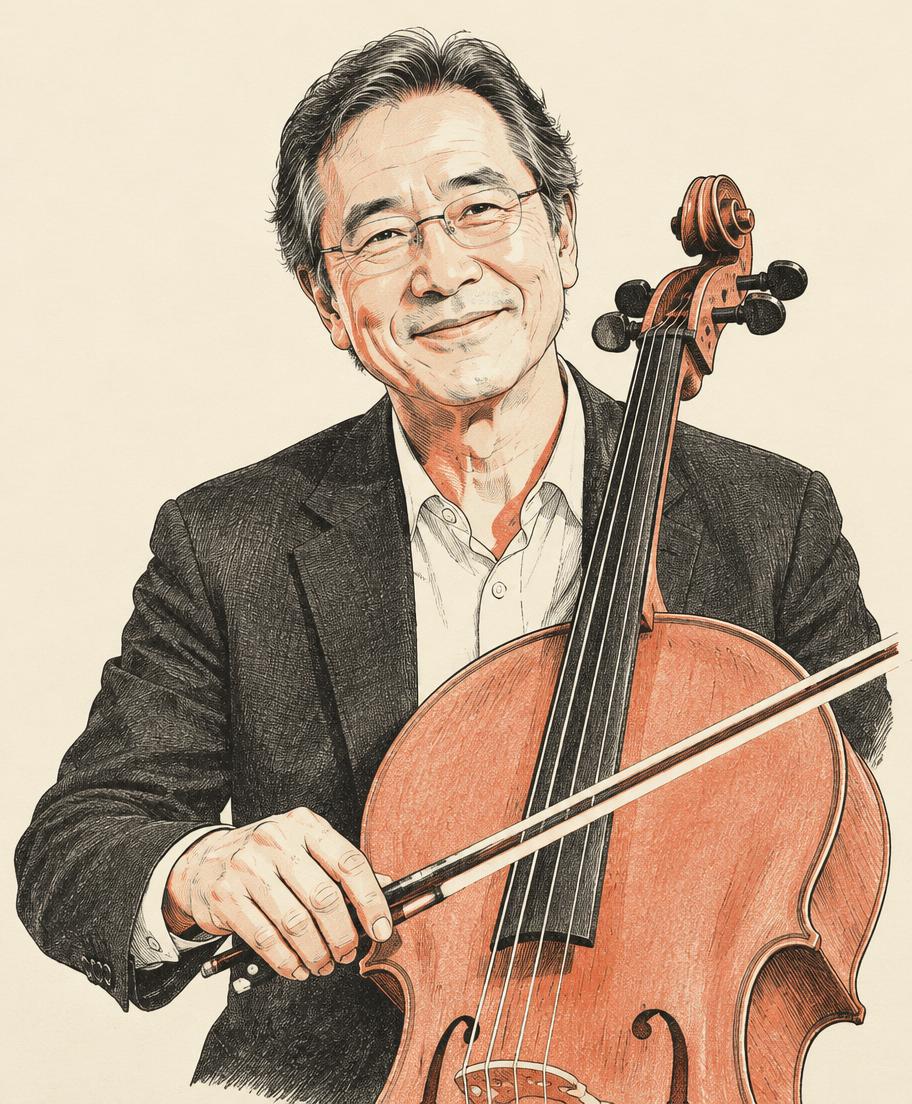
Cellist
Yo-Yo Ma
A cellist known for his recordings of the Bach cello suites and for decades of cross-cultural musical collaboration.
Read biography ↗
British singer (1949–2012)
Robin Gibb
Robin Hugh Gibb was a British singer and songwriter.
Read biography ↗