First president of Senegal, poet, and cultural theorist (1906–2001)
Léopold Sédar Senghor
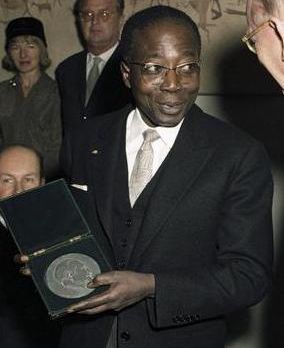
Léopold Sédar Senghor was a Senegalese politician, cultural theorist and poet who served as the first president of Senegal from 1960 to 1980.
By globalcelebwiki Editorial Desk, adapted from Wikipedia · Published 29 September 2026
- Profession
- First president of Senegal, poet, and cultural theorist (1906–2001)
- Born
- 9 October 1906
- Birthplace
- Joal-Fadiouth
- Nationality
- Senegalese
Overview
Léopold Sédar Senghor ( song-GOR, French: [leɔpɔl sedaʁ sɑ̃ɡɔʁ], Wolof: Léwopóol Sedaar Seŋoor; 9 October 1906 – 20 December 2001) was a Senegalese politician, cultural theorist and poet who served as the first president of Senegal from 1960 to 1980.
Ideologically an African socialist, Senghor was one of the major theoreticians of Négritude. He was a proponent of African culture, black identity, and African empowerment within the framework of French-African ties. He advocated for the extension of full civil and political rights for France's African territories while arguing that French Africans would be better off within a federal French structure than as independent nation-states.
Senghor became the first president of independent Senegal. He fell out with his long-standing associate Mamadou Dia, who was the prime minister of Senegal, arresting him on suspicion of fomenting a coup in 1962 and imprisoning him for 12 years. Following this, Senghor established an authoritarian one-party state where rival political parties were suppressed. In 1976, Senghor permitted opposition parties while retaining an unequal playing field favoring his party. Senghor retired in 1980, handing power to Abdou Diouf.
Senghor was the founder of the Senegalese Democratic Bloc party in 1948. He was the first African elected as a member of the Académie française and won the 1985 International Nonino Prize in Italy. Senghor is regarded by many as one of the most important African intellectuals of the 20th century.
Early years: 1906–28
Léopold Sédar Senghor was born on 9 October 1906 in the city of Joal, some 110 kilometres south of Dakar, the capital of Senegal. His father, Basile Diogoye Senghor (pronounced: Basile Jogoy Senghor), was a wealthy peanut merchant belonging to the bourgeois Serer people. Basile Senghor was said to be a man of great means and owned thousands of cattle and vast lands, some of which were given to him by his cousin the king of Sine. Gnilane Ndiémé Bakhoum (1861–1948), Senghor's mother, the third wife of his father, a Muslim with Fula origin who belonged to the Tabor tribe, was born near Djilor to a Christian family. She gave birth to six children, including two sons.
Senghor's birth certificate states that he was born on 9 October 1906; however, there is a discrepancy with his certificate of baptism, which states it occurred on 9 August 1906. His Serer middle name Sédar comes from the Serer language, meaning "one that shall not be humiliated" or "the one you cannot humiliate".
His surname Senghor is a combination of the Serer words Sène (a Serer surname and the name of the Supreme Deity in Serer religion called Rog Sene) and gor or ghor, the etymology of which is kor in the Serer language, meaning male or man. Tukura Badiar Senghor, the prince of Sine and a figure from whom Léopold Sédar Senghor has been reported to trace descent, was a c. 13th-century Serer noble.
At the age of eight, Senghor began his studies in Senegal in the Ngasobil boarding school of the Fathers of the Holy Spirit. In 1922, he entered a seminary in Dakar. After being told that religious life was not for him, he attended a secular institution. By then, he was already passionate about French literature. He won distinctions in French, Latin, Greek and Algebra. With his Baccalaureate completed, he was awarded a scholarship to continue his studies in France.
"Sixteen years of wandering": 1928–1944
In 1928, Senghor sailed from Senegal for France, beginning, in his words, "sixteen years of wandering". Starting his post-secondary studies at the Sorbonne, he quit and went on to the Lycée Louis-le-Grand to finish his preparatory course for entrance to the École Normale Supérieure, a grande école. Henri Queffélec, Robert Verdier and Georges Pompidou were also studying at this elite institution. After failing the entrance exam, Senghor prepared for his grammar Agrégation. He was granted his agrégation in 1935 at his second attempt.
Senghor graduated from the University of Paris, where he received the Agrégation in French Grammar. Subsequently, he was designated professor at the universities of Tours and Paris, where he taught during the period 1935–45.
Senghor started his teaching years at the lycée René-Descartes in Tours; he also taught at the lycée Marcelin-Berthelot in Saint-Maur-des-Fosses near Paris. He also studied linguistics taught by Lilias Homburger at the École pratique des hautes études. He studied with prominent social scientists such as Marcel Cohen, Marcel Mauss and Paul Rivet, director of the Institut d'ethnologie de Paris.
Senghor, along with other intellectuals of the African diaspora who had come to study in the colonial capital, coined the term and conceived the notion of "négritude", which was a response to the racism still prevalent in France. It turned the racial slur nègre into a positively connoted celebration of African culture and character. The idea of négritude informed Senghor's cultural criticism and literary work, and became a guiding principle for his political thought in his career as a statesman.
In 1939, Senghor was enlisted in the 3rd Colonial Infantry Regiment of the French army with the rank of private (2e Classe) despite his higher education. In June 1940, the invading Germans took him prisoner in la Charité-sur-Loire or Villabon. He was interned in a succession of camps, and finally at Front Stalag 230, in Poitiers. Front Stalag 230 was reserved for colonial troops captured during the war.
According to Senghor, German soldiers wanted to execute him and the others on the day they were captured, but they escaped this fate by yelling Vive la France, vive l'Afrique noire! ("Long live France, long live Black Africa!"). A French officer told the soldiers that executing the African prisoners would dishonour the Aryan race and the German Army. Senghor spent two years in different prison camps, where he spent most of his time writing poems, and learning enough German to read Goethe's poetry in the original. In 1942, he was released for medical reasons.
He resumed his teaching career while remaining involved in the resistance during the Nazi occupation.
Senghor advocated for African integration within the French Empire, arguing that independence for small, weak territories would lead to the perpetuation of oppression, whereas African empowerment within a federal French Empire could transform it for the better.
Once the war was over, Senghor was selected as Dean of the Linguistics Department with the École nationale de la France d'Outre-Mer, a position he would hold until Senegal's independence in 1960. While travelling on a research trip for his poetry, he met the local socialist leader, Lamine Guèye, who suggested that Senghor run for election as a member of the Assemblée nationale française. Senghor accepted and became député for the riding of Sénégal-Mauritanie, when colonies were granted the right to be represented by elected individuals. They took different positions when the train conductors on the Dakar-Niger line went on strike. Guèye voted against the strike, arguing the movement would paralyse the colony, while Senghor supported the workers, which gained him great support among Senegalese.
During the negotiations to write the French Constitution of 1946, Senghor pushed for the extension of French citizenship to all French territories. Four Senegalese communes had citizenship since 1916 – Senghor argued that this should be extended to the rest of France's territory. Senghor argued for a federal model whereby each African territory would govern its own internal affairs, and this federation would be part of a larger French confederation that run foreign affairs, defence and development policies. Senghor opposed indigenous nationalism, arguing that African territories would develop more successfully within a federal model where each territory had its "negro-African personality" along with French experience and resources.
In 1947, Senghor left the African Division of the French Section of the Workers' International (SFIO), which had given enormous financial support to the social movement. With Mamadou Dia, he founded the Bloc démocratique sénégalais (1948). They won the legislative elections of 1951, and Guèye lost his seat. Senghor was involved in the negotiations and drafting of the Fourth Republic's constitution.
Re-elected deputy in 1951 as an independent overseas member, Senghor was appointed state secretary to the council's president in Edgar Faure's government from 1 March 1955 to 1 February 1956. He became mayor of the city of Thiès, Senegal in November 1956 and then advisory minister in the Michel Debré's government from 23 July 1959 to 19 May 1961. He was also a member of the commission responsible for drafting the Fifth Republic's constitution, general councillor for Senegal, member of the Grand Conseil de l'Afrique Occidentale Francaise and member of the parliamentary assembly of the Council of Europe.
In 1964, Senghor published the first volume of a series of five, titled Liberté. The book contains a variety of speeches, essays and prefaces.
Senghor supported federalism for newly independent African states, a type of "French Commonwealth", while retaining a degree of French involvement:
In Africa, when children have grown up, they leave their parents' hut, and build a hut of their own by its side. Believe me, we don't want to leave the French compound. We have grown up in it, and it is good to be alive in it. We simply want to build our own huts.
Since federalism was not favoured by the African countries, he decided to form, along with Modibo Keita, the Mali Federation with former French Sudan (present-day Mali). Senghor was president of the Federal Assembly until it failed in 1960.
Afterwards, Senghor became the first President of the Republic of Senegal, elected on 5 September 1960. He is the author of the Senegalese national anthem. The first prime minister, Mamadou Dia, was in charge of executing Senegal's long-term development plan, while Senghor was in charge of foreign relations. The two men quickly disagreed. In December 1962, Mamadou Dia was arrested under suspicion of fomenting a coup d'état. He was held in prison for 12 years. Following this, Senghor took actions to establish an authoritarian presidential regime where all rival political parties were suppressed.
By 1966, Senegal had become a one-party state. Senghor tightly circumscribed press freedom in Senegal where the media market was monopolized by state-run media such as Le Soleil and Radio Sénégal.
He supported the creation of the Organisation internationale de la Francophonie and was elected vice-president of the High Council of the Francophonie. In 1982, he was one of the founders of the Association France and developing countries whose objectives were to bring attention to the problems of developing countries, in the wake of the changes affecting the latter.
Global policy
He was one of the signatories of the agreement to convene a convention for drafting a world constitution. As a result, for the first time in human history, a World Constituent Assembly convened to draft and adopt the Constitution for the Federation of Earth.
Académie française: 1983–2001
Senghor was elected a member of the Académie française on 2 June 1983, at the 16th seat where he succeeded Antoine de Lévis Mirepoix. He was the first African to sit at the Académie. The entrance ceremony in his honour took place on 29 March 1984, in presence of French President François Mitterrand. This was considered a further step towards greater openness in the Académie, after the previous election of a woman, Marguerite Yourcenar. In 1993, the last and fifth book of the Liberté series was published: Liberté 5: le dialogue des cultures.
Personal life and death
Senghor's first marriage was to Ginette Éboué (1 March 1923 – 1992), daughter of Félix Éboué. They married on 9 September 1946 and divorced in 1955. They had two sons, Francis in 1947 and Guy in 1948. Senghor's second wife, Colette Hubert [fr] (20 November 1925 – 18 November 2019), who was from France, became Senegal's first First Lady upon independence in 1960. Senghor had three sons between his two marriages.
Senghor spent the last years of his life with his wife in Verson, near the city of Caen in Normandy, where he died on 20 December 2001. His funeral was held on 29 December 2001 in Dakar. Officials attending the ceremony included Raymond Forni, president of the Assemblée nationale and Charles Josselin, state secretary for the minister of foreign affairs, in charge of the Francophonie. Jacques Chirac, who said, upon hearing of Senghor's death: "Poetry has lost one of its masters, Senegal a statesman, Africa a visionary and France a friend", and Lionel Jospin, respectively president of the French Republic and the prime minister, did not attend.
Legacy
Although a socialist, Senghor avoided the Marxist and anti-Western ideology that had become popular in post-colonial Africa, favouring the maintenance of close ties with France and the Western world. Senghor's tenure as president was characterised by the development of African socialism, which was created as an indigenous alternative to Marxism, drawing heavily from the négritude philosophy. In developing this, he was assisted by Ousmane Tanor Dieng.
On 31 December 1980, he retired in favour of his prime minister, Abdou Diouf. Politically, Senghor's stamp can also be identified today. With regards to Senegal in particular, his willful abdication of power to his successor, Abdou Diouf, led to Diouf's peaceful exit from office as well. Senegal's special relationship with France and economic legacy are more highly contested, but Senghor's impact on democracy remains nonetheless.
Senghor managed to retain his identity as a poet and a politician even throughout his busy careers as both, living by his philosophy of achieving equilibrium between competing forces. Whether it was France and Africa, poetics and politics, or other disparate parts of his identity, Senghor balanced the two.
In literature, Senghor's influence on political thought and poetic form are wide-reaching even in the modern day. Senghor's poetry endures as the "record of an individual sensibility at a particular moment in history," capturing the spirit of the Négritude movement at its peak, but also marks a definitive place in literary history. Senghor's thoughts were exceedingly radical for this time, arguing that Africans could only progress if they developed a culture distinct and separate from the colonial powers that oppressed them, pushing against popular thought at the time. Senghor was deeply influenced by poets from the US such as Langston Hughes. Seat number 16 of the Académie was vacant after the Senegalese poet's death. He was ultimately replaced by another former president, Valéry Giscard d'Estaing.
Honours and awards
Senghor received several honours in the course of his life. He was made Grand-Croix of the Légion d'honneur, Grand-Croix of the l'Ordre national du Mérite, commander of arts and letters. He also received academic palms and the Grand Cross of the National Order of the Lion. His war exploits earned him the Reconnaissance Franco-alliée Medal of 1939–1945 and the Combattant Cross of 1939–1945. He received honorary doctorates from thirty-seven universities.
Senghor received the Commemorative Medal of the 2500th Anniversary of the founding of the Persian Empire on 14 October 1971.
On 13 November 1978, he was created a Knight of the Collar of the Order of Isabella the Catholic of Spain. Members of the order at the rank of Knight and above enjoy personal nobility and have the privilege of adding a golden heraldic mantle to their coats of arms. Those at the rank of the Collar also receive the official style "His or Her Most Excellent Lord".
In 1978, Senghor received an honoris causa from the University of Salamanca.
In 1983, he was awarded the Dr. Leopold Lucas Prize by the University of Tübingen.
Sources and references
Spotted something wrong? Report a correction.
Related profiles
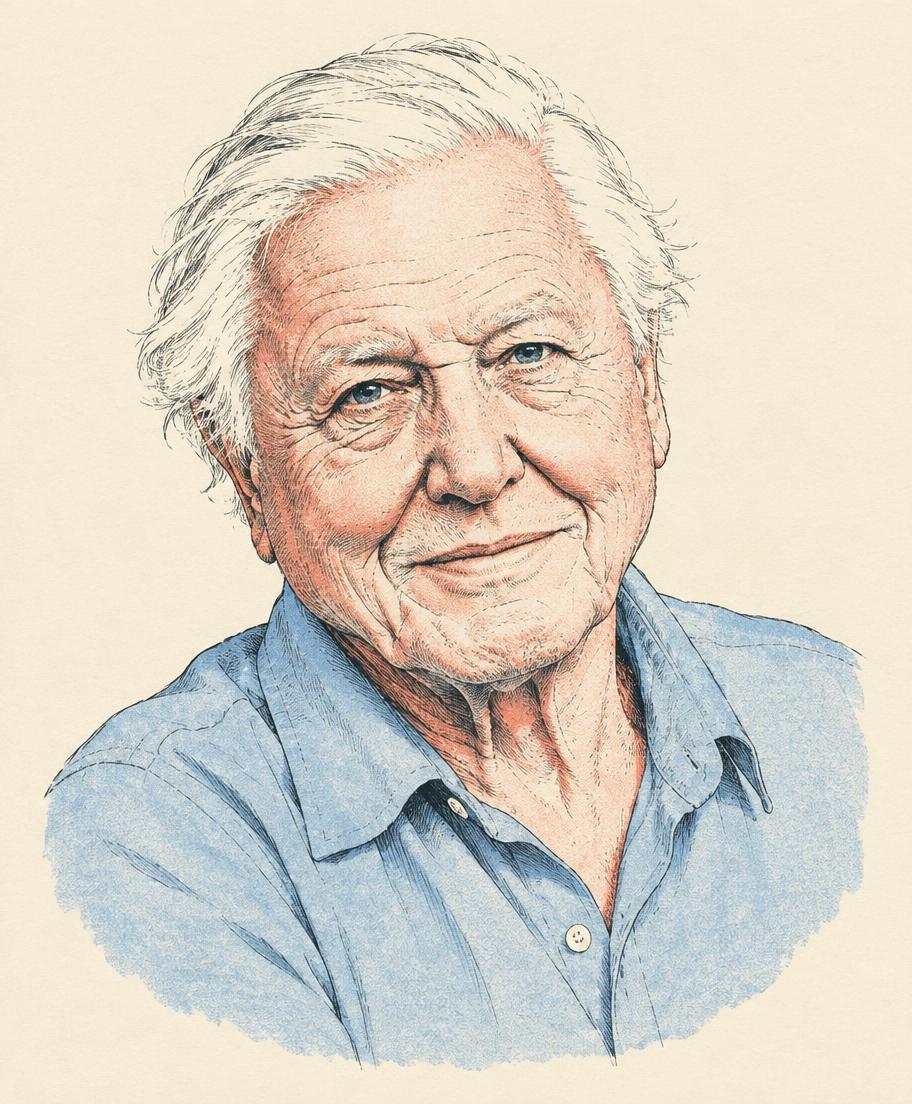
Broadcaster and natural historian
David Attenborough
The broadcaster whose natural history series have shaped how audiences understand life on Earth.
Read biography ↗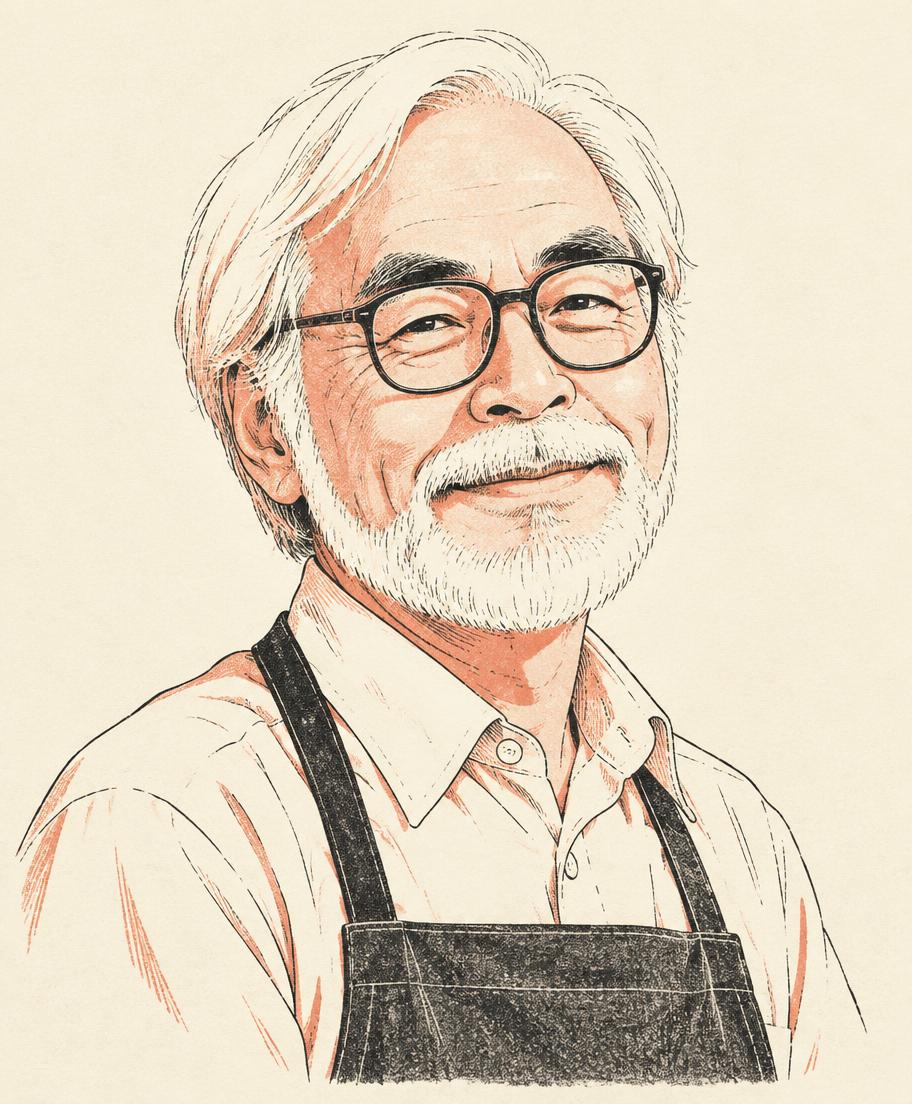
Animator and film director
Hayao Miyazaki
The animator and co-founder of Studio Ghibli whose hand-drawn films reached audiences worldwide.
Read biography ↗
Pope
Benedict I
Pope Benedict I was the bishop of Rome from 2 June 575 to his death on 30 July 579.
Read biography ↗