1st-century Latin poet from Hispania
Martial
Marcus Valerius Martialis was a Roman poet born in Bilbilis, Hispania, best known for his twelve books of Epigrams, published in Rome between AD 86 and 103, during the reigns of the emperors Domitian, Nerva and Trajan.
By globalcelebwiki Editorial Desk, adapted from Wikipedia · Published 29 September 2026
- Profession
- 1st-century Latin poet from Hispania
- Birthplace
- Augusta Bilbilis
- Nationality
- Roman
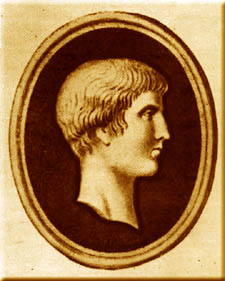
Overview
Marcus Valerius Martialis (known in English as Martial ; March, between 38 and 41 AD – between 102 and 104 AD) was a Roman poet born in Bilbilis, Hispania (modern Spain), best known for his twelve books of Epigrams, published in Rome between AD 86 and 103, during the reigns of the emperors Domitian, Nerva and Trajan. In these poems he satirises city life and the scandalous activities of his acquaintances, and romanticises his provincial upbringing. A total of 1,561 epigrams written by him have survived, of which 1,235 are in elegiac couplets.
Martial has been called the greatest Latin epigrammatist.
Early life
Knowledge of his origins and early life are derived almost entirely from his works, which can be more or less dated according to the well-known events to which they refer. In Book X of his Epigrams, composed between 95 and 98, he mentions celebrating his fifty-seventh birthday; hence he was born during March 38, 39, 40 or 41 AD (Mart. 10. 24. 1),
Martial's name seems to imply that he was born a Roman citizen. His place of birth was Augusta Bilbilis (now Calatayud) in Hispania Tarraconensis, information he gives by speaking of himself as "sprung from the Celts and Iberians, and a countryman of the Tagus". In contrasting his own masculine appearance with that of an effeminate Greek, he draws particular attention to "his stiff Hispanian hair" (Mart. 10. 65. 7). Several notable 1st-century Latin writers were born in Roman Hispania, including Seneca the Elder and Seneca the Younger, Lucan and Quintilian, and Martial's contemporaries Licinianus of Bilbilis, Decianus of Emerita and Canius of Gades.
Martial's parents, Fronto and Flaccilla, appear to have died in his youth. His home in the country was evidently one of rustic comfort and plenty, affording him the amusements of hunting and fishing, which he often recalls with keen pleasure. It was sufficiently close to the town to afford him the companionship of many comrades, the few survivors of whom he looks forward to meeting again after his thirty-four years' absence (Mart. 10. 104). The memories of this old home and of other spots, the rough names and local associations which he delights to introduce into his verse, attest to the simple pleasures of his early life and were among the influences that kept his spirit alive in the stultifying routines of upper-crust social life in Rome.
Martial professes to be of the school of Catullus, Pedo and Marsus. The epigram bears to this day the form impressed upon it by his unrivalled skill in wordsmithing.
Life in Rome
The success of his countrymen may have been what motivated Martial to move to Rome from Hispania once he had completed his education. This move occurred in AD 64. Seneca the Younger and Lucan may have served as his first patrons, but this is not known for sure.
Not much is known of the details of his life for the first twenty years or so after he came to Rome. He published some juvenile poems of which he thought very little in his later years, and he chuckles at a foolish bookseller who would not allow them to die a natural death (Mart. 1. 113). His faculty ripened with experience and with the knowledge of that social life which was both his theme and his inspiration; many of his best epigrams are among those written in his last years. From many answers which he makes to the remonstrances of friends—among others to those of Quintilian—it may be inferred that he was urged to practice at the bar, but that he preferred his own lazy, some would say Bohemian kind of life. He made many influential friends and patrons and secured the favor of both Titus and Domitian. From them he obtained various privileges, among others the semestris tribunatus, which conferred on him equestrian rank. Martial failed, however, in his application to Domitian for more substantial advantages, although he commemorates the glory of having been invited to dinner by him, and also the fact that he procured the privilege of citizenship for many persons on whose behalf he appealed to him.
The earliest of his extant works, known as Liber spectaculorum, was first published at the opening of the Colosseum in the reign of Titus. It relates to the theatrical performances given by him, but the book as it now stands was published about the first year of Domitian, i.e. about the year 81. The favour of the emperor procured him the countenance of some of the worst creatures at the imperial court—among them of the notorious Crispinus, and probably of Paris, the supposed author of Juvenal's exile, for whose monument Martial afterwards wrote a eulogistic epitaph. The two books, numbered by editors XIII and XIV, known by the names of Xenia and Apophoreta—inscriptions in two lines each for presents—were published at the Saturnalia of 84. In 86 he produced the first two of the twelve books on which his reputation rests.
From that time till his return to Hispania in 98 he published a volume almost every year. The first nine books and the first edition of Book X appeared in the reign of Domitian; Book XI. appeared at the end of 96, shortly after the accession of Nerva. A revised edition of book X, that which we now possess, appeared in 98, about the time of Trajan's entrance into Rome. The last book was written after three years' absence in Hispania, shortly before his death about the year 102 or 103.
These twelve books bring Martial's ordinary mode of life between the age of forty-five and sixty before us. His regular home for thirty-five years was the bustle of metropolitan Rome. He lived at first up three flights of stairs, and his "garret" overlooked the laurels in front of the portico of Agrippa. He had a small villa and unproductive farm near Nomentum, in the Sabine territory, to which he occasionally retired from the pestilence, boors and noises of the city (Mart. 2. 38, Mart. 7. 57). In his later years he had also a small house on the Quirinal, near the temple of Quirinus.
Martial and his patrons
Martial was dependent on his wealthy friends and patrons for gifts of money, for his dinner, and even for his dress, but the relation of client to patron had been recognized as an honourable one by the best Roman traditions. No blame was attached to Virgil or Horace on account of the favours which they received from Augustus and Maecenas, or of the return which they made for these favours in their verse. That old honourable relationship, however, greatly changed during the time that passed between Augustus and Domitian. Men of good birth and education, and sometimes even of high official position (Juv. 1. 117), accepted the dole (sportula). Martial was merely following a general fashion in paying his court to "a lord," and he made the best of the custom. In his earlier career he used to accompany his patrons to their villas at Baiae or Tibur, and to attend their morning levees. Later on, he went to his own small country house, near Nomentum, and sent a poem, or a small volume of his poems, as his representative at the early visit.
Martial's character
Pliny the Younger, in the short tribute he pays to him on hearing of his death, wrote, "He had as much good nature as wit and pungency in his writings". Martial professes to avoid personalities in his satire, and honour and sincerity (fides and simplicitas) seem to have been the qualities he most admires in his friends. Some have found distasteful his apparent servile flattery to the worst of the many bad emperors of Rome in the 1st century. They were emperors Martial would later censure immediately after their death (Mart. 12. 6). However he seems to have disliked hypocrisy in its many forms and to be free from cant, pedantry and affectation of any kind.
Though many of his epigrams indicate a cynical disbelief in the female character, others prove that he could respect and almost revere a refined and courteous woman. His own life in Rome afforded him no experience of domestic virtue; but his epigrams show that, even in the age known to modern readers chiefly from the Satires of Juvenal, virtue was recognized as the purest source of happiness. The tenderest element in Martial's nature seems, however, to have been his affection for children and for his dependants.
Martial's Epigrams
Literary interest in Martial's epigrams persists due both to their literary quality and their references to daily life in imperial Rome.
From Martial, for example, we have a glimpse of his living conditions in the city of Rome:
As Jo-Ann Shelton has written, "fire was a constant threat in ancient cities because wood was a common building material and people often used open fires and oil lamps. However, some people may have deliberately set fire to their property in order to collect insurance money." Martial makes this accusation in one of his epigrams:
Martial also pours scorn on the doctors of his day:
Martial's epigrams also refer to the cruelty shown to slaves in Roman society. Below, he chides a man named Rufus for flogging his cook for a minor mistake:
Reception
The works of Martial became highly valued on their discovery by the Renaissance, whose writers often saw them as sharing an eye for the urban vices of their own times. The poet's influence is seen in Juvenal, late classical literature, the Carolingian revival, the Renaissance in France and Italy, the Siglo de Oro, and early modern English and German poetry, until he became unfashionable with the growth of the Romantic movement.
The 21st century has seen a resurgence of scholarly attention to Martial's work.
Sources and references
Spotted something wrong? Report a correction.
Related profiles

Broadcaster and natural historian
David Attenborough
The broadcaster whose natural history series have shaped how audiences understand life on Earth.
Read biography ↗
Animator and film director
Hayao Miyazaki
The animator and co-founder of Studio Ghibli whose hand-drawn films reached audiences worldwide.
Read biography ↗
Pope
Benedict I
Pope Benedict I was the bishop of Rome from 2 June 575 to his death on 30 July 579.
Read biography ↗