First Lady of the United States from 1981 to 1989
Nancy Reagan
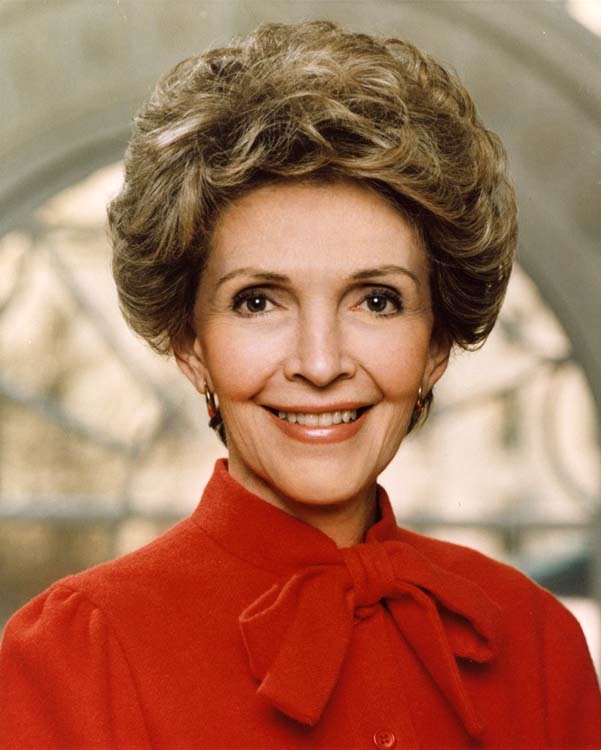
Nancy Davis Reagan was an American actress who was First Lady of the United States from 1981 to 1989.
By globalcelebwiki Editorial Desk, adapted from Wikipedia · Published 29 September 2026
- Profession
- First Lady of the United States from 1981 to 1989
- Born
- 6 July 1921
- Birthplace
- Manhattan
- Nationality
- American
Overview
Nancy Davis Reagan (born Anne Frances Robbins; July 6, 1921 – March 6, 2016) was an American actress who was First Lady of the United States from 1981 to 1989. She was the second wife of Ronald Reagan, the 40th president of the United States.
Reagan was born at Sloane Hospital for Women in Washington Heights, Manhattan New York City. After her parents separated, she lived in Maryland with an aunt and uncle for six years. When her mother remarried in 1929, she moved to Chicago and was adopted by her mother's second husband. As Nancy Davis, she was a Hollywood actress in the 1940s and 1950s, starring in films such as The Next Voice You Hear..., Night into Morning, and Donovan's Brain. In 1952, she married Ronald Reagan, who was then president of the Screen Actors Guild. He had two children from his previous marriage to Jane Wyman, and he and Nancy had two children together. Nancy Reagan was first lady of California when her husband was governor from 1967 to 1975, and she began to work with the Foster Grandparents Program.
Reagan became First Lady of the United States in January 1981, following her husband's victory in the 1980 presidential election. Early in his first term, she was criticized largely due to her decisions both to replace the White House china, which had been paid for by private donations, and to accept free clothing from fashion designers. She championed opposition to recreational drug use when she founded the "Just Say No" drug awareness campaign, which is considered her major initiative as First Lady—although it received substantial criticism for stigmatizing poor communities affected by the crack epidemic. More discussion of her role ensued following a 1988 revelation that she had consulted an astrologer to assist in planning the president's schedule after the attempted assassination of her husband in 1981. She generally had a strong influence on her husband and played a role in a few of his personnel and diplomatic decisions.
The couple returned to their home in Bel Air, Los Angeles, California, after leaving the White House. Reagan devoted most of her time to caring for her husband, who was diagnosed with Alzheimer's disease in 1994, until his death at the age of 93 on June 5, 2004. Reagan remained active within the Reagan Library and in politics, particularly in support of embryonic stem cell research, until her death from congestive heart failure at the age of 94 in 2016. She gained high approval ratings in later life for her devotion to her husband in his final illness.
Early life and education
Anne Frances Robbins was born in Manhattan on July 6, 1921, but throughout her life she told others she was born in 1923. Her parents were used car salesman Kenneth Robbins and actress Edith Luckett. The actress Alla Nazimova was her godmother. She was named Anne after her great-great-great-grandmother, but her mother took to calling her "Nancy" until that became the name she was known by. Robbins lived her first two years in Flushing, a neighborhood in Queens, in a two-story house on Roosevelt Avenue between 149th and 150th Streets.
Robbins' parents split in 1923 when her mother decided to return to acting and the couple could not agree on where to live. Her father removed himself from her life, and her mother resumed work as a stage actress. Robbins was placed with her mother's sister, Virginia Galbraith, in Bethesda, Maryland, along with her uncle and cousin. She attended Sidwell Friends School in Washington, D.C. Robbins missed her mother while living with her aunt, and they made trips to New York so she could see her mother perform on stage. She emulated her mother by wearing makeup and pretending to be an actress. Robbins' parents finalized their divorce in 1928. Later analysis of her life has focused on this unstable family environment as a reason why she held marriage as a life goal.
Robbins's mother remarried in 1929, giving her a stepfather at age seven. Loyal Davis was a neurosurgeon, and the family moved to Chicago together where she formed a close bond with her stepfather. She would always refer to him as her father. She also had a stepbrother but did not develop a close relationship with him. She attended Girls' Latin School in Chicago, where she involved in Drama Club, field hockey, and student government. In her senior year, she had the lead role in the school play First Lady.
Having a wealthy neurosurgeon as a stepfather meant a comfortable childhood where Robbins lived beyond the means of most Americans, and the family socialized in high society. Her mother's career also meant that Robbins had regular interactions with famous actors of the day, especially with their family friends Katharine Hepburn, Walter Huston, and Spencer Tracy. Her stepfather's conservative beliefs were a strong influence on her own politics.
Robbins was adopted by her stepfather at age fourteen, and she changed her legal name to Nancy Davis. In 1939, Davis left Girls' Latin School and began attending Smith College in Northampton, Massachusetts, where she studied English and drama. Among her instructors was Federal Theatre Project director Hallie Flanagan. Davis was a debutante that December, where she met Frank Birney, who kept introducing himself to her under different names to make her comfortable. They were eventually engaged, but he was struck by a train and killed before they were married.
Acting career
Davis moved to New York to work as an actress and model under the tutelage of Walter Huston and Spencer Tracy. This began when family friend ZaSu Pitts got her a role in the play Ramshackle Inn on Broadway in 1945. She had a total of three lines. Although the play closed soon after, she followed it with a role in Lute Song. Davis dated Clark Gable for one week, which brought her a higher public profile.
In 1940, a young Davis had appeared as a National Foundation for Infantile Paralysis volunteer in a short subject film shown in movie theaters to raise donations for the crusade against polio. The Crippler featured a sinister figure spreading over playgrounds and farms, laughing over its victims, until finally dispelled by the volunteer. It was effective in raising contributions.
She landed the role of Si-Tchun, a lady-in-waiting, in the 1946 Broadway musical about the Orient, Lute Song, starring Mary Martin and a pre-fame Yul Brynner. The show's producer told her, "You look like you could be Chinese."
Davis went to Hollywood in 1949 when Metro-Goldwyn-Mayer asked her to participate in a screen test. Her mother worked with Tracy to get director George Cukor to evaluate the test. They gave her a seven-year contract and was paid $250 (equivalent to $3,383 in 2025) per week. She went on to appear in eleven films, including The Doctor and the Girl (1949), East Side, West Side (1949), Night into Morning (1951), It's a Big Country (1951), and Donovan's Brain (1953). She was generally well-received but did not achieve mainstream success. These appearances generally typecast her as a wife and mother.
Davis played a child psychiatrist in the film noir Shadow on the Wall (1950) with Ann Sothern and Zachary Scott; her performance was called "beautiful and convincing" by New York Times critic A. H. Weiler. She co-starred in 1950's The Next Voice You Hear..., playing a pregnant housewife who hears the voice of God from her radio. Influential reviewer Bosley Crowther of The New York Times wrote that "Nancy Davis [is] delightful as [a] gentle, plain, and understanding wife." MGM released Davis from her contract in 1952; she sought a broader range of parts, but also married Reagan, keeping her professional name as Davis, and had her first child that year. She soon starred in the science fiction film Donovan's Brain (1953); Crowther said that Davis, playing the role of a possessed scientist's "sadly baffled wife", "walked through it all in stark confusion" in an "utterly silly" film. In her next-to-last movie, Hellcats of the Navy (1957), she played nurse Lieutenant Helen Blair, and appeared in a film for the only time with her husband, playing what one critic called "a housewife who came along for the ride". Another reviewer, however, stated that Davis plays her part satisfactorily, and "does well with what she has to work with".
Marriage and family
During her Hollywood career, Davis dated many actors, including Clark Gable, Robert Stack, and Peter Lawford; she later called Gable the nicest of the stars she had met.
Davis met the president of the Screen Actors Guild, Ronald Reagan, on November 15, 1949. According to Davis, she had the meeting arranged after she discovered her name was on the Hollywood blacklist. They met for dinner where he explained that she was being confused with another Nancy Davis. The exact nature of their meeting has been disputed, with some biographers arguing that she was already well-connected enough to address the issue or that they had met in other circumstances entirely. She later said that meeting him was the moment her life began. Although Ronald was hesitant to begin a relationship following his divorce from Jane Wyman, he started dating Davis. They were not exclusive at first, and Ronald continued seeing other women in the early period of their relationship. Their relationship was the subject of many gossip columns; one Hollywood press account described their nightclub-free times together as "the romance of a couple who have no vices".
First Lady of California (1967–1975)
Nancy Reagan became First Lady of California when Ronald Reagan took office as Governor in 1967. She was surprised by his desire to hold elected office and was hesitant to participate in campaigning, but nonetheless made stops on his behalf and answered questions from voters. She eventually found the experience to be enjoyable, albeit "tiring".
Upon becoming first lady of California, Nancy criticized the Governor's Mansion, feeling it was unfit for a family. They instead moved to a rented home in the state's capital Sacramento. Although the Governor's Mansion was officially deemed a fire hazard, her reaction was seen as snobbish by her critics. She disliked living in the state capital of Sacramento, which lacked the excitement, social life, and mild climate to which she was accustomed in Los Angeles. Her redecoration of the California State Capitol was received more positively.
Nancy was a socialite in California, making appearances at major events and shopping in the wealthy neighborhood of Beverly Hills. At the same time, she had to acclimate to the political attacks against her husband and her family, which offended her more than him. She held her first press conference when she was accused of taking donations to the governor's home for her own personal use. On June 6, 1968, Nancy was the subject of a biographical profile titled "Pretty Nancy" following an interview with Joan Didion; Didion was deeply critical in her publication, portraying Nancy as out-of-touch and insincere. To vent her frustration, Nancy began having imaginary arguments while she was in the bath.
In 1967, Ronald appointed Nancy to the California Arts Commission, and a year later she was named Los Angeles Times Woman of the Year; in its profile, the Times labeled her "A Model First Lady".
Nancy did not know that her husband intended to seek the presidential nomination at the 1968 Republican National Convention until after he did so.
Role in 1976 and 1980 presidential campaigns
Governor Reagan's gubernatorial time in office ended in 1975, and he did not run for a third term; instead, he met with advisors to discuss a possible bid for the 1976 presidency, challenging incumbent president Gerald Ford. Ronald still needed to convince a reluctant Nancy before running, however. She feared for her husband's health and his career as a whole, though she felt that he was the right man for the job and approved eventually. Nancy took on a traditional role in the campaign, holding coffees, luncheons, and talks. She also oversaw personnel, monitored her husband's schedule, and occasionally provided press conferences. The 1976 campaign included the so-called "battle of the queens", contrasting Nancy with First Lady Betty Ford. They both spoke out over the course of the campaign on similar issues, but with different approaches. Nancy was upset by the warmonger image that the Ford campaign had drawn of her husband.
Though he lost the 1976 Republican nomination, Ronald Reagan ran for the presidency a second time in 1980. He succeeded in winning the nomination and defeated incumbent rival Jimmy Carter in a landslide. During this second campaign, Nancy played a prominent role, and her management of staff became more apparent. She organized a meeting among feuding campaign managers John Sears and Michael Deaver and her husband, which resulted in Deaver leaving the campaign and Sears being given full control. After the Reagan camp lost the Iowa Caucus and fell behind in New Hampshire polls, Nancy organized a second meeting and decided it was time to fire Sears and his associates; she gave Sears a copy of the press release announcing his dismissal. Her influence on her husband became particularly notable; her presence at rallies, luncheons, and receptions increased his confidence.
Reagan became the first lady of the United States when Ronald Reagan was inaugurated as president in January 1981. Early in her husband's presidency, Reagan stated her desire to create a more suitable "first home" in the White House, as the building had fallen into a state of disrepair following years of neglect. White House aide Michael Deaver described the second and third-floor family residence as having "cracked plaster walls, chipped paint [and] beaten up floors"; Rather than use government funds to renovate and redecorate, she sought private donations. In 1981, Reagan directed a major renovation of several White House rooms, including all of the second and third floors and rooms adjacent to the Oval Office, including the press briefing room. The renovation included repainting walls, refinishing floors, repairing fireplaces, and replacing antique pipes, windows, and wires. The closet in the master bedroom was converted into a beauty parlor and dressing room, and the West bedroom was made into a small gymnasium.
The First Lady secured the assistance of renowned interior designer Ted Graber, popular with affluent West Coast social figures, to redecorate the family living quarters. A Chinese-pattern, handpainted wallpaper was added to the master bedroom. Family furniture was placed in the president's private study. The first lady and her designer retrieved several White House antiques, which had been in storage, and placed them throughout the mansion. In addition, many of Reagan's collectibles were put out for display, including around twenty-five Limoges Boxes, as well as some porcelain eggs and a collection of plates.
The extensive redecoration was paid for by private donations. Many significant and long-lasting changes occurred as a result of the renovation and refurbishment, of which Reagan said, "This house belongs to all Americans, and I want it to be something of which they can be proud." The renovations received some criticisms for being funded by tax-deductible donations, meaning some of it eventually did indirectly come from the tax-paying public.
Reagan's interest in fashion was another one of her trademarks. While her husband was still president-elect, press reports speculated about Reagan's social life and interest in fashion. In many press accounts, Reagan's sense of style was favorably compared to that of a previous first lady, Jacqueline Kennedy. Friends and those close to her remarked that, while fashionable like Kennedy, she would be different from other first ladies; close friend Harriet Deutsch was quoted as saying, "Nancy has her own imprint."
White House photographer Mary Anne Fackelman-Miner, who was assigned to Reagan, said of her, "She always photographed so easily and was at ease in front of the cameras."
Reagan's wardrobe consisted of dresses, gowns, and suits made by luxury designers, including James Galanos, Bill Blass, and Oscar de la Renta. Her white, hand-beaded, one shoulder Galanos 1981 inaugural gown was estimated to cost $10,000, while the overall price of her inaugural wardrobe was said to cost $25,000. She favored the color red, calling it "a picker-upper", and wore it accordingly. Her wardrobe included red so often that the fire-engine shade became known as "Reagan red". She employed two private hairdressers, who would style her hair on a regular basis in the White House.
Fashion designers were pleased with the emphasis Reagan placed on clothing. Adolfo said the first lady embodied an "elegant, affluent, well-bred, chic American look", while Bill Blass commented, "I don't think there's been anyone in the White House since Jacqueline Kennedy Onassis who has her flair." William Fine, president of cosmetic company Frances Denney, noted that she "stays in style, but she doesn't become trendy."
Though her elegant fashions and wardrobe were hailed as a "glamorous paragon of chic", they were also controversial subjects. In 1982, she revealed that she had accepted thousands of dollars in clothing, jewelry, and other gifts, but defended her actions by stating that she had borrowed the clothes and that they would either be returned or donated to museums, and that she was promoting the American fashion industry. Facing criticism, she soon said she would no longer accept such loans. While often buying her clothes, she continued to borrow and sometimes keep designer clothes throughout her time as first lady, which came to light in 1988. None of this had been included on financial disclosure forms; the non-reporting of loans under $10,000 in liability was in violation of a voluntary agreement the White House had made in 1982, while not reporting more valuable loans or clothes not returned was a possible violation of the Ethics in Government Act. Reagan expressed through her press secretary "regrets that she failed to heed counsel's advice" on disclosing them.
Approximately a year into her husband's first term, Nancy explored the idea of ordering new state china service for the White House. A full china service had not been purchased since the Truman administration in the 1940s, as only a partial service was ordered in the Johnson administration. She was quoted as saying, "The White House really badly, badly needs china." Working with Lenox, the primary porcelain manufacturer in America, the first lady chose a design scheme of a red with etched gold band, bordering the scarlet and cream colored ivory plates with a raised presidential seal etched in gold in the center. The full service comprised 4,370 pieces, with 19 pieces per individual set. The service totaled $209,508. Although it was paid for by private donations, some from the private J. P. Knapp Foundation, the purchase generated quite a controversy, for it was ordered at a time when the nation was undergoing an economic recession. Furthermore, news of the china purchase emerged at the same time that her husband's administration had proposed school lunch regulations that would allow ketchup to be counted as a vegetable.
The new china set, White House renovations, expensive clothing, and her attendance at the wedding of Charles and Diana, Prince and Princess of Wales, gave her an aura of being "out of touch" with the American people during the recession. This built upon the reputation she had coming to Washington, wherein many people concluded that Reagan was a vain and shallow woman, and her taste for splendor inspired the derogatory nickname "Queen Nancy". While Jacqueline Kennedy had also faced some press criticism for her spending habits, Reagan's treatment was much more consistent and negative. In an attempt to deflect the criticism, she self-deprecatingly donned a baglady costume at the 1982 Gridiron Dinner and sang "Second-Hand Clothes", mimicking the song "Second-Hand Rose". The skit helped to restore her reputation.
Reagan reflected on the criticisms in her 1989 autobiography, My Turn. She described lunching with former Democratic National Committee chairman Robert S. Strauss, wherein Strauss said to her, "When you first came to town, Nancy, I didn't like you at all. But after I got to know you, I changed my mind and said, 'She's some broad!'" Reagan responded, "Bob, based on the press reports I read then, I wouldn't have liked me either!"
After the presidency of Jimmy Carter (who dramatically reduced the formality of presidential functions), Reagan brought a Kennedy-esque glamour back into the White House. She hosted 56 state dinners over eight years. She remarked that hosting the dinners is "the easiest thing in the world. You don't have to do anything. Just have a good time and do a little business. And that's the way Washington works." The White House residence staff found Reagan demanding to work for during the preparation for the state dinners, with the first lady overseeing every aspect of meal presentations, and sometimes requesting one dessert after another be prepared, before finally settling on one she approved of.
In general, the First Lady's desire for everything to appear just right in the White House led the residence staff to consider her not easy to work for, with tirades following what she perceived as mistakes. One staffer later recalled, "I remember hearing her call for her personal maid one day and it scared the dickens out of me—just her tone. I never wanted to be on the wrong side of her." She did show loyalty and respect to a number of the staff. In particular, she came to the public defense of a maid who was indicted on charges of helping to smuggle ammunition to Paraguay, providing an affidavit to the maid's good character (even though it was politically inopportune to do so at the time of the Iran–Contra affair); charges were subsequently dropped, and the maid returned to work at the White House.
With the help of her Chief of Staff James Rosebush, the first lady launched the "Just Say No" drug awareness campaign in 1982, which was her primary project and major initiative as first lady. Reagan first became aware of the need to educate young people about drugs during a 1980 campaign stop in Daytop village, New York. She remarked in 1981 that "Understanding what drugs can do to your children, understanding peer pressure and understanding why they turn to drugs is ... the first step in solving the problem." Her campaign focused on drug education and informing the youth of the danger of drug abuse.
In 1982, Reagan was asked by a schoolgirl what to do when offered drugs; Reagan responded: "Just say no." The phrase proliferated in the popular culture of the 1980s, and was eventually adopted as the name of club organizations and school anti-drug programs. Reagan became actively involved by traveling more than 250,000 miles (400,000 km) throughout the United States and several nations, visiting drug abuse prevention programs and drug rehabilitation centers. She also appeared on television talk shows, recorded public service announcements, and wrote guest articles. She appeared in an episode of the sitcom Diff'rent Strokes to underscore support for the "Just Say No" campaign, and in a rock music video, "Stop the Madness" (1985).
In 1985, Reagan expanded the campaign to an international level by inviting the First Ladies of various nations to the White House for a conference on drug abuse. On October 27, 1986, President Reagan signed a drug enforcement bill into law, which granted $1.7 billion in funding to fight the perceived crisis and ensured a mandatory minimum penalty for drug offenses. Although the bill was criticized, Reagan considered it a personal victory. In 1988, she became the first active first lady invited to address the United Nations General Assembly, where she spoke on international drug interdiction and trafficking laws.
Critics of Reagan's efforts questioned their purpose, labelled Reagan's approach to promoting drug awareness as simplistic, and argued that the program did not give adequate attention to various social issues associated with increased rates of drug use, including unemployment, poverty, and family dissolution.
Reagan assumed the role of unofficial "protector" for her husband after the attempted assassination of him in 1981. On March 30 of that year, President Reagan and three others were shot by the attempted assassin 25-year old John Hinckley Jr as they left the Washington Hilton hotel. Nancy was alerted and arrived at George Washington University Hospital, where the President was hospitalized. She recalled having seen "emergency rooms before, but I had never seen one like this – with my husband in it." She was escorted into a waiting room, and when granted access to see her husband, he quipped to her, "Honey, I forgot to duck", borrowing the defeated boxer Jack Dempsey's jest to his wife.
An early example of the first lady's protective nature occurred when Senator Strom Thurmond entered the president's hospital room that day in March, passing the Secret Service detail by claiming he was the President's "close friend", presumably to acquire media attention. Nancy was outraged and demanded that he leave. While the President recuperated in the hospital, the first lady slept with one of his shirts to be comforted by the scent. When Ronald Reagan was released from the hospital on April 12, she escorted him back to the White House.
Press accounts framed Reagan as her husband's "chief protector", an extension of their general initial framing of her as a helpmate and a Cold War domestic ideal. As it happened, the day after her husband was shot, she fell off a chair while trying to take down a picture to bring to him in the hospital; she suffered several broken ribs, but was determined to not reveal it publicly.
During the Reagan administration, Nancy Reagan consulted a San Francisco astrologer, Joan Quigley, who provided advice on which days and times would be optimal for the president's safety and success. Quigley began her work at the White House after the assassination attempt on President Reagan in 1981. Nancy Reagan was told by Merv Griffin that Quigley had predicted that day would be dangerous for President Reagan, causing her to become a regular astrological consultant for the administration. Quigley previously worked on the Reagan campaign prior to serving as their astrological consultant. She volunteered for their campaign in 1980, as she was impressed by his astrological chart. Private lines were set up in the White House and Camp David to assist in phone calls between Nancy Reagan and Joan Quigley, which occurred multiple times a day, and she was paid $3,000 a month for her work.
White House chief of staff Donald Regan grew frustrated with this regimen, which created friction between him and the first lady. This friction escalated with the revelation of the Iran–Contra affair, an administration scandal, in which the first lady felt Regan was damaging the president. She thought he should resign, and expressed this to her husband, although he did not share her view. Regan wanted President Reagan to address the Iran-Contra matter in early 1987 by means of a press conference, though the first lady refused to allow her husband to overexert himself due to a recent prostate surgery and astrological warnings. She became so angry with Regan that he hung up on her during a 1987 telephone conversation. According to the recollections of ABC News correspondent Sam Donaldson, when the President heard of this treatment, he demanded—and eventually received—Regan's resignation. Vice President George H. W. Bush is also reported to have suggested to her to have Regan fired.
In his 1988 memoir, For the Record: From Wall Street to Washington, Regan wrote the following about Nancy Reagan's consultations with an astrologer:
Virtually every major move and decision the Reagans made during my time as White House Chief of Staff was cleared in advance with a woman in San Francisco [Quigley] who drew up horoscopes to make certain that the planets were in a favorable alignment for the enterprise.
Donald Regan's memoir went on to cause political discourse, as well as scrutiny of the astrological community, as he exposed the "most closely guarded secret" of the Reagan administration. Although he did not know Quigley's name at the time, he wrote extensively on her role in the White House. Regan further claimed that Quigley selected the date of the 1985 Geneva Summit. For her part, Quigley stated in 1998 that she had "'absolutely nothing'" to do with arranging the summit and added that others were "'overemphasizing'" her role; however, in 1990, she released a book in which she asserted that she was "in charge" of the President's scheduling during the Reagan administration.
Nancy Reagan wielded a powerful influence over President Reagan.
In her memoirs, Reagan stated, "I felt panicky every time [Ronald Reagan] left the White House". Following the assassination attempt, she strictly controlled access to the president; occasionally, she even attempted to influence her husband's decision making.
Beginning in 1985, she strongly encouraged her husband to hold "summit" conferences with Soviet general secretary Mikhail Gorbachev, and suggested they form a personal relationship beforehand. Both Ronald Reagan and Gorbachev had developed a productive relationship through their summit negotiations. The relationship between Nancy Reagan and Raisa Gorbacheva was anything but the friendly, diplomatic one between their husbands; Reagan found Gorbacheva hard to converse with and their relationship was described as "frosty". The two women usually had tea and discussed differences between the USSR and the United States. Visiting the United States for the first time in 1987, Gorbacheva irked Reagan with lectures on subjects ranging from architecture to socialism, reportedly prompting the American president's wife to quip, "Who does that dame think she is?"
Press framing of Reagan changed from that of just helpmate and protector to someone with hidden power. As the image of her as a political interloper grew, she sought to explicitly deny that she was the power behind the throne. At the end of her time as First Lady, however, she said that her husband had not been well-served by his staff. She acknowledged her role in reaction in influencing him on personnel decisions, saying "In no way do I apologize for it." She wrote in her memoirs, "I don't think I was as bad, or as extreme in my power or my weakness, as I was depicted," but went on, "However the first lady fits in, she has a unique and important role to play in looking after her husband. And it's only natural that she'll let him know what she thinks. I always did that for Ronnie, and I always will." Her chief of staff James Rosebush's 1988 book First Lady, Public Wife explored the role of the First Lady as a demanding and rigorous job.
In October 1987, a mammogram detected a lesion in Reagan's left breast and she was subsequently diagnosed with breast cancer. She chose to undergo a mastectomy rather than a lumpectomy, and the breast was removed on October 17, 1987. Ten days after the operation, her 99-year-old mother, Edith Luckett Davis, died in Phoenix, Arizona, leading Reagan to dub the period "a terrible month".
After the surgery, more women across the country had mammograms, which exemplified the influence that the first lady possessed.
Later life (1989–2016)
Though Reagan was a controversial first lady, 56 percent of Americans had a favorable opinion of her when her husband left office on January 20, 1989, with 18 percent having an unfavorable opinion, and the balance not giving an opinion. Compared to fellow first ladies when their husbands left office, Reagan's approval was higher than those of Rosalynn Carter, Hillary Clinton, Melania Trump, and Jill Biden. However, she was less popular than Barbara Bush, Laura Bush, and Michelle Obama, and her disapproval rating was double that of Carter's.
Upon leaving the White House, the couple returned to California, where wealthy friends purchased them a home at 668 St. Cloud Road in the wealthy East Gate Old Bel Air neighborhood of Bel Air, Los Angeles, dividing their time between Bel Air and the Reagan Ranch in Santa Barbara, California. Ronald and Nancy regularly attended the Bel Air Church as well. After leaving Washington, Reagan made numerous public appearances, many on behalf of her husband. She continued to reside at the Bel Air home, where she lived with her husband until he died on June 5, 2004.
Reagan's official White House portrait was painted by Aaron Shikler and unveiled at the White House in 1989. It depicts her in a red dress standing against the doors of the State Dining Room.
In late 1989, the former first lady established the Nancy Reagan Foundation, which aimed to continue to educate people about the dangers of substance abuse. The Foundation teamed with the BEST Foundation For A Drug-Free Tomorrow in 1994, and developed the Nancy Reagan Afterschool Program. She continued to travel around the United States, speaking out against drug and alcohol abuse.
Her memoirs, My Turn: The Memoirs of Nancy Reagan (1989), are an account of her life in the White House, commenting openly about her influence within the Reagan administration, and discussing the myths and controversies that surrounded the couple. In 1991, the author Kitty Kelley wrote an unauthorized and largely uncited biography about Reagan, repeating accounts of a poor relationship with her children, and introducing rumors of alleged sexual relations with singer Frank Sinatra. A wide range of sources commented that Kelley's largely unsupported claims are most likely false.
In 1989, the IRS (Internal Revenue Service) began investigating the Reagans over allegations they owed additional tax on the gifts and loans of high-fashion clothes and jewellery to the first lady during their time in the White House (recipients benefiting from the display of such items recognize taxable income even if they are returned). In 1992, the IRS determined the Reagans had failed to include some $3 million worth of fashion items between 1983 and 1988 on their tax returns; they were billed for a large amount of back taxes and interest, which was subsequently paid.
After President Reagan revealed that he had been diagnosed with Alzheimer's disease in 1994, she made herself his primary caregiver, and became actively involved with the National Alzheimer's Association and its affiliate, the Ronald and Nancy Reagan Research Institute in Chicago, Illinois.
In April 1997, Nancy Reagan joined President Bill Clinton and former Presidents Ford and Bush in signing the Summit Declaration of Commitment in advocating for participation by private citizens in solving domestic issues within the United States.
Ronald Reagan died in their Bel Air home on June 5, 2004. During the seven-day state funeral, Nancy, accompanied by her children and military escort, led the nation in mourning. She kept a strong composure, traveling from her home to the Reagan Library for a memorial service, then to Washington, D.C., where her husband's body lay in state for 34 hours prior to a national funeral service in the Washington National Cathedral. She returned to the library in Simi Valley for a sunset memorial service and interment, where, overcome with emotion, she lost her composure and cried in public for the first time during the week. After receiving the folded flag, she kissed the casket and mouthed "I love you" before leaving. During the week, CNN journalist Wolf Blitzer said, "She's a very, very strong woman, even though she looks frail."
She had directed the detailed planning of the funeral, which included scheduling all the major events and asking former president George H. W. Bush, as well as former British prime minister Margaret Thatcher, former Soviet Union leader Mikhail Gorbachev, and former Canadian prime minister Brian Mulroney to speak during the National Cathedral Service. She paid very close attention to the details, something she had always done in her husband's life. Betsy Bloomingdale, one of Reagan's closest friends, stated, "She looks a little frail. But she is very strong inside. She is. She has the strength. She is doing her last thing for Ronnie. And she is going to get it right." The funeral marked her first major public appearance since she delivered a speech to the 1996 Republican National Convention on her husband's behalf.
The funeral had a great impact on her public image. Following substantial criticism during her tenure as first lady, she was seen somewhat as a national heroine, praised by many for supporting and caring for her husband while he suffered from Alzheimer's disease. U.S. News & World Report opined, "after a decade in the shadows, a different, softer Nancy Reagan emerged."
Following her husband's death, Reagan remained active in politics, particularly relating to stem cell research. Beginning in 2004, she favored what many consider to be the Democratic Party's position, and urged President George W. Bush to support federally funded embryonic stem cell research, in the hope that this science could lead to a cure for Alzheimer's disease. Although she failed to change the president's position, she did support his campaign for a second term.
In 2005, Reagan was honored at a gala dinner at the Ronald Reagan Building in Washington, D.C., where guests included Dick Cheney, Harry Reid, and Condoleezza Rice.
In 2007, she attended the national funeral service for Gerald Ford in the Washington National Cathedral. Reagan hosted two 2008 Republican presidential debates at the Reagan Presidential Library, the first in May 2007 and the second in January 2008. On March 25, she formally endorsed Senator John McCain, then the presumptive Republican party nominee for president, but McCain would go on to lose the election to Barack Obama.
Reagan attended the funeral of Lady Bird Johnson in Austin, Texas, on July 14, 2007, and three days later accepted the highest Polish distinction, the Order of the White Eagle, on behalf of Ronald Reagan at the Reagan Library. The Reagan Library opened the temporary exhibit "Nancy Reagan: A First Lady's Style", which displayed over eighty designer dresses belonging to her.
Reagan's health and well-being became a prominent concern in 2008. In February, she suffered a fall at her Bel Air home and was taken to Saint John's Health Center in Santa Monica, California. Doctors reported that she did not break her hip as feared, and she was released from the hospital two days later. News commentators noted that Reagan's step had slowed significantly, as the following month she walked in very slow strides with John McCain.
Death and funeral
On March 6, 2016, Nancy Reagan died of congestive heart failure at her home in Los Angeles at the age of 94. On March 7, President Barack Obama issued a presidential proclamation ordering the US flag to be flown at half-staff until sunset on the day of Reagan's interment.
Her funeral was held on March 11 at the Ronald Reagan Presidential Library in Simi Valley, California.
Representatives from ten first families attended, including former president George W. Bush, then-first lady Michelle Obama, former first ladies Laura Bush and Rosalynn Carter, and then-2016 presidential candidate former U.S. secretary of state Hillary Clinton, herself a former first lady. Presidential children Steven Ford, Tricia Nixon Cox, Luci Baines Johnson, and Caroline Kennedy were also in attendance, as was presidential grandchild Anne Eisenhower Flottl.
Other attendees included California governor Jerry Brown, former governors Arnold Schwarzenegger and Pete Wilson, former House speakers Nancy Pelosi and Newt Gingrich, and former members of the Reagan administration, including George P. Shultz and Edwin Meese. There were also many attendees from the Hollywood entertainment industry, including Mr. T, Maria Shriver (Schwarzenegger's then-wife), Wayne Newton, Johnny Mathis, Anjelica Huston, John Stamos, Tom Selleck, Bo Derek, and Melissa Rivers. In all there were some 1,000 guests.
Eulogies were given by former prime minister of Canada Brian Mulroney, former secretary of state James Baker, Diane Sawyer, Tom Brokaw, and Reagan's children Patti Davis and Ron Reagan. After the funeral, Reagan was interred next to her husband.
Sources and references
Spotted something wrong? Report a correction.
Related profiles
Actor
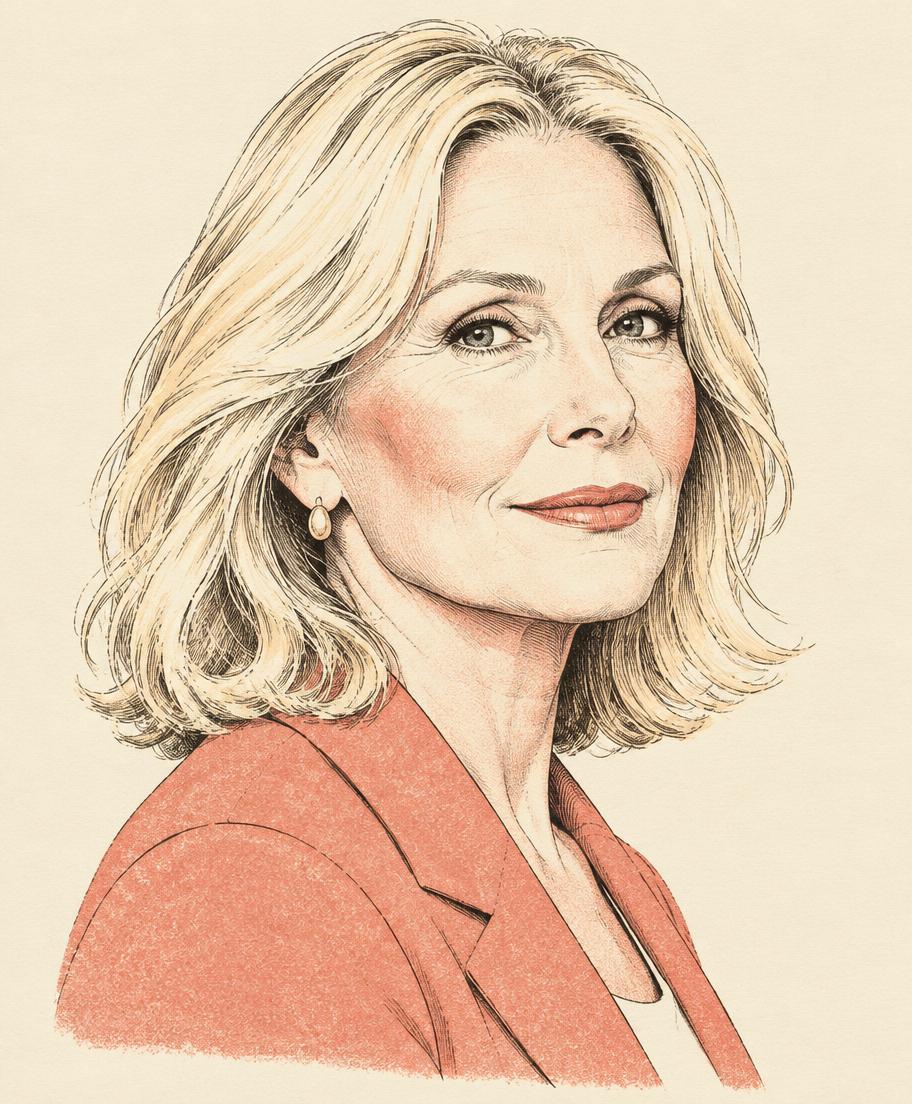
Meryl Streep
The most-nominated performer in Academy Awards history, known for her range across four decades of film and stage.
Read biography ↗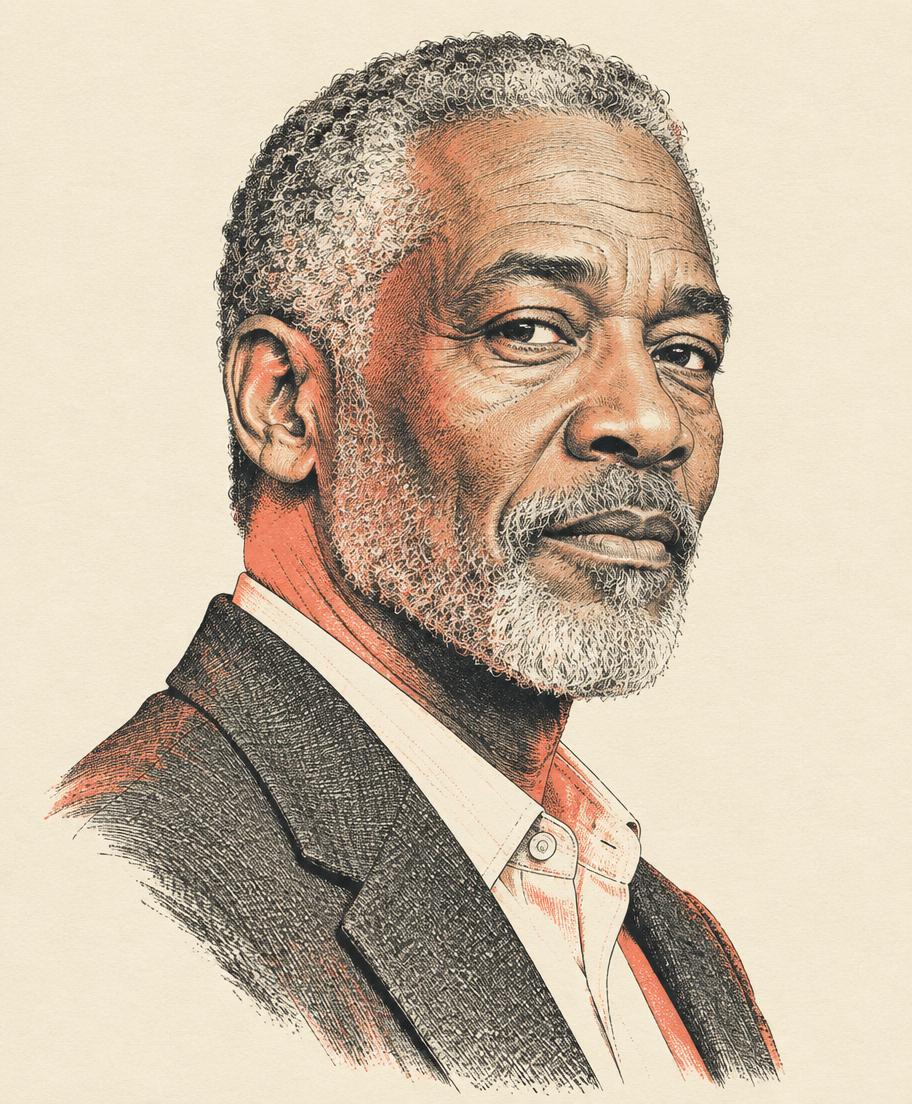
Actor and director
Denzel Washington
An American actor and director whose screen work spans Glory, Malcolm X and Training Day, alongside acclaimed stage performances.
Read biography ↗