English-born Australian writer
Patrick White
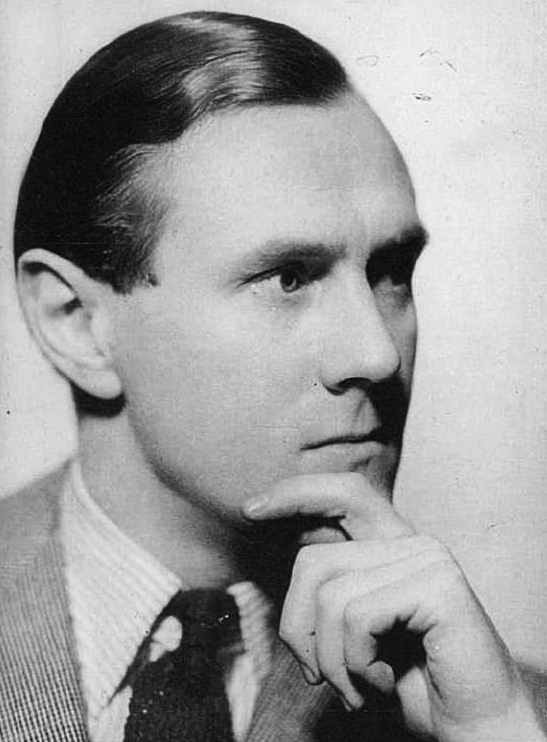
Patrick Victor Martindale White was an Australian novelist and playwright who explored themes of religious experience, personal identity and the conflict between visionary individuals and a materialistic, conformist society.
By globalcelebwiki Editorial Desk, adapted from Wikipedia · Published 29 September 2026
- Profession
- English-born Australian writer
- Born
- 28 May 1912
- Birthplace
- London
- Nationality
- Australian
Overview
Patrick Victor Martindale White (28 May 1912 – 30 September 1990) was an Australian novelist and playwright who explored themes of religious experience, personal identity and the conflict between visionary individuals and a materialistic, conformist society. Influenced by the modernism of James Joyce, D. H. Lawrence and Virginia Woolf, he developed a complex literary style and a body of work that challenged the dominant realist prose tradition of his home country, was satirical of Australian society, and sharply divided local critics. He was awarded the Nobel Prize in Literature in 1973 and is the only Australian to receive it.
Born in London to affluent Australian parents, White spent his childhood in Sydney and on his family's rural properties. He was sent to an English public school at the age of 13, and went on to read modern languages at Cambridge. After graduating in 1935 he embarked on a literary career. His first published novel, Happy Valley (1939), was awarded the Gold Medal of the Australian Literature Society. In World War II he served as an intelligence officer in the Royal Air Force. While stationed in Alexandria, Egypt, in 1941, he met Manoly Lascaris, who became his life companion and, as White later wrote, "the central mandala in my life's hitherto messy design."
In 1948 White returned to Australia, where he bought a small farm on the outskirts of Sydney. There he wrote the two novels, The Tree of Man (1955) and Voss (1957), that brought him critical acclaim in the United States and the United Kingdom. In the 1960s he wrote the novels Riders in the Chariot (1961) and The Solid Mandala (1966), and a series of plays, including The Season at Sarsaparilla and A Cheery Soul, that had a major impact on Australian theatre.
White and Lascaris moved to Sydney's Centennial Park in 1964. From the late 1960s White became increasingly involved in public affairs, opposing the Vietnam War and supporting Aboriginal self-determination, nuclear disarmament and environmental causes. His later work includes the novels The Eye of the Storm (1973) and The Twyborn Affair (1979) and the memoir Flaws in the Glass (1981).
Childhood and adolescence
White was born in Knightsbridge, London, on 28 May 1912. His Australian parents, Victor Martindale White, a wealthy sheep grazier, and Ruth (née Withycombe) were in England on an extended honeymoon. The family returned to Sydney, Australia, when he was six months old. As a child he lived in a flat with his sister, a nanny, and a maid while his parents lived in an adjoining flat. In 1916 they moved to a large house, "Lulworth", in Elizabeth Bay. At the age of four White developed asthma, a condition that had taken the life of his maternal grandfather, and his health was fragile throughout his childhood.
At the age of five he attended kindergarten at Sandtoft in Woollahra, close to their home. His mother often took him to plays and pantomimes and White developed a life long love of the theatre. Nevertheless, White felt closer to his nurse, Lizzie Clark, who taught him to tell the truth and "not blow his own trumpet".
In 1920 he attended Cranbrook School but his asthma worsened. Two years later he was sent to Tudor House School, a boarding school in the Southern Highlands of New South Wales, where it was thought the climate would help his lungs. White enjoyed the freedom provided by the school where discipline was lax. He read widely from the school library, wrote a play and excelled at English. In 1924 the boarding school ran into financial trouble, and the headmaster suggested that White be sent to a public school in England.
In April 1925 his parents took White to England to enrol in Cheltenham College in Gloucestershire. In his first years at Cheltenham he was withdrawn and had few friends. He found his housemaster to be sadistic and puritanical, and White's certitude of his own homosexuality increased his sense of isolation. He later wrote of Cheltenham, "When the gates of my expensive prison closed I lost confidence in my mother, and [I] never forgave."
One of White's few pleasures was the time spent at the Somerset home of his cousin, the painter Jack Withycombe. Jack's daughter Elizabeth Withycombe became a mentor to him while he was completing his first, privately published, volume of verse, Thirteen Poems, written between 1927 and 1929. White also became friends with Ronald Waterall who was two years his senior at Cheltenham and shared his passion for the theatre. He and White would spend their holidays in London seeing as many shows as they could.
Europe, America and war
From 1932 White lived in England, studying French and German literature at King's College, Cambridge. There he began a love affair with a fellow student that lasted until White graduated. White wrote poems, some of which were published in the London Mercury. He spent his holidays in France and Germany to improve his languages and read Joyce, Lawrence, Proust, Flaubert, Stendhal and Thomas Mann with admiration. He made a pilgrimage to Zennor in Cornwall where Lawrence wrote Women in Love and the visit inspired further poems. A collection was published as The Ploughman and Other Poems in an edition of 300 in Sydney in 1935 but received little critical attention and was later suppressed by White. A play, Bread and Butter Women, was given an amateur production in Sydney the same year.
On White's graduation in 1935 his mother wanted him to embark on a diplomatic career but he was determined to stay in England and become a writer. His mother relented and his father granted him an allowance of £400 a year. He moved to London's Pimlico district where, in 1936, he met the Australian painter Roy de Maistre. De Maistre briefly became White's lover and remained a mentor and friend. White later said that de Maistre had encouraged him to break from naturalistic prose and write "from the inside out."
White began work on the novel Happy Valley, partly based on his experience working as a jackaroo. In 1937 his story "The Twitching Colonel" was published in the London Mercury. His father died in December, leaving him a legacy of £10,000 that enabled him to write full-time in relative comfort. He started work on a play, Return to Abyssinia, and wrote skits for revues which were produced with moderate success. He completed Happy Valley and the novel was accepted by the British publisher George G. Harrap and Company in 1938.
Happy Valley was published in early 1939 to generally favourable reviews which encouraged White to go to America to find a publisher there. White arrived in New York in April and travelled across the country. He visited Taos, New Mexico, where he viewed Lawrence's ashes and met Frieda Lawrence. He then moved to Cape Cod where he worked on a novel, The Living and the Dead, partly based on his life in London. When the Second World War broke out in September, White took the first available ship back to England where he continued to work on his new novel.
In early 1940 White heard that Ben Huebsch, the head of the American publisher Viking, had accepted Happy Valley. Huebsch had published Lawrence and Joyce in America and White was delighted with the connection to these writers. Huebsch was to become one of White's main literary supporters. White decided to travel back to New York for the publication of Happy Valley and to complete the new novel. Happy Valley was published in June to favourable reviews. Huebsch also accepted the now completed novel The Living and the Dead for publication.
Return to Australia
White arrived back in Australia in February 1948. He and Lascaris moved to a small farm purchased by White at Castle Hill, now a Sydney suburb but then semi-rural. He named the house "Dogwoods", after trees he planted there. He and Lascaris worked the farm and sold flowers, vegetables, milk and cream as well as pedigree schnauzer puppies.
The reviews of The Aunt's Story in the British and Australian press were less enthusiastic than those in America, and White was unable to interest theatres in Australia or overseas in producing The Ham Funeral. He was making slow progress on the novel which was to become The Tree of Man and was discouraged at his prospects of success as a writer. He also questioned his decision to return to Australia.
In late 1951 White had a religious experience that gave him a belief in God and the inspiration to recommence work on The Tree of Man (published in 1955). He described the novel as an attempt to suggest "every possible aspect of life, through the lives of an ordinary man and woman." The Tree of Man and his following work Voss (1957) established White's favourable critical reputation in Britain and America. White, however, was embittered by what he considered a hostile critical response in Australia.
Following his international success White continued to live and work on his farm in Castle Hill. He gave few interviews and usually declined requests for public appearances, promotion of his work, and invitations for his membership of literary and cultural organisations. He entertained a close circle of friends at his home but always felt himself to be an outsider: "first as a child with what kind of strange gift no one quite knew; then a despised colonial in an English public school; finally an artist in horrified Australia."
In 1961 his novel Riders in the Chariot was published, and was his first to receive almost universal critical praise in Australia. Meanwhile, White's interest had returned to the theatre. The Drama Committee of the Adelaide Festival had recommended The Ham Funeral as the festival's main theatrical production for 1962. The festival governors, however, rejected the play citing concerns about "a piece of work which quite fails to reconcile poetry with social realism" and a scene involving an aborted foetus in a dustbin. The controversy led to a successful amateur production of the play in Adelaide followed by a professional production in Sydney. White was inspired to write three further plays which were given professional productions: The Season at Sarsaparilla (1962), A Cheery Soul (1963) and Night on Bald Mountain (1964).
Nobel laureate
In 1970 White had begun working on a new novel, The Eye of the Storm, about the meaning of his mother's death. He sent the completed work to his British publishers in December 1972. He delayed sending it to his American publishers, Viking, because The Vivisector had sold poorly in America and he hoped positive reviews of the new work in Britain would increase interest in the United States.
The novel was published in August 1973 and White was awarded the Nobel Prize in Literature in October. The Nobel citation praised him "for an epic and psychological narrative art, which has introduced a new continent into literature". White, pleading delicate health, declined to travel to Sweden to accept the award. Nolan attended the ceremony on his behalf.
The Nobel prize increased worldwide interest in White's work. Eye of the Storm was widely reviewed in the United States and sold 25,000 copies by March 1974. New editions of his previous novels were published and translation rights sold well. White, however, refused to have Happy Valley republished as he considered it an inferior early work and he was afraid that some of the people on whom characters were based might sue for defamation.
According to David Marr, White's biographer, "From the time of the prize his work became saturated with a late, relaxed sensuality." White himself was less relaxed about the effects of the award, telling a supporter: "the Nobel Prize is a terrifying and destructive experience."
White was made Australian of the Year for 1973. In his acceptance speech, he said that Australia Day should be "a day of self-searching rather than trumpet blowing" and that historian Manning Clark, comedian Barry Humphries and communist trade union leader Jack Mundey were more worthy of the award.
In late 1984 White was hospitalised due to osteoporosis, crumbled vertebrae and glaucoma resulting from his long-term use of cortisone to treat his asthma and chest infections. Although he was still mentally agile, his physical health and mobility were declining.
He had recovered sufficiently by January 1985 to recommence work on a new novel, Memoirs of Many in One, which he described as a "religious" and "bawdy" novel about senility. Posing as the editor of the memoirs of Alex Xenophon Demirjian Gray, White felt free to explore various aspects of his own character. The novel was published in Britain on 1 April 1986 and sharply divided critics.
Salman Rushdie wrote to White in 1985, praising the novel Voss: "I cannot think when last a book so moved me." By this time, however, White was tired of praise for the novel as he rated several of his other works more highly. The completed opera Voss opened at the Adelaide Festival in March 1986 to general critical acclaim. White, however, boycotted the premiere because the festival had invited the Queen to attend. He attended the Sydney premiere later that year and judged it: "a stupendous occasion."
In April 1987 White's new play, Shepherd on the Rocks, opened at Adelaide in a production directed by Neil Armfield. White attended and deemed it a success. He had also written three short prose poems which were published as Three Uneasy Pieces in late 1987. White was determined that none of his works would be published or performed in 1988 which was the bicentenary of British settlement in Australia. He also urged a boycott of all official celebrations of the event, stating: "circuses don't solve serious problems."
White was hospitalised with pneumonia in August 1988. A nurse stayed at his home for the remainder of his life and he no longer had the strength to attend protest rallies. In June 1989, a selection of his public statements, speeches and interviews was published as Patrick White Speaks. In October, the Sydney Theatre Company staged a successful revival of The Ham Funeral directed by Neil Armfield. White attended the premiere in his last public appearance.
White was raised an Anglican but stated, "I… went through my youth believing in nothing but my own ego." In late 1951 he experienced a religious conversion:If I say I had no religious tendencies between adolescence and The Tree of Man, it's because I was sufficiently vain and egotistical to feel one can ignore certain realities. (I think the turning point came during a season of unending rain at Castle Hill when I fell flat on my back one day in the mud and starting cursing a God I had convinced myself didn't exist. My personal scheme of things until then at once seemed too foolish to continue holding.)As the 1950s progressed White became disillusioned with the Anglican church and his religious beliefs became more eclectic. He once described himself as a "lapsed Anglican egotist agnostic pantheist occultist existentialist would-be though failed Christian Australian." White stated in 1981 that he did not call himself a Christian because he could not follow Christ's injunction to forgive. In 1969, however, he had affirmed the importance of religion in his work: "Religion. Yes, that's behind all my books. What I am interested in is the relationship between the blundering human being and God."
In the 1930s White was not politically engaged, but was sympathetic to the Francoist cause in the Spanish Civil War and supported Britain's policy of appeasing Hitler. He later expressed regret over his complacency regarding European fascism. On his return to Australia after the Second World War he had little interest in politics but routinely voted for the conservative coalition in elections. He became involved in politics in 1969 when he joined protests against the Vietnam war and conscription of Australian troops for the conflict. He also supported the trade union Green Bans against development proposals which threatened the urban environment. He publicly supported the Australian Labor Party in the federal elections of 1972, 1974 and 1975 despite a falling out with the prime minister Gough Whitlam over sand mining on Fraser Island.
Following the dismissal of the Whitlam government in November 1975, he became a prominent advocate for an Australian republic. He was a public supporter of Aboriginal self-determination and privately donated money towards Aboriginal education. From 1981 he became a leading public figure in campaigns for nuclear disarmament and continued his support for various environmental causes. Marr states that a common thread running through his political interventions was his opposition to plutocracy. Academic Martin Thomas argues that White was acutely aware of his own privileged upbringing and this drove his later concern about social injustice.
According to critic Brian Kiernan, "the basic situation in his [White's] fiction is the attempt of individuals, most often individuals alienated from society, to grasp some higher, more essential reality that lies beyond or behind social existence." The search for a higher reality is most often presented as an exploration of various forms of religious or mystical experience and the "seers" are variously pioneer-settlers (The Tree of Man), explorers (Voss), artists (The Vivisector), the simple-minded (The Solid Mandala), those fleeing into the self (The Aunt's Story) or those on the margins of society. Sexual ambivalence and the search for personal identity are also recurrent themes that become more prominent in the later novels.
Society, in particular Australian society, is mostly portrayed as materialistic, conformist and life-inhibiting. White satirises what he called in 1958, "The Great Australian Emptiness"in which the mind is the least of possessions, in which the rich man is the important man, in which the schoolmaster and the journalist rule what intellectual roost there is, in which beautiful youths and girls stare at life through blind blue eyes, in which human teeth fall like autumn leaves, the buttocks of cars grow hourly glassier, food means cake and steak, muscles prevail, and the march of material ugliness does not raise a quiver from the average nerves."The academic Mark Williams argues that White places the religious impulse at the centre of the human condition and his work, adding that "religion is one of the central values, along with art and love, which he considers to be denigrated in his homeland." Kiernan notes a division among critics over whether "he is essentially a simple and traditional writer who affirms a religious, even mystical view of life, or one who is distinctively modern, sophisticated and ironic, continually exploring transcendent possibilities but with detachment and even scepticism." Greg Clarke argues that Christian discourse is central to White's writing. Marr, Williams and Kiernan, however, state that White drew on various religious and mystical traditions in his work including Judaism, Jungian archetypes and gnosticism.
White's early novels were heavily influenced by the modernism of Eliot, Joyce, Lawrence and Woolf. Kiernan has called his mature work "complex, ambiguous and ironic verbal structures". His narratives shift seamlessly between past and present, inner experience and outer awareness, and the point of view of different characters. According to Williams, "the point of view of the narrative in any White novel changes continually, rapidly and disconcertingly. The narrative voice ... is a voice composed of many voices, a slippery, complex, fluent medium."
White frequently shifts between tones, styles and linguistic registers. According to Kiernan, "A self-conscious play with conventions, a parodic playfulness, is apparent through White's adoption of various modes in his work from the first." His transitions between realist, expressionist, symbolist and romantic modes were a conscious attempt to demonstrate that "the Australian novel is not necessarily the dreary, dun-coloured offspring of journalistic realism." Kiernan states that in Voss the theme of the outsider as visionary explorer of the human condition is undercut by ironic comedy and parodies of the "gothic excess" of romantic literature. Williams argues that White's tendency for parody and playfulness become more prominent in later works such as The Twyborn Affair and Memoirs of Many in One. The tone becomes less portentous and more relaxed, and the works more self-referential.
Influence and legacy
Critic Susan Lever considers White a pivotal figure in Australian literature, stating that he made the novel, rather than poetry, the pre-eminent literary form. He "transformed the possibilities of the Australian novel by demonstrating that it was a place to test ideas against complex spiritual, psychological and emotional experience, not only an avenue for national storytelling."
Australian novelists influenced by White include Thomas Keneally, Thea Astley, Randolph Stow and Christopher Koch. Lever argues that the following generations of novelists were more influenced by recent trends in world literature. Novelist David Malouf states that White's "High Modernism" is a literary form that has become unfashionable but that this could change. In 2018, novelist Christos Tsiolkas argued that White was an important figure in Australian literature who hadn't received enough attention in recent decades. Writing in 2024, critic Martin Thomas noted that critical and public interest in White had declined.
The Patrick White Award is an annual literary prize which White founded in 1975 with the prize money from his Nobel prize. It is awarded to writers who have made a significant contribution to Australian literature. The Patrick White Indigenous Writers Award is for Indigenous students in New South Wales from Kindergarten to year 12. It is run by the Aboriginal Education Council which was a beneficiary of Patrick White's estate. The Sydney Theatre Company sponsors the Patrick White Playwrights Award and Fellowship in honour of White's contribution to Australian theatre.
In 2006 the National Library of Australia acquired a large quantity of White's manuscripts. These included an unfinished novel, The Hanging Garden, which was published in 2012. The Art Gallery of New South Wales owns a 1940 portrait of White by de Maistre, and Parliament House, Sydney, owns a 1980 portrait by Brett Whiteley. A portrait of White by Louis Kahan won the 1962 Archibald Prize. White donated much of his own collection of Australian art to the Art Gallery of New South Wales.
As of 2024 there is no museum or institution dedicated to White's life and work. His former residence, "Dogwoods", at Castle Hill is privately owned but has a commemorative plaque and the surrounding streets are named after him. His former Sydney residence at Centennial Park is privately owned but is heritage listed. White is commemorated by the Patrick White Lawns adjacent to the National Library of Australia in Canberra.
Honours and awards
White's numerous honours and awards include:
1941: Gold Medal of the Australian Literature Society for Happy Valley
1955: Gold Medal of the Australian Literature Society for The Tree of Man
1957: Miles Franklin Literary Award for Voss
1959: W. H. Smith Literary Award for Voss
Sources and references
Spotted something wrong? Report a correction.
Related profiles
Broadcaster and natural historian
David Attenborough
The broadcaster whose natural history series have shaped how audiences understand life on Earth.
Read biography ↗
Animator and film director
Hayao Miyazaki
The animator and co-founder of Studio Ghibli whose hand-drawn films reached audiences worldwide.
Read biography ↗
Pope
Benedict I
Pope Benedict I was the bishop of Rome from 2 June 575 to his death on 30 July 579.
Read biography ↗