Austrian writer, playwright and film director (born 1942)
Peter Handke
Peter Handke is an Austrian novelist, playwright, translator, poet, film director, and screenwriter.
By globalcelebwiki Editorial Desk, adapted from Wikipedia · Published 29 September 2026
- Profession
- Austrian writer, playwright and film director (born 1942)
- Born
- 6 December 1942
- Birthplace
- Griffen
- Nationality
- Austrian

Overview
Peter Handke (German: [ˈpeːtɐ ˈhantkə]; born 6 December 1942) is an Austrian novelist, playwright, translator, poet, film director, and screenwriter. He was awarded the 2019 Nobel Prize in Literature "for an influential work that with linguistic ingenuity has explored the periphery and the specificity of human experience." Handke is considered to be one of the most influential and original German-language writers in the second half of the 20th century.
In the late 1960s, he earned his reputation as a member of the avant-garde with such plays as Offending the Audience (1966) in which actors analyze the nature of theatre and alternately insult the audience and praise its "performance", and Kaspar (1967). His novels, mostly ultra objective, deadpan accounts of characters in extreme states of mind, include The Goalie's Anxiety at the Penalty Kick (1970) and The Left-Handed Woman (1976). Prompted by his mother's suicide in 1971, he reflected her life in the novella A Sorrow Beyond Dreams (1972).
A dominant theme of his works is the deadening effects and underlying irrationality of ordinary language, everyday reality, and rational order. Handke was a member of the Grazer Gruppe (an association of authors) and the Grazer Autorenversammlung, and co-founded the Verlag der Autoren publishing house in Frankfurt. He collaborated with director Wim Wenders, and wrote such screenplays as The Wrong Move and Wings of Desire.
In 1973, he won the Georg Büchner Prize, the most important literary prize for German-language literature. In 1999, as a protest against the NATO bombing of Yugoslavia, Handke returned the prize money to the German Academy for Language and Literature. Handke has drawn significant controversy for his public support of Serbian nationalism in the wake of the Yugoslav Wars.
Early life and family
Handke was born in Griffen, in Carinthia, Austria (then an annexed part of Germany). His father, Erich Schönemann, was a bank clerk and German soldier whom Handke did not meet until adulthood. His mother Maria, a Carinthian Slovene, married Bruno Handke, a tram conductor and Wehrmacht soldier from Berlin, before Peter was born. The family lived in the Soviet-occupied Pankow district of Berlin from 1944 to 1948, where Maria Handke had two more children: Peter's half-sister and half-brother. Then the family moved to his mother's home town of Griffen. Peter experienced his stepfather as more and more violent due to alcoholism.
In 1954, Handke was sent to the Catholic Marianum boys' boarding school at Tanzenberg Castle in Sankt Veit an der Glan. There, he published his first writing in the school newspaper, Fackel. In 1959, he moved to Klagenfurt, where he went to high school, and commenced law studies at the University of Graz in 1961.
While studying, Handke established himself as a writer, linking up with the Grazer Gruppe (the Graz Authors' Assembly), an association of young writers. The group published a magazine on literature, manuskripte, which published Handke's early works. Group members included Wolfgang Bauer and Barbara Frischmuth.
Handke abandoned his studies in 1965, after the German publishing house Suhrkamp Verlag accepted his novel Die Hornissen (The Hornets) for publication. He gained international attention after an appearance at a meeting of avant-garde artists belonging to the Gruppe 47 in Princeton, New Jersey, in 1966. The same year, his play Publikumsbeschimpfung (Offending the Audience) premiered at the Theater am Turm in Frankfurt, directed by Claus Peymann. Handke became one of the co-founders of the publishing house Verlag der Autoren in 1969 with a new commercial concept, as it belonged to the authors. He co-founded the Grazer Autorenversammlung in 1973 and was a member until 1977.
Handke's first play, Publikumsbeschimpfung (Offending the Audience), which premiered in Frankfurt in 1966 and made him well known, was the first of several experimental plays without a conventional plot. In his second play, Kaspar, he treated the story of Kaspar Hauser as "an allegory of conformist social pressures".
Handke collaborated with director Wim Wenders on a film version of Die Angst des Tormanns beim Elfmeter, wrote the script for Falsche Bewegung (The Wrong Move) and co-wrote the screenplay for Der Himmel über Berlin (Wings of Desire) including the poem at its opening and Les Beaux Jours d'Aranjuez (The Beautiful Days of Aranjuez). He also directed films, including adaptations from his novels The Left-Handed Woman after Die linkshändige Frau, and The Absence after Die Abwesenheit. The Left-Handed Woman, was released in 1978 and was nominated for the Golden Palm Award at the Cannes Film Festival in 1978 and won the Gold Award for German Arthouse Cinema in 1980. Leonard Maltin's Movie Guide's description of the film is that a woman demands that her husband leave and he complies. "Time passes... and the audience falls asleep." Handke also won the 1975 German Film Award in Gold for his screenplay for Falsche Bewegung (The Wrong Move). Since 1975, Handke has been a jury member of the European literary award Petrarca-Preis.
In 2019, Handke was awarded the Nobel Prize in Literature "for an influential work that with linguistic ingenuity has explored the periphery and the specificity of human experience."
Literary reception
In 1977, reviewing A Moment of True Feeling, Stanley Kauffmann wrote that Handke "is the most important new writer on the international scene since Samuel Beckett." John Updike reviewed the same novel in The New Yorker and was equally impressed, noting that "there is no denying his [Handke's] willful intensity and knifelike clarity of evocation. He writes from an area beyond psychology, where feelings acquire the adamancy of randomly encountered, geologically analyzed pebbles." The Frankfurter Allgemeine Zeitung described him as "the darling of the West German critics." Hugo Hamilton stated that, since his debut, Handke "has tested, inspired and shocked audiences." Joshua Cohen noted that Handke "commands one of the great German-language prose styles of the post-war period, a riverine rhetoric deep and swift and contrary of current," while Gabriel Josipovici described him, "despite reservations about some of his recent work," as one of the most significant German-language writers of the post-war era. W. G. Sebald was inspired by Handke's intricate prose. In an essay on Repetition, he wrote about "a great and, as I have since learned, lasting impression" the book made on him. "I don’t know," he lauded, "if the forced relation between hard drudgery and airy magic, particularly significant for the literary art, has ever been more beautifully documented than in the pages of Repetition." Karl Ove Knausgård described A Sorrow Beyond Dreams as one of the "most important books written in German in our time." The book and its author were also praised in Knausgård's My Struggle.
Awards
1987: Vilenica International Literary Prize
2002: Honorary Doctor, University of Klagenfurt
2003: Honorary Doctor, University of Salzburg
2018: Nestroy Theatre Prize for Lifetime Achievement
2024: Grand Decoration of Honour in Gold with Sash for Services to the Republic of Austria
Works
Handke has written novels, plays, screenplays, essays and poems, often published by Suhrkamp. Many works were translated into English. His works are held by the German National Library, including:
1970 Die Angst des Tormanns beim Elfmeter (The Goalie's Anxiety at the Penalty Kick), novel and screenplay of the film The Goalkeeper's Fear of the Penalty (1972)
1972 Der kurze Brief zum langen Abschied (Short Letter, Long Farewell), novel
1972 Wunschloses Unglück (A Sorrow Beyond Dreams: A Life Story), memoir
1975 Die Stunde der wahren Empfindung (A Moment of True Feeling), novel
1976 Die linkshändige Frau (The Left-Handed Woman)
1966 Publikumsbeschimpfung und andere Sprechstücke (Offending the Audience and Other Spoken Plays), play, English version as Offending the Audience and Self-accusation
1967 Kaspar, play, English version also as Kaspar and Other Plays
1973 Die Unvernünftigen sterben aus, play
1990 Das Wintermärchen, William Shakespeare, German translation by Peter Handke. Première Schaubühne Berlin (1990)
1992 Die Stunde, da wir nichts voneinander wußten (The Hour We Knew Nothing of Each Other), play
1969 Die Innenwelt der Aussenwelt der Innerwelt (The Innerworld of the Outerworld of the Innerworld)
1974 Als das Wünschen noch geholfen hat (Nonsense and Happiness)
1971 Chronik der laufenden Ereignisse (Chronicle of Current Events)
1977 Die linkshändige Frau (The Left-Handed Woman), after his 1976 novel
1985 Das Mal des Todes (The Malady of Death), after Marguerite Duras' 1982 novella
1969 3 amerikanische LP's (3 American LPs), film by Wim Wenders
1972 Die Angst des Tormanns beim Elfmeter (The Goalie's Anxiety at the Penalty Kick), film by Wim Wenders
1975 Falsche Bewegung (Wrong Move), film by Wim Wenders
1987 Der Himmel über Berlin (Wings of Desire), film by Wim Wenders
Sources and references
Spotted something wrong? Report a correction.
Related profiles
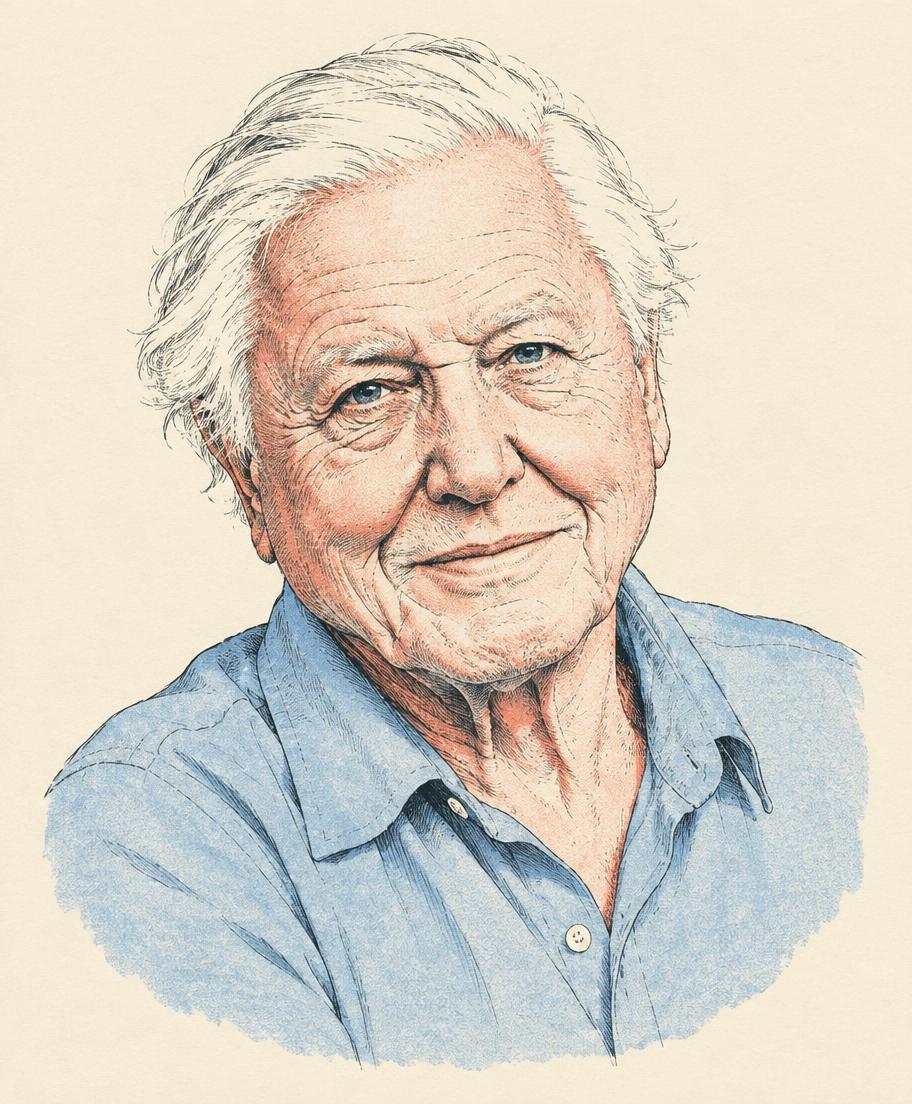
Broadcaster and natural historian
David Attenborough
The broadcaster whose natural history series have shaped how audiences understand life on Earth.
Read biography ↗
Animator and film director
Hayao Miyazaki
The animator and co-founder of Studio Ghibli whose hand-drawn films reached audiences worldwide.
Read biography ↗
Pope
Benedict I
Pope Benedict I was the bishop of Rome from 2 June 575 to his death on 30 July 579.
Read biography ↗