American novelist (1933–2018)
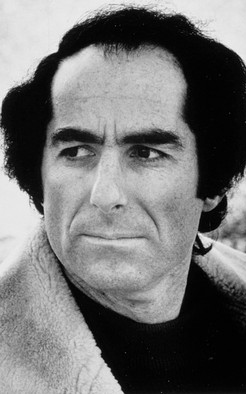
Philip Roth
Philip Milton Roth was an American novelist and short-story writer.
By globalcelebwiki Editorial Desk, adapted from Wikipedia · Published 29 September 2026
- Profession
- American novelist (1933–2018)
- Born
- 18 March 1933
- Birthplace
- Newark
- Nationality
- American
Overview
Philip Milton Roth (; March 19, 1933 – May 22, 2018) was an American novelist and short-story writer. Roth's fiction—often set in his birthplace of Newark, New Jersey—is known for its intensely autobiographical character, for philosophically and formally blurring the distinction between reality and fiction, for its "sensual, ingenious style" and for its provocative explorations of Jewish and American identity. He first gained attention with the 1959 short story collection Goodbye, Columbus, which won the U.S. National Book Award for Fiction. Ten years later, he published the bestseller Portnoy's Complaint. Nathan Zuckerman, Roth's literary alter ego, narrates several of his books. A fictionalized Roth narrates some of his others, such as the alternate history The Plot Against America.
Roth is one of the most honored American writers of his generation. He received the National Book Critics Circle award for The Counterlife, the PEN/Faulkner Award for Operation Shylock, The Human Stain, and Everyman, a second National Book Award for Sabbath's Theater, and the Pulitzer Prize for American Pastoral. In 2001, Roth received the inaugural Franz Kafka Prize in Prague. In 2005, the Library of America began publishing his complete works, making him the second author so anthologized while still living, after Eudora Welty. Harold Bloom named him one of the four greatest American novelists of his day, along with Cormac McCarthy, Thomas Pynchon, and Don DeLillo. James Wood wrote: "More than any other post-war American writer, Roth wrote the self—the self was examined, cajoled, lampooned, fictionalized, ghosted, exalted, disgraced but above all constituted by and in writing. Maybe you have to go back to the very different Henry James to find an American novelist so purely a bundle of words, so restlessly and absolutely committed to the investigation and construction of life through language... He would not cease from exploration; he could not cease, and the varieties of fiction existed for him to explore the varieties of experience".
Early life and academic pursuits
Philip Roth was born in Newark, New Jersey, on March 19, 1933, and grew up at 81 Summit Avenue in the Weequahic neighborhood. He was the second child of Bess (née Finkel) and Herman Roth, an insurance broker. Roth's family was Jewish, and his parents were second-generation Americans. His paternal grandparents came from Kozlov near Lviv (then Lemberg) in Austrian Galicia, and his mother's ancestors were from the region of Kyiv in Ukraine. He graduated from Newark's Weequahic High School in or around 1950.
In 1969, Arnold H. Lubasch wrote in The New York Times that the school "has provided the focus for the fiction of Philip Roth, the novelist who evokes his era at Weequahic High School in the highly acclaimed Portnoy's Complaint. Besides identifying Weequahic High School by name, the novel specifies such sites as the Empire Burlesque, the Weequahic Diner, the Newark Museum and Irvington Park, all local landmarks that helped shape the youth of the real Roth and the fictional Portnoy, both graduates of Weequahic class of '50." The 1950 Weequahic Yearbook calls Roth a "boy of real intelligence, combined with wit and common sense". He was known as a comedian during his time at school.
Roth attended Rutgers University in Newark for a year, then transferred to Bucknell University in Pennsylvania, where he earned a B.A. magna cum laude in English and was elected to Phi Beta Kappa. He received a fellowship to attend the University of Chicago, where he earned an M.A. in English literature in 1955 and briefly worked as an instructor in the university's writing program. That same year, rather than wait to be drafted, Roth enlisted in the army, but suffered a back injury during basic training and was given a medical discharge. He returned to Chicago in 1956 to study for a PhD in literature, but dropped out after one term. Roth was a longtime faculty member at the University of Pennsylvania, where he taught comparative literature until retiring from teaching in 1991. He then took a part-time visiting lecturer position at Bard College, where his friend Norman Manea had long been a distinguished writer in residence, and where the two co-taught a class in 1999.
Writing career
Roth's work first appeared in print in the Chicago Review while he was studying, and later teaching, at the University of Chicago. His first book, Goodbye, Columbus, contains the novella Goodbye, Columbus and four short stories. It won the National Book Award in 1960. He published his first full-length novel, Letting Go, in 1962. In 1967 he published When She Was Good, set in the WASP Midwest in the 1940s. It is based in part on the life of Margaret Martinson Williams, whom Roth married in 1959.
The publication in 1969 of his fourth and most controversial novel, Portnoy's Complaint, gave Roth widespread commercial and critical success, causing his profile to rise significantly. During the 1970s Roth experimented in various modes, from the political satire Our Gang (1971) to the Kafkaesque The Breast (1972). By the end of the decade Roth had created his alter ego Nathan Zuckerman. In a series of highly self-referential novels and novellas that followed between 1979 and 1986, Zuckerman appeared as either the main character or an interlocutor.
Sabbath's Theater (1995) may have Roth's most lecherous protagonist, Mickey Sabbath, a disgraced former puppeteer. It won his second National Book Award. In complete contrast, American Pastoral (1997), the first volume of his so-called American Trilogy, focuses on the life of virtuous Newark star athlete Swede Levov, and the tragedy that befalls him when his teenage daughter becomes a domestic terrorist during the late 1960s. It won the Pulitzer Prize for Fiction.
The Dying Animal (2001) is a short novel about eros and death that revisits literary professor David Kepesh, protagonist of two 1970s works, The Breast and The Professor of Desire (1977). In The Plot Against America (2004), Roth imagines an alternative American history in which Charles Lindbergh, aviator hero and isolationist, is elected U.S. President in 1940, and the U.S. negotiates an understanding with Hitler's Nazi Germany and embarks on its own program of antisemitism.
Roth's novel Everyman, a meditation on illness, aging, desire, and death, was published in May 2006. It was Roth's third book to win the PEN/Faulkner Award, making him the only person so honored. Exit Ghost, which again features Nathan Zuckerman, was released in October 2007. It was the last Zuckerman novel. Indignation, Roth's 29th book, was published on September 16, 2008. Set in 1951, during the Korean War, it follows Marcus Messner's departure from Newark to Ohio's Winesburg College, where he begins his sophomore year. In 2009, Roth's 30th book, The Humbling, was published. It tells the story of the last performances of Simon Axler, a celebrated stage actor. Roth's 31st book, Nemesis, was published on October 5, 2010. According to the book's notes, Nemesis is the last in a series of four "short novels", after Everyman, Indignation and The Humbling. In October 2009, during an interview with Tina Brown of The Daily Beast to promote The Humbling, Roth considered the future of literature and its place in society, stating his belief that within 25 years the reading of novels will be regarded as a "cultic" activity:
Influences and themes
Much of Roth's fiction revolves around semi-autobiographical themes, while self-consciously and playfully addressing the perils of establishing connections between Roth and his fictional lives and voices. Examples of this close relationship between the author's life and his characters' include narrators and protagonists such as David Kepesh and Nathan Zuckerman as well as the character "Philip Roth", who appears in The Plot Against America and of whom there are two in Operation Shylock. Critic Jacques Berlinerblau noted in The Chronicle of Higher Education that these fictional voices create a complex and tricky experience for readers, deceiving them into believing they "know" Roth.
In Roth's fiction the question of authorship is intertwined with the theme of the idealistic, secular Jewish son who attempts to distance himself from Jewish customs and traditions, and from what he perceives as the sometimes suffocating influence of parents, rabbis, and other community leaders. Roth's fiction has been described by critics as pervaded by "a kind of alienation that is enlivened and exacerbated by what binds it".
Roth's first work, Goodbye, Columbus, was an irreverently humorous depiction of the life of middle-class Jewish Americans and received highly polarized reviews; one reviewer found it infused with self-loathing. In response, Roth, in his 1963 essay "Writing About Jews" (collected in Reading Myself and Others), maintained that he wanted to explore the conflict between the call to Jewish solidarity and his desire to be free to question the values and morals of middle-class Jewish Americans uncertain of their identities in an era of cultural assimilation and upward social mobility:
The cry 'Watch out for the goyim!' at times seems more the expression of an unconscious wish than of a warning: Oh that they were out there, so that we could be together here! A rumor of persecution, a taste of exile, might even bring with it the old world of feelings and habits—something to replace the new world of social accessibility and moral indifference, the world which tempts all our promiscuous instincts, and where one cannot always figure out what a Jew is that a Christian is not.
In Roth's fiction the exploration of "promiscuous instincts" within the context of Jewish lives, mainly from a male viewpoint, plays an important role. In the words of critic Hermione Lee:
Personal life
While at Chicago in 1956, Roth met Margaret Martinson, who became his first wife in 1959. Their separation in 1963, and Martinson's subsequent death in a car crash in 1968, left a lasting mark on Roth's literary output. Martinson was the inspiration for female characters in several of Roth's novels, including Lucy Nelson in When She Was Good and Maureen Tarnopol in My Life as a Man.
Roth was an atheist who once said, "When the whole world doesn't believe in God, it'll be a great place." He also said during an interview with The Guardian: "I'm exactly the opposite of religious, I'm anti-religious. I find religious people hideous. I hate the religious lies. It's all a big lie ... It's not a neurotic thing, but the miserable record of religion—I don't even want to talk about it. It's not interesting to talk about the sheep referred to as believers. When I write, I'm alone. It's filled with fear and loneliness and anxiety—and I never needed religion to save me."
Death and burial
Roth died at a Manhattan hospital of heart failure on May 22, 2018, at the age of 85. Roth was buried at the Bard College Cemetery in Annandale-on-Hudson, New York, where in 1999 he taught a class. He had planned to be buried next to his parents at the Gomel Chesed Cemetery in Newark, but changed his mind about 15 years before his death, in order to be close to where his friend Norman Manea was a writer in residence, and other Jews "to whom he could talk". Roth expressly banned any religious rituals from his funeral service, though it was noted that, the day after his burial, a pebble had been placed on top of his tombstone in accordance with Jewish tradition.
Awards and nominations
Two of Roth's works won the National Book Award for Fiction; four others were finalists. Two won National Book Critics Circle awards; another five were finalists. Roth won three PEN/Faulkner Awards (for Operation Shylock, The Human Stain, and Everyman) and a Pulitzer Prize for his 1997 novel American Pastoral.
In 2001, The Human Stain was awarded the United Kingdom's WH Smith Literary Award for the best book of the year, as well as France's Prix Médicis Étranger. Also in 2001, the MacDowell Colony awarded Roth the 42nd Edward MacDowell Medal. In 2002, Roth was awarded the National Book Foundation Medal for Distinguished Contribution to American Letters.
In 2003, literary critic Harold Bloom named Roth one of the four major American novelists still at work, along with Cormac McCarthy, Thomas Pynchon, and Don DeLillo. The Plot Against America (2004) won the Sidewise Award for Alternate History in 2005 and the Society of American Historians' James Fenimore Cooper Prize. Roth was also awarded the United Kingdom's WH Smith Literary Award for the best book of the year, an award he received twice.
In October 2005, Roth was honored in his hometown when then-mayor Sharpe James presided over the unveiling of a street sign in Roth's name on the corner of Summit and Keer Avenues, where Roth lived for much of his childhood, a setting prominent in The Plot Against America. A plaque on the house where the Roths lived was unveiled. In May 2006, he received the PEN/Nabokov Award, and in 2007 he received the PEN/Faulkner award for Everyman, making him the award's only three-time winner. In April 2007, he received the first PEN/Saul Bellow Award for Achievement in American Fiction.
The May 21, 2006, issue of The New York Times Book Review announced the results of a letter that was sent to what the publication described as "a couple of hundred prominent writers, critics, editors and other literary sages, asking them to identify 'the single best work of American fiction published in the last 25 years'". American Pastoral tied for fifth, and The Counterlife, Operation Shylock, Sabbath's Theater, The Human Stain and The Plot Against America received multiple votes. In the accompanying essay, A. O. Scott wrote: "Over the past 15 years, Roth's output has been so steady, so various and (mostly) so excellent that his vote has been, inevitably, split. If we had asked for the single best writer of fiction of the past 25 years, he would have won." Scott notes that "The Roth whose primary concern is the past—the elegiac, summarizing, conservative Roth—is preferred over his more aesthetically radical, restless, present-minded doppelgänger by a narrow but decisive margin." In 2009, Roth received the German newspaper Die Welt's Welt-Literaturpreis.
Eight of Roth's novels and short stories have been adapted as films: Goodbye, Columbus; Portnoy's Complaint; The Human Stain; The Dying Animal, adapted as Elegy; The Humbling; Indignation; and American Pastoral. In addition, The Ghost Writer was adapted for television in 1984. In 2014 filmmaker Alex Ross Perry made Listen Up Philip, which was influenced by Roth's work. HBO dramatized Roth's The Plot Against America in 2020 as a six-part series starring Zoe Kazan, Winona Ryder, John Turturro, and Morgan Spector.
Legacy
John Updike, considered by many Roth's chief literary rival, said in 2008, "He's scarily devoted to the novelist's craft... [he] seems more dedicated in a way to the act of writing as a means of really reshaping the world to your liking. But he's been very good to have around as far as goading me to become a better writer." Roth spoke at Updike's memorial service, saying, "He is and always will be no less a national treasure than his 19th-century precursor, Nathaniel Hawthorne." After Updike's memorial at the New York Public Library, Roth told Charles McGrath, "I dream about John sometimes. He's standing behind me, watching me write." Asked who was better, Roth said, "John had more talent, but I think maybe I got more out of the talent I had." McGrath agreed with that assessment, adding that Updike might be the better stylist, but Roth's work was more consistent and "much funnier". McGrath added that in the 1990s Roth "underwent a kind of sea change and, borne aloft by that extraordinary second wind, produced some of his very best work": Sabbath's Theater and the American Trilogy (American Pastoral, I Married a Communist, and The Human Stain). Another admirer of Roth's work is Bruce Springsteen. Roth read Springsteen's autobiography, Born to Run, and Springsteen praised Roth's American Trilogy: "I'll tell you, those three recent books by Philip Roth just knocked me on my ass.... To be in his sixties making work that is so strong, so full of revelations about love and emotional pain, that's the way to live your artistic life. Sustain, sustain, sustain."
Roth left his book collection and more than $2 million to the Newark Public Library. In 2021, the Philip Roth Personal Library opened for public viewing in the Newark Public Library. In April 2021, W. W. Norton & Company published Blake Bailey's authorized biography of Roth, Philip Roth: The Biography. Publication was halted two weeks after release due to sexual assault allegations against Bailey. Three weeks later, in May 2021, Skyhorse Publishing announced that it would release a paperback, ebook, and audiobook versions of the biography. Roth had asked his executors "to destroy many of his personal papers after the publication of the semi-authorized biography on which Blake Bailey had recently begun work.... Roth wanted to ensure that Bailey, who was producing exactly the type of biography he wanted, would be the only person outside a small circle of intimates permitted to access personal, sensitive manuscripts, including the unpublished Notes for My Biographer (a 295-page rebuttal to his ex-wife's memoir) and Notes on a Slander-Monger (another rebuttal, this time to a biographical effort from Bailey's predecessor). 'I don't want my personal papers dragged all over the place,' Roth said. The fate of Roth's personal papers took on new urgency in the wake of Norton's decision to halt distribution of the biography. In May 2021, the Philip Roth Society published an open letter imploring Roth's executors 'to preserve these documents and make them readily available to researchers.'"
After Roth's death, Harold Bloom told the Library of America: "Philip Roth's departure is a dark day for me and for many others. His two greatest novels, American Pastoral and Sabbath's Theater, have a controlled frenzy, a high imaginative ferocity, and a deep perception of America in the days of its decline. The Zuckerman tetralogy remains fully alive and relevant, and I should mention too the extraordinary invention of Operation Shylock, the astonishing achievement of The Counterlife, and the pungency of The Plot Against America. His My Life as a Man still haunts me. In one sense Philip Roth is the culmination of the unsolved riddle of Jewish literature in the twentieth and twenty-first centuries. The complex influences of Kafka and Freud and the malaise of American Jewish life produced in Philip a new kind of synthesis. Pynchon aside, he must be estimated as the major American novelist since Faulkner."
The New York Times asked several prominent authors to name their favorite work by Roth. The responses were varied; Jonathan Safran Foer chose Patrimony, Roth's memoir of his father's illness: "Much has been written about Roth since he died. In keeping with the unseemliness of our profession, we all have something to say. The responses have overflowed with a kind of blunt adoration that would be perfectly un-Rothlike if they weren't the efforts of children agonizing over the right way to bury our father. None of it feels right, perhaps because nothing could. Roth's words dressed his father for death, and they dressed so many of us for life. How does one properly acknowledge that? How does one say thank you for the thousand almost-invisible preparations? This morning, as I was getting my children dressed for school, I felt the profound gratitude of a 'little son.'"
Joyce Carol Oates told The Guardian: "Philip Roth was a slightly older contemporary of mine. We had come of age in more or less the same repressive 50s era in America—formalist, ironic, 'Jamesian', a time of literary indirection and understatement, above all impersonality—as the high priest TS Eliot had preached: 'Poetry is an escape from personality.' Boldly, brilliantly, at times furiously, and with an unsparing sense of the ridiculous, Philip repudiated all that. He did revere Kafka—but Lenny Bruce as well. (In fact, the essential Roth is just that anomaly: Kafka riotously interpreted by Lenny Bruce.) But there was much more to Philip than furious rebellion. For at heart he was a true moralist, fired to root out hypocrisy and mendacity in public life as well as private. Few saw The Plot Against America as actual prophecy, but here we are. He will abide."
Sources and references
Spotted something wrong? Report a correction.
Related profiles
Broadcaster and natural historian
David Attenborough
The broadcaster whose natural history series have shaped how audiences understand life on Earth.
Read biography ↗
Animator and film director
Hayao Miyazaki
The animator and co-founder of Studio Ghibli whose hand-drawn films reached audiences worldwide.
Read biography ↗
Pope
Benedict I
Pope Benedict I was the bishop of Rome from 2 June 575 to his death on 30 July 579.
Read biography ↗