American marine biologist and conservationist (1907–1964)
Rachel Carson
Rachel Louise Carson was an American marine biologist, writer, and conservationist whose sea trilogy and book Silent Spring are credited with advancing marine conservation and the global environmental movement.
By globalcelebwiki Editorial Desk, adapted from Wikipedia · Published 29 September 2026
- Profession
- American marine biologist and conservationist (1907–1964)
- Born
- 27 May 1907
- Birthplace
- Rachel Carson Homestead
- Nationality
- American

Overview
Rachel Louise Carson (May 27, 1907 – April 14, 1964) was an American marine biologist, writer, and conservationist whose sea trilogy (1941–1955) and book Silent Spring (1962) are credited with advancing marine conservation and the global environmental movement.
Carson began her career as an aquatic biologist in the U.S. Bureau of Fisheries, and became a full-time nature writer in the 1950s. Her widely praised 1951 bestseller The Sea Around Us won her a U.S. National Book Award, recognition as a gifted writer, and financial security. Its success prompted the republication of her first book, Under the Sea Wind (1941), in 1952, which was followed by The Edge of the Sea in 1955 — both were also bestsellers. This sea trilogy explores the whole of ocean life from the shores to the depths.
Late in the 1950s, Carson turned her attention to conservation, especially some problems she believed were caused by synthetic pesticides. The result was the book Silent Spring (1962), which brought environmental concerns to an unprecedented share of the American people. Although Silent Spring was met with fierce opposition by chemical companies, it spurred a reversal in national pesticide policy, which led to a nationwide ban on DDT and other pesticides. It also inspired a grassroots environmental movement that led to the creation of the U.S. Environmental Protection Agency. Carson was posthumously awarded the Presidential Medal of Freedom by President Jimmy Carter.
Early life and education
Carson was born on May 27, 1907, on a family farm near Springdale, Pennsylvania, located by the Allegheny River near Pittsburgh. She was the daughter of Maria Frazier (McLean) and Robert Warden Carson, an insurance salesman. She spent a lot of time exploring around her family's 65-acre (26 ha) farm. An avid reader, she began writing stories, often involving animals, at age eight. At age ten, she had her first story published. She enjoyed reading St. Nicholas Magazine, which carried her first published stories, the works of Beatrix Potter, the novels of Gene Stratton-Porter, and in her teen years, Herman Melville, Joseph Conrad, and Robert Louis Stevenson. The natural world, particularly that of the ocean, was the common thread of her favorite literature. Carson attended Springdale's small school through tenth grade, and then completed high school in nearby Parnassus, Pennsylvania, graduating in 1925 at the top of her class of 44 students. In high school, Carson was said to have been somewhat of a loner.
Carson gained admission to Pennsylvania College for Women, now Chatham University, in Pittsburgh, where she originally studied English but switched her major to biology in January 1928. She continued contributing to the school's student newspaper and literary supplement.
She was admitted to graduate school at Johns Hopkins University in Baltimore in 1928, but was forced to remain at the Pennsylvania College for Women for her senior year due to financial difficulties. In 1929, she graduated magna cum laude. In the summer of 1929, Carson moved to Woods Hole, Massachusetts for a course at the Marine Biological Laboratory (MBL). While at MBL, Carson wrote a "detailed anatomical study of the brain and cranial nerves of a turtle". Her time at MBL had a profound impact on Carson, who later stated that her "first prolonged contact with the sea [was] at Woods Hole", where she "first discovered the scientific literature of the sea". That fall, she continued her studies in zoology and genetics at Johns Hopkins. After her first year of graduate school, Carson became a part-time student, taking an assistantship in Raymond Pearl's laboratory, where she worked with rats and Drosophila, to earn money for tuition. After false starts with pit vipers and squirrels, she completed a dissertation on the embryonic development of the pronephros (urinary organ) in fish.
In June 1932, she earned a master's degree in zoology. She had intended to continue for a doctorate, however in 1934 Carson was forced to leave Johns Hopkins to search for a full-time teaching position to help support her family during the Great Depression. In 1935, Carson's father died suddenly, worsening their already critical financial situation and leaving Carson to care for her aging mother.
Career
At the urging of Mary Scott Skinker, her undergraduate biology mentor, Carson secured a temporary position with the U.S. Bureau of Fisheries, where she wrote radio copy for a series of weekly educational broadcasts called Romance Under the Waters. The series of 52 seven-minute programs focused on aquatic life and was intended to generate public interest in fish biology and the bureau's work, a task that several writers before Carson had not managed. Carson also began submitting articles on marine life in the Chesapeake Bay, based on her research for the series, to local newspapers and magazines. Carson earned extra money as a lecturer at the University of Maryland's Dental and Pharmacy Schools and Johns Hopkins University.
Carson's supervisor, pleased with the success of the radio series, asked her to write the introduction to a public brochure about the fisheries bureau; he also worked to secure her the first full-time position that became available. Sitting for the civil service exam, she outscored all other applicants and, in 1936, became the second woman hired by the Bureau of Fisheries for a full-time professional position, as a junior aquatic biologist.
Using her research and consultations with marine biologists as starting points, she wrote a steady stream of articles for The Baltimore Sun and other newspapers. However, her family responsibilities further increased in January 1937 when her older sister died, leaving Carson as the sole breadwinner for her mother and two nieces.
In July 1937, the Atlantic Monthly accepted a revised version of an essay, The World of Waters, that she originally wrote for her first fisheries bureau brochure. Her supervisor had deemed it too good for that purpose. The essay, published as Undersea, was a vivid narrative of a journey along the ocean floor. It marked a major turning point in Carson's writing career. Publishing house Simon & Schuster, impressed by Undersea, contacted Carson and suggested that she expand it into a book. Several years of writing resulted in Under the Sea Wind (1941), which received excellent reviews but sold poorly. In the meantime, Carson's article-writing success continued with her features appearing in Sun Magazine, Nature, and Collier's. Carson attempted to leave the Bureau (by then transformed into the United States Fish and Wildlife Service) in 1945. However, few jobs for naturalists were available, since most money for science was focused on technical fields in the wake of the Manhattan Project.
In mid-1945, Carson first encountered the subject of DDT, a revolutionary new pesticide—lauded as the "insect bomb" after the atomic bombings of Hiroshima and Nagasaki—that was only beginning to undergo tests for safety and ecological effects. DDT was one of Carson's many writing interests at the time, but editors found the subject unappealing; she published nothing on DDT until 1962.
Early in 1953, Carson began library and field research on the ecology and organisms of the Atlantic shore. In 1955, she completed the third volume of her sea trilogy, The Edge of the Sea, which focuses on life in coastal ecosystems, particularly along the Eastern Seaboard. It appeared in The New Yorker in two condensed installments shortly before its October 26 book release by Houghton Mifflin (again a new publisher). By this time, Carson's reputation for clear and poetical prose was well established; The Edge of the Sea received highly favorable reviews, if not quite as enthusiastic as for The Sea Around Us.
Through 1955 and 1956, Carson worked on several projects—including the script for an Omnibus episode, "Something About the Sky"—and wrote articles for popular magazines. Her plan for the next book was to address evolution. However, the publication of Julian Huxley's Evolution in Action—and her own difficulty in finding a clear and compelling approach to the topic—led her to abandon the project. Instead, her interests were turning to conservation. She considered an environment-themed book project tentatively titled Remembrance of the Earth and became involved with The Nature Conservancy and other conservation groups. She also made plans to buy and preserve from development an area in Maine she and Freeman called the "Lost Woods."
In early 1957, a family tragedy struck for the third time when one of her nieces she had cared for since the 1940s died at the age of 31, leaving her 5-year-old son, Roger Christie, an orphan. Carson took on the responsibility for Roger when she adopted him, along with caring for her aging mother. Carson moved to Silver Spring, Maryland to care for Roger and spent much of 1957 putting together a new living situation and studying specific environmental threats.
By late 1957, Carson was closely following federal proposals for widespread pesticide spraying; the United States Department of Agriculture (USDA) planned to eradicate fire ants. Other spraying programs involving chlorinated hydrocarbons and organophosphates were on the rise. For the rest of her life, Carson's main professional focus would be the dangers of pesticide overuse.
Silent Spring, Carson's most influential book, was published by Houghton Mifflin on September 27, 1962. The book described the harmful effects of pesticides on the environment, and is widely credited with helping launch the environmental movement. Carson was not the first or the only person to raise concern about DDT, but her combination of "scientific knowledge and poetic writing" reached a broad audience and helped to focus opposition to DDT use. In 1994, an edition of Silent Spring was published with an introduction written by Vice President Al Gore. In 2012 Silent Spring was designated a National Historic Chemical Landmark by the American Chemical Society for its role in the development of the modern environmental movement.
Starting in the mid-1940s, Carson had become concerned about the use of synthetic pesticides, many of which had been developed through the military funding of science since World War II. However, the United States federal government's 1957 gypsy moth, now called spongy moth, eradication program prompted Carson to devote her research and her next book to pesticides and environmental poisons. The gypsy moth program involved aerial spraying of DDT and other pesticides mixed with fuel oil, including the spraying of private land. Landowners on Long Island filed a lawsuit to have the spraying stopped, and many in affected regions followed the case closely. Though the suit was lost, the Supreme Court granted petitioners the right to gain injunctions against potential environmental damage in the future; this laid the basis for later successful environmental actions.
The Audubon Naturalist Society also actively opposed such spraying programs and recruited Carson to help make public the government's exact spraying practices and the related research. Carson began the four-year project of what would become Silent Spring by gathering examples of environmental damage attributed to DDT. She also attempted to enlist others to join the cause, such as essayist E. B. White and several journalists and scientists. By 1958, Carson had arranged a book deal, with plans to co-write with Newsweek science journalist Edwin Diamond. However, when The New Yorker commissioned a long and well-paid article on the topic from Carson, she began considering writing more than simply the introduction and conclusion as planned; soon, it was a solo project. (Diamond would later write one of the harshest critiques of Silent Spring).
As her research progressed, Carson found a sizable community of scientists who were documenting the physiological and environmental effects of pesticides. She also took advantage of her connections with many government scientists, who supplied her with confidential information. From reading the scientific literature and interviewing scientists, Carson found two scientific camps when it came to pesticides: those who dismissed the possible danger of pesticide spraying barring conclusive proof, and those who were open to the possibility of harm and willing to consider alternative methods such as biological pest control.
She also found significant support and extensive evidence from a group of biodynamic agriculture organic market gardeners, their adviser, Dr. Ehrenfried Pfeiffer, other contacts, and their suite of legal actions (1957–1960) against the U.S. Government. According to recent research by Paull (2013), this may have been the primary and (for strategic reasons) uncredited source for Carson's book. Marjorie Spock and Mary T. Richards of Long Island, New York, contested the aerial spraying of dichlorodiphenyltrichloroethane (DDT). They compiled their evidence and shared it with Carson, who used it, their extensive contacts, and the trial transcripts as a primary input for Silent Spring. Carson wrote of the content as "a gold mine of information" and says, "I feel guilty about the mass of your material I have here" and makes multiple references to Pfeiffer and his correspondence.
By 1959, the USDA's Agricultural Research Service responded to the criticism by Carson and others with a public service film, Fire Ant on Trial; Carson characterized it as "flagrant propaganda" that ignored the dangers that spraying pesticides (especially dieldrin and heptachlor) posed to humans and wildlife. That spring, Carson wrote a letter, published in The Washington Post, that attributed the recent decline in bird populations—in her words, the "silencing of birds"—to pesticide overuse. That was also the year of the "Great Cranberry Scandal": the 1957, 1958, and 1959 crops of U.S. cranberries were found to contain high levels of the herbicide aminotriazole (which caused cancer in laboratory rats), and the sale of all cranberry products was halted. Carson attended the subsequent FDA hearings on revising pesticide regulations; she came away discouraged by the aggressive tactics of the chemical industry representatives, which included expert testimony that was firmly contradicted by the bulk of the scientific literature she had been studying. She also wondered about the possible "financial inducements behind certain pesticide programs."
Biographer Mark Hamilton Lytle writes that Carson "quite self-consciously decided to write a book calling into question the paradigm of scientific progress that defined post-war American culture." The overriding theme of Silent Spring is the powerful—and often adverse—effect humans have on the natural world.
Carson's main argument is that pesticides have detrimental effects on the environment; they are more properly termed biocides, she argues, because their effects are rarely limited to the target pests. DDT is a prime example, but other synthetic pesticides come under scrutiny, many of which are subject to bioaccumulation. Carson also accuses the chemical industry of intentionally spreading disinformation and public officials of accepting industry claims uncritically. Most of the book is devoted to pesticides' effects on natural ecosystems. However, four chapters also detail cases of human pesticide poisoning, cancer, and other illnesses attributed to pesticides. Regarding DDT and cancer, the subject of so much subsequent debate, Carson only briefly mentions the topic:
In laboratory tests on animal subjects, DDT has produced suspicious liver tumors. Scientists of the Food and Drug Administration who reported the discovery of these tumors were uncertain how to classify them but felt there was some "justification for considering them low grade hepatic cell carcinomas." Dr. Hueper [author of Occupational Tumors and Allied Diseases] now gives DDT the definite rating of a "chemical carcinogen."
Carson predicted increased consequences in the future, especially as targeted pests develop pesticide resistance. At the same time, weakened ecosystems fall prey to unanticipated invasive species. The book closes with a call for a biotic approach to pest control as an alternative to chemical pesticides.
Regarding DDT, Carson never called for an outright ban. Part of the argument she made in Silent Spring was that even if DDT and other insecticides had no environmental side effects, their indiscriminate overuse was counter-productive because it would create insect resistance, making them useless in eliminating the target insect populations:
Carson and the others involved with the publication of Silent Spring expected fierce criticism. They were particularly concerned about the possibility of being sued for libel. Carson was also undergoing radiation therapy to combat her spreading cancer and expected to have little energy to devote to defending her work and responding to critics. In preparation for the anticipated attacks, Carson and her agent attempted to amass as many prominent supporters as possible before the book's release.
Most of the book's scientific chapters were reviewed by scientists with relevant expertise, among whom Carson found strong support. Carson attended the White House Conference on Conservation in May 1962; Houghton Mifflin distributed proof copies of Silent Spring to many of the delegates and promoted the upcoming New Yorker serialization. Among many others, Carson also sent a proof copy to Supreme Court Associate Justice William O. Douglas, a longtime environmental advocate who had argued against the court's rejection of the Long Island pesticide spraying case (and who had provided Carson with some of the material included in her chapter on herbicides).
Though Silent Spring had generated a relatively high level of interest based on pre-publication promotion, this became much more intense with the serialization in The New Yorker, which began in its June 16, 1962, issue. This brought the book to the attention of the chemical industry and its lobbyists and a wide swath of the American populace. Around that time, Carson also learned that Silent Spring had been selected as the Book of the Month for October; as she put it, this would "carry it to farms and hamlets all over that country that don't know what a bookstore looks like—much less The New Yorker." Other publicity included a positive editorial in The New York Times and excerpts of the serialized version in Audubon magazine, with another round of publicity in July and August as chemical companies responded. The story of the birth defect-causing drug thalidomide broke just before the book's publication as well, inviting comparisons between Carson and Frances Oldham Kelsey, the Food and Drug Administration reviewer who had blocked the drug's sale in the United States.
Following the publication of Silent Spring, Carson as a woman in science faced personal attacks. Linda Lear, Carson's biographer, describes in the Introduction to Silent Spring how critics sought to undermine Carson's arguments by calling her a "bird and bunny lover." In the eyes of the chemical industry, Carson was a "woman out of control," going outside the bounds of her gender by making claims about an industry within the scientific community.
In the weeks leading up to the September 27, 1962, publication, there was strong opposition to Silent Spring from the chemical industry. DuPont (a high market-share manufacturer of DDT and 2,4-D) and Velsicol Chemical Corporation (exclusive manufacturer of chlordane and heptachlor) were among the first to respond. DuPont compiled an extensive report on the book's press coverage and estimated impact on public opinion. Velsicol threatened legal action against Houghton Mifflin and The New Yorker and Audubon unless the planned Silent Spring features were canceled. Chemical industry representatives and lobbyists also lodged a range of non-specific complaints, some anonymously. Chemical companies and associated organizations produced a number of their own brochures and articles promoting and defending pesticide use. However, Carson's and the publishers' lawyers were confident in the vetting process Silent Spring had undergone. The magazine and book publications proceeded as planned, as did the large Book-of-the-Month printing (which included a pamphlet endorsing the book by William O. Douglas).
Writing style and effect
Rachel Carson's writing style includes scientific report blended with imagery and narrative, aiming to emotionally appeal to her readers, in an effort to motivate environmental activism. Carson utilizes grotesque imagery of the human body to reinforce the idea that humans are a part of nature . Another method she uses to reinforce human proximity to nature is creating sublimity within her writing . She uses natural imagery to demonstrate that humans are a small part of a much larger whole, deeming the environment as important as humans . These stylistic choices emphasize the interconnectedness of humans and nature and influence the reader to develop a sense of empathy for the environment, resulting in feelings of responsibility to preserve and protect the natural world .
Carson met Dorothy M. Freeman in the summer of 1953 on Southport Island, Maine. Freeman had written to Carson welcoming her to the area when she had heard that the famous author was to become her neighbor. It was the beginning of a devoted friendship that lasted the rest of Carson's life. Their relationship was conducted mainly through letters and during summers spent together in Maine. Over 12 years, they exchanged around 900 letters. Many of these were published in the book Always, Rachel, published in 1995 by Beacon Press.
Carson's biographer, Linda J. Lear, writes that "Carson sorely needed a devoted friend and kindred spirit who would listen to her without advising and accept her wholly, the writer as well as the woman." She found this in Freeman. The two women had common interests, nature chief among them, and began exchanging letters regularly while apart. They shared summers for the remainder of Carson's life and met whenever else their schedules permitted.
Death
Weakened from breast cancer and her treatment regimen, Carson became ill with a respiratory virus in January 1964. Her condition worsened, and in February, doctors found that she had severe anemia from her radiation treatments. In March, they discovered that the cancer had reached her liver. She died of a heart attack on April 14, 1964, in her home in Silver Spring, Maryland.
Her body was cremated, and some of her ashes were buried beside her mother at Parklawn Memorial Gardens in Rockville, Maryland. The rest were scattered along the coast of Squirrel Island near Sheepscot River in Maine.
Carson bequeathed her manuscripts and papers to Yale University to take advantage of the new state-of-the-art preservations facilities of the Beinecke Rare Book & Manuscript Library. Her longtime agent and literary executor Marie Rodell spent nearly two years organizing and cataloging Carson's papers and correspondence, distributing all the letters to their senders so that only what each correspondent approved would be submitted to the archive.
In 1965, Rodell arranged for the publication of an essay Carson had intended to expand into a book: The Sense of Wonder. The essay, which was combined with photographs by Charles Pratt and others, exhorts parents to help their children experience the "...lasting pleasures of contact with the natural world ... available to anyone who will place himself under the influence of earth, sea, and sky and their amazing life."
In addition to the letters in Always Rachel, in 1998, a volume of Carson's previously unpublished work was published as Lost Woods: The Discovered Writing of Rachel Carson, edited by Linda Lear. All of Carson's books remain in print.
Carson's work had a powerful impact on the environmental movement. Silent Spring, in particular, was a rallying point for the fledgling social movement in the 1960s. According to environmental engineer and Carson scholar H. Patricia Hynes, "Silent Spring altered the balance of power in the world. No one since would be able to sell pollution as the necessary underside of progress so easily or uncritically." Carson's work, and the activism it inspired, are at least partly responsible for the deep ecology movement and the overall strength of the grassroots environmental movement since the 1960s. It was also influential on the rise of ecofeminism and on many feminist scientists.
While there remains no evidence that Carson was openly a women's rights activist, her work and its subsequent criticisms have left an iconic legacy for the ecofeminist movement. Attacks on Carson's credibility included criticism of her credentials in which she was labeled an "amateur." It was said that her writing was too "emotional." Ecofeminist scholars argue that not only was the dissenting rhetoric gendered to paint Carson as hysterical but was done because her arguments challenged the capitalist production of large agri-business corporations. Others, such as Yaakov Garb, suggest that in addition to not being a women's rights activist, Carson also had no anti-capitalist agenda and that such attacks were unwarranted. Additionally, the way photos of Carson were used to portray her are often questioned because of few representations of her engaging in work typical of a scientist, but instead of her leisure activities.
Carson's most direct legacy in the environmental movement was the campaign to ban DDT in the United States (and related efforts to ban or limit its use throughout the world). Though environmental concerns about DDT had been considered by government agencies as early as Carson's testimony before the President's Science Advisory Committee, the 1967 formation of the Environmental Defense Fund was the first significant milestone in the campaign against DDT. The organization brought lawsuits against the government to "establish a citizen's right to a clean environment," and the arguments employed against DDT largely mirrored Carson's. By 1972, the Environmental Defense Fund and other activist groups had succeeded in securing a phase-out of DDT use in the United States (except in emergency cases).
The creation of the Environmental Protection Agency (EPA) by the Nixon Administration in 1970 addressed another concern that Carson had brought to light. Until then, the same agency (the USDA) was responsible both for regulating pesticides and promoting the concerns of the agriculture industry; Carson saw this as a conflict of interest since the agency was not responsible for effects on wildlife or other environmental concerns beyond farm policy. Fifteen years after its creation, one journalist described the EPA as "the extended shadow of Silent Spring." Much of the agency's early work, such as enforcing the 1972 Federal Insecticide, Fungicide, and Rodenticide Act, was directly related to Carson's work.
In the 1980s, the policies of the Reagan Administration emphasized economic growth, rolling back many of the environmental policies adopted in response to Carson and her work.
Various groups ranging from government institutions to environmental and conservation organizations to scholarly societies have celebrated Carson's life and work since her death. Perhaps most significantly, on June 9, 1980, Carson was awarded the Presidential Medal of Freedom, the highest civilian honor in the United States. A 17¢ Great Americans series postage stamp was issued in her honor the following year; several other countries have since issued Carson postage as well. In 1973, Carson was inducted into the National Women's Hall of Fame.
The University of California, Santa Cruz, named one of its colleges, formerly known as College Eight, Rachel Carson College in 2016. Rachel Carson College is the first college at the university to bear a woman's name.
Munich's Rachel Carson Center for Environment and Society was founded in 2009. An international, interdisciplinary center for research and education in the environmental humanities and social sciences, it was established as a joint initiative of Munich's Ludwig-Maximilians-Universität and the Deutsches Museum, with the support of the German Federal Ministry of Education and Research.
Carson's birthplace and childhood home in Springdale, Pennsylvania, now known as the Rachel Carson Homestead, became a National Register of Historic Places site and the nonprofit Rachel Carson Homestead Association was created in 1975 to manage it. Her home in Colesville, Maryland, where she wrote Silent Spring, was named a National Historic Landmark in 1991. Near Pittsburgh, a 46.1 miles (74 km) hiking trail, the Rachel Carson Trail and maintained by the Rachel Carson Trails Conservancy, was dedicated to Carson in 1975. A Pittsburgh bridge was renamed in Carson's honor as the Rachel Carson Bridge. The Pennsylvania Department of Environmental Protection State Office Building in Harrisburg is named in her honor.
Elementary schools in Gaithersburg, Maryland, Sammamish, Washington and San Jose, California middle schools in Beaverton, Oregon Queens, New York City, Rachel Carson Intermediate School, in Herndon, Virginia, Rachel Carson Middle School, and a high school in Brooklyn, New York City were all named in her honor.
The centennial of Carson's birth occurred in 2007. On Earth Day (April 22), Courage for the Earth: Writers, Scientists, and Activists Celebrate the Life and Writing of Rachel Carson released as "a centennial appreciation of Rachel Carson's brave life and transformative writing." It included 13 essays by environmental writers and scientists.
Democratic Senator Benjamin L. Cardin of Maryland had intended to submit a resolution celebrating Carson for her "legacy of scientific rigor coupled with poetic sensibility" on the 100th anniversary of her birth. The resolution was blocked by Republican Senator Tom Coburn of Oklahoma.
On May 27, 2007, the Rachel Carson Homestead Association held a birthday party and sustainable feast at her birthplace and home in Springdale, Pennsylvania, and the first Rachel Carson Legacy Conference in Pittsburgh with E. O. Wilson as keynote speaker. Both Rachel's Sustainable Feast and the conference continue as annual events.
Also in 2007, American author Ginger Wadsworth wrote a biography of Carson.
List of works
Under the Sea Wind, 1941, Simon & Schuster, Penguin Group, 1996, ISBN 0-14-025380-7
"Food From the Sea: Fish and Shellfish of New England" (PDF). US Fish & Wildlife Publications. United States Government Printing Office. 1943.
Carson, Rachel (1943). "Food From Home Waters: Fishes of the Middle West" (PDF). US Fish & Wildlife Publications. United States Government Printing Office.
"Fish and Shellfish of the South Atlantic and Gulf Coasts" (PDF). US Fish & Wildlife Publications. United States Government Printing Office. 1944.
Carson, Rachel (1945). "Fish and Shellfish of the Middle Atlantic Coast" (PDF). US Fish & Wildlife Publications. United States Government Printing Office.
Sources and references
Spotted something wrong? Report a correction.
Related profiles
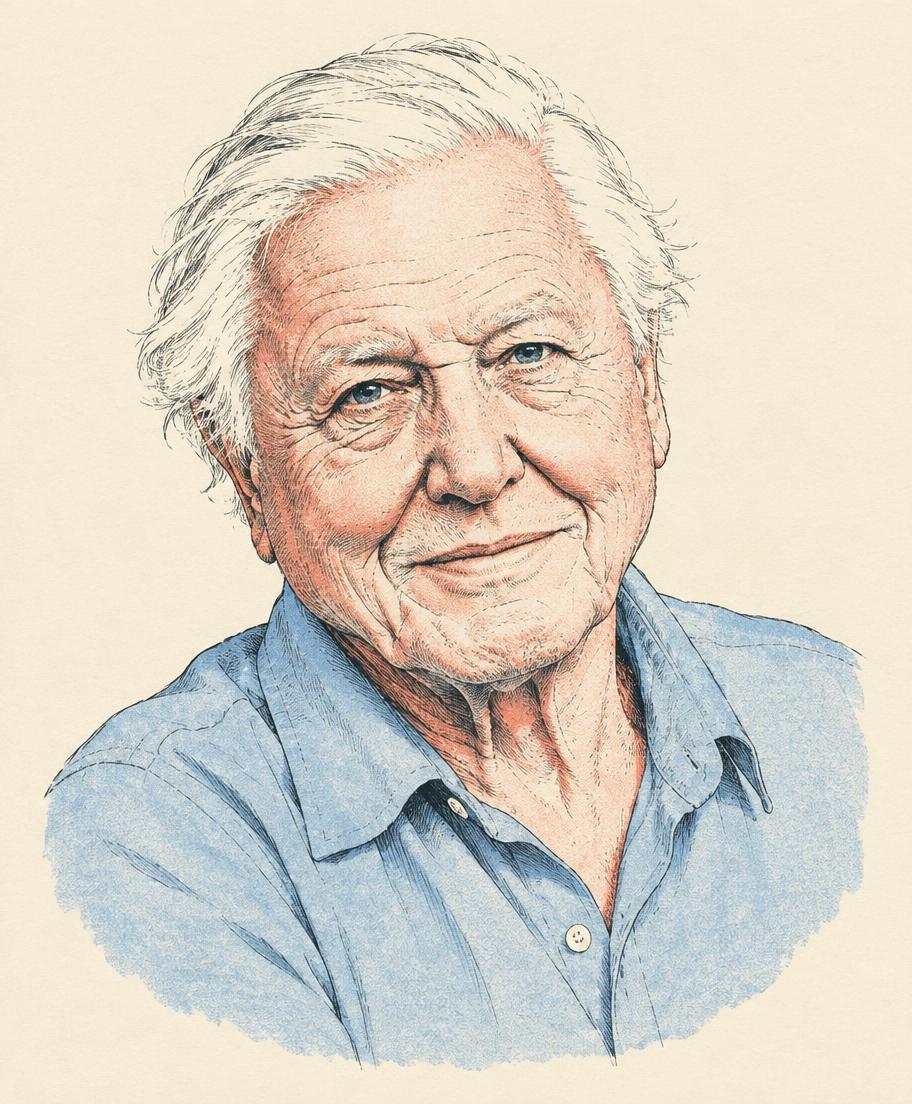
Broadcaster and natural historian
David Attenborough
The broadcaster whose natural history series have shaped how audiences understand life on Earth.
Read biography ↗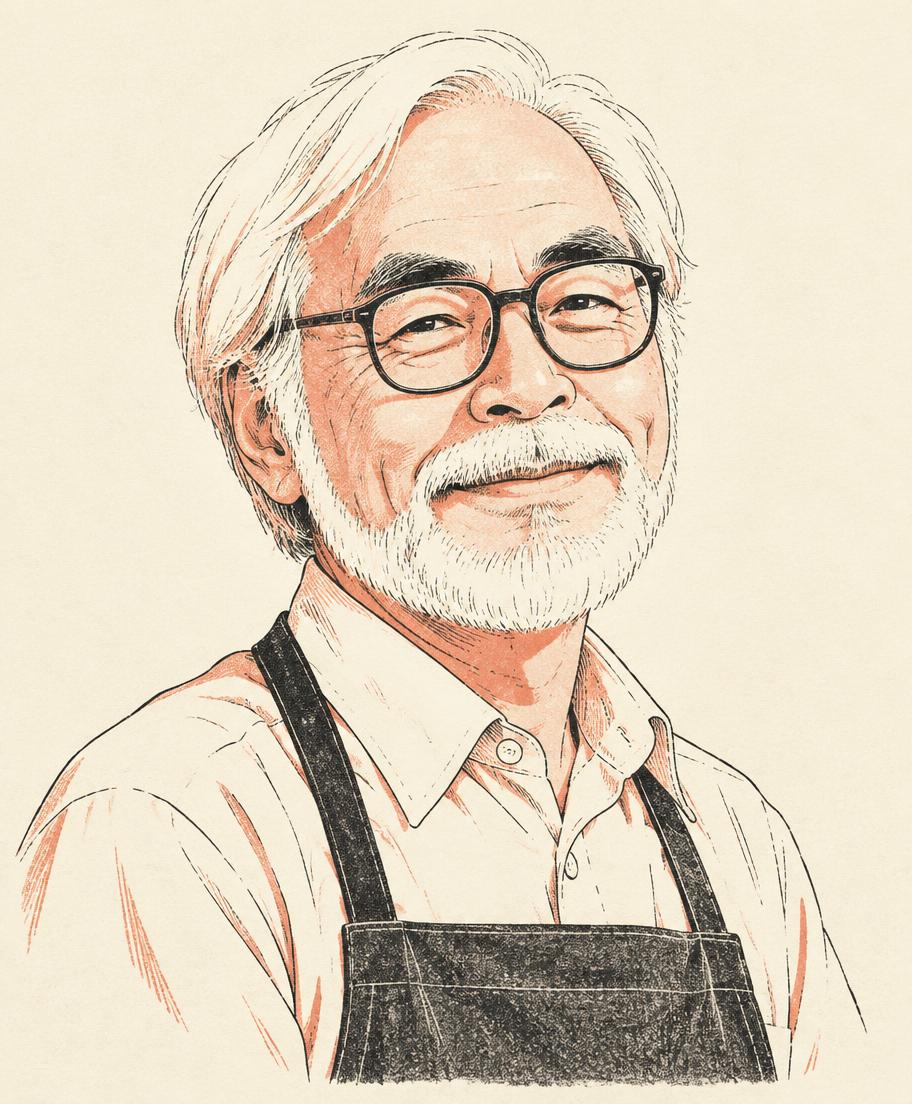
Animator and film director
Hayao Miyazaki
The animator and co-founder of Studio Ghibli whose hand-drawn films reached audiences worldwide.
Read biography ↗
Pope
Benedict I
Pope Benedict I was the bishop of Rome from 2 June 575 to his death on 30 July 579.
Read biography ↗