Welsh actor (1925–1984)
Richard Burton
Richard Walter Burton was a Welsh actor.
By globalcelebwiki Editorial Desk, adapted from Wikipedia · Published 29 September 2026
- Profession
- Welsh actor (1925–1984)
- Born
- 10 November 1925
- Birthplace
- Pontrhydyfen
- Nationality
- British
Overview
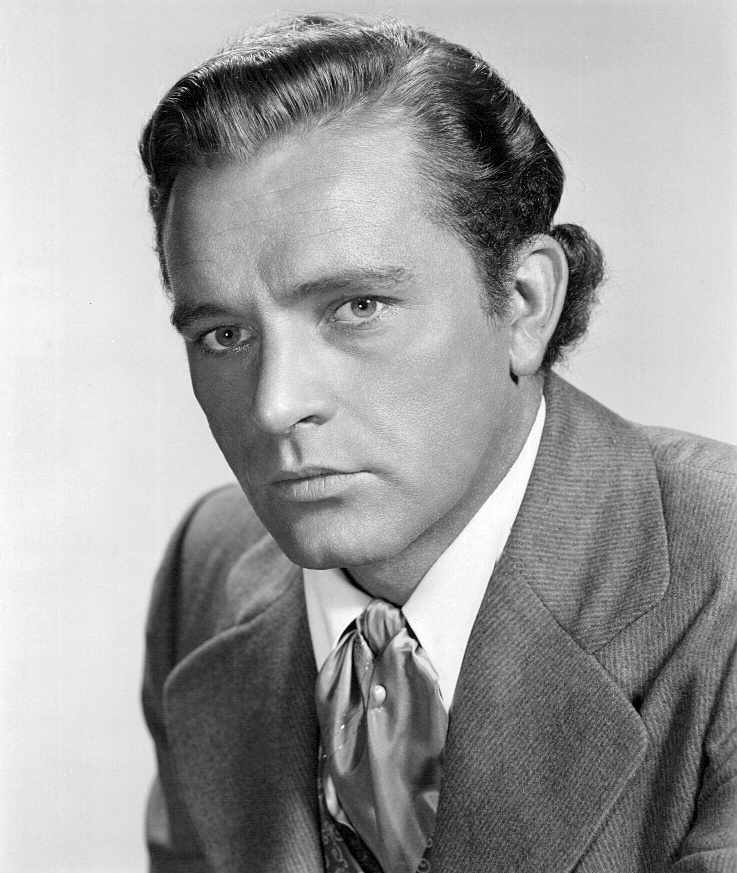
Richard Walter Burton (; born Richard Walter Jenkins Jr.; 10 November 1925 – 5 August 1984) was a Welsh actor.
Noted for his powerful presence and baritone voice, Burton had an expansive film and stage career. He made his feature film debut in the British drama The Last Days of Dolwyn in 1949 and gained attention for his role as Philip Ashley, the protagonist in the romantic mystery My Cousin Rachel earning his first Academy Award nomination for Best Supporting Actor.
On stage, Burton established himself as a Shakespearean actor, starring in roles such as roles such as Prince Hal in Henry IV, Part 1 (1951) and Henry IV, Part 2 (1951), Henry V of England in Henry V (1951), Ferdinand in The Tempest (1951), Prince Hamlet in Hamlet (1953), Sir Toby Belch in Twelfth Night (1953), Gnaeus Marcius Coriolanus in Coriolanus (1953), and Othello in Othello (1955). He was called "the natural successor to Olivier" by critic Kenneth Tynan. Burton's perceived failure to live up to those expectations disappointed some critics and colleagues; his heavy drinking added to his reputation as a great performer who had wasted his talent.
Throughout his career Burton received numerous accolades, including a BAFTA Award, a Golden Globe Award and a Grammy Award. He received the Tony Award for Best Actor in a Musical for his portrayal of King Arthur in the Lerner and Loewe musical Camelot (1960). Despite seven Academy Award nominations Burton failed to win an Oscar; he was nominated for his performances in My Cousin Rachel (1952), The Robe (1953), Becket (1964), The Spy Who Came In from the Cold (1965), Who's Afraid of Virginia Woolf? (1966), Anne of the Thousand Days (1969) and Equus (1977).
Burton has remained closely associated in the public mind with his second and third wife, Elizabeth Taylor due to their publicly turbulent relationship, in which they married and divorced twice, and starred in eleven films together.
Childhood
Burton was born Richard Walter Jenkins Jr. on 10 November 1925 in a house at 2 Dan-y-bont in Pontrhydyfen, Glamorgan, Wales. He was the twelfth of thirteen children born into the Welsh-speaking family of Richard Walter Jenkins Sr. (5 March 1876 – 25 March 1957), and Edith Maude Jenkins (née Thomas; 28 January 1883 – 31 October 1927). Jenkins Sr., called Daddy Ni by the family, was a coal miner, while his mother worked as a barmaid at a pub called the Miners Arms in the village where she met her husband. They married, without approval of her parents, at Neath Register Office on 24 December 1900. Biographer Melvyn Bragg quoted Burton as saying that Daddy Ni was a "twelve-pints-a-day man" who sometimes went off on drinking and gambling sprees for weeks, and that "he looked very much like me". Jenkins Sr. was badly burned in a mining explosion. His father, Thomas Jenkins, also a miner, had also had a serious mining accident and had relied on a wheelchair.
Burton described his mother as "a very strong woman" and "a religious soul with fair hair and a beautiful face". But he was not quite two years old when she died on 31 October 1927, six days after the birth of Graham Jenkins, the family's thirteenth child. Edith's death was a result of postpartum infections; Burton believed it had occurred because of "hygiene neglect". According to biographer Michael Munn, Edith "was fastidiously clean", but her exposure to the dust from the coal mines resulted in her death. Following Edith's death, Richard's elder sister Cecilia, whom he affectionately addressed as "Cis", and her husband Elfed James, also a miner, took him under their care until the age of seventeen. Richard lived with Cis, Elfed and their two daughters, Marian and Rhianon, in their three-bedroom terraced cottage on 73 Caradoc Street, Taibach, a suburban district in Port Talbot, which Bragg describes as "a tough steel town, English-speaking, grind and grime".
Burton remained grateful and loving to Cis throughout his life, later going on to say: "When my mother died she, my sister, had become my mother, and more mother to me than any mother could ever have been ... I was immensely proud of her ... she felt all tragedies except her own". Daddy Ni would occasionally visit the homes of his grown daughters but was otherwise absent. Another important figure in Richard's early life was Ifor, his brother, 19 years his senior. A miner and rugby union player, Ifor "ruled the household with the proverbial firm hand". He was also responsible for nurturing a passion for rugby in young Richard. Although Richard also played cricket, tennis, and table tennis, biographer Bragg notes rugby union football to be his greatest interest. On rugby, Burton said he "would rather have played for Wales at Cardiff Arms Park than Hamlet at The Old Vic". The Welsh rugby union centre, Bleddyn Williams, believed the young Richard "had distinct possibilities as a player".
From the age of five to eight, Richard Jenkins was educated at the Eastern Primary School in Port Talbot, and he attended the boys' segment of the same school from eight to twelve years old. In March 1937, he took and passed a scholarship exam for admission into Port Talbot Secondary School Biographer Hollis Alpert notes that both Daddy Ni and Ifor considered Richard's education to be "of paramount importance" and planned to send him to the University of Oxford. Richard became the first member of his family to go to secondary school. He displayed an excellent speaking and singing voice from childhood, even winning an eisteddfod prize as a boy soprano. While a pupil at Port Talbot Secondary School, Richard also showed immense interest in reading poetry as well as English and Welsh literature. He earned pocket money by running messages, hauling horse manure, and delivering newspapers.
In 1939, Richard was bolstered by winning a certificate at Maesteg Town Hall during a local eisteddfod and wanted to repeat his success. He chose to sing Sir Arthur Sullivan's "Orpheus with his Lute" (1866), which biographer Alpert thought "a difficult composition". He requested the help of his schoolmaster, Philip Burton, but his voice cracked during their practice sessions. This incident marked the beginning of his association with Philip. Philip later recalled, "His voice was tough to begin with but with constant practice it became memorably beautiful." Richard made his first foray into theatre with a minor role in his school's production of the Irish playwright George Bernard Shaw's The Apple Cart. He decided to leave school by the end of 1941 and work as a miner like Elfed. However, he ended up with a job, which he came to dislike intensely, at the local Taibach Co-operative retail store as a draper's assistant in the menswear department, limited at that time by war-time rationing. He also simultaneously considered other professions for his future, including boxing, religious ministry and singing. It was also during this period that Richard took up smoking and drinking despite being underage.
When he joined the Port Talbot Squadron 499 of the Air Training Corps section of the Royal Air Force (RAF) as a cadet, he re-encountered Philip, who was the squadron commander. He also joined the Taibach Youth Centre, a youth drama group founded by Meredith Jones and led by Leo Lloyd, a steel worker and avid amateur thespian, who taught him the fundamentals of acting. Richard played the role of an escaped convict in Lloyd's play, The Bishop's Candlesticks, an adaptation of a section of Victor Hugo's Les Misérables. The play did not have any dialogue, but Alpert noted that Richard "mimed his role". Philip gave him a part in a radio documentary/adaptation of his play for BBC Radio, Youth at the Helm (1942). Seeing the talent Richard possessed, both Jones and Philip re-admitted him to school on 5 October 1942. Philip tutored his charge intensely in school subjects and also worked at developing the youth's acting voice, including outdoor voice drills which improved his projection. Richard called the experience "the most hardworking and painful period" in his life. Philip called Richard "my son to all intents and purposes. I was committed to him", while Burton later wrote of Philip, "I owe him everything".
In March 1943, aged 17, Richard left his sister's home as a result of his brother-in-law's resentment at supporting his resumed education. He sought the help of Philip Burton, who arranged his transfer to the home of widow Elizabeth 'Ma' Smith where he himself lodged. By the autumn of that year Philip planned to adopt Richard but was not able to do so as he was 20 days too young to be 21 years older than his adoptee, a legal requirement. As a result, with consent of his father, Richard became Philip's legal ward and, just aged 18, changed his surname on 26 November 1943 to "Burton", after Philip's own surname, by means of deed poll. It was also in 1943 that Richard qualified for admission into a university after excelling in the School Certificate Examination. Philip requested Richard to study at Exeter College, Oxford, as a part of a six-month scholarship programme offered by the RAF for qualified cadets prior to active service.
In 1943, Burton played Professor Henry Higgins in a school production of another Shaw play directed by Philip, Pygmalion. The role won him favourable reviews and caught the attention of the dramatist, Emlyn Williams, who offered Burton a small role as the lead character's elder brother, Glan, in his play The Druid's Rest. The play debuted at the Royal Court Theatre, Liverpool on 22 November 1943, and later premiered in St Martin's Theatre, London in January 1944. Burton thought the role was "a nothing part" and that he "hardly spoke at all". He was paid ten pounds a week for playing the role (equivalent to £383 in 2025), which was "three times what the miners got". Alpert states that the play garnered mixed critical reviews, but James Redfern of the New Statesman took notice of Burton's performance and wrote: "In a wretched part, Richard Burton showed exceptional ability." Burton noted that single sentence from Redfern changed his life.
While an undergraduate at Exeter College, University of Oxford, Burton featured as "the complicated sex-driven puritan" Angelo in the Oxford University Dramatic Society's 1944 production of William Shakespeare's Measure for Measure. The play was directed by Burton's English literature professor, Nevill Coghill, and was performed at the college in the presence of additional contributors to West End theatre including John Gielgud, Terence Rattigan and Binkie Beaumont. On Burton's performance, fellow actor and friend, Robert Hardy recalled, "There were moments when he totally commanded the audience by this stillness. And the voice which would sing like a violin and with a bass that could shake the floor." Gielgud appreciated Burton's performance and Beaumont, who knew about Burton's work in The Druid's Rest, suggested that he "look him up" after completing his service in the RAF if he still wanted to pursue acting as a profession.
In late 1944, Burton successfully completed his six-month scholarship at Exeter College, Oxford, and went to the RAF classification examinations held in Torquay to train as a pilot. He was disqualified for pilot training because his eyesight was below par, and was classified as a navigator trainee. He had a short term posting for training at a temporary RCAF training base in Carberry, Manitoba. He served in the RAF for three years, during which time rather than flight crew he was assigned as an Aircraftman 1st Class to perform an administrative role in a Wiltshire-based RAF Hospital, RAF Wroughton. Burton's habits of drinking and smoking increased during this period; he was involved in a brief casual affair with actress Eleanor Summerfield. Burton was cast in an uncredited and unnamed role of a bombing officer by BBC Third Programme in a 1946 radio adaptation of In Parenthesis, an epic poem of the First World War by David Jones. Burton was discharged from the RAF on 16 December 1947.
In 1948, Burton moved to London to make contact with H. M. Tennent Ltd., where he again met Beaumont, who put him under a contract of £500 per year (£10 a week). Daphne Rye, the casting director for H. M. Tennent Ltd., offered Burton rooms on the top floor of her house in Pelham Crescent, London as a place for him to stay. Rye cast Burton in a minor role as a young officer, Mr. Hicks, in Castle Anna (1948), a drama set in Ireland.
While touring with the cast and crew members of Wynyard Browne's Dark Summer, Burton was called by Emlyn Williams for a screen test for his film, The Last Days of Dolwyn (1949). Burton performed the screen test for the role of Gareth, which Williams wrote especially for him, and was subsequently selected when Williams sent him a telegram that quoted a line from The Corn Is Green — "You have won the scholarship." This led to Burton making his mainstream film debut. Filming took place during the summer and early autumn months of 1948. It was on the sets of this film that Burton was introduced by Williams to Sybil Williams, whom he married on 5 February 1949 at a registry office in Kensington. The Last Days of Dolwyn opened to generally positive critical reviews. Burton was praised for his "acting fire, manly bearing and good looks" and film critic Philip French of The Guardian called it an "impressive movie debut". After marrying Sybil, Burton moved into a flat at 6 Lyndhurst Road, Hampstead NW3, where he lived from 1949 to 1956.
Pleased with the feedback Burton received for his performance in The Last Days of Dolwyn, the film's co-producer Alexander Korda offered him a contract at a stipend of £100 a week (equivalent to £3,055 in 2025), which he signed. The contract allowed Korda to lend Burton to films produced by other companies. Throughout the late 1940s and early 1950s, Burton acted in small parts in various British films such as Now Barabbas (1949) with Richard Greene and Kathleen Harrison, The Woman with No Name (1950) opposite Phyllis Calvert, and Waterfront (1950) with Harrison. Burton had a bigger part as Robert Hammond, a spy for a newspaper editor in Green Grow the Rushes (1951) alongside Honor Blackman. His performance in Now Barabbas received positive feedback from critics. C. A. Lejeune of The Observer believed Burton had "all the qualities of a leading man that the British film industry badly needs at this juncture: youth, good looks, a photogenic face, obviously alert intelligence and a trick of getting the maximum effort with the minimum of fuss." For The Woman With No Name, a critic from The New York Times thought Burton "merely adequate" in his role of the Norwegian aviator, Nick Chamerd. Biographer Bragg states the reviews for Burton's performance in Waterfront were "not bad", and that Green Grow the Rushes was a box office bomb.
Rye recommended Richard to director Peter Glenville for the part of Hephaestion in Rattigan's play about Alexander the Great, Adventure Story, in 1949. The play was directed by Glenville and starred the then up-and-coming actor Paul Scofield as the titular character. Glenville, however, rejected him as he felt that Burton was too short compared to Scofield. Rye came to the rescue again by sending Burton to audition for a role in The Lady's Not for Burning, a play by Christopher Fry and directed by Gielgud. The lead roles were played by Gielgud himself, and Pamela Brown, while Burton played a supporting role as Richard alongside the then-relatively unknown actress Claire Bloom. Gielgud was initially uncertain about selecting Burton and asked him to come back the following day to repeat his audition. Burton got the part the second time he auditioned for the role. He was paid £15 a week for the part, which was five more than what Beaumont was paying him. After getting the part, he pushed for a raise in his salary from £10 to £30 a week with Williams' assistance, in addition to the £100 Korda paid him; Beaumont accepted it after much persuasion. Bloom was impressed with Burton's natural way of acting, noting that "he just was" and went further by saying "He was recognisably a star, a fact he didn't question."
The play opened at the Globe Theatre in May 1949 and had a successful run in London for a year. Writer and journalist Samantha Ellis of The Guardian, in her overview of the play, thought critics found Burton to be "most authentic" for his role. Gielgud took the play to Broadway in the United States, where it opened at the Royale Theatre on 8 November 1950. Theatre critic Brooks Atkinson appreciated the performances and praised the play's "hard glitter of wit and skepticism", while describing Fry as precocious with "a touch of genius". The play ran on Broadway until 17 March 1951, and received the New York Drama Critics' Circle award for the Best Foreign Play of 1951. Burton received the Theatre World Award for his performance, his first major award.
Burton began 1952 by starring alongside Noel Willman in the title role of Emmanuel Roblès adventure Montserrat, which opened on 8 April at the Lyric Hammersmith. The play only ran for six weeks but Burton once again won praise from critics. According to Bragg, some of the critics who watched the performance considered it to be Burton's "most convincing role" till then. Tynan lauded Burton's role of Captain Montserrat, noting that he played it "with a variousness which is amazing when you consider that it is really little more than a protracted exposition of smouldering dismay".
Burton successfully made the transition to Hollywood on the recommendation of film director George Cukor when he was given the lead role in the Gothic romance film, My Cousin Rachel (1952) opposite Olivia de Havilland. Darryl F. Zanuck, co-founder of 20th Century Fox, negotiated a deal with Korda to lend Burton to the company for three films as well as pay Burton a total of $150,000 ($50,000 per film). De Havilland did not get along well with Burton during filming, calling him "a coarse-grained man with a coarse-grained charm and a talent not completely developed, and a coarse-grained behavior [sic] which makes him not like anyone else". One of Burton's friends opined it may have been because of Burton's making remarks to her that she did not find in good taste.
Based on the 1951 novel of the same name by Daphne du Maurier, My Cousin Rachel is about a man who suspects his rich cousin was murdered by his wife in order to inherit his wealth, but ends up falling in love with her, despite his suspicions. Upon release, the film was successful at the box office, and Burton's performance received mostly excellent reviews. Bosley Crowther, writing for The New York Times, appreciated Burton's emotional performance, describing it as "most fetching"; he called him "the perfect hero of Miss du Maurier's tale". The Los Angeles Daily News reviewer stated "young Burton registers with an intense performance that stamps him as an actor of great potential". Conversely, a critic from the Los Angeles Examiner labelled Burton as "terribly, terribly tweedy". The film earned Burton the Golden Globe Award for New Star of the Year – Actor and his first Academy Award nomination in the Best Supporting Actor category.
While shooting My Cousin Rachel, Burton was offered the role of Mark Antony in Julius Caesar (1953) by the production company, Metro Goldwyn Mayer (MGM), but Burton refused it to avoid schedule conflicts. The role subsequently went to Marlon Brando for which he earned a BAFTA Award for Best Foreign Actor and an Academy Award nomination for Best Actor.
The year 1953 marked an important turning point in Burton's career. He arrived in Hollywood at a time when the studio system was struggling. The rise of television was drawing viewers away and the studios looked to new stars and film technologies to tempt viewers back to cinemas. He first appeared in the war film The Desert Rats with James Mason, playing an English captain in the North African campaign during World War II who takes charge of a hopelessly outnumbered Australian unit against the indomitable German field marshal, Erwin Rommel, who was portrayed by Mason. The film received generally good reviews from critics in London, although they complained the British contribution to the campaign had been underplayed. The critic from Variety magazine thought Burton was "excellent" while The New York Times reviewer noted his "electric portrayal of the hero" made the film look "more than a plain, cavalier apology". Burton and Sybil became good friends with Mason and his wife Pamela Mason, and stayed at their residence until Burton returned home to the UK in June 1953 in order to play Prince Hamlet as a part of The Old Vic 1953–54 season. This was to be the first time in his career he took up the role.
After The Old Vic season ended, Burton's contract with Fox required him to do three more films. The first was Prince of Players (1955), where he was cast as the 19th-century Shakespearean actor Edwin Booth, who was John Wilkes Booth's brother. Maggie McNamara played Edwin's wife, Mary Devlin Booth. Philip thought the script was "a disgrace" to Burton's name. The film's director Philip Dunne observed, "He hadn't mastered yet the tricks of the great movie stars, such as Gary Cooper, who knew them all. The personal magnetism Richard had on the sound stage didn't come through the camera." This was one aspect that troubled Richard throughout his career on celluloid. The film flopped at the box office and has since been described as "the first flop in CinemaScope". Crowther, however, lauded Burton's scenes where he performed Shakespeare plays such as Richard III.
Shortly after the release of Prince of Players, Burton met director Robert Rossen, who was well known at the time for his Academy Award-winning film, All the King's Men (1949). Rossen planned to cast Burton in Alexander the Great (1956) as the eponymous character. Burton accepted Rossen's offer after the director reassured him he had been studying the Macedonian king for two years to make sure the film was historically accurate. Burton was loaned by Fox to the film's production company United Artists, which paid him a fee of $100,000 (equivalent to $1,184,211 in 2025). Alexander the Great was made mostly in Spain during February 1955 and July 1955 on a budget of $6 million. The film reunited Burton with Bloom and it was also the first film he made with her. Bloom played the role of Barsine, the daughter of Artabazos II of Phrygia, and one of Alexander's three wives. Fredric March, Danielle Darrieux, Stanley Baker, Michael Hordern and William Squire were respectively cast as Philip II of Macedon, Olympias, Attalus, Demosthenes and Aeschines.
After the completion of Alexander the Great, Burton had high hopes for a favourable reception of the "intelligent epic", and went back to complete his next assignment for Fox, Jean Negulesco's The Rains of Ranchipur (1955). In this remake of Fox's own 1939 film The Rains Came, Burton played a Hindu doctor, Rama Safti, who falls in love with Lady Edwina Esketh (Lana Turner), an invitee of the Maharani of the fictional town of Ranchipur. Burton faced the same troubles with playing character roles as before with Belch. The Rains of Ranchipur released on 16 December 1955, three months before Alexander the Great rolled out on 28 March 1956. Contrary to Burton's expectations, both the films were critical and commercial failures, and he rued his decision to act in them. Time magazine critic derided The Rains of Ranchipur and even went as far as to say Richard was hardly noticeable in the film. A. H. Weiler of The New York Times, however, called Burton's rendering of Alexander "serious and impassioned".
Burton returned to The Old Vic to perform Henry V for a second time. The Benthall-directed production opened in December 1955 to glowing reviews and was a much-needed triumph for Burton. Tynan made it official by famously saying Burton was now "the next successor to Olivier". The reviewer from The Times began by pointing out the deficiencies in Burton's previous rendition of the character in 1951 before stating "Mr. Burton's progress as an actor is such that already he is able to make good all the lacks of a few short years ago ... what was greatly metallic has been transformed into a steely strength which becomes the martial ring and hard brilliance of the patriotic verse. There now appears a romantic sense of a high kingly mission and the clear cognisance of the capacity to fulfil it ... the whole performance — a mostly satisfying one — is firmly under the control of the imagination".
In January 1956, the London Evening Standard honoured Burton by presenting to him its Theatre Award for Best Actor for his portrayal of Henry V. His success in and as Henry V led him to be called the "Welsh Wizard". Henry V was followed by Benthall's adaptation of Othello in February 1956, where he alternated on successive openings between the roles of Othello and Iago with John Neville. As Othello, Burton received both praise for his dynamism and criticism with being less poetical with his dialogues, while he was acclaimed as Iago.
In 1960, Burton appeared in two films for Warner Bros., neither of which were successful: The Bramble Bush which reunited him with his Wuthering Heights director Petrie, and Vincent Sherman's adaptation of Edna Ferber's Ice Palace. Burton called the latter a "piece of shit". He received a fee of $125,000 for both films. Burton's next appearance was as the stammering secularist, George Holyoake in BBC's documentary-style television adaptation of John Osborne's A Subject of Scandal and Concern. According to Osborne's biographer Luc Gilleman, the film garnered little attention. Burton returned to the United States for the filming of John Frankenheimer's television adaptation of Ernest Hemingway's The Fifth Column. He also provided narration for 26 episodes of The Valiant Years, an American Broadcasting Company (ABC) series based on Winston Churchill's memoirs.
Burton made a triumphant return to the stage with Moss Hart's 1960 Broadway production of Camelot as King Arthur. The play, written by Alan Jay Lerner and Frederick Loewe, had Julie Andrews fresh from her triumph in My Fair Lady playing Guinevere, and Robert Goulet as Lancelot completing the love triangle. Roddy McDowall played the villainous Mordred. Hart first came up with the proposal to Burton after learning from Lerner about his ability to sing. Burton consulted Olivier on whether he should take the role, which came with a stipend of $4,000 a week. Olivier pointed out this salary was good and that he should accept the offer. The production was troubled, with both Loewe and Hart falling ill and the pressure was building, owing to great expectations and huge advance sales. The show's running time was nearly five hours. Burton's intense preparation and competitive desire to succeed served him well. He immediately drafted Philip, who revised the musical's script and cut its running time to three hours while also incorporating three new songs. Burton was generous and supportive to everyone throughout the production and coached the understudies himself. According to Lerner, "he kept the boat from rocking, and Camelot might never have reached New York if it hadn't been for him". Burton's reviews were excellent, with the critic from Time magazine observing that Richard "gives Arthur the skillful and vastly appealing performance that might be expected from one of England's finest young actors". Broadway theatre reviewer Walter Kerr noted Richard's syllables, "sing, the account of his wrestling the stone from the sword becomes a bravura passage of house-hushing brilliance" and complemented his duets with Andrews, finding Burton's rendition to possess "a sly and fretful and mocking accent to take care of the humor [sic] without destroying the man".
However, on the whole, the play initially received mixed reviews on its opening at the Majestic Theatre on Broadway and was slow to earn money. Advance sales managed to keep Camelot running for three months until a twenty-minute extract was broadcast on The Ed Sullivan Show which helped Camelot achieve great success, and an unprecedented three-year run overall from 1960 to 1963. Its success led to Burton being called "The King of Broadway", and he went on to receive the Tony Award for Best Actor in a Musical. The original soundtrack of the musical topped the Billboard charts throughout 1961 after its release at the end of 1960. John F. Kennedy, who was then the President of the United States, reportedly enjoyed the play and invited Burton to the White House for a visit. In 1962, Burton appeared as Flying Officer David Campbell, an RAF fighter pilot in The Longest Day, which included a large ensemble cast featuring: McDowall, George Segal, Henry Fonda, John Wayne, Mel Ferrer, Robert Mitchum, Rod Steiger and Sean Connery. The same year he provided narration for the Jack Howells documentary Dylan Thomas. The short won the Best Documentary Short Subject at the 35th Academy Awards ceremony.
After performing Camelot for six months, in July 1961, Burton met producer Walter Wanger who asked him to replace Stephen Boyd as Mark Antony in director Joseph L. Mankiewicz's magnum opus Cleopatra. Burton was paid $250,000 for four months work in the film (equivalent to $2,629,076 in 2025). The gigantic scale of the film's troubled production, Taylor's bouts of illness and fluctuating weight, Burton's off-screen relationship with the actress, (which he gave the sardonic nickname "Le Scandale") all generated enormous publicity; Life magazine proclaimed it the "Most Talked About Movie Ever Made". Fox's future appeared to hinge on what became the most expensive movie ever made until then, with costs reaching almost $40 million. During filming, Burton met and fell in love with Elizabeth Taylor, who was then married to Eddie Fisher. According to Alpert, at their first meeting on the set while posing for their publicity photographs, Burton said, "Has anyone ever told you that you're a very pretty girl?" Taylor later recalled, "I said to myself, Oy gevalt, here's the great lover, the great wit, the great intellectual of Wales, and he comes out with a line like that." Bragg contradicts Alpert by pointing out that Burton could not stand Taylor at first, calling her "Miss Tits" and opined to Mankiewicz, "I expect she shaves"; he saw her simply as another celebrity with no acting talent. All that changed when, in their first scene together, Burton was shaky and forgot his lines, and she soothed and helped him; it was at this instance, according to Taylor, that she fell for him. Soon the affair began in earnest; both Fisher and Sybil were unable to bear it. While Fisher fled the sets for Gstaad, Sybil went first to Céligny and then headed off to London. Olivier, shocked by Burton's affair with Taylor, cabled him: "Make up your mind, dear heart. Do you want to be a great actor or a household word?". Burton replied "Both".
Cleopatra was finally released on 11 June 1963 with a run time of 243 minutes, to polarising reviews. The Time magazine critic found the film "riddled with flaws, [lacking] style both in image and in action", and wrote Burton "staggers around looking ghastly and spouting irrelevance". In a contradictory review, Crowther termed the film "generally brilliant, moving, and satisfying" and thought Burton was "exciting as the arrogant Antony". Richard Brody of The New Yorker commented positively on the chemistry between Burton and Taylor, describing it as "entrancing in the movie's drama as it was in life". Cleopatra grossed over $26 million (equivalent to $273,423,913 in 2025), becoming one of the highest-grossing films of 1963. It was not enough to prevent Fox from entering bankruptcy. The studio sued Burton and Taylor for allegedly damaging the film's prospects at the box office with their behaviour, but it proved unsuccessful. Cleopatra was nominated for nine Academy Awards, winning for Best Production Design, Best Costume Design and Best Visual Effects.
Appointed Commander of the Order of the British Empire (CBE) in the 1970 Birthday Honours, he received the honour at Buckingham Palace on his 45th birthday; Taylor and Cis attended the ceremony. He attributed not being knighted to changing his residence from London to Céligny to escape taxes. From the 1970s, after his completion of Anne of the Thousand Days, Burton began to work in mediocre films, which hurt his career. This was partly due to the Burtons' extravagant spending, his increasing addiction to alcohol, and his claim that he could not "find any worthy material that is pertinent to our times". He recognised his financial need to work, and understood in the New Hollywood era of cinema, neither he nor Taylor would be paid as well as at the height of their stardom. Some of the films he made during this period include: Bluebeard (1972), Hammersmith Is Out (1972), Battle of Sutjeska (1973), The Klansman (1974), and Exorcist II: The Heretic (1977). His last film with Taylor was the two-part melodrama Divorce His, Divorce Hers (1973). He did enjoy one major critical success in the 1970s with the film version of his stage hit Equus, winning the Golden Globe Award as well as garnering an Academy Award nomination. Public sentiment towards his perennial frustration at not winning an Oscar made many pundits consider him the favourite to finally win the award, but he lost to Richard Dreyfuss in The Goodbye Girl.
In 1976, Burton received a Grammy Award in the category of Best Recording for Children for his narration of The Little Prince by Antoine de Saint-Exupéry. His narration of Jeff Wayne's Musical Version of The War of the Worlds became such a necessary part of the concept album that a hologram of Burton was used to narrate the live stage show (touring in 2006, 2007, 2009 and 2010) of the musical. In 2011, however, Liam Neeson was cast in the part for a "New Generation" re-recording, and replaced Burton as the hologram character in the stage show.
Burton had an international box-office hit with The Wild Geese (1978), an adventure tale about mercenaries in Africa. The film was a success in Europe but had only limited distribution in the United States owing to the collapse of the studio that distributed it. He returned to films with The Medusa Touch (1978), Circle of Two (1980), and the title role in Wagner (1983). His last film performance as O'Brien in Nineteen Eighty-Four (1984) was critically acclaimed though he was not the first choice for the role. According to the film's director, Michael Radford, Paul Scofield was originally contracted to play the part, but had to withdraw due to a broken leg; Sean Connery, Marlon Brando and Rod Steiger were all approached before Burton was cast. He had "heard stories" about Burton's heavy drinking, which had concerned the producers.
Burton's last acting appearance was in the miniseries Ellis Island, which aired posthumously on CBS in November 1984. At the time of his death, he was preparing to film Wild Geese II, the sequel to The Wild Geese, which was eventually released in 1985. Burton was to reprise the role of Colonel Faulkner, while Laurence Olivier was cast as Rudolf Hess. After his death, Burton was replaced by Edward Fox, and the character changed to Faulkner's younger brother.
Burton was married five times, twice consecutively to Taylor.
From 1949 until 1963, he was married to Sybil Williams, with whom he had two daughters, Kate (born 1957) and Jessica Burton (born 1959). During the marriage Burton had a long affair with actress Claire Bloom. Burton told biographer Michael Munn "'I only ever loved two women before Elizabeth,' Sybil was one, Claire Bloom the other."
Politically, Burton was a lifelong socialist, although he was never as heavily involved in politics as his close friend Stanley Baker. He admired Democratic senator Robert F. Kennedy and once got into a sonnet-quoting contest with him.
In 1972, Burton played Leon Trotsky in The Assassination of Trotsky. The next year, he agreed to play Josip Broz Tito in a film biography, since he admired the Yugoslav leader. While filming in Yugoslavia he publicly proclaimed that he was a communist, saying he felt no contradiction between earning vast sums of money for films and holding left-wing views since "unlike capitalists, I don't exploit other people".
Burton was a heavy smoker. In a December 1977 interview with Sir Ludovic Kennedy, Burton said he was smoking 60–100 cigarettes per day. According to his younger brother, as stated in Graham Jenkins's 1988 book Richard Burton: My Brother, he smoked at least 100 cigarettes a day. After his father died from a cerebral haemorrhage in March 1957, Burton declined to attend his funeral. Burton was also an alcoholic most of his adult life. According to biographer Robert Sellers, "At the height of his boozing in the mid-70s he was knocking back three to four bottles of hard liquor a day."
After nearly drinking himself to death during the shooting of The Klansman (1974), Burton dried out at Saint John's Health Center in Santa Monica, California. Burton was allegedly inebriated while making the movie, and many of his scenes had to be filmed with him sitting or lying down due to his inability to stand upright. In some scenes, he appears to slur his words or speak incoherently. Burton later said that he could not remember making the film. Co-star O. J. Simpson said "There would be times when he couldn't move".
According to his diaries, Burton used Antabuse to try to stop his excessive consumption of alcohol, which he blamed for wrecking his marriage to Taylor. Burton himself said of the time leading up to his near loss of life, "I was fairly sloshed for five years. I was up there with John Barrymore and Robert Newton. The ghosts of them were looking over my shoulder." He said that he turned to the bottle for solace "to burn up the flatness, the stale, empty, dull deadness that one feels when one goes offstage". The 1988 biography by Melvyn Bragg provides a detailed description of the many health issues that plagued Burton throughout his life. In his youth, Burton had been known for being exceptionally strong and athletic.
By the age of 41, he had declined so far in health that by his own admission, his arms were thin and weak. He suffered from bursitis, possibly aggravated by faulty treatment, arthritis, dermatitis, cirrhosis of the liver, and kidney disease, as well as developing, by his mid-forties, a pronounced limp. How much of this was due to his intake of alcohol is impossible to ascertain, according to Bragg, because of Burton's reluctance to be treated for alcoholism. In 1974, Burton spent six weeks in a clinic to recuperate from a period during which he had drunk three bottles of vodka a day. Health issues continued to plague him until his death.
Burton died from intracerebral haemorrhage at his home in Céligny, Switzerland, on 5 August 1984, aged 58. Although his death was sudden, his health had been declining for several years, and he suffered from constant and severe neck pain. As early as March 1970, he had been warned that his liver was enlarged, and he was diagnosed with cirrhosis and kidney disease in April 1981.
Burton was buried at the Old Cemetery (Vieux Cimetière) of Céligny with a copy of Dylan Thomas's poems.
Burton left an estate worth US$4.58 million (equivalent to $14,193,306 in 2025). The bulk of his estate consisted of real estate, investments in three countries, and works of art. Most of his estate was bequeathed to his widow, Sally Hay.
Acting credits and accolades
Burton received numerous accolades including a British Academy Film Award, two Golden Globe Awards, a Grammy Award, and two Tony Awards (including a Special Tony Award) as well as nominations for a Primetime Emmy Award. For his contributions to cinema, Burton was inducted posthumously into the Hollywood Walk of Fame in 2013 with a motion pictures star located at 6336 Hollywood Boulevard. For his contributions to theatre, Burton was inducted into the Theatre Hall of Fame.
Despite seven Academy Award nominations Burton failed to win an Oscar.
Over his distinguished career he has been recognised by the Academy of Motion Picture Arts and Sciences for the following performances:
25th Academy Awards: Best Supporting Actor, nomination, My Cousin Rachel (1952)
26th Academy Awards: Best Actor, nomination, The Robe (1953)
Society and culture
In 2012 Yale University Press published The Richard Burton Diaries. Edited by Chris Williams, the book comprised extracts from diaries written between 1939 and 1983.
Burton is portrayed by Dominic West, opposite Helena Bonham Carter, in 2013's Burton & Taylor.
In 2025, Mr Burton, a British biographical drama film starring Harry Lawtey as a young Richard Burton and Toby Jones as Philip Burton, was released.
Sources and references
Spotted something wrong? Report a correction.
Related profiles
Actor
Meryl Streep
The most-nominated performer in Academy Awards history, known for her range across four decades of film and stage.
Read biography ↗
Actor and director
Denzel Washington
An American actor and director whose screen work spans Glory, Malcolm X and Training Day, alongside acclaimed stage performances.
Read biography ↗