Malian singer-songwriter, referred to as the "Golden Voice of Africa".
Salif Keita
Salif Keïta is a Malian singer-songwriter, referred to as the "Golden Voice of Africa".
By globalcelebwiki Editorial Desk, adapted from Wikipedia · Published 29 September 2026
- Profession
- Malian singer-songwriter, referred to as the "Golden Voice of Africa".
- Born
- 25 August 1949
- Birthplace
- Djoliba
- Nationality
- Malian

Overview
Salif Keïta (IPA: [salif keita]) (born 25 August 1949) is a Malian singer-songwriter, referred to as the "Golden Voice of Africa". He is a member of the Keita royal family of Mali.
Early life
Salif Keita was born a traditional prince in the village of Djoliba. He was born to the Keita royal family, who trace their lineage to Sundiata Keita, founder of the Mali Empire. He was cast out by his family and ostracized by the community because of his albinism, a sign of bad luck in Mandinka culture. Raised in a Muslim family, he went to an Islamic school where he was influenced by his Qur'an teacher's singing. He decided to pursue music in his teenage years, further distancing him from his family as that was against occupational prohibitions of his noble status.
In 1967, he left Djoliba for Bamako, where he joined the government-sponsored Super Rail Band de Bamako. In 1973, Keita joined the group Les Ambassadeurs (du Motel de Bamako). Keita and Les Ambassadeurs fled political unrest in Mali during the mid-1970s and subsequently changed the group's name to Les Ambassadeurs Internationaux. The reputation of this band grew internationally in the late-1970s, leading to Keita pursuing a solo career in the following years.
He is the father of paralympian athlete Nantenin Keita.
Career
Due to political unrest, Keita and his band-mates fled Mali in the mid-1970s. They settled in Abidjan, Ivory Coast, where they struggled financially and often had to rent equipment to perform shows. The band (now named Les Ambassadeurs Internationaux) steadily grew in popularity in the ensuing years. Their 1978 album, Mandjou, became an overnight success in West Africa.
In 1976, Sékou Touré, the President of Guinea, made Keita an Officer of Guinea's National Order of Merit. The President had been a fan of Keita and the band's since they met at an official visit in 1974. Touré had remained a fan and supporter even after they fled Mali. Wanting to reciprocate the honour, Keita composed the track "Mandjou" (featured on the eponymous 1978 album) as a praise song for Touré. However, by the time the song was released, Touré had completely resorted to authoritarian rule and plunged his country into bloodshed and chaos. Keita still performs rearranged versions of "Mandjou".
Keita moved to Paris, France, in 1984 to reach a larger audience and to pursue a solo career. His music combined traditional West African music styles with influences from both Europe and the Americas.
At that time, Keita was famous in Africa and had a strong fan base among connoisseurs around the world. Soro became his international-breakthrough album in 1987. The project was produced by Ibrahima Sylla, a visionary who had already discovered dozens of African stars (and would later become the driving force behind Africando). The arrangements featured roiling rhythms, slightly nasal female backup choirs, and traditional percussion typical of Malian music.
Musical instruments that are commonly featured in Keita's work include balafons, djembes, guitars, koras, organs, saxophones, and synthesizers. He performed at the Nelson Mandela 70th Birthday Tribute concert in 1988 to call for Nelson Mandela's release from prison. In 1990, Keita contributed "Begin the Beguine" to the Cole Porter tribute/AIDS benefit album Red Hot + Blue, produced by the Red Hot Organization.
Albinism
A descendant of the founder of the Mali Empire, Salif Keïta was born albino. He faced significant challenges in his native land of Mali, particularly among the Mandinka people, where his condition was regarded as an illness. Despite being part of a lineage of musicians, he was prohibited from pursuing music owing to his royal lineage. When he decided to pursue music in his teenage years, it resulting in his disownment by his father and expulsion from school as his father stopped paying for his education. Seeking acceptance, he relocated to Ivory Coast in his youth, where he focused on his passion for music. He ultimately became recognized as a cultural icon. In 1997, he returned to Mali after achieving fame, but did not attempt to contact his family.
Sources and references
Spotted something wrong? Report a correction.
Related profiles

Singer and songwriter
Beyoncé
A singer, songwriter and performer whose career spans Destiny's Child and a run of genre-shifting solo albums.
Read biography ↗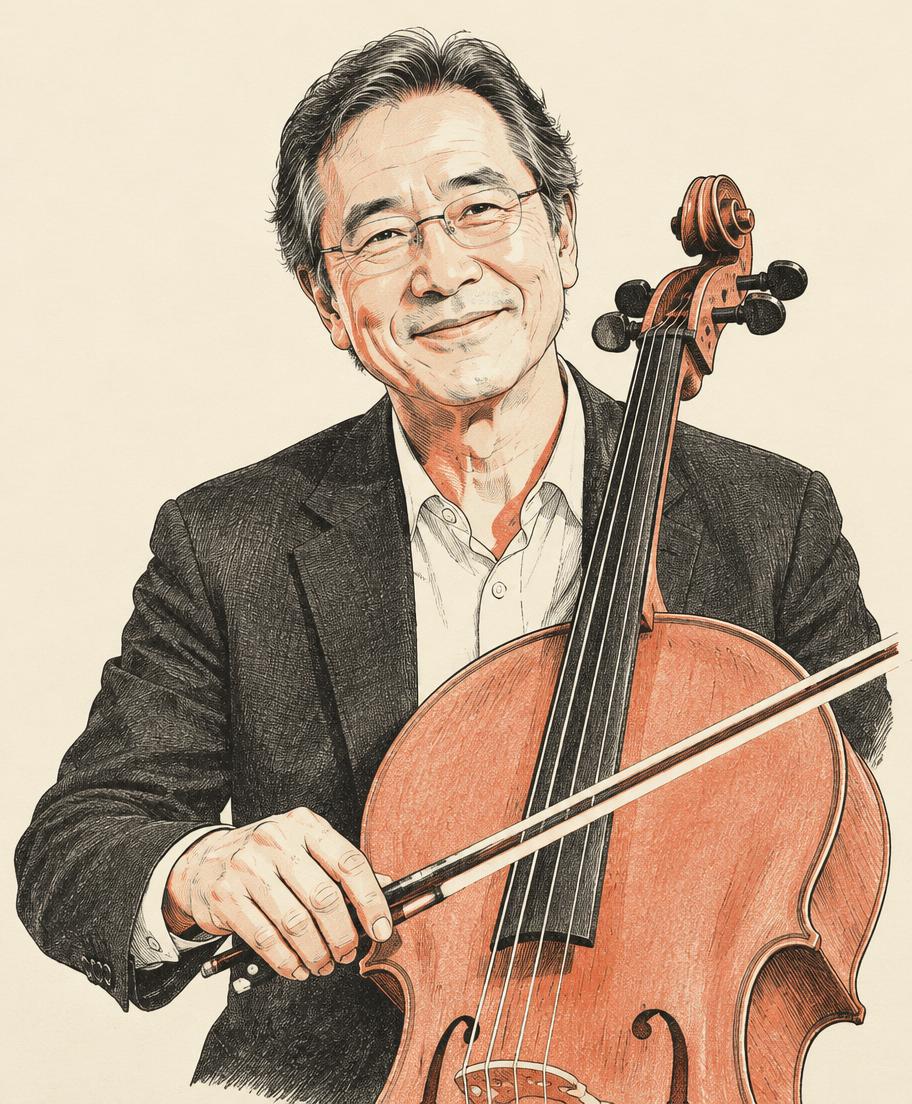
Cellist
Yo-Yo Ma
A cellist known for his recordings of the Bach cello suites and for decades of cross-cultural musical collaboration.
Read biography ↗
British singer (1949–2012)
Robin Gibb
Robin Hugh Gibb was a British singer and songwriter.
Read biography ↗