British writer (1969–2025)
Sophie Kinsella
Madeleine Sophie Wickham, known by her pen name Sophie Kinsella, was an English author.
By globalcelebwiki Editorial Desk, adapted from Wikipedia · Published 29 September 2026
- Profession
- British writer (1969–2025)
- Born
- 12 December 1969
- Birthplace
- Roehampton
- Nationality
- British

Overview
Madeleine Sophie Wickham (née Townley; 12 December 1969 – 10 December 2025), known by her pen name Sophie Kinsella, was an English author. She is especially known for her best-selling Shopaholic series of novels. The first two novels in the series, The Secret Dreamworld of a Shopaholic (2000) and Shopaholic Abroad (2001), were adapted into the film Confessions of a Shopaholic (2009).
Early life and education
Madeleine Sophie Townley was born on 12 December 1969 in Roehampton, South West London to parents David Townley and Patricia (née Kinsella), a teacher and a lecturer respectively. She had maternal Irish heritage. She was the eldest of three daughters.
She was educated at Putney High School, St Mary's School, Shaftesbury, Sherborne School for Girls, and New College, Oxford, where she initially studied Music, but after a year switched to Philosophy, Politics and Economics (PPE), graduating with a BA.
She worked as a financial journalist (including for Pensions World) before turning to writing fiction.
Career
At the age of 24, Kinsella wrote her first novel, The Tennis Party, which was published under her married name of Madeleine Wickham in 1995, when she was 26. The book became a top-ten bestseller and was republished in 2011 under the new title of 40 Love. She went on to write six more novels as Madeleine Wickham: A Desirable Residence (1996), Swimming Pool Sunday (1997), The Gatecrasher (1998), The Wedding Girl (1999), Cocktails for Three (2000), and Sleeping Arrangements (2001), all published before she adopted a pen-name.
Wickham's first novel under the name of Sophie Kinsella (taken from her own middle name and her mother's maiden name) was submitted to her publishers anonymously and was enthusiastically received. She revealed her real identity for the first time when her fourth pseudonymous novel Can You Keep a Secret? (her seventh novel overall) was published in December 2003.
Kinsella is best known for having written the Shopaholic series of chick lit novels, which concern the misadventures of Becky Bloomwood, a financial journalist who cannot manage her own finances. Becky is also known for her relationship with Luke. A theme of the series is her obsession with shopping and its resulting complications for her life. The first two Shopaholic books were adapted into the film Confessions of a Shopaholic, released in February 2009.
Shopaholic to the Rescue was released on 22 October 2015; "Christmas Shopaholic" was released in October 2019. Her most recent standalone novels are My Not So Perfect Life (2017), Surprise Me (2018), I Owe You One (Feb 2019), Love Your Life (2020), The Party Crasher (2021), The Burnout (2023), and What Does It Feel Like? (2024). In 2015, Kinsella branched out into Young Adult writing with her first such book, Finding Audrey, published in June 2015.
A musical adaptation by Chris Burgess of Kinsella's novel Sleeping Arrangements had its London premiere on 17 April 2013 at the Landor Theatre.
Reception
For Emma Specter of Vogue magazine, Kinsella transformed and elevated the literature pejoratively known as chick-lit into an art form, tackling diverse themes ranging from Hollywood to anti-consumerism, with her signature humor. Brazilian author Sophia Mendonça considers Sophie Kinsella one of her greatest literary references and states that she learned the philosophy of 'transforming suffering into satire' from the British writer. Jojo Moyes also praised Kinsella's work, saying that despite their seemingly lighthearted nature, her stories are built on careful characterization and meticulous plotlines. Nonetheless, in common with other contemporary works of the same style, Kinsella has been critiqued for her character construction. Critics often argue that her heroines lack depth and appear infantilized, as seen in Can You Keep a Secret? and the Shopaholic series.
Brazilian critic Caroline Souza Marques da Silva highlights how the diversity of Chick lit subgenres accompanies the identity maturation of the protagonist of Shopaholic series, Becky Bloomwood. The researcher concludes that Chick lit, as exemplified by this series, offers a profound representation of the contemporary woman, attesting that her identity is fluid, mutable, and plural. The author argues that the genre breaks with the traditional stereotypes of pink literature—such as the model of the passive woman whose narrative is reduced to waiting for marriage—and sets out to debate denser socio-psychological issues, such as the shopping compulsion associated with a consumer society, professional challenges, self-esteem fluctuations, and the complexities of motherhood. Literary critic Danielle Todd considers the Shopaholic series to be classified under a sub-genre that places consumerism at the center of the narrative, serving as a comical allegory for the last fifteen years when consumerism helped drive the world's economy. For the protagonist Becky Bloomwood, designer objects are not merely fashion; they define her psyche and her place in the world. The author utilizes Jacques Lacan's 'mirror stage' theory to explain how Becky seeks an identity through the images reflected by a consumerist society.
According to the analysis by Kirkus Reviews, in Twenties Girl, the narrative blends elements of romantic comedy with magical realism and the supernatural. The focus is not solely on the romance, but heavily on the intergenerational relationship and the unusual female friendship between Lara and Sadie, exploring themes such as memory, historical justice, and the courage to take control of one's own narrative. The Guardian described Sophie Kinsella's debut young adult novel, Finding Audrey, as a work that preserves the author’s trademark humor and lightness while addressing weighty mental health themes through a lens that balances family drama and romance. The narrative centers on the protagonist’s recovery process—symbolized by her constant use of dark glasses and social isolation—exploring how her interactions with new characters, such as Linus, facilitate her gradual re-emergence from an "emotional cocoon." The review highlighted Kinsella’s skill in translating the experience of social anxiety for a younger audience, maintaining character complexity and realism without losing the comedic touch that defines her bibliography.
Literary style
Kinsella's work is the subject of academic analyses that highlight her linguistic and stylistic profile within contemporary literature and the chick-lit genre. Linguistic studies point out that the author predominantly uses first-person narratives, combined with rhetorical questions and interpersonal insertions, which shortens the distance between the narrator and the reader, creating a strong effect of immersion. Humor and irony are prominent features in her writing. Kinsella frequently uses parentheses to introduce humorous and intimate comments from the characters. In specific works, such as I've Got Your Number, footnotes assume a narrative function similar to that of parentheses, revealing additional thoughts and conferring authenticity and immersion to the plot. Aiming for semantic emphasis and realism, the writer employs various graphic devices, such as italics, capitalization, and font formatting changes to simulate the reading of e-mails or text messages.
In terms of vocabulary, one of her trademarks is the creation of neologisms (occasionalisms) by joining several words with hyphens, forming everything from short expressions to entire sentences. The author frequently incorporates terms in foreign languages, reflecting her educational background, with a focus on Latin, French, German, and Italian. Scholars observe that the emotional language of Kinsella's characters subverts traditional gender stereotypes. The use of interjections and obscene vocabulary by the protagonists breaks with the expectation of passive and restrained female characters, aligning with post-feminist ideals where women have the right to express themselves with authentic emotions.
Personal life and death
In 1991, Kinsella married Henry Wickham, whom she had met at Oxford. A schoolmaster, he became head of Lockers Park School and managed her business affairs. They lived in Dorset and London, with their four sons and one daughter.
In 2024, Kinsella revealed she had glioblastoma, an aggressive form of brain cancer, with which she was diagnosed in late 2022. She underwent neurosurgery. Kinsella died at her home in Dorset on 10 December 2025.
Accolades
In 2024, Kinsella's novel What Does It Feel Like? was selected as one of The New York Times' 100 Notable Books of the Year. The book was also listed among "five of the best romance books" of the year by The Guardian.
In 2025, Kinsella was shortlisted for "Author of the Year" in the British Book Awards.
The Tennis Party (1995) (re-released as 40 Love in 2011)
The Secret Dreamworld of a Shopaholic (also titled Confessions of a Shopaholic) (2000)
Shopaholic Abroad (also titled Shopaholic Takes Manhattan) (2001)
Shopaholic on Honeymoon (2014) — short story
Girls Night In (2004) (an omnibus of novels, along with many authors including Meg Cabot and Jennifer Weiner)
Finding Audrey (2015) (a young adult novel)
Mummy Fairy and Me (2018) (an illustrated series for young readers)
Sources and references
Spotted something wrong? Report a correction.
Related profiles
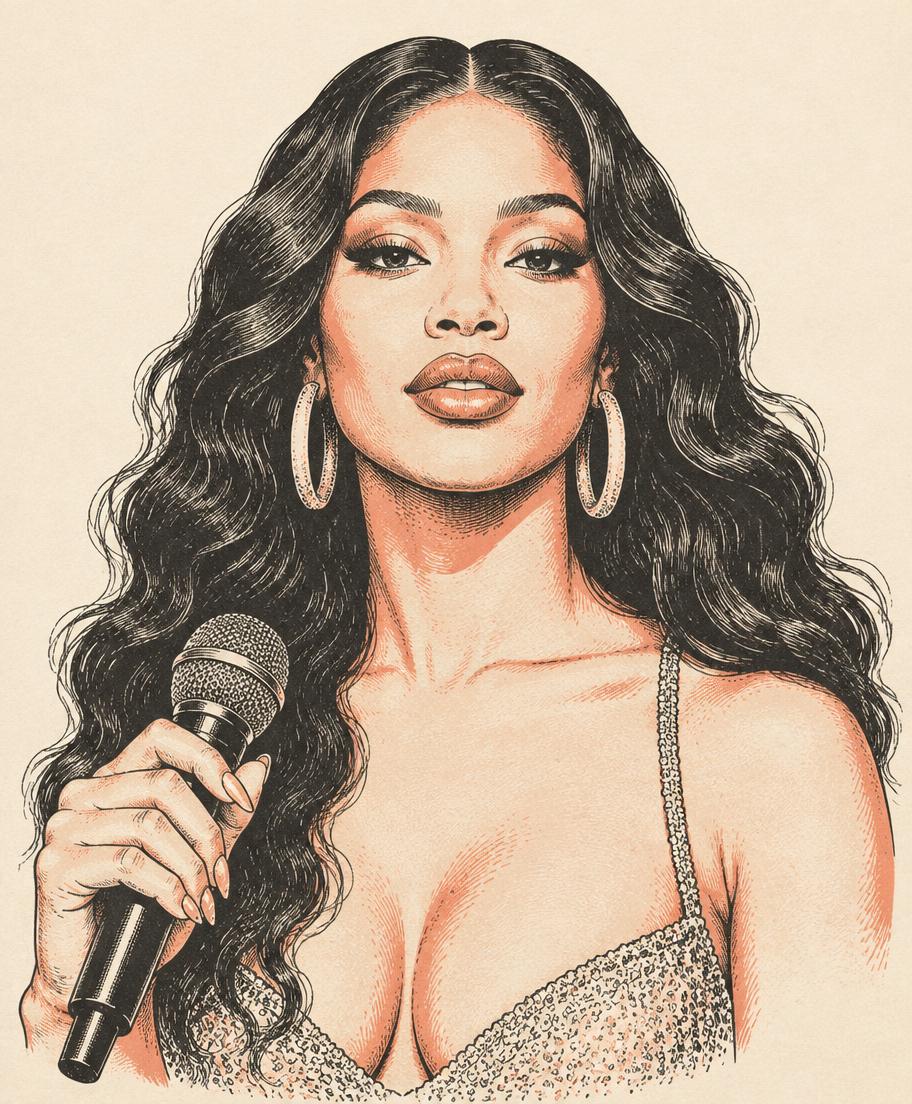
Singer and songwriter
Beyoncé
A singer, songwriter and performer whose career spans Destiny's Child and a run of genre-shifting solo albums.
Read biography ↗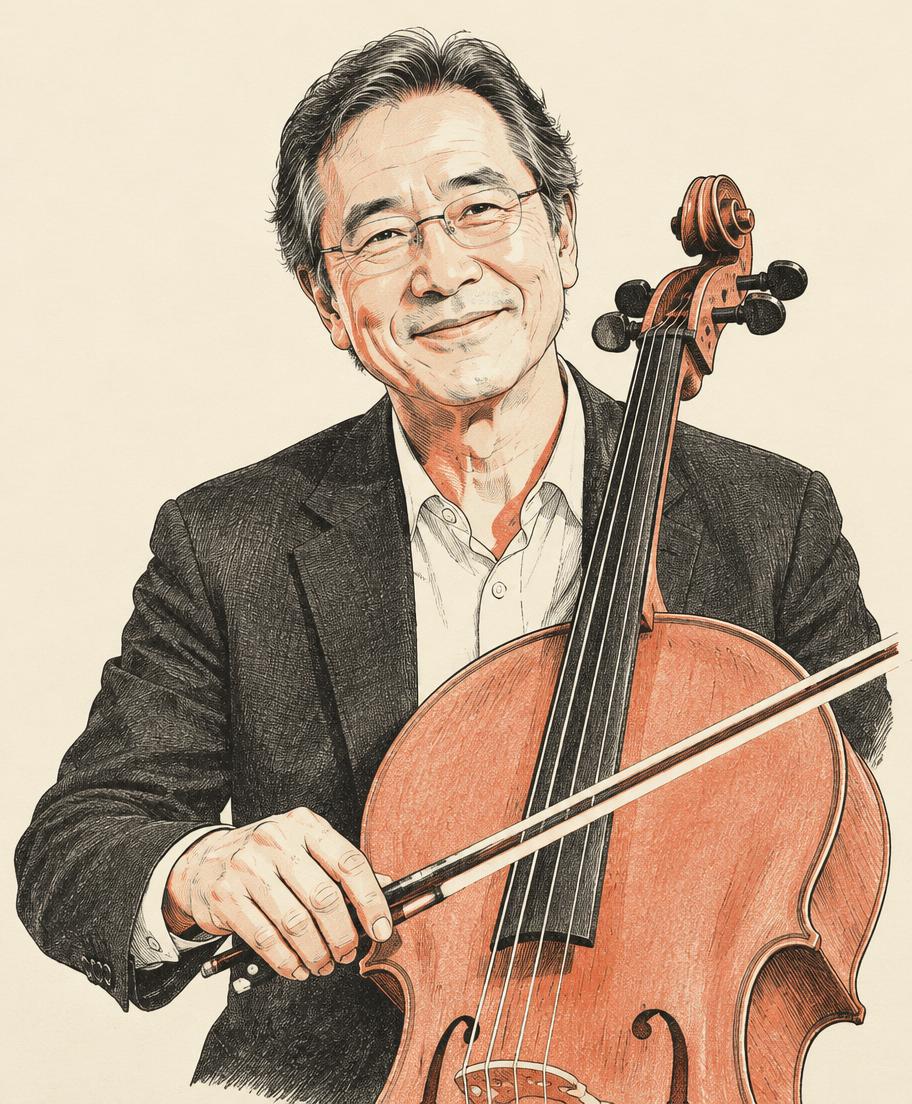
Cellist
Yo-Yo Ma
A cellist known for his recordings of the Bach cello suites and for decades of cross-cultural musical collaboration.
Read biography ↗
British singer (1949–2012)
Robin Gibb
Robin Hugh Gibb was a British singer and songwriter.
Read biography ↗