American playwright (1911–1983)
Tennessee Williams
Thomas Lanier Williams III, known by his pen name Tennessee Williams, was an American playwright and screenwriter.
By globalcelebwiki Editorial Desk, adapted from Wikipedia · Published 29 September 2026
- Profession
- American playwright (1911–1983)
- Born
- 26 March 1914
- Birthplace
- Columbus
- Nationality
- American

Overview
Thomas Lanier Williams III (March 26, 1911 – February 25, 1983), known by his pen name Tennessee Williams, was an American playwright and screenwriter. Along with contemporaries Eugene O'Neill and Arthur Miller, he is considered among the three foremost playwrights of 20th-century American drama.
Williams wrote his first play in 1930, but his work did not gain much traction until 1944 with the success of The Glass Menagerie. His next plays, including A Streetcar Named Desire (1947), Cat on a Hot Tin Roof (1955), Sweet Bird of Youth (1959), and The Night of the Iguana (1961), were also successful and widely acclaimed. With his later work, Williams attempted a new style that did not appeal as widely to audiences. His drama A Streetcar Named Desire is often numbered on short lists of the finest American plays of the 20th century alongside Eugene O'Neill's Long Day's Journey into Night and Arthur Miller's Death of a Salesman.
Much of Williams's work was adapted to film. He also wrote short stories, poetry, essays, and a volume of memoirs. In 1979, four years before his death, Williams was inducted into the American Theater Hall of Fame.
Early life
Thomas Lanier Williams III was born in Columbus, Mississippi, of English, Welsh, and Huguenot ancestry, the second child of Edwina Dakin (August 9, 1884 – June 1, 1980) and Cornelius Coffin "C. C." Williams (1879–1957). His father was a traveling shoe salesman who became an alcoholic and was frequently away from home. His mother was the daughter of Rose O. Dakin, a music teacher, and the Reverend Walter Dakin, an Episcopal priest from Illinois who was assigned to a parish in Clarksdale, Mississippi, shortly after Williams's birth. Williams lived in his grandfather's Episcopal rectory with his family for much of his early childhood and was close to his grandparents.
He had two siblings, older sister Rose Isabel Williams (1909–1996) and younger brother Walter Dakin Williams (1919–2008). As a young child, Williams nearly died from a case of diphtheria that left him frail, short and virtually confined to his house during a year of recuperation. At least partly due to his illness, he was considered a weak child by his father, Cornelius Williams, a descendant of East Tennessee pioneers, had a violent temper and was prone to use his fists. He regarded what he thought was his son's effeminacy with disdain. Edwina, locked in an unhappy marriage, focused her attention almost entirely on her frail young son. Critics and historians agree that Williams drew from his own dysfunctional family in much of his writing and that his desire to break free from his puritan upbringing propelled him toward writing.
When Williams was eight years old, his father was promoted to a job at the home office of the International Shoe Company in St. Louis. His mother's continual search for a more appropriate home, as well as his father's heavy drinking and loudly turbulent behavior, caused them to move numerous times around St. Louis. Williams attended Soldan High School, a setting he referred to in his play The Glass Menagerie. Later he studied at University City High School. At age 16, Williams won third prize for an essay published in Smart Set, titled "Can a Good Wife Be a Good Sport?" A year later, his short story "The Vengeance of Nitocris" was published (as by "Thomas Lanier Williams") in the August 1928 issue of the magazine Weird Tales. These early publications did not lead to any significant recognition or appreciation of Williams's talent, and he would struggle for more than a decade to establish his writing career. Later, in 1928, Williams first visited Europe with his maternal grandfather Dakin.
Education
From 1929 to 1931, Williams attended the University of Missouri in Columbia, where he enrolled in journalism classes. He was bored by his classes and distracted by unrequited love for a girl. Soon he began entering his poetry, essays, stories, and plays in writing contests, hoping to earn extra income. His first submitted play was Beauty Is the Word (1930), followed by Hot Milk at Three in the Morning (1932). As recognition for Beauty, a play about rebellion against religious upbringing, he became the first freshman to receive honorable mention in a writing competition.
At University of Missouri, Williams joined the Alpha Tau Omega fraternity, but he did not fit in well with his fraternity brothers. After he failed a military training course in his junior year, his father pulled him out of school and put him to work at the International Shoe Company factory. Although Williams hated the monotony, the job forced him out of the gentility of his upbringing. His dislike of his new 9-to-5 routine drove Williams to write prodigiously. He set a goal of writing one story a week. Williams often worked on weekends and late into the night. His mother recalled his intensity:
Tom would go to his room with black coffee and cigarettes and I would hear the typewriter clicking away at night in the silent house. Some mornings when I walked in to wake him for work, I would find him sprawled fully dressed across the bed, too tired to remove his clothes.
Overworked, unhappy, and lacking further success with his writing, by his 24th birthday Williams had suffered a nervous breakdown and left his job. Memories of this period and of a particular factory co-worker would contribute to the character Stanley Kowalski in A Streetcar Named Desire. By the mid-1930s his mother separated from his father due to his worsening alcoholism and abusive temper. They agreed to a legal separation in 1946 but never divorced.
In 1936, Williams enrolled at Washington University in St. Louis where he wrote the play Me, Vashya (1937). After not winning the school's poetry prize, he decided to drop out. In the autumn of 1937, he transferred to the University of Iowa in Iowa City, where he graduated with a B.A. in English in August 1938. He later studied at the Dramatic Workshop of The New School in New York City. About his early days as a playwright and an early collaborative play called Cairo, Shanghai, Bombay!, Williams wrote, "The laughter ... enchanted me. Then and there the theatre and I found each other for better and for worse. I know it's the only thing that saved my life." Around 1939, he adopted Tennessee Williams as his professional name in acknowledgement of his Southern accent and roots.
Williams's writings reference some of the poets and writers he most admired in his early years: Hart Crane, Arthur Rimbaud, Anton Chekhov, William Shakespeare, Clarence Darrow, D. H. Lawrence, Katherine Mansfield, August Strindberg, William Faulkner, Thomas Wolfe, Emily Dickinson, William Inge, James Joyce, and, according to some, Ernest Hemingway.
Career
In the late 1930s, while struggling to gain production and an audience for his work, Williams worked at a string of menial jobs that included a stint as caretaker on a chicken ranch in Laguna Beach, California.
In 1939, with the help of his agent Audrey Wood, Williams was awarded a $1,000 grant (equivalent to $23,100 in 2025) from the Rockefeller Foundation in recognition of his play Battle of Angels. It was produced in Boston, Massachusetts in 1940 and was poorly received.
In 1939, using some of the Rockefeller funds, Williams moved to New Orleans to write for the Works Progress Administration (WPA), a federally funded program of the New Deal era. Williams lived for a time in the New Orleans French Quarter, including 722 Toulouse Street, the setting of his future play Vieux Carré (1977). The building is now part of The Historic New Orleans Collection.
The Rockefeller grant brought him to the attention of the Hollywood film industry, and Williams received a six-month contract as a writer from the Metro-Goldwyn-Mayer film studio, earning US$250 weekly (equivalent to $5,800 in 2025).
During the winter of 1944–45, Williams' memory play The Glass Menagerie, developed from his short story "Portrait of a Girl in Glass" (1943), was produced in Chicago and garnered good reviews. It moved to New York where it became an instant hit and enjoyed a long Broadway run. Elia Kazan (who directed many of Williams's greatest successes) said of Williams: "Everything in his life is in his plays, and everything in his plays is in his life." The Glass Menagerie won the award for the best play of the season, the New York Drama Critics' Circle Award.
Personal life
Throughout his life, Williams remained close to his sister, Rose, who was diagnosed with schizophrenia as a young woman. In 1943, as her behavior became increasingly disturbing, she was subjected to a lobotomy, requiring her to be institutionalized for the rest of her life. As soon as he was financially able, Williams moved Rose to a private institution just north of New York City, where he often visited her. He gave her a percentage interest in several of his most successful plays, the royalties of which were applied toward her care. The devastating effects of Rose's treatment may have contributed to Williams's alcoholism and his dependence on various combinations of amphetamines and barbiturates.
After some early attempts at relationships with women, by the late 1930s, Williams began exploring his homosexuality. In New York City, he joined a gay social circle that included fellow writer and close friend Donald Windham (1920–2010) and Windham's then-boyfriend Fred Melton. In the summer of 1940, Williams initiated a relationship with Kip Kiernan (1918–1944), a young dancer he met in Provincetown, Massachusetts. When Kiernan left him to marry a woman, Williams was distraught. Kiernan's death four years later at age 26 was another heavy blow.
Death
On February 25, 1983, Williams was found dead at age 71 in his suite at the Hotel Elysée in New York City. Chief Medical Examiner of New York City Elliot M. Gross reported that Williams had choked to death from inhaling the plastic cap of the type used on bottles of nasal spray or eye solution. However, the report was corrected on August 14, 1983, to state that Williams had been using the plastic cap found in his mouth to ingest barbiturates and had actually died from a toxic level of secobarbital.
I, Thomas Lanier (Tennessee) Williams, being in sound mind upon this subject, and having declared this wish repeatedly to my close friends—do hereby state my desire to be buried at sea. More specifically, I wish to be buried at sea at as close a possible point as the American poet Hart Crane died by choice in the sea; this would be ascrnatible [sic], this geographic point, by the various books (biographical) upon his life and death. I wish to be sewn up in a canvas sack and dropped overboard, as stated above, as close as possible to where Hart Crane was given by himself to the great mother of life which is the sea: the Caribbean, specifically, if that fits the geography of his death. Otherwise—whereever fits it [sic].
However, his brother Dakin Williams arranged for him to be buried at Calvary Cemetery in St. Louis, Missouri, where his mother is buried.
According to The New York Times, "most of his estate was left to the University of the South in Sewanee, Tennessee, with the bulk of it to remain in trust for his sister during her lifetime." Tennessee's sister Rose died in 1996 after many years in a mental institution in New York state; the university subsequently received about $7 million, which supports a creative writing program.
Posthumous recognition
From February 1 to July 21, 2011, to commemorate the 100th anniversary of his birth, the Harry Ransom Center at the University of Texas at Austin, the home of Williams's archive, exhibited 250 of his personal items. The exhibit, titled "Becoming Tennessee Williams", included a collection of Williams manuscripts, correspondence, photographs and artwork. The Ransom Center holds the earliest and largest collections of Williams's papers, including all of his earliest manuscripts, the papers of his mother Edwina Williams, and those of his long-time agent Audrey Wood.
In late 2009, Williams was inducted into the Poets' Corner at the Cathedral of Saint John the Divine in New York. Performers and artists who took part in his induction included Vanessa Redgrave, playwright John Guare, Eli Wallach, Sylvia Miles, Gregory Mosher, and Ben (Griessmeyer) Berry.
The Tennessee Williams Theatre in Key West, Florida, is named for him. The Tennessee Williams Key West Exhibit on Truman Avenue houses rare Williams memorabilia, photographs, and pictures including his famous typewriter.
At the time of his death, Williams had been working on a final play, In Masks Outrageous and Austere, which attempted to reconcile certain forces and facts of his own life. This was a continuing theme in his work. As of September 2007, author Gore Vidal was completing the play, and Peter Bogdanovich was slated to direct its Broadway debut. The play received its world premiere in New York City in April 2012, directed by David Schweizer and starring Shirley Knight as Babe.
The rectory of St. Paul's Episcopal Church in Columbus, Mississippi, where Williams's grandfather Dakin was rector at the time of Williams's birth, was moved to another location in 1993 for preservation. It was renovated in 2010 for use by the City of Columbus as the Tennessee Williams Welcome Center.
Works
Characters in his plays are often seen as representations of his family members. Laura Wingfield in The Glass Menagerie is thought to be modeled on his sister Rose. Some biographers believed that the character of Blanche DuBois in A Streetcar Named Desire also is based on her and that the mental deterioration of Blanche's character is inspired by Rose's mental health struggles.
Amanda Wingfield in The Glass Menagerie generally was taken to represent Williams's mother Edwina. Characters such as Tom Wingfield in The Glass Menagerie and Sebastian in Suddenly, Last Summer were understood to represent Williams himself. In addition, he used a lobotomy as a motif in Suddenly, Last Summer.
The Pulitzer Prize for Drama was awarded to A Streetcar Named Desire in 1948 and to Cat on a Hot Tin Roof in 1955. These two plays later were adapted as highly successful films by noted directors Elia Kazan (Streetcar), with whom Williams developed a very close artistic relationship, and Richard Brooks (Cat). Both plays included references to elements of Williams's life such as homosexuality, mental instability, and alcoholism.
Although The Flowering Peach by Clifford Odets was the preferred choice of the Pulitzer Prize jury in 1955, and Cat on a Hot Tin Roof was at first considered the weakest of the five shortlisted nominees, Joseph Pulitzer Jr., chairman of the Board, had seen Cat on a Hot Tin Roof and thought it worthy of the drama prize. The Board went along with him after considerable discussion.
Williams wrote The Parade, or Approaching the End of a Summer when he was 29, and worked on it sporadically throughout his life. A semi-autobiographical depiction of his 1940 romance with Kip Kiernan in Provincetown, Massachusetts, it was produced for the first time on October 1, 2006, in Provincetown by the Shakespeare on the Cape production company. This was part of the First Annual Provincetown Tennessee Williams Festival. Something Cloudy, Something Clear (1981) is also based on his memories of Provincetown in the 1940s.
Sources and references
Spotted something wrong? Report a correction.
Related profiles
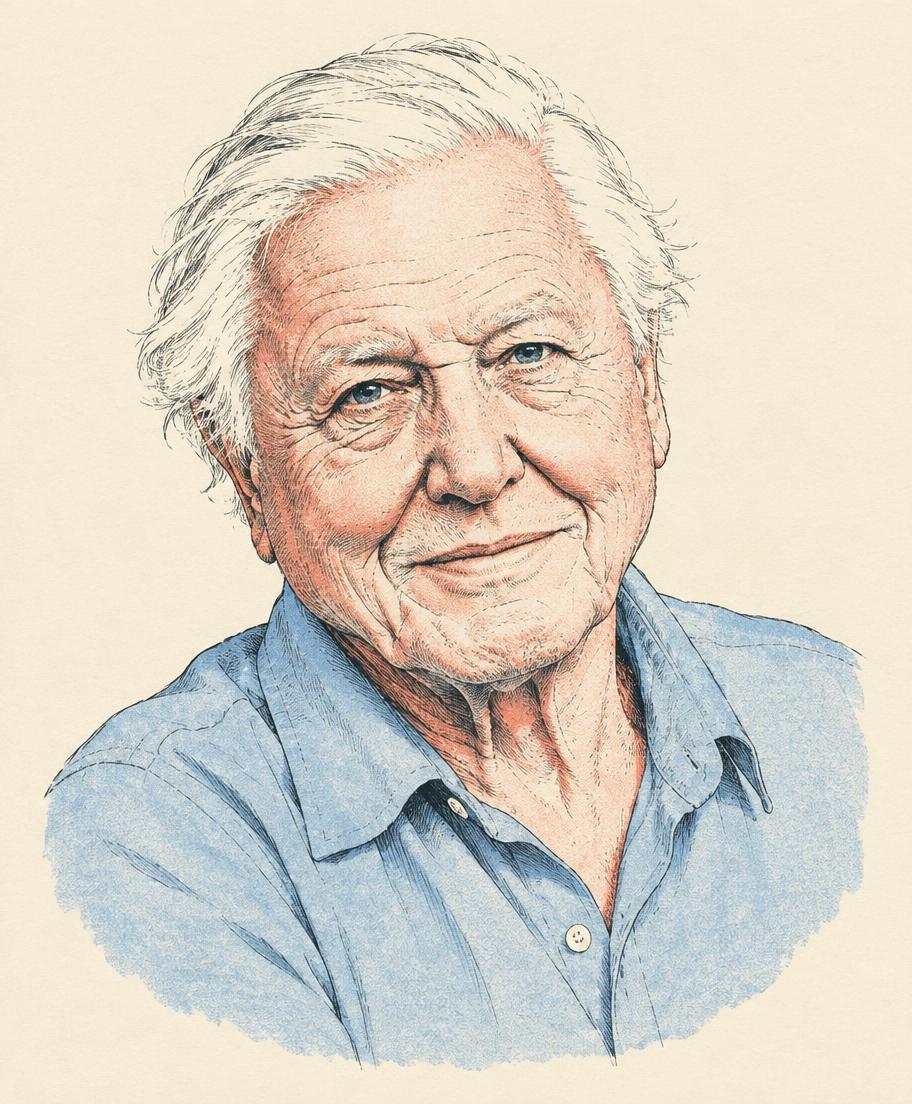
Broadcaster and natural historian
David Attenborough
The broadcaster whose natural history series have shaped how audiences understand life on Earth.
Read biography ↗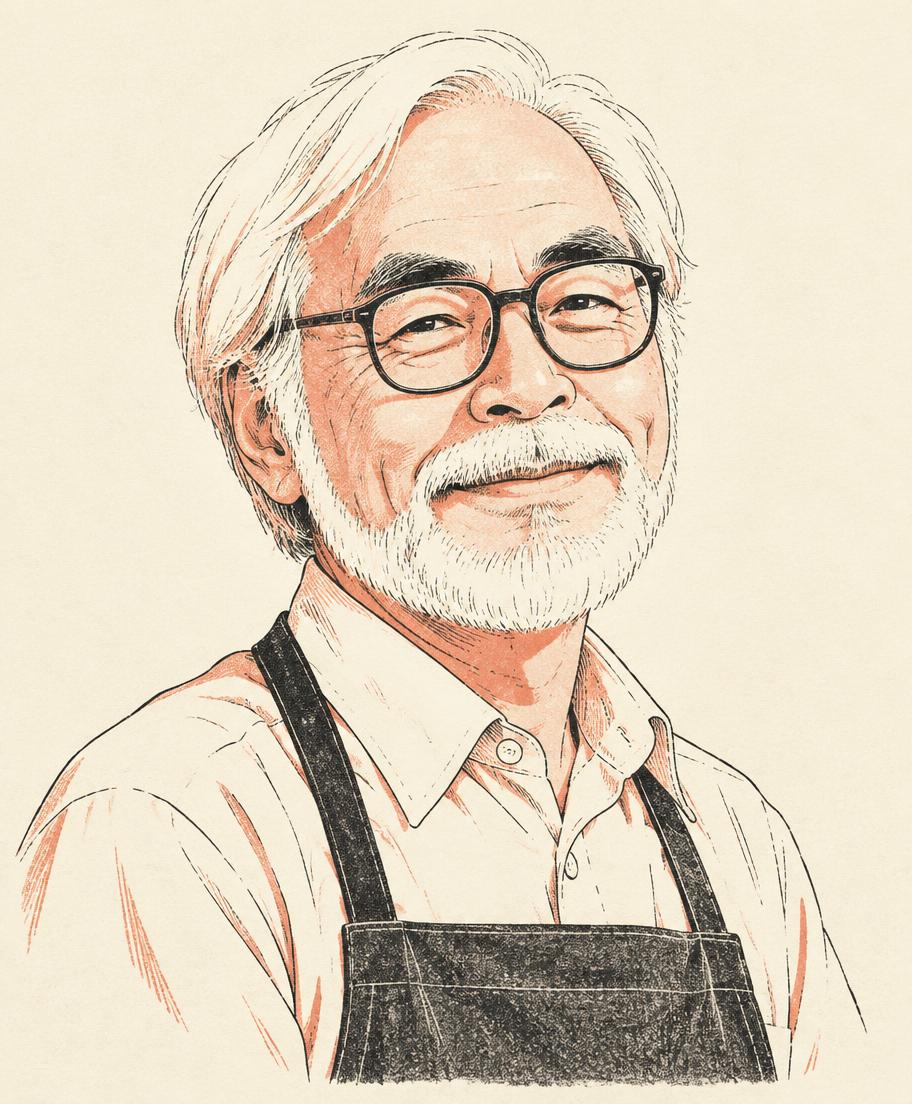
Animator and film director
Hayao Miyazaki
The animator and co-founder of Studio Ghibli whose hand-drawn films reached audiences worldwide.
Read biography ↗
Pope
Benedict I
Pope Benedict I was the bishop of Rome from 2 June 575 to his death on 30 July 579.
Read biography ↗