Italian writer and poet (1778–1827)
Ugo Foscolo
Ugo Foscolo, born Niccolò Foscolo, was an Italian writer, revolutionary and poet.
By globalcelebwiki Editorial Desk, adapted from Wikipedia · Published 29 September 2026
- Profession
- Italian writer and poet (1778–1827)
- Born
- 6 February 1778
- Birthplace
- Zakynthos
- Nationality
- Venetian

Overview
Ugo Foscolo (Italian: [ˈuːɡo ˈfoskolo, fɔs-]; 6 February 1778 – 10 September 1827), born Niccolò Foscolo, was an Italian writer, revolutionary and poet.
He is remembered for his 1807 long poem Dei Sepolcri, for writing what is considered the first modern Italian novel, The Last Letters of Jacopo Ortis (1798), and the carmen The Graces (1812).
Early life
Foscolo was born in Zakynthos in 1778, in the Ionian Islands. His father Andrea Foscolo was an impoverished Venetian nobleman and medical doctor, and his mother Diamantina Spathis was Greek.
In 1788, upon the death of his father, who worked as a physician in Spalato (present-day Split, Croatia), the family moved to Venice, and Foscolo completed the studies he began at the Dalmatian grammar school at the University of Padua.
Amongst his Paduan teachers was the Abbé Melchiore Cesarotti, whose version of Ossian was very popular in Italy, and who influenced Foscolo's literary tastes; he knew both modern and Ancient Greek. His literary ambition revealed itself in the appearance in 1797 of his tragedy Tieste—a production that enjoyed a certain degree of success.
Politics and poetry
Foscolo, who, for unknown reasons, had changed his Christian name Niccolò to that of Ugo, began to take an active part in the stormy political discussions which the fall of the Republic of Venice had triggered. He was a prominent member of the national committees, and addressed an ode to Napoleon, expecting Napoleon to overthrow the Venetian oligarchy and create a free republic.
The Treaty of Campo Formio (17 October 1797), under which, the French having indeed forced the dissolution of the ancient Republic of Venice, then handed over the city and the Veneto to the Austrians (in exchange for the Austrian Netherlands) gave a rude shock to Foscolo, but did not quite destroy his hopes. The state of mind produced by that shock is reflected in his novel The Last Letters of Jacopo Ortis (1798), which was described by the 1911 Encyclopædia Britannica as a more politicized version of Johann Wolfgang von Goethe's The Sorrows of Young Werther: "for Foscolo's hero embodies the mental sufferings and suicide of an undeceived Italian patriot just as Goethe's hero places before us the too-delicate sensitiveness, embittering and at last cutting short the life of a private German scholar."
The story of Foscolo's novel, The Last Letters of Jacopo Ortis had a groundwork of melancholy fact. Jacopo Ortis had been a real person; he was a young student from Padua, and committed suicide there under circumstances akin to those described by Foscolo.
Foscolo, like many of his contemporaries, had thought much about suicide. Cato the Younger and the many classical examples of self-destruction described in Plutarch's Lives appealed to the imaginations of young Italian patriots as they had to the heroes and heroines of the Gironde in France. In the case of Foscolo, as in that of Goethe, the effect produced on the writer's mind by the composition of the work seems to have been beneficial. He had seen the ideal of a great national future rudely shattered; but he did not despair of his country, and sought relief in now turning to gaze on the ideal of a great national poet.
After the fall of Venice, Foscolo moved to Milan, where he formed a friendship with the older poet Giuseppe Parini, whom he later remembered with admiration and gratitude. In Milan, he published a selection of 12 Sonnets, blending the passionate sentiments shown in "Ortis" with classical control of language and rhythm.
London
During the eleven years spent by Foscolo in London, until his death there, he enjoyed all the social distinction which the most brilliant circles of the English capital could confer on foreigners of political and literary renown, and experienced all the misery which follows on from a disregard of the first conditions of domestic economy.
His contributions to the Edinburgh Review and Quarterly Review, his dissertations in Italian on the text of Dante Alighieri and Giovanni Boccaccio, and still more his English essays on Petrarch (1821), of which the value was enhanced by Barbarina Brand's admirable translations of some of Petrarch's finest sonnets, heightened his previous fame as a Man of Letters. However, he was frequently accused of financial ineptitude, and ended up spending time in debtors' prison, which affected his social standing after his release.
According to the History of the County of Middlesex, the scientist and businessman William Allen hired Foscolo to teach Italian at the Quaker school he co-founded, the Newington Academy for Girls. His general bearing in society – as reported by Walter Scott – had not been such as to gain and retain lasting friendships. He died at Turnham Green on 10 September 1827, and was buried at St Nicholas Church, Chiswick, where his restored tomb remains to this day; it refers to him as the "wearied citizen poet", and incorrectly states his age as 50. Forty-four years after his death, on 7 June 1871, his remains were exhumed at the request of the King of Italy and taken to Florence, where with all the pride, pomp and circumstance of a great national mourning, found their final resting-place beside the monuments of Niccolò Machiavelli and Vittorio Alfieri, of Michelangelo and Galileo, in the church of Santa Croce, the pantheon of Italian glory he had celebrated in Dei Sepolcri.
As noted by historian Lucy Riall, the glorification of Ugo Foscolo in the 1870s was part of the effort of the Italian government of this time (successful in completing the Italian unification but at the cost of a head-on confrontation with the Catholic Church) to create a gallery of "secular saints" to compete with those of the Church and sway popular feeling in favor of the newly created Italian state.
A Bonaparte liberatore [To Bonaparte the liberator], ode (1797)
A Luigia Pallavicini caduta da cavallo [To Luigia Pallavicini fallen from a horse], ode (1800)
All'amica risanata [To the healed (female) friend], ode (1802)
Non son chi fui, perì di noi gran parte, sonnet (1802)
E tu ne' carmi avrai perenne vita, sonnet (1802)
Ultime lettere di Jacopo Ortis [The last letters of Jacopo Ortis] (1802)
Sources and references
Spotted something wrong? Report a correction.
Related profiles
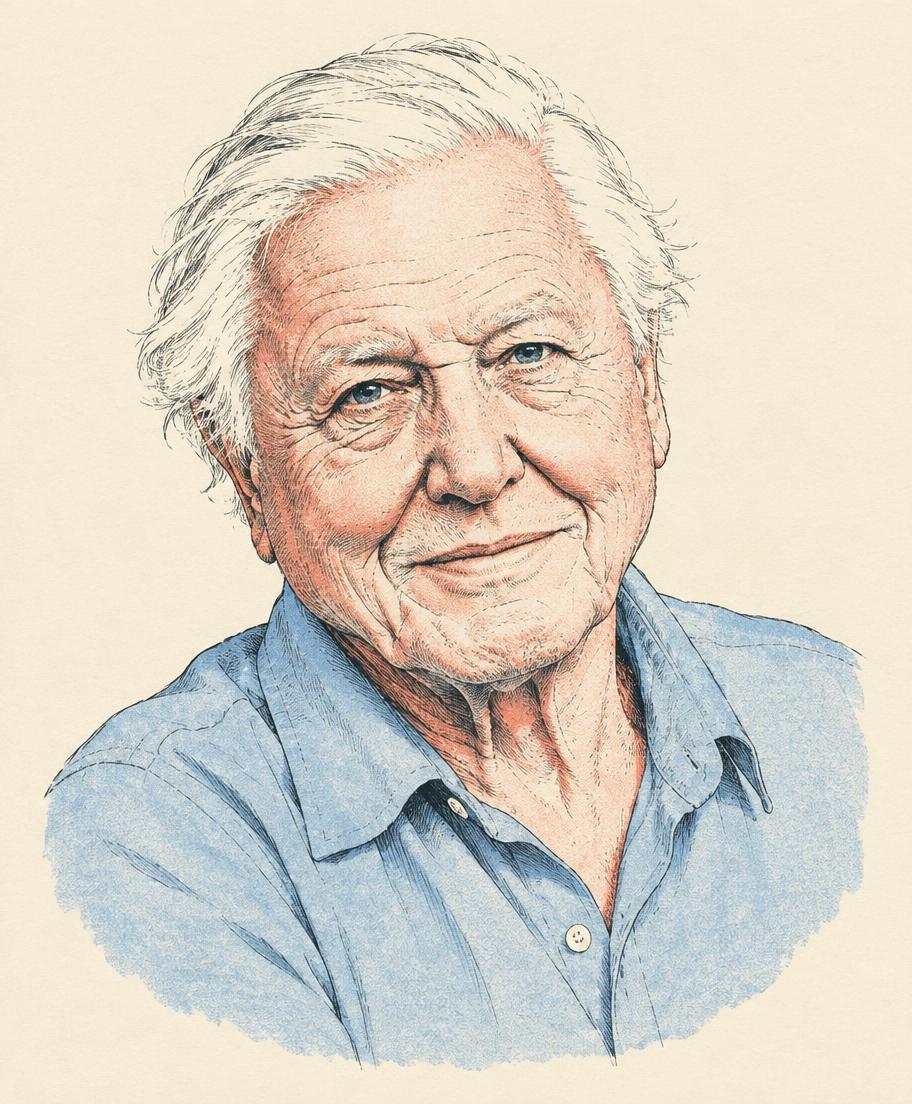
Broadcaster and natural historian
David Attenborough
The broadcaster whose natural history series have shaped how audiences understand life on Earth.
Read biography ↗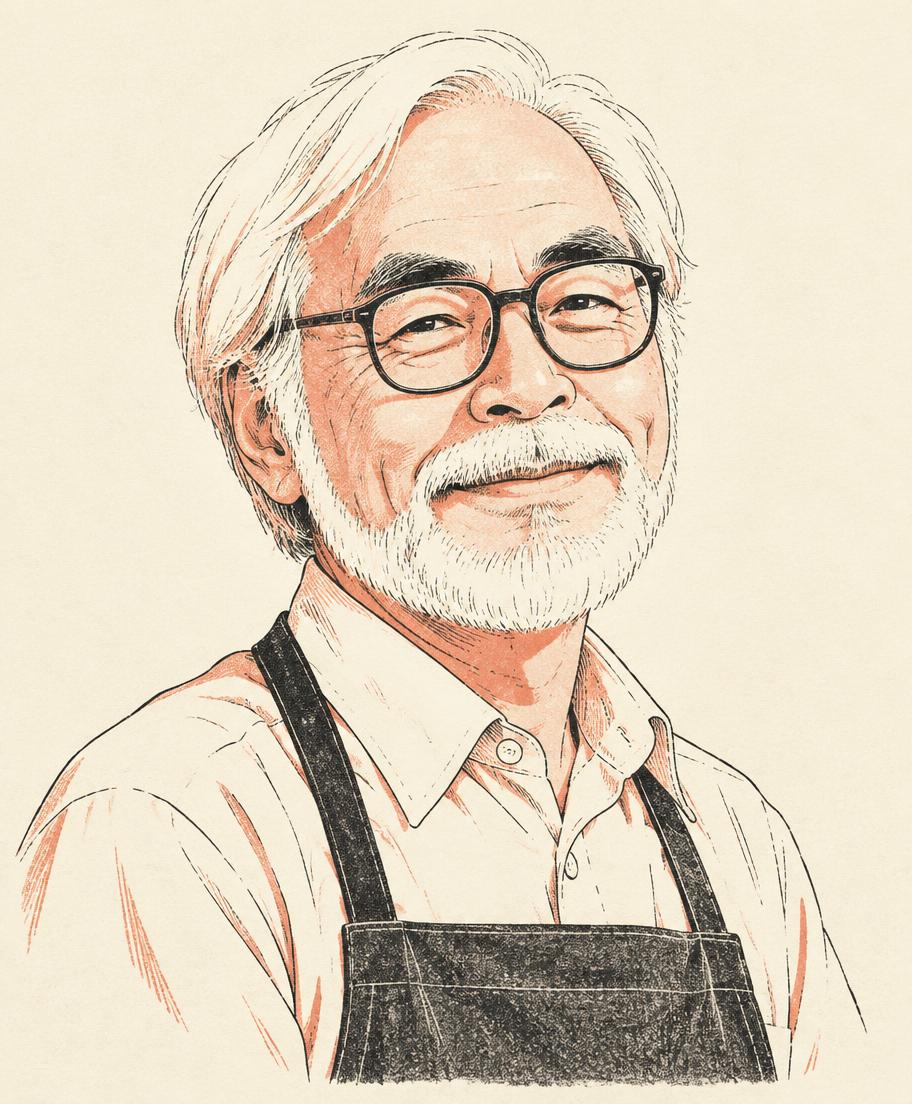
Animator and film director
Hayao Miyazaki
The animator and co-founder of Studio Ghibli whose hand-drawn films reached audiences worldwide.
Read biography ↗
Pope
Benedict I
Pope Benedict I was the bishop of Rome from 2 June 575 to his death on 30 July 579.
Read biography ↗