Czech statesman, playwright, and former dissident, the last president of Czechoslovakia and the first president of the C
Václav Havel
Václav Havel was a Czech statesman, author, poet, playwright, and dissident.
By globalcelebwiki Editorial Desk, adapted from Wikipedia · Published 29 September 2026
- Profession
- Czech statesman, playwright, and former dissident, the last president of Czechoslovakia and the first president of the C
- Born
- 5 October 1936
- Birthplace
- Prague
- Nationality
- Czech
Overview
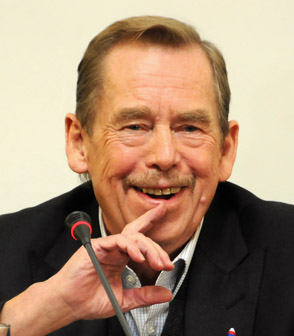
Václav Havel (Czech: [ˈvaːt͡slav ˈɦavɛl] ; 5 October 1936 – 18 December 2011) was a Czech statesman, author, poet, playwright, and dissident. Havel served as the last president of Czechoslovakia from 1989 until 1992, prior to the dissolution of Czechoslovakia on 31 December, before he became the first president of the Czech Republic from 1993 to 2003. He was the first democratically elected president of either country after the fall of communism. As a writer of Czech literature, he is known for his plays, essays and memoirs.
His educational opportunities having been limited by his bourgeois background under the Czechoslovak Socialist Republic, Havel first rose to prominence as a playwright. In works such as The Garden Party and The Memorandum, Havel used an absurdist style to criticize the Communist system. After participating in the Prague Spring and being blacklisted after the Warsaw Pact invasion of Czechoslovakia, he became more politically active and helped found several dissident initiatives, including Charter 77 and the Committee for the Defense of the Unjustly Prosecuted. His political activities brought him under the surveillance of the StB secret police, and he spent several periods as a political prisoner, the longest of his imprisoned terms being nearly four years, between 1979 and 1983.
Havel's Civic Forum party played a major role in the Velvet Revolution that toppled the Communist system in Czechoslovakia in 1989. He assumed the presidency shortly thereafter, and was re-elected in a landslide the following year and after Slovak independence in 1993. Havel was instrumental in dismantling the Warsaw Pact and enlargement of NATO membership eastward. Many of his stances and policies were controversial domestically, such as his opposition to Slovak independence, condemnation of the treatment of Sudeten Germans and their mass expulsion from Czechoslovakia after World War II, and granting of general amnesty to all those imprisoned under the Communist era. By the end of his presidency, he enjoyed greater popularity abroad than at home. Havel continued his life as a public intellectual after his presidency, launching several initiatives including the Prague Declaration on European Conscience and Communism, the VIZE 97 Foundation, and the Forum 2000 annual conference.
Havel's political philosophy was one of anti-consumerism, humanitarianism, environmentalism, civil activism, and direct democracy. He supported the Czech Green Party from 2004 until his death. He received numerous accolades during his lifetime, including the Presidential Medal of Freedom, the Gandhi Peace Prize, the Philadelphia Liberty Medal, the Order of Canada, the Four Freedoms Award, the Ambassador of Conscience Award, and the Hanno R. Ellenbogen Citizenship Award. The 2012–2013 academic year at the College of Europe was named in his honour. He is considered by some to be one of the most important intellectuals of the 20th century. The international airport in Prague was renamed Václav Havel Airport Prague in 2012.
Early life
Havel was born in Prague on 5 October 1936 into a wealthy family celebrated in Czechoslovakia for its entrepreneurial and cultural accomplishments. His grandfather, Vácslav Havel, a real estate developer, built a landmark entertainment complex on Prague's Wenceslas Square. His father, Václav Maria Havel, was the real estate developer behind the suburban Barrandov Terraces, located on the highest point of Prague—next door to which his uncle, Miloš Havel, built one of the largest film studios in Europe. Havel's mother, Božena Vavrečková, also came from an influential family; her father was a Czechoslovak ambassador and a well-known journalist.
In the early 1950s, because of his class background, Havel entered into a four-year apprenticeship as a chemical laboratory assistant and simultaneously took evening classes at a gymnasium. He completed his secondary education in 1954.
For political reasons, he was not accepted into any post-secondary school with a humanities program; therefore, he opted for studies at the Faculty of Economics of the Czech Technical University in Prague but dropped out after two years. On 9 July 1964, Havel married Olga Šplíchalová.
Early theatre career
The intellectual tradition of his family was essential for Havel's lifetime adherence to the humanitarian values of the Czech culture. After finishing his military service (1957–59), Havel had to bring his intellectual ambitions in line with the given circumstances, especially with the restrictions imposed on him as a descendant of a bourgeois family. He found employment in Prague's theatre world as a stagehand at Prague's Theatre ABC – Divadlo ABC, and then at the Theatre on Balustrade – Divadlo Na zábradlí. Simultaneously, he was a student of dramatic arts by correspondence at the Theatre Faculty of the Academy of Performing Arts in Prague (DAMU). His first own full-length play performed in public, besides various vaudeville collaborations, was The Garden Party (1963). Presented in a series of Theatre of the Absurd, at the Theatre on Balustrade, this play won him international acclaim. The play was soon followed by The Memorandum, one of his best known plays, and The Increased Difficulty of Concentration, all at the Theatre on Balustrade. In 1968, The Memorandum was also brought to The Public Theater in New York, which helped to establish Havel's reputation in the United States. The Public Theater continued to produce his plays in the following years. After 1968, Havel's plays were banned from the theatre world in his own country, and he was unable to leave Czechoslovakia to see any foreign performances of his works.
Political dissident
During the first week of the Warsaw Pact invasion of Czechoslovakia in August 1968, Havel assisted the resistance by providing an on-air narrative via Radio Free Czechoslovakia station (at Liberec). Following the suppression of the Prague Spring in 1968, he was banned from the theatre and became more politically active. He took a job at Krakonoš brewery in Trutnov, an experience he wrote about in his play Audience. This play, along with two other "Vaněk" plays (so-called because of the recurring character Ferdinand Vaněk, a stand in for Havel), became distributed in samizdat form across Czechoslovakia, and greatly added to Havel's reputation of being a leading dissident (several other Czech writers later wrote their own plays featuring Vaněk). This reputation was cemented with the publication of the Charter 77 manifesto, written partially in response to the imprisonment of members of the Czech psychedelic rock band The Plastic People of the Universe; Havel had attended their trial, which centered on the group's non-conformity in having long hair, using obscenities in their music, and their overall involvement in the Prague underground movement. Havel co-founded the Committee for the Defense of the Unjustly Prosecuted in 1979. His political activities resulted in multiple imprisonments by the authorities, and constant government surveillance and questioning by the secret police (Státní bezpečnost). His longest period in prison, from May 1979 to February 1983, is documented in letters to his wife that were later published as Letters to Olga.
He was known for his essays, most particularly The Power of the Powerless (1978), in which he described a societal paradigm in which citizens were forced to "live within a lie" under the Communist regime. In describing his role as a dissident, Havel wrote in 1979: "we never decided to become dissidents. We have been transformed into them, without quite knowing how, sometimes we have ended up in prison without precisely knowing how. We simply went ahead and did certain things that we felt we ought to do, and that seemed to us decent to do, nothing more nor less."
Samuel Beckett's 1982 short play, Catastrophe, was dedicated to Havel while he was held as a political prisoner in Czechoslovakia. Both plays were published by Index on Censorship, which in 2022 requested a followup play on similar themes from the Iranian playwright Reza Shirmarz.
Presidency
On 29 December 1989, while he was leader of the Civic Forum, Havel became President of Czechoslovakia by a unanimous vote of the Federal Assembly. He had long insisted that he was not interested in politics and had argued that political change in the country should be induced through autonomous civic initiatives rather than through the official institutions. In 1990, soon after his election, Havel was awarded the Prize For Freedom of the Liberal International.
In 1990, Czechoslovakia held its first free elections in 44 years, resulting in a sweeping victory for Civic Forum and its Slovak counterpart, Public Against Violence. Between them, they commanded strong majorities in both houses of the legislature, and tallied the highest popular vote share recorded for a free election in the country. During his early presidency, Havel gave a number of interviews to foreign media, including to Voice of America correspondent Jolyon Naegele, who had covered Czechoslovak dissident movements throughout the 1980s.
Despite increasing political tensions between the Czechs and the Slovaks in 1992, Havel supported the retention of the Czech and Slovak Federative Republic prior to the dissolution of the country. Havel sought re-election in 1992. Although no other candidate filed, when the vote came on 3 July, he failed to get a majority due to a lack of support from Slovak deputies. The largest Czech political party, the Civic Democratic Party, let it be known that it would not support any other candidate. After the Slovaks issued their Declaration of Independence, he resigned as president on 20 July, saying that he would not preside over the country's breakup.
However, when the Czech Republic was created as one of two successor states, he stood for election as its first president on 26 January 1993, and won. Although he was nominally the new country's chief executive, the framers of the Constitution of the Czech Republic intended to vest most of the real power in the prime minister. However, owing to his prestige, he still commanded great moral authority, and the presidency acquired a greater role than the framers intended. For instance, largely due to his influence, the Communist Party of Bohemia and Moravia (KSCM), successor to the KSC's branch in the Czech Lands, was kept on the margins for most of his presidency. Havel suspected that the KSCM was still an unreformed Stalinist party.
Havel's popularity abroad surpassed his popularity at home, and he was often the object of controversy and criticism. During his time in office, Havel stated that the expulsion of the indigenous Sudeten German population after World War II was immoral, causing a great controversy at home. He also extended general amnesty as one of his first acts as president, in an attempt to lessen the pressure in overcrowded prisons as well as to release political prisoners and persons who may have been falsely imprisoned during the Communist era. Havel felt that many of the decisions by the previous regime's courts should not be trusted, and that most of those in prison had not received fair trials. However, critics claimed that this amnesty led to a significant increase in the crime rate: the total number of crimes doubled, as did the number of murders. Several of the worst crimes in the history of the Czech criminology were committed by criminals released in this amnesty. Within four years of the Velvet Revolution (and following another two amnesties declared by Havel), criminality had more than tripled since 1989.
Post-presidential career
Beginning in 1997, Havel hosted Forum 2000, an annual conference to "identify the key issues facing civilisation and to explore ways to prevent the escalation of conflicts that have religion, culture or ethnicity as their primary components". In 2005, the former president occupied the Kluge Chair for Modern Culture at the John W. Kluge Center of the United States Library of Congress, where he continued his research on human rights. In November and December 2006, Havel spent eight weeks as a visiting artist in residence at Columbia University. The stay was sponsored by the Columbia Arts Initiative and featured "performances, and panels centr[ing] on his life and ideas", including a public "conversation" with former U.S. President Bill Clinton. Concurrently, the Untitled Theater Company No. 61 launched a Havel Festival, the first complete festival of his plays in various venues throughout New York City, including The Brick Theater and the Ohio Theatre, in celebration of his 70th birthday. Havel was a member of the World Future Society and addressed the Society's members on 4 July 1994. His speech was later printed in THE FUTURIST magazine (July 1995).
Havel was greatly admired by Czech citizens. In the poll taken for the 2005 TV show Největší Čech (the Czech spin-off of the BBC 100 Greatest Britons), Havel placed third.
Havel's memoir of his experience as president, To the Castle and Back, was published in May 2007. The book mixes an interview in the style of Disturbing the Peace with actual memoranda he sent to his staff and modern diary entries and recollections.
On 4 August 2007, Havel met with members of the Belarus Free Theatre at his summer cottage in the Czech Republic in a show of his continuing support, which has been instrumental in the theatre's attaining international recognition and membership in the European Theatrical Convention.
Havel went on a hunger strike in 2007 to support Kurdish doctor and human rights activist Yekta Uzunoglu in his legal battle. A former president going on a hunger strike to support the legal battle of a foreigner in his country was a first in world history.
Death
A week before his death, he met with his long-time friend, the Dalai Lama, in Prague; Havel appeared in a wheelchair. He died in the morning of 18 December 2011, at the age of 75, at his country home in Hrádeček.
Prime Minister Petr Nečas announced a three-day mourning period from 21 to 23 December, the date announced by President Václav Klaus for the state funeral. The funeral Mass was held at Saint Vitus Cathedral, celebrated by the Archbishop of Prague Dominik Duka and Havel's old friend Bishop Václav Malý. During the service, a 21 gun salute was fired in the former president's honour, and in accordance with the family's request, a private ceremony followed at Prague's Strašnice Crematorium. Havel's ashes were placed in the family tomb in the Vinohrady Cemetery in Prague. On 23 December 2011, the Václav Havel Tribute Concert was held in Prague's Palác Lucerna.
Within hours Havel's death was met with numerous tributes, including from U.S. President Barack Obama, British Prime Minister David Cameron, German Chancellor Angela Merkel and former Polish President Lech Wałęsa. Merkel called Havel "a great European", while Wałęsa said he should have been given the Nobel Peace Prize. The Russian Embassy sent an official condolence on behalf of the President Dmitry Medvedev and Prime Minister Vladimir Putin. Slovakia declared 23 December a day of national mourning.
At the news of his death, former U.S. Secretary of State Madeleine Albright, a native of Czechoslovakia, said, "He was one of the great figures of the 20th Century", while Czech expatriate novelist Milan Kundera said: "Václav Havel's most important work is his own life." Leader of Communist Party of Bohemia and Moravia, Vojtěch Filip, stated that Havel was a very controversial person and that his words often conflicted with his deeds. He criticized Havel for having supported the NATO bombing of Yugoslavia, repeating the charge that Havel had called the event a "humanitarian bombing", although Havel had expressly and emphatically denied ever using such a phrase.
An online petition organized by one of the best-known Czech and Slovak film directors, Fero Fenič, calling on the government and the Parliament to rename Prague Ruzyně Airport to Václav Havel International Airport attracted—in a week after 20 December 2011—support of over 80,000 Czech Republic and foreign signatories. It was announced that the airport would be renamed the Václav Havel Airport Prague on 5 October 2012.
Reviewing a new biography by Michael Žantovský, Yale historian Marci Shore summarized his challenges as president: "Havel's message, 'We are all responsible, we are all guilty,' was not popular. He enacted a general amnesty for all but the most serious criminals, apologized on behalf of Czechoslovakia for the post-World War II expulsion of the Sudeten Germans and resisted demands for a more draconian purge of secret police collaborators. These things were not popular either. And as the government undertook privatization and restitution, Havel confronted pyramid schemes, financial corruption and robber baron capitalism. He saw his country fall apart (if bloodlessly), becoming in 1993 the Czech Republic and Slovakia."
Awards
In 1986, Havel received the Erasmus Prize, in 1989 the Friedenspreis des Deutschen Buchhandels, and in 1990, he received the Gottlieb Duttweiler Prize for his outstanding contributions to the well-being of the wider community. In the same year he received the Freedom medal.
In 1993, he was elected an Honorary Fellow of the Royal Society of Literature.
On 4 July 1994, Václav Havel was awarded the Philadelphia Liberty Medal. In his acceptance speech, he said: "The idea of human rights and freedoms must be an integral part of any meaningful world order. Yet I think it must be anchored in a different place, and in a different way, than has been the case so far. If it is to be more than just a slogan mocked by half the world, it cannot be expressed in the language of departing era, and it must not be mere froth floating on the subsiding waters of faith in a purely scientific relationship to the world."
Havel was elected to the American Philosophical Society in 1995.
In 1997, Havel received ex aequo the Prince of Asturias Award for Communication and Humanities and the Prix mondial Cino Del Duca.
Sources and references
Spotted something wrong? Report a correction.
Related profiles
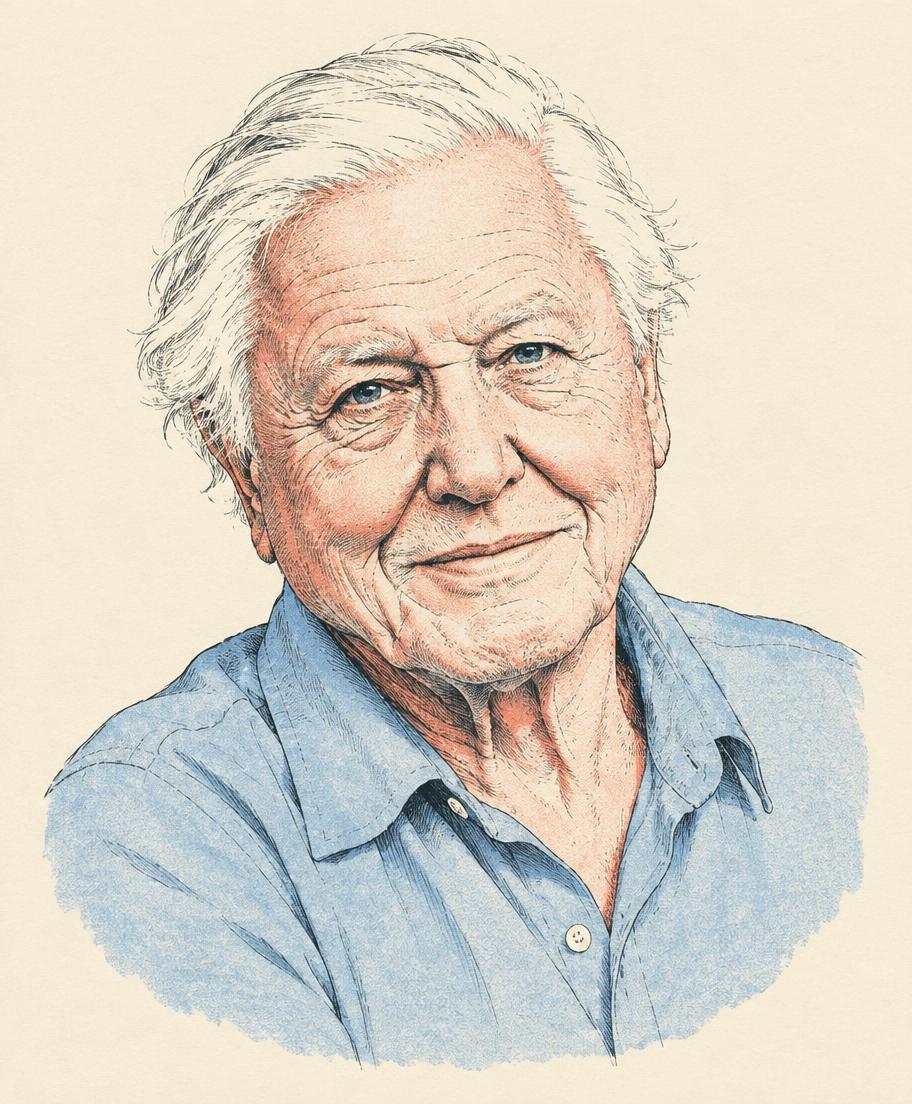
Broadcaster and natural historian
David Attenborough
The broadcaster whose natural history series have shaped how audiences understand life on Earth.
Read biography ↗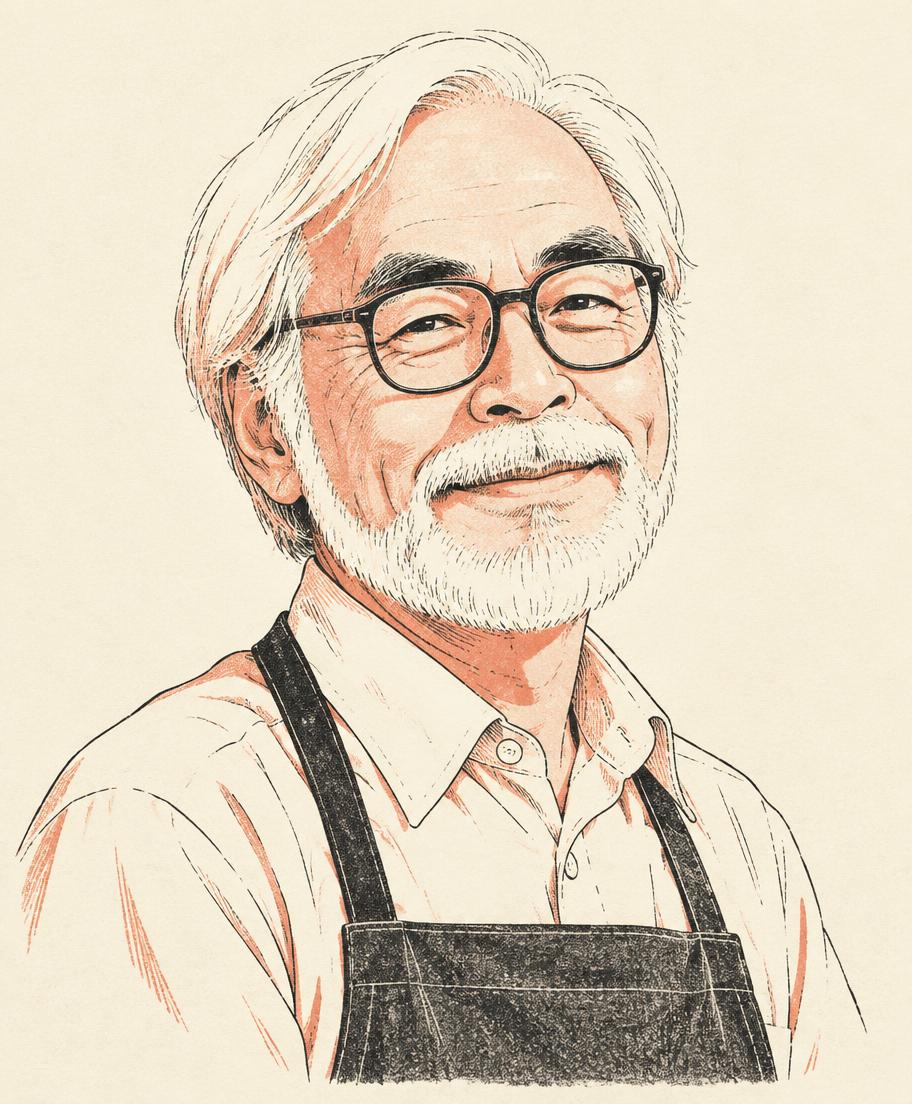
Animator and film director
Hayao Miyazaki
The animator and co-founder of Studio Ghibli whose hand-drawn films reached audiences worldwide.
Read biography ↗
Pope
Benedict I
Pope Benedict I was the bishop of Rome from 2 June 575 to his death on 30 July 579.
Read biography ↗