Hungarian chess player
Judit Polgár
Judit Polgár is a Hungarian chess grandmaster, widely regarded as the strongest female chess player of all time.
By globalcelebwiki Editorial Desk, adapted from Wikipedia · Published 29 September 2026
- Profession
- Hungarian chess player
- Born
- 23 July 1976
- Birthplace
- Budapest
- Nationality
- Hungarian

Overview
Judit Polgár (born 23 July 1976) is a Hungarian chess grandmaster, widely regarded as the strongest female chess player of all time. She is the only woman to be ranked in the world top 10, the only woman to achieve a rating over 2700, reaching a peak rating of 2735, and the only woman to compete in the final stage of a World Chess Championship. She was the top-rated woman in the world from January 1989 until her retirement from competitive chess in 2014, remaining No. 1 until the March 2015 rating list, a record of 26 consecutive years as woman's No. 1.
Polgár was a chess prodigy, and at age 12 became the youngest player to break into the FIDE top-100 rating list, ranked 55 in the January 1989 list. In 1991, she became the youngest player at the time to achieve the title of Grandmaster, at the age of 15 years and 4 months, breaking the 33-year-old record held by former world champion Bobby Fischer. With the achievement, she became only the fourth-ever female Grandmaster, achieving the title the same year her older sister Susan had become the third-ever female Grandmaster.
Polgár won or shared first in the chess tournaments of Hastings 1993, Madrid 1994, León 1996, U.S. Open 1998, Hoogeveen 1999, Sigeman & Co 2000, Japfa 2000, and the Najdorf Memorial 2000. She is the only woman to have won a game against a reigning world number one player (Garry Kasparov, in 2002), and defeated eleven current or former world champions in either rapid or classical chess: Magnus Carlsen, Anatoly Karpov, Kasparov, Vladimir Kramnik, Boris Spassky, Vasily Smyslov, Veselin Topalov, Viswanathan Anand, Ruslan Ponomariov, Alexander Khalifman, and Rustam Kasimdzhanov.
On 13 August 2014, she announced her retirement from competitive chess. In June 2015, Polgár was elected as the new captain and head coach of the Hungarian national men's team. On 20 August 2015, she received Hungary's highest decoration, the Grand Cross of the Order of Saint Stephen of Hungary. In 2021, Polgár was inducted into the World Chess Hall of Fame. In September 2024, as part of FIDE's centennial celebration, Polgár was awarded the FIDE 100 Award as the best female player of the past 100 years.
Early life
Polgár was born on 23 July 1976 in Budapest to a Jewish-Hungarian family. Polgár and her two older sisters, Grandmaster Susan and International Master Sofia, were part of an educational experiment carried out by their father, László Polgár, in an attempt to prove that children could make exceptional achievements if trained in a specialist subject from a very early age. "Geniuses are made, not born," was László's thesis. He and his wife Klára educated their three daughters at home, with chess as the specialist subject. László also taught his three daughters the international language Esperanto. They also received criticism at the time from some Western commentators for depriving the sisters of a normal childhood.
Traditionally, chess had been a male-dominated activity, and women were often seen as weaker players, thus advancing the idea of a Women's World Champion. However, from the beginning, László was against the idea that his daughters had to participate in female-only events. "Women are able to achieve results similar, in fields of intellectual activities, to that of men," he wrote. "Chess is a form of intellectual activity, so this applies to chess. Accordingly, we reject any kind of discrimination in this respect." This put the Polgárs in conflict with the Hungarian Chess Federation of the day, whose policy was for women to play in women-only tournaments.
Career
Polgár rarely played in women-only tournaments or divisions and has never competed for the Women's World Championship: "I always say that women should have the self-confidence that they are as good as male players, but only if they are willing to work and take it seriously as much as male players." While László Polgár has been credited with being an excellent chess coach, the Polgárs had also employed professional chessplayers to train their daughters, including Hungarian champion IM Tibor Florian, GM Pal Benko, and Russian GM Alexander Chernin. Susan Polgár, the eldest of the sisters, 5½ years older than Sofia and 7 years older than Judit, was the first of the sisters to achieve prominence in chess by winning tournaments, and by 1986, she was the world's top-rated female chess player. Initially, being the youngest, Judit was separated from her sisters while they were in training. However, this only served to increase Judit's curiosity. After she had learned the rules, they discovered Judit was able to find solutions to the problems they were studying, and she began to be invited into the group. One evening, Susan was studying an endgame with their trainer, a strong International Master. Unable to find the solution, they woke Judit, who was asleep in bed and carried her into the training room. Still half asleep, Judit showed them how to solve the problem, after which they put her back to bed. László Polgár's experiment would produce a family of one international master and two grandmasters and would strengthen the argument for nurture over nature, as well as prove women could be chess grandmasters.
Trained in her early years by her sister Susan, Judit Polgár was a chess prodigy from an early age. At age 5, she defeated a family friend without looking at the board. After the game, the friend joked: "You are good at chess, but I'm a good cook." Judit replied: "Do you cook without looking at the stove?" However, according to Susan, Judit's ability was borne of hard work, not an abnormally great natural ability. Explaining this, Susan said, "Judit was a slow starter, but very hard-working." Polgár described herself at that age as "obsessive" about chess. She first defeated an International Master, Dolfi Drimer, at age 10 and a grandmaster, Lev Gutman, at age 11.
Judit started playing in tournaments at 6 years old, and by age 9 her rating with the Hungarian Chess Federation was 2080. She was a member of a chess club in Budapest, where she would get experience from master level players. In 1984 in Budapest, Sofia and Judit, at the time 9 and 7 years of age, respectively, played two games of blindfold chess against two masters, which they won. At one point the girls complained that one of their opponents was playing too slowly and suggested a clock should be used.
In April 1986, 9-year-old Judit played in her first rated tournament in the U.S., finishing first in the unrated section of the New York Open, winning US$1,000. All three Polgár sisters competed. Susan, 16, competed in the grandmaster section and had a victory against GM Walter Browne, and Sofia, 11, finished second in her section, but Judit gathered most of the attention in the tournament. Grandmasters would drop by to watch the serious, quiet child playing. She won her first seven games before drawing the final game. Although the unrated section had many of the weaker players in the Open, it also had players of expert strength who were foreign to the United States and had not been rated yet. Milorad Boskovic related a conversation with Judit's sixth-round opponent, a Yugoslav player he knew to be a strong expert: "He told me he took some chances in the game because he couldn't believe she was going to attack so well." Since Judit was not yet able to speak English very well, her mother interpreted as she told a reporter her goal was to be a chess professional. When the reporter asked her if she would be world champion one day, Judit answered: "I will try."
In January 1987, 10-year-old Judit defeated Romanian International Master Dolfi Drimer in the Adsteam Lidums International Tournament in Adelaide, Australia. Edmar Mednis said he played his best game of the tournament in beating Judit: "I was careful in that game... Grandmasters don't like to lose to 10-year-old girls, because then we make the front page of all the papers."
In April 1988, Polgár became the youngest girl to make an International Master norm when she made her first International Master norm in the International B section of the New York Open, at 11 years and nine months; this age record stood until Bodhana Sivanandan surpassed it in July 2026. In August 1988, Polgár won the under-12 "Boys" section of the World Youth Chess and Peace Festival in Timișoara, Romania. In October 1988, she finished first in a 10-player round-robin tournament in London, scoring 7–2, for a half point lead over Israeli GM Yair Kraidman. With her April, August, and October results, she completed the requirements for the International Master title; at the time, she was the youngest player ever to have achieved this distinction. Both Bobby Fischer and Garry Kasparov were 14 when they were awarded the title; Polgár was 12. It was during this time that former world champion Mikhail Tal said Polgár had the potential to win the World Championship.
In December 1991, Polgár achieved the grandmaster title by winning the Hungarian National Championship, at the time the youngest ever at 15 years, 4 months to have achieved the title. This beat Fischer's record by a month. This made her both the first woman to be the youngest-ever grandmaster and the fourth woman to become a grandmaster (after Nona Gaprindashvili, Maia Chiburdanidze and Polgar's sister Susan). With this, Polgar also beat her sister Susan's record for youngest-ever female grandmaster, obtained earlier in January 1991, by over 7 years. Hungary, one of the strongest chess-playing countries, had all but one of their strongest players participate in that year's championship, as only Zoltán Ribli was missing. Going into the last round, Polgár needed only a draw to achieve the GM title, but she won her game against GM Tibor Tolnai to finish first, with six points in nine games.
In 1992, Polgár tied for second, behind Anatoly Karpov at the Madrid International in Linares. She and Russian GM Vladimir Epishin finished with 5½–3½. In July 1992, she placed second in the Reshevsky Memorial in Manhattan, finishing with four wins, five draws and no losses. In September 1992, Polgár participated in a tournament held in Aruba in which a team of senior men's players competed against a team of top women players. The men's team consisted of Lev Polugaevsky, Wolfgang Uhlmann, Oscar Panno, Efim Geller, Borislav Ivkov and Vasily Smyslov. The women's team consisted of Judit and Susan Polgár, Pia Cramling, Chiburdanidze, Ketevan Arakhamia and Alisa Galliamova. The men won the tournament 39–33. The overall high scorer was Polugaevsky, 57 years old with Polgár, 16, finishing second with 7½–4½.
Polgár then tied for first in the Hastings tournament held over New Year's, 1992–93. Russian GM Evgeny Bareev, at the time ranked eighth in the world, led going into tournament's last round, but was defeated by Polgár in their second individual game, allowing her to share first. Immediately following the Hastings tournament, Polgár played an exhibition match in February against former World Champion, Boris Spassky. She won the match 5½–4½ and won $110,000, the largest prize money to that point in her career. Polgár also participated in the Melody Amber tournament in Monaco which featured a blindfold tournament of 12 grandmasters. Anand and Karpov finished first, Ljubojević third, while Polgár finished in clear fourth with 6½ points from 11 rounds, ahead of other strong GMs such as Ivanchuk, Short, Korchnoi and her sister Susan.
In 1993, Polgár became the first woman ever to qualify for an Interzonal tournament. In March, she finished in a four-way tie for second place in the Budapest Zonal and won the tiebreaking tournament. She then confirmed her status as one of the world's leading players, narrowly failing to qualify for the Candidates Tournaments at the rival FIDE and PCA Interzonal tournaments.
In the summer of 1993, Bobby Fischer stayed for a time in the Polgár household. He had been living in seclusion in Yugoslavia due to an arrest warrant issued by the United States for violating the UN blockade of Yugoslavia with his 1992 match against Spassky. Susan Polgár met Fischer with her family and persuaded him to come out of hiding "in a cramped hotel room in a small Yugoslavian village". During his stay, he played many games of Fischer random chess and helped the sisters analyse their games. Susan said that he was friendly on a personal level and recalled mostly pleasant moments with him as their guest, although conflicts arose due to his political views. On the suggestion of a friend of Fischer, a match of blitz chess between Fischer and Polgár was arranged and announced to the press. However, problems ensued between Fischer and László Polgár and Fischer cancelled the match, telling a friend who asked if the match would take place, "No, they're Jewish."
Polgár is generally considered the strongest female chess player of all time. In January 1996, she became the only woman ever to be ranked in the top ten of all chess players. In August 1996, she participated in a very strong 10-player tournament in Vienna. There was a three-way tie for first between Karpov, Topalov and Boris Gelfand and a three-way tie for fourth between Kramnik, Polgár and Lékó. In December 1996, Polgár played a match in São Paulo against Brazil's champion Gilbert Milos. The four games were played at 30 moves an hour with 30 minutes for the remainder of the game. Polgár won two, drew one and lost one, earning $12,000 in prize money.
In February 1997, she played in the Linares "supertournament" which Kasparov won by edging out Kramnik. Polgár finished in clear fifth position in the 12-GM tournament, ahead of Anand, Ivanchuk, Gelfand and Shirov. Her result was considered exceptional considering the strength of the tournament, average 2701, and she was praised for her tactical skills in her game against Ivanchuk. In April 1997, she played in the Dos Hermanas Chess tournament, a single round-robin category XIX event of 10 of the world's best players. She finished in sixth place with an even score of 4½–4½. In June 1997, she finished with an even score, 4½–4½, in the Madrid 10-player GM tournament won by Topalov. In July 1997, Polgár competed in the elite Dortmund International Tournament. She finished in fifth in the strong field of ten, ahead of players such as Anatoly Karpov. In the tournament, she won playing with the black pieces against Veselin Topalov, at the time ranked fourth in the world. Topalov had the advantage until Polgár executed a deep positional sacrifice. In October 1997, she tied for second in a double round-robin tournament of four grandmasters in the VAM International Tournament in Hoogeveen, the Netherlands.
"There has long been a lively debate about who is the strongest player of all", wrote GM Robert Byrne in his New York Times column of 26 August 1997. "Prominent candidates are Bobby Fischer, Garry Kasparov, Jose Raul Capablanca, Alexander Alekhine or Emanuel Lasker. But there is no argument about the greatest female player: she is 21-year-old Judit Polgár."
In January 1998, she played in the category XVII event, the Hoogovens in Wijk aan Zee, Netherlands, in which 14 of the world's top grandmasters participated. She finished in the middle of the pack, tied for sixth–tenth position with Karpov, Topalov and Jeroen Piket and an even score of 6½ points in thirteen games. Polgár handed co-winner Viswanathan Anand his only loss of the tournament. In June 1998 in Budapest, Polgár played an eight-game match of "action" chess, which is 30 minutes for the entire game, against Anatoly Karpov. She won the match 5–3 by winning two games with the remaining ending in draws. At the time Karpov was the FIDE World Champion. In August 1998, Polgár became the first woman ever to win the U.S. Open, which was held at the Kona Surf Resort in Kailua-Kona, Hawaii. She shared the tournament victory with GM Boris Gulko as each scored 8–1. Typical of her aggressive style was her victory against GM Georgi Kacheishvili, in which she sacrificed her queen for the attack. In October 1998, Polgár won the VAM four-grandmaster tournament in Hoogeveen, Netherlands, by 1½ points over Jan Timman. In November 1998, Polgár played in the Wydra Memorial Rapid chess tournament in Israel. She tied for first with Viswanathan Anand as both scored 11½ out of the 14 games. Anand won the tournament in a tie-break game over Polgár.
In the two years since Polgár became the first woman ever to break into the top 10, her rating had dropped. Although she was in the top 20, this had the effect of her being invited less frequently to the strongest tournaments.
In 2004, Polgár took some time off from chess to give birth to her son, Olivér. She was consequently considered inactive and not listed on the January 2005 FIDE rating list. Her sister Susan reactivated her playing status during this period and temporarily became the world's No. 1 ranked female player again.
Polgár returned to chess at the prestigious Corus chess tournament on 15 January 2005. The tournament, which was now considered by some as the most important in Europe, was won by fellow Hungarian Péter Lékó while Polgár scored 7/13 to tie for fourth with Alexander Grischuk, Michael Adams and Kramnik. She was therefore relisted in the April 2005 FIDE rating list, gaining a few rating points for her better-than-par performance at Corus. In May she also had a better-than-par performance at a strong tournament in Sofia, Bulgaria, finishing third. This brought her to her highest ever rating, 2735, in the July 2005 FIDE list and enabled her to retain her spot as the eighth ranked player in the world.
In 2010, Polgár began her return to competitive chess and would play more than she had in recent years. In March 2010, Polgár played a four-game match against GM Gregory Kaidanov at Hilton Head, South Carolina. It was required that each game begin with the Sicilian Defense. The match was drawn with each player winning two games. In April 2010, Polgár played an eight-game rapid chess match against Czech GM David Navara which was part of the ČEZ Chess Trophy 2010 festival of the Prague Chess Society. Despite slightly higher ranking, 2708 to Polgár's 2682, Navara lost the match 6–2. Polgár participated in the rapid chess tournament of the Presidential Chess Cup in Baku, Azerbaijan from 29 April to 1 May 2010. She finished with one win, two losses and four draws, tied for fifth position in the eight-player round robin. The tournament finished with a three-way tie for first with the winner, Kramnik, being decided by Elo over Mamedyarov and Kamsky. In June 2010, it was reported Polgár was assisting GM Zoltán Almási in training for the Olympiad.
In September and October 2010, Polgár played 3rd board for the Hungarian Men's team in the 39th Chess Olympiad in Khanty-Mansiysk, Russia. The team finished in fourth place, losing the Bronze medal to Israel on tie-break. Playing more in 2010 than in recent years, Polgár finished fourth overall among Board three players with a 6/10 score. The highlight for the Hungarian Men's team was a fifth-round victory over Russia I. In November 2010, Polgár won the four-player rapid tournament which was held to celebrate the National University of Mexico's 100th anniversary. Polgár won a close opening match against Vassily Ivanchuk. She then crushed Veselin Topalov, a former world champion and ranked No. 1 in the world in 2009, 3½–½ to win the tournament.
On 2 April 2011, Polgár finished in a four-way tie for first in the European Individual Chess Championship in Aix-les-Bains, France. The tournament, featuring 393 players of which 167 were Grandmasters, was won by Russian Vladimir Potkin on tie-break; GM Radosław Wojtaszek won the silver, while Polgár placed third, winning the bronze. Polgár was praised for her creative attacks and endgame technique. Polgár became the first woman ever to finish in the top three of the male championship. Continuing Polgár's return to competitive chess, in July 2011 she participated in the 39th Greek Team National Championship, scoring 3½ out of 4 games. Also in July 2011, Polgár played Board 3 for Hungary in the World Team Championships. Hungary finished in fifth place of the ten teams and individually Polgár finished sixteenth of the fifty players.
In September 2011, Polgár competed in the Chess World Cup, a 128-player tournament with a large prize fund and qualification to the top three for the World Championship cycle. Polgár made it to the final 8 players before she was eliminated by Peter Svidler. A highlight for Polgár was her elimination of the tournament's No. 1 seed and world's fifth highest rated player, Sergey Karjakin. In October 2011, Polgár took part in the Unive 2011 competition. She finished last in the elite four-player Crown group, losing games to Vladimir Kramnik and Anish Giri.
In September 2011, Polgár finally returned to "Super GM" status with a FIDE rating of 2701 and by November she had raised it to 2710 and ranked 35 in the world.
Playing style
While having a strong understanding of positional play, Polgár excels in tactics and is known for an aggressive playing style, striving to maximize the initiative and actively pursuing complications. The former world champion Garry Kasparov wrote that, based upon her games, "if to 'play like a girl' meant anything in chess, it would mean relentless aggression." In her youth, she was especially popular with chess fans due to her willingness to employ wild gambits and attacks. As a teenager, Polgár has been credited with contributing to the popularity of the opening variation King's Bishop's Gambit. Polgár prefers aggressive openings, playing 1.e4 as White and the Sicilian or King's Indian Defence with black, but she has also said her opening choices will also depend upon her trainer. Jennifer Shahade, writer and two-time U.S. women's chess champion, suggested that the influence of Polgár as a role model may be one of the reasons women play more aggressive chess than men. Describing an individual encounter with Polgár, former U.S. Champion Joel Benjamin said, "It was all-out war for five hours. I was totally exhausted. She is a tiger at the chessboard. She absolutely has a killer instinct. You make one mistake and she goes right for the throat."
Polgár is especially adept at faster time controls. When she was still young, Der Spiegel wrote of her, "her tactical thunderstorms during blitz games have confounded many opponents, who are rated higher."
Polgár has spoken of appreciating the psychological aspect of chess. She has stated preferring to learn an opponent's style so she can play intentionally against that player rather than playing "objective" chess. In her 2002 victory (at 25 minutes time control) over Kasparov, she deliberately chose a line Kasparov had used against Vladimir Kramnik, employing the strategy of forcing the opponent to "play against himself". Kasparov's response was inadequate and he soon found himself in an inferior position. In an interview regarding playing against computers she said, "Chess is 30 to 40% psychology. You don't have this when you play a computer. I can't confuse it."
Chess professional
"You have to be very selfish sometimes", said Polgár in speaking of the life of a professional chess player. "If you are in a tournament, you have to think of yourself—you can't think of your wife or children—only about yourself." When asked in 2002 if she still desired to win the world championship she said, "Chess is my profession and of course I hope to improve. But I'm not going to give up everything to become world champion; I have my life."
Polgár said she did not have a permanent coach, although she had help from GM Lev Psakhis or GM Mihail Marin. She said she rarely used a second and when she traveled to tournaments, it was usually her husband who accompanied her. Polgár said she changed how she prepared for tournaments. "I make more use of my experience now and try to work more efficiently so that my efforts aren't wasted", she said in 2008.
Concentrating on her two children left Polgár with little time to train and play competitively and her ranking dropped from eighth in 2005 to the mid 50s in 2009. She played in the 2009 Maccabiah Games in Israel and was named the Outstanding Female Athlete of the Games. Polgár remained the only woman in the top 100 until Hou Yifan reached rank 86 in August 2014, just before Polgár played her last rated game in September 2014 and dropped off the top 100 list due to inactivity a year later. Comparing motherhood to playing chess, Polgár has said that a chess tournament now "feels like a vacation". When asked why she came back to chess after taking time off to care for her children, she said, "I cannot live without chess! It is an integral part of my life. I enjoy the game!"
Despite being the highest-rated woman for twenty-five years, Polgár never competed for the women's world championship. In a 2011 interview she was asked about this possibility. Polgár said that in the past she has never been interested in competing for it, but in recent years "the mentality of a couple of the women players has changed". Polgár said that for her to consider competing it would have to be a challenge and "if I get an extremely nice offer just to play for the title".
Polgár authored a series of children's books on chess, Chess Playground. Her sister Sofia provided illustrations.
Personal life
In August 2000, Polgár married Hungarian veterinary surgeon Gusztáv Font. They have two children, a boy named Olivér (born 2004) and a girl named Hanna (born 2006). While Judit remained in Hungary, her sisters and parents eventually emigrated: Sofia to Israel, Susan to the United States, and her parents to Israel and the United States.
Several members of Polgár's family were murdered in the Holocaust; her grandmother was a survivor of Auschwitz concentration camp.
Notable games
Judit Polgár vs. Viswanathan Anand, Dos Hermanas 1999 · Sicilian Defense: Scheveningen Variation. Delayed Keres Attack Perenyi Gambit (B90) · 1–0 Former trainer for the Polgárs, IM Tibor Károlyi, called this the most beautiful game ever played by a woman.
Judit Polgár vs. Ferenc Berkes, Hunguest Hotels Super Chess Tournament 2003 · French Defense: Classical. Burn Variation Main Line (C11) · 1–0 Polgár's opponent falls for a clever trap, expecting her to play 14.Bxa8 and he would reply with 14...g4!, but she springs 14.g4!!
Alexey Shirov vs. Judit Polgár, Buenos Aires ARG 1994 · Sicilian Defense: Paulsen. Normal Variation (B45) · 0–1 Polgár uses a novelty to break up Shirov's pawn front. She used only 48 minutes to win this game.
Judit Polgár vs. Nigel Short, 1994 New York PCA/Intel-GP Rapid knockout tournament. 1–0. In the Steinitz variation of the French Defense, Short seemingly has a crushing attack in the opening, sending Polgár's king on a walk. However, Short's attack runs out of steam, and Polgár recovers quickly, leaving Short's pieces constricted and his own king exposed.
Judit Polgár vs. Garry Kasparov, Russia vs. The Rest of the World match, Moscow 2002 · Spanish Game: Berlin Defense. l'Hermet Variation (C67) · 1–0 Polgár makes history when, for the first time ever, a woman defeats the world's No. 1 chess player in a game.
Judit Polgar Chess Foundation
The Judit Polgar Chess Foundation developed two educational programs. One is Chess Palace for primary school children (grades 1–4) and the other one is Chess Playground for pre-school children. The aim is to improve various skills (problem solving, strategical thinking, etc.) with the help of chess. The systematic rules of chess are used to process the knowledge of general subjects as well (math, language, etc.). The program is very successful in Hungary and it is part of the Hungarian National Curriculum. At the 2015 Frankfurt Book Fair the Chess Palace book series received the special prize of the Best European Learning Materials Awards (BELMA).
Sources and references
Spotted something wrong? Report a correction.
Related profiles
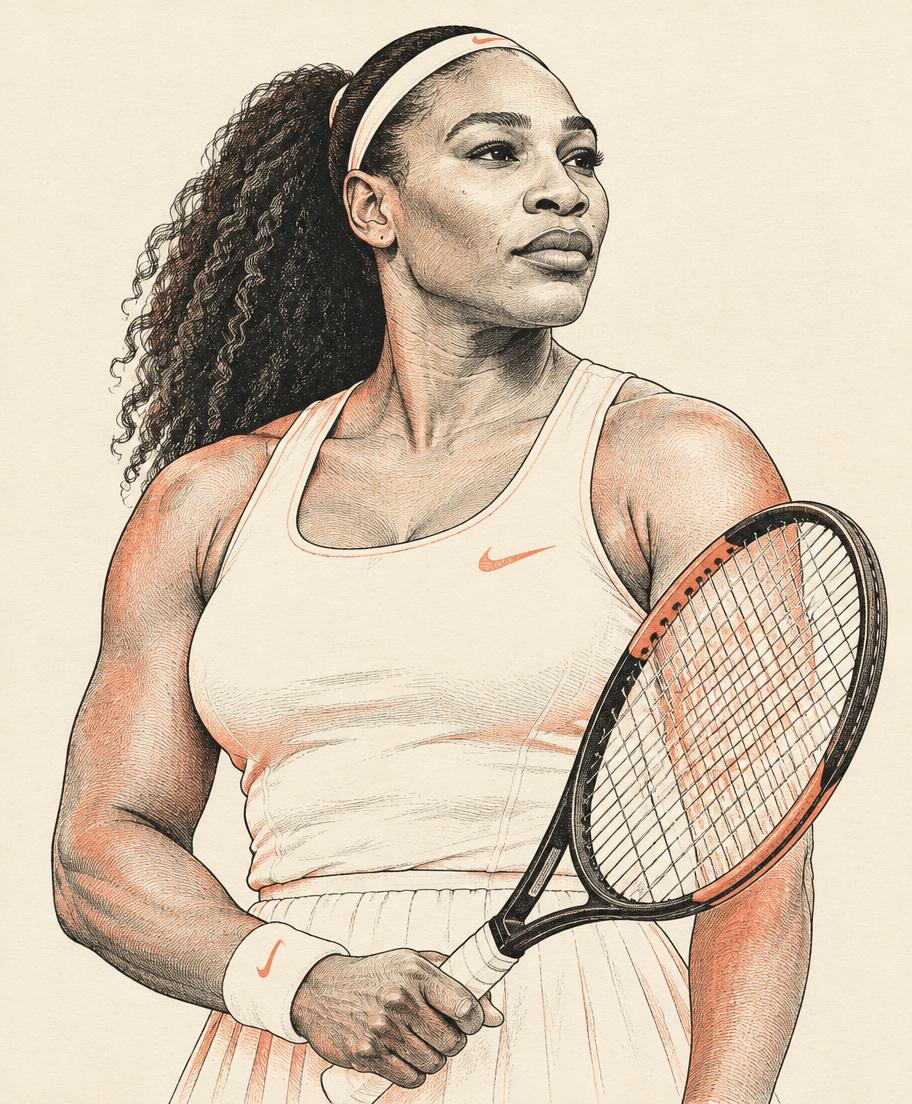
Tennis player
Serena Williams
One of the most successful tennis players in the history of the sport, with 23 Grand Slam singles titles.
Read biography ↗
Footballer
Lionel Messi
An Argentine footballer whose record haul of individual honours is matched by a World Cup title in 2022.
Read biography ↗
Argentine association football player (born 1987)
Lionel Messi
Lionel Andrés "Leo" Messi is an Argentine professional footballer who plays as a forward for the Major League Soccer club Inter Miami, which he captains, and the Argentina national team.
Read biography ↗