American basketball player and businessman (born 1963)
Michael Jordan
Michael Jeffrey Jordan, also known by his initials MJ, is an American businessman, former professional basketball player, and former baseball player.
By globalcelebwiki Editorial Desk, adapted from Wikipedia · Published 29 September 2026
- Profession
- American basketball player and businessman (born 1963)
- Born
- 17 February 1963
- Birthplace
- Brooklyn
- Nationality
- American

Overview
Michael Jeffrey Jordan (born February 17, 1963), also known by his initials MJ, is an American businessman, former professional basketball player, and former baseball player. He played 15 seasons in the National Basketball Association (NBA) between 1984 and 2003, winning six NBA championships with the Chicago Bulls. Jordan is regarded as one of the most influential sports figures in history and is considered by many to be the greatest basketball player of all time; he was integral in popularizing the sport and the NBA around the world in the 1980s and 1990s.
Jordan played college basketball with the North Carolina Tar Heels. As a freshman, he was a member of the Tar Heels' national championship team in 1982. As a junior in 1984, he was named the national college player of the year and was selected by the Bulls with the third overall pick of the 1984 NBA draft. With the Bulls, he emerged as a league star known for prolific scoring, defensive prowess and vehement competitiveness. His leaping ability, demonstrated by performing slam dunks from the free-throw line in Slam Dunk Contests, earned him the nicknames "Air Jordan" and "His Airness". Jordan won his first NBA title with the Bulls in 1991 and followed that with titles in 1992 and 1993, securing a three-peat.
Citing exhaustion from basketball and superstardom, Jordan abruptly retired before the 1993–94 NBA season to play Minor League Baseball in the Chicago White Sox organization. He returned to the Bulls in 1995 and led them to three more championships in 1996, 1997, and 1998, as well as a then-record 72 regular season wins in the 1995–96 NBA season. Jordan retired for the second time in 1999, then returned for two NBA seasons from 2001 to 2003 as a member of the Washington Wizards. He was selected to play for the United States national team during his college and NBA careers, winning four gold medals—at the 1983 Pan American Games, 1984 Summer Olympics, 1992 Tournament of the Americas and 1992 Summer Olympics—while also being undefeated.
Jordan's individual accolades include six NBA Finals Most Valuable Player (MVP) awards, 10 NBA scoring titles (both all-time records), five NBA MVP awards, an NBA Defensive Player of the Year award, 10 All-NBA First Team designations, nine All-Defensive First Team honors, 14 NBA All-Star Game selections, and three NBA All-Star Game MVP awards. He holds the NBA records for career regular season scoring average (30.1 points per game) and career playoff scoring average (33.4 points per game). He is one of only eight players to achieve the basketball Triple Crown. In 1999, Jordan was named the 20th century's greatest North American athlete by ESPN and was second on the Associated Press' list of athletes of the century. Jordan was twice inducted into the Naismith Basketball Hall of Fame, in 2009 for his individual career, and in 2010 as part of the 1992 United States men's Olympic basketball team ("The Dream Team"). The trophy for the NBA Most Valuable Player Award is named in his honor.
One of the most effectively marketed athletes ever, Jordan made many product endorsements. He fueled the success of Nike's Air Jordan sneakers, introduced in 1984. Jordan starred as himself in the film Space Jam (1996) and was the focus of the Emmy-winning documentary series The Last Dance (2020). He became part-owner and head of basketball operations for the Charlotte Hornets (then named the Bobcats) in 2006 and bought a controlling interest in 2010, before selling his majority stake in 2023. Jordan is a co-owner of 23XI Racing in the NASCAR Cup Series. He is the wealthiest athlete of all time with official records, and one of the world's richest celebrities, with a $4.7 billion net worth as of 2026. In 2016, President Barack Obama awarded Jordan the Presidential Medal of Freedom.
Early life
Michael Jeffrey Jordan was born on February 17, 1963, at Cumberland Hospital in the Fort Greene neighborhood of Brooklyn, New York City, to bank employee Deloris (née Peoples) and equipment supervisor James R. Jordan Sr. He has two older brothers, James Jr. and Larry, as well as an older sister named Deloris and a younger sister named Roslyn. Jordan and his siblings were raised Methodist.
In 1968, the family moved to Wilmington, North Carolina. Jordan attended Emsley A. Laney High School, where he played basketball, baseball, and football. He tried out for the basketball varsity team during his sophomore year, but at a height of 5 feet 11 inches (1.80 m), he was deemed too short. Motivated to prove his worth, Jordan became the star of Laney's junior varsity team and tallied some 40-point games. The following summer, he grew four inches (10 cm) and trained rigorously. Upon earning a spot on the varsity roster, Jordan averaged more than 25 points per game (ppg) over his final two seasons of high school play. He also adopted his signature jersey number, 23. As a senior, he was selected for the 1981 McDonald's All-American Game and scored 30 points, after averaging 26.8 ppg, 11.6 rebounds (rpg), and 10.1 assists per game (apg) for the season.
Jordan was recruited by numerous college basketball programs, including Duke, North Carolina, South Carolina, Syracuse, Virginia, and Clemson. He reportedly most strongly considered recruiting efforts from North Carolina, NC State, and Maryland before, in 1980, he accepted a basketball scholarship to the University of North Carolina at Chapel Hill, where he majored in cultural geography. He chose this field of study because of its relationship to meteorology, as Jordan was interested in a career as a meteorologist.
College career
As a freshman under coach Dean Smith's team-oriented system, Jordan was named ACC Freshman of the Year after averaging 13.4 points per game on 53.4% shooting—ranking 10th in scoring and sixth in field goal percentage in the conference. He made the game-winning jump shot in the 1982 NCAA Championship game against Georgetown, which was led by future NBA rival Patrick Ewing. Jordan later described this shot as the major turning point in his basketball career. During his sophomore and junior seasons, Jordan consistently ranked among the ACC's elite, finishing either 1st or 2nd in both total points and points per game, while also placing in the top 10 in field goal percentage and free throw percentage. In his three seasons with the Tar Heels, Jordan averaged 17.7 ppg on 54.0% shooting and added 5.0 rpg and 1.8 apg.
Jordan was selected by consensus to the NCAA All-American First Team in both his sophomore (1983) and junior (1984) seasons. After winning the Naismith and the Wooden College Player of the Year awards in 1984, Jordan left North Carolina a year before his scheduled graduation to enter the 1984 NBA draft. Jordan returned to North Carolina to complete his degree in 1986, when he graduated with a Bachelor of Arts degree in geography. In 2002, Jordan was selected to the ACC 50th Anniversary men's basketball team and named the greatest athlete in ACC history.
The Chicago Bulls selected Jordan with the third overall pick of the 1984 NBA draft after Hakeem Olajuwon (Houston Rockets) and Sam Bowie (Portland Trail Blazers). One of the primary reasons why Jordan was not drafted sooner was because the first two teams were in need of a center. Trail Blazers general manager Stu Inman contended that it was not a matter of drafting a center but more a matter of taking Bowie over Jordan, in part because Portland already had Clyde Drexler, who was a guard with similar skills to Jordan. Citing Bowie's injury-laden college career, ESPN named the Blazers' choice of Bowie as the worst draft pick in North American professional sports history.
Jordan made his NBA debut at Chicago Stadium on October 26, 1984, and scored 16 points. In 2021, a ticket stub from the game sold at auction for $264,000, setting a record for a collectible ticket stub. During his rookie 1984–85 season with the Bulls, Jordan averaged 28.2 ppg on 51.5% shooting. He helped the Bulls improve from 27–55 to 38–44 and qualify for the postseason for the first time since the 1980–81 season. Jordan quickly became a fan favorite even in opposing arenas. Roy S. Johnson of The New York Times described Jordan as "the phenomenal rookie of the Bulls" in November, and he appeared on the cover of Sports Illustrated with the heading "A Star Is Born" in December. The fans voted in Jordan as an All-Star starter during his rookie season. Controversy arose before the 1985 NBA All-Star Game when word surfaced that several veteran players, led by Isiah Thomas, were upset by the amount of attention Jordan was receiving. This led to a so-called "freeze-out" on Jordan, where players refused to pass the ball to him. The controversy left Jordan relatively unaffected when he returned to regular season play, and he would go on to be voted the NBA Rookie of the Year. The Bulls lost to the Milwaukee Bucks in four games in the first round of the playoffs.
An often-cited moment was on August 26, 1985, when Jordan shook the arena during a Nike exhibition game in Trieste, Italy, by shattering the glass of the backboard with a dunk. The moment was filmed and is often referred to as an important milestone in Jordan's rise. The shoes Jordan wore during the game were auctioned in August 2020 for $615,000, a record for a pair of sneakers. Jordan's 1985–86 season was cut short when he broke his foot in the third game of the year, causing him to miss 64 games. The Bulls made the playoffs despite Jordan's injury and a 30–52 record, at the time the fifth-worst record of any team to qualify for the playoffs in NBA history. Jordan recovered in time to participate in the postseason and performed well upon his return. On April 20 at the Boston Garden, in Game 2 of the First Round, a 135–131 double overtime loss to the Boston Celtics, Jordan scored a playoff career-high 63 points, breaking Elgin Baylor's single-game playoff scoring record. The Celtics swept the series in three games.
Jordan completely recovered in time for the 1986–87 season, and had one of the most prolific scoring seasons in NBA history; he became the only player other than Wilt Chamberlain to score 3,000 points in a season, averaging a league-high 37.1 ppg on 48.2% shooting. Jordan also demonstrated his defensive prowess, as he became the first player in NBA history to record 200 steals and 100 blocked shots in a season. Despite Jordan's success, Magic Johnson won the NBA Most Valuable Player Award. The Bulls reached 40 wins, and advanced to the playoffs for the third consecutive year but were again swept by the Celtics.
Jordan led the league in scoring during the 1987–88 season, averaging 35.0 ppg on 53.5% shooting, and won his first league MVP Award. He was named the NBA Defensive Player of the Year after averaging 1.6 blocks per game (bpg), a league-high 3.2 steals per game (spg), and leading the Bulls defense to the fewest points per game allowed in the league. The Bulls finished 50–32, and made it past the first round of the playoffs for the first time in Jordan's career, as they defeated the Cleveland Cavaliers in five games. In the Eastern Conference Semifinals, the Bulls lost in five games to the more experienced Detroit Pistons, who were led by Isiah Thomas and a group of physical players known as the "Bad Boys".
In the 1988–89 season, Jordan again led the league in scoring, averaging 32.5 ppg on 53.8% shooting from the field, along with 8.0 rpg and 8.0 apg. During the season, Jordan expressed his frustration over the Bulls' offense with head coach Doug Collins, who then put Jordan at point guard. In his time as a point guard, Jordan had 10 triple-doubles in 11 games, with averages of 33.6 ppg, 11.4 rpg, and 10.8 apg.
The Bulls finished with a 47–35 record, and advanced to the Eastern Conference Finals, defeating the Cavaliers and New York Knicks along the way. The Cavaliers series included a career highlight for Jordan when he hit "The Shot" over Craig Ehlo at the buzzer in the fifth and final game of the series. In the Eastern Conference Finals, the Pistons again defeated the Bulls, this time in six games, by utilizing their "Jordan Rules" method of guarding Jordan, which consisted of double and triple teaming him every time he touched the ball.
The Bulls entered the 1989–90 season as a team on the rise, with their core group of Jordan and young improving players like Scottie Pippen and Horace Grant and under the guidance of new coach Phil Jackson. On March 28, 1990, Jordan scored a career-high 69 points in a 117–113 road win over the Cavaliers. He averaged a league-leading 33.6 ppg on 52.6% shooting, to go with 6.9 rpg and 6.3 apg, in leading the Bulls to a 55–27 record. They again advanced to the Eastern Conference Finals after beating the Bucks and Philadelphia 76ers; despite pushing the series to seven games, the Bulls lost to the Pistons for the third consecutive season.
After the Bulls' previous losses to the Pistons, Phil Jackson, along with assistant coach Tex Winter, focused on implementing the triangle offense to counteract the Pistons' defense and other teams that heavily targeted Jordan. This system, however, required Jordan to adjust his playing style. In his book Eleven Rings, Jackson recalled, "I was planning to ask Michael to reduce the number of shots he took so that other members of the team could get more involved in the offense. I knew this would be a challenge for him." In The Last Dance, Jordan admitted he was initially reluctant to back the system. Nevertheless, he eventually embraced the change, which led to success for the team.
In the 1990–91 season, Jordan won his second MVP award after averaging 31.5 ppg on 53.9% shooting, 6.0 rpg, and 5.5 apg for the regular season. The Bulls finished in first place in their division for the first time in sixteen years and set a franchise record with 61 wins in the regular season. With Scottie Pippen developing into an All-Star, the Bulls had elevated their play. The Bulls defeated the New York Knicks and the Philadelphia 76ers in the opening two rounds of the playoffs. They advanced to the Eastern Conference Finals, where their rival, the Detroit Pistons, awaited them; this time, the Bulls beat the Pistons in a four-game sweep.
The Bulls advanced to the Finals for the first time in franchise history to face the Los Angeles Lakers. The Bulls won the series in five games and compiled a 15–2 playoff record along the way. Perhaps the best-known moment of the series came in Game 2 when, attempting a dunk, Jordan avoided a potential Sam Perkins block by switching the ball from his right hand to his left in mid-air to lay the shot into the basket. In his first Finals appearance, Jordan had 31.2 ppg on 56% shooting from the field, 11.4 apg, 6.6 rpg, 2.8 spg, and 1.4 bpg. Jordan won his first NBA Finals MVP award and cried while holding the Finals trophy.
Jordan and the Bulls continued their dominance in the 1991–92 season, establishing a 67–15 record, topping their franchise record from the 1990–91 campaign. Jordan won his second consecutive MVP award with averages of 30.1 ppg, 6.4 rpg, and 6.1 apg on 52% shooting. After winning a physical seven-game series over the New York Knicks in the second round of the playoffs and finishing off the Cleveland Cavaliers in the Conference Finals in six games, the Bulls met Clyde Drexler and the Portland Trail Blazers in the Finals. The media, hoping to recreate a Magic–Bird rivalry, highlighted the similarities between "Air" Jordan and Clyde "The Glide" during the pre-Finals hype.
In a Game 1 victory, Jordan scored a Finals-record 35 points in the first half, including a record-setting six three-point field goals. After the sixth three-pointer, he jogged down the court shrugging as he looked courtside. Marv Albert, who broadcast the game, later stated that it was as if Jordan was saying: "I can't believe I'm doing this." The Bulls went on to defeat the Blazers in six games. Jordan was named Finals MVP for the second year in a row, and finished the series averaging 35.8 ppg, 4.8 rpg, and 6.5 apg, while shooting 52.6% from the floor.
On October 6, 1993, Jordan announced his retirement, saying that he lost his desire to play basketball. He later said that the murder of his father three months earlier helped shape his decision. James R. Jordan Sr. was murdered on July 23, 1993, at a highway rest area in Lumberton, North Carolina, by two teenagers, Daniel Green and Larry Martin Demery, who carjacked his Lexus. His body, dumped in a South Carolina swamp, was not discovered until August 3. Green and Demery were sentenced to life imprisonment. However, in The Last Dance, Jordan stated that he retired due to physical and mental exhaustion from basketball and superstardom.
Jordan was close to his father; as a child, Jordan imitated the way his father stuck out his tongue while absorbed in work. Jordan later adopted it as his own signature, often displaying it as he drove to the basket. In 1996, Jordan founded a Chicago-area Boys & Girls Club and dedicated it to his father. In his 1998 autobiography For the Love of the Game, Jordan wrote that he was preparing for retirement as early as the summer of 1992. The added exhaustion due to the "Dream Team" run in the 1992 Summer Olympics solidified Jordan's feelings about the game and his celebrity status. Jordan's announcement sent shock waves throughout the NBA and appeared on the front pages of newspapers around the world.
Jordan further surprised the sports world by signing a Minor League Baseball (MiLB) contract with the Chicago White Sox on February 7, 1994. He reported to spring training in Sarasota, Florida, and was assigned to the team's minor league system on March 31. Jordan said that this decision was made to pursue the dream of his late father, who always envisioned his son as a Major League Baseball (MLB) player. The White Sox were owned by Bulls owner Jerry Reinsdorf, who continued to honor Jordan's basketball contract during the years he played baseball.
In 1994, Jordan played for the Birmingham Barons, a Double-A minor league affiliate of the Chicago White Sox, batting .202 with three home runs, 51 runs batted in, 30 stolen bases, 114 strikeouts, 51 bases on balls, and 11 errors. His strikeout total led the team and his games played tied for the team lead. His 30 stolen bases were second on the team only to Doug Brady. Jordan also appeared for the Scottsdale Scorpions in the 1994 Arizona Fall League, batting .252 against the top prospects in baseball. On November 1, 1994, his No. 23 was retired by the Bulls in a ceremony that included the erection of a permanent sculpture known as The Spirit outside the new United Center.
The Bulls went 55–27 in 1993–94 without Jordan in the lineup and lost to the New York Knicks in the second round of the playoffs. In March 1995, Jordan decided to quit baseball because he feared he might become a replacement player during the Major League Baseball strike. During the 1994–95 season, Jordan returned to the Bulls midway through the season. On March 18, 1995, Jordan announced his comeback to the NBA in a two-word press release: "I'm back." The next day, Jordan took to the court with the Bulls to face the Indiana Pacers in Indianapolis, scoring 19 points. The game had the highest Nielsen rating of any regular season NBA game since 1975. Although he could have worn his original number even though the Bulls retired it, Jordan wore No. 45, his baseball number.
Despite his 18-month hiatus from the NBA, Jordan played well, making a game-winning jump shot against Atlanta in his fourth game back. He scored 55 points in his next game, against the New York Knicks at Madison Square Garden on March 28, 1995. Boosted by Jordan's comeback, the Bulls went 13–4 to make the playoffs and advanced to the Eastern Conference Semifinals against the Orlando Magic. At the end of Game 1, Orlando's Nick Anderson stripped Jordan from behind, leading to the game-winning basket for the Magic; he later commented that Jordan "didn't look like the old Michael Jordan", and said, "No. 45 doesn't explode like No. 23 used to".
Jordan responded by scoring 38 points in the next game, which Chicago won. Before the game, Jordan decided that he would immediately resume wearing his former No. 23. The Bulls were fined $25,000 for failing to report the impromptu number change to the NBA. Jordan was fined an additional $5,000 for opting to wear white sneakers when the rest of the Bulls wore black. He averaged 31 ppg in the playoffs, but Orlando won the series in six games.
Jordan was motivated by the playoff defeat, and he trained aggressively for the 1995–96 season. The Bulls were strengthened by the addition of rebound specialist Dennis Rodman, and the team dominated the league, starting the season at 41–3. The Bulls finished with the best regular season record in NBA history, 72–10, a mark broken two decades later by the 2015–16 Golden State Warriors. Jordan led the league in scoring with 30.4 ppg, and he won the league's regular season and All-Star Game MVP awards.
In the playoffs, the Bulls lost only three games in four series (Miami Heat 3–0, New York Knicks 4–1, and Orlando Magic 4–0), as they defeated the Seattle SuperSonics 4–2 in the NBA Finals to win their fourth championship. The series was one of the tougher ones for Jordan as he had a 41.5% field goal percentage, and his scoring average dropped nearly nine points from his average during the rest of the playoffs. Nevertheless, Jordan was named Finals MVP for a record fourth time; he achieved only the second sweep of the MVP awards in the All-Star Game, regular season, and NBA Finals after Willis Reed in the 1969–70 season. Upon winning the championship, his first since his father's murder, Jordan reacted emotionally, clutching the game ball and crying on the locker room floor.
In the 1996–97 season, the Bulls stood at a 69–11 record but ended the season by losing their final two games to finish the year 69–13, missing out on a second consecutive 70-win season. The Bulls again advanced to the Finals, where they faced the Utah Jazz. That team included Karl Malone, who had beaten Jordan for the NBA MVP award in a tight race (986–957). The series against the Jazz featured two of the more memorable clutch moments of Jordan's career. He won Game 1 for the Bulls with a buzzer-beating jump shot. In Game 5, with the series tied 2–2, Jordan played despite being feverish and dehydrated from a stomach virus or food poisoning, likely caused by a pizza ordered the night before. Jordan eventually claimed it was food poisoning in the 2020 docuseries The Last Dance. In what is known as "The Flu Game", Jordan scored 38 points, including the game-winning three-pointer with 25 seconds remaining. The Bulls won 90–88 and went on to win the series in six games. For the fifth time in as many Finals appearances, Jordan received the Finals MVP award. During the 1997 NBA All-Star Game, he posted the first triple-double in All-Star Game history in a victorious effort, but the MVP award went to Glen Rice.
The Bulls compiled a 62–20 record in the 1997–98 season. Jordan led the league with 28.7 ppg, securing his fifth regular season MVP award, plus honors for All-NBA First Team, First Defensive Team, and the All-Star Game MVP. The Bulls won the Eastern Conference Championship for a third straight season, including surviving a seven-game series with the Indiana Pacers in the Eastern Conference Finals; it was the first time Jordan had played in a Game 7 since the 1992 Eastern Conference Semifinals with the New York Knicks. After winning, they moved on for a rematch with the Jazz in the Finals.
In Game 6 in Utah, Jordan scored 45 points, setting a Finals record for the most points in a championship-clinching game on the road (later tied by Jalen Brunson in 2026). He executed a series of plays considered to be one of the greatest clutch performances in NBA Finals history. With 41.9 seconds remaining and the Bulls trailing 86–83, Phil Jackson called a timeout. When play resumed, Jordan received the inbound pass, drove to the basket, and sank a shot over several Jazz defenders, cutting Utah's lead to 86–85. The Jazz brought the ball upcourt and passed the ball to Malone, who was set up in the low post and was being guarded by Rodman. Malone jostled with Rodman and caught the pass, but Jordan cut behind him and stole the ball out of his hands.
With Phil Jackson's contract expiring, the pending departures of Scottie Pippen and Dennis Rodman looming, and being in the latter stages of an owner-induced lockout of NBA players, Jordan retired for the second time on January 13, 1999. On January 19, 2000, Jordan returned to the NBA not as a player but as part owner and president of basketball operations for the Washington Wizards. Jordan's responsibilities with the Wizards were comprehensive, as he controlled all aspects of the Wizards' basketball operations, and had the final say in all personnel matters; opinions of Jordan as a basketball executive were mixed. He managed to purge the team of several highly paid, unpopular players (like forward Juwan Howard and point guard Rod Strickland) but used the first pick in the 2001 NBA draft to select high school student Kwame Brown, who did not live up to expectations and was traded away after four seasons.
Despite his January 1999 claim that he was "99.9% certain" he would never play another NBA game, Jordan expressed interest in making another comeback in the summer of 2001, this time with his new team. Inspired by the NHL comeback of his friend Mario Lemieux the previous winter, Jordan spent much of the spring and summer of 2001 in training, holding several invitation-only camps for NBA players in Chicago. Jordan hired his old Chicago Bulls head coach, Doug Collins, as Washington's coach for the upcoming season, a decision that many saw as foreshadowing another Jordan return.
On September 25, 2001, Jordan announced his return to the NBA to play for the Washington Wizards, indicating his intention to donate his salary as a player to a relief effort for the victims of the September 11 attacks. In an injury-plagued 2001–02 season, Jordan led the team in scoring (22.9 ppg), assists (5.2 apg), and steals (1.4 spg), and was an MVP candidate, as he led the Wizards to a winning record and playoff contention; Jordan would eventually finish 13th in the MVP ballot. After he suffered torn cartilage in his right knee, and subsequent knee soreness, the Wizards missed the playoffs, and Jordan's season ended after only 60 games, the fewest he had played in a regular season since playing 17 games after returning from his first retirement during the 1994–95 season. Jordan started 53 of his 60 games for the season, averaging 24.3 ppg, 5.4 apg, and 6.0 rpg, and shooting 41.9% from the field in his 53 starts. His last seven appearances were in a reserve role, in which he averaged just over 20 minutes per game. The Wizards finished the season with a 37–45 record, an 18-game improvement.
Playing in his 14th and final NBA All-Star Game in 2003, Jordan passed Kareem Abdul-Jabbar as the all-time leading scorer in All-Star Game history, a record since broken by Kobe Bryant and LeBron James. That year, Jordan was the only Washington player to play in all 82 games, starting in 67 of them as he came off the bench in 15. Jordan averaged 20.0 ppg, 6.1 rpg, 3.8 assists, and 1.5 spg per game. He also shot 45% from the field, and 82% from the free-throw line. Although Jordan turned 40 during the season, he scored 20 or more points 42 times, 30 or more points nine times, and 40 or more points three times. On February 21, 2003, Jordan became the first 40-year-old to tally 43 points in an NBA game. During his stint with the Wizards, all of Jordan's home games at the MCI Center were sold out and the Wizards were the second most-watched team in the NBA, averaging 20,172 fans a game at home and 19,311 on the road. Jordan's final two seasons did not result in a playoff appearance for the Wizards, and he was often unsatisfied with the play of those around him. At several points, Jordan openly criticized his teammates to the media, citing their lack of focus and intensity, notably that of Kwame Brown, the number-one draft pick in the 2001 NBA draft.
With the recognition that 2002–03 would be Jordan's final season, tributes were paid to him throughout the NBA. In his final game at the United Center in Chicago, which was his old home court, Jordan received a four-minute standing ovation. The Miami Heat retired the No. 23 jersey on April 11, 2003, even though Jordan never played for the team. At the 2003 All-Star Game, Jordan was offered a starting spot from Tracy McGrady and Allen Iverson but refused both; he accepted the spot of Vince Carter. Jordan played in his final NBA game on April 16, 2003, in Philadelphia. After scoring 13 points in the game, Jordan went to the bench with 4 minutes and 13 seconds left in the third quarter and his team trailing the Philadelphia 76ers 75–56. Just after the start of the fourth quarter, the First Union Center crowd began chanting "We want Mike!" After much encouragement from coach Doug Collins, Jordan finally rose from the bench and re-entered the game, replacing Larry Hughes with 2:35 remaining. At 1:45, Jordan was intentionally fouled by the 76ers' Eric Snow, and stepped to the line to make both free throws. After the second foul shot, the 76ers in-bounded the ball to rookie John Salmons, who in turn was intentionally fouled by Bobby Simmons one second later, stopping time so that Jordan could return to the bench. He received a three-minute standing ovation from his teammates, his opponents, the officials, and the crowd of 21,257 fans.
National team career
Jordan made his debut as a college player for the U.S. national basketball team at the 1983 Pan American Games in Caracas, Venezuela. He led the team in scoring with 17.3 ppg as the U.S., coached by Jack Hartman, won the gold medal. The following year, Jordan won another gold medal in the 1984 Summer Olympics. The 1984 U.S. team was coached by Bob Knight and featured young players such as Patrick Ewing, Sam Perkins, Chris Mullin, Steve Alford, and Wayman Tisdale. Jordan led the team in scoring, averaging 17.1 ppg for the tournament.
In 1992, Jordan, now an NBA player, was a member of the "Dream Team", which included Larry Bird and Magic Johnson. The team won gold in the 1992 Tournament of the Americas, and the 1992 Summer Olympics. Jordan was the only player to start all eight games in the Olympics. He averaged 14.9 ppg on 45% shooting from the field and 68% from the free-throw line, and was second on the team in scoring. He was undefeated in the four tournaments he played for the U.S. national team, and won all 30 games he took part in.
Player profile
Jordan was a shooting guard who could also play as a small forward, the position he would primarily play during his second return to professional basketball with the Washington Wizards. Jordan was known as a strong clutch performer. With the Bulls, he decided 25 games with field goals or free throws in the last 30 seconds, including two NBA Finals games and five other playoff contests. His competitiveness was visible in his prolific trash talk and well-known work ethic. Jordan often used perceived slights to fuel his performances. Sportswriter Wright Thompson described him as "a killer, in the Darwinian sense of the word, immediately sensing and attacking someone's weakest spot". As the Bulls organization built the franchise around Jordan, management had to trade away players who were not "tough enough" to compete with him in practice. To improve his defense, Jordan spent hours studying film of opponents. On offense, he relied more on instinct and improvization. Jordan's fierce competitiveness greatly impacted his teammates, sometimes motivating them but also leading to tension and alienation.
Noted as a durable player, Jordan did not miss four or more games while active for a full season from 1986–87 to 2001–02, when he injured his right knee. Of the 15 seasons Jordan was in the NBA, he played all 82 regular season games nine times, and never missed a single playoff game. Jordan has frequently cited David Thompson, Walter Davis, and Jerry West as influences. Confirmed at the start of his career, and possibly later on, Jordan had a special "Love of the Game" clause written into his contract, which was unusual at the time, and allowed him to play basketball against anyone at any time, anywhere.
Jordan had a versatile offensive game and was capable of aggressively driving to the basket as well as drawing fouls from his opponents at a high rate. His 8,772 free throw attempts are the 12th-highest total in NBA history. Early in Jordan's career, he weighed around 200 pounds (91 kg) and was more athletic in terms of play style. As his career progressed, Jordan developed the ability to post up his opponents and score with his trademark fadeaway jump shot, using his leaping ability to avoid block attempts. According to Hubie Brown, this move alone made Jordan nearly unstoppable. Around this time, he bulked up to 215 pounds (98 kg) to adapt to the increased physicality of NBA defenses during the 1990s, sacrificing some athleticism for added strength in the post. Despite media criticism by some as a selfish player early in his career, Jordan was willing to defer to his teammates, with a career average of 5.3 apg and a season-high of 8.0 apg. For a guard, Jordan was also a good rebounder, finishing with 6.2 rpg. Defensively, he averaged 2.3 spg and 0.8 bpg.
The three-point field goal was not Jordan's strength, especially in his early years. Later on in his career, Jordan improved his three-point shooting, and finished his career with a three-point field goal percentage of 32.7%. His best years shooting from three were the 1989–90 and 1992–93 seasons, where he shot 37.6% and 35.2% from three, respectively.
Overall, Jordan's effective field goal percentage was 51%, and he had six seasons with at least 50% shooting, five of which were consecutive (1988–1992). Jordan also shot 51% and 50% from the field, and 30% and 33% from three-point range, throughout his first and second retirements, respectively, finishing his Bulls career with 31.5 points per game on 50.5 FG% shooting and his overall career with 49.7 FG% shooting.
Legacy
Jordan is regarded as one of the most influential sports figures in history and is considered by many to be the greatest basketball player of all time; he was integral in popularizing the sport and the NBA around the world in the 1980s and 1990s.
Jordan's talent was clear from his first NBA season; by October 1984, he was being compared to Julius Erving. Larry Bird said that rookie Jordan was the best player he ever saw, and that Jordan was "one of a kind", and comparable to Wayne Gretzky as an athlete. In his first game in Madison Square Garden against the New York Knicks, Jordan received a near minute-long standing ovation. After Jordan established the single game playoff record of 63 points against the Boston Celtics on April 20, 1986, Bird described him as "God disguised as Michael Jordan".
Jordan led the NBA in scoring in 10 seasons (NBA record) and tied Wilt Chamberlain's record of seven consecutive scoring titles. Jordan was a fixture of the NBA All-Defensive First Team, making the roster nine times (NBA record shared with Gary Payton, Kevin Garnett, and Kobe Bryant). He also holds the records for career regular season scoring average (30.1 points per game) and career playoff scoring average (33.4 points per game). Jordan was the outright leading scorer across both teams in 36 of the 37 playoff series of his career (97.3%). By 1998, the season of his Finals-winning shot against the Jazz, he was well known throughout the league as a clutch performer. In the regular season, Jordan was the Bulls' primary threat in the final seconds of a close game and in the playoffs; he would always ask for the ball at crunch time. Jordan's total of 5,987 points in the playoffs is the second-highest among NBA career playoff scoring leaders. He scored 32,292 points in the regular season, placing him sixth on the NBA all-time scoring list behind LeBron James, Kareem Abdul-Jabbar, Karl Malone, Bryant, and Kevin Durant.
With five regular season MVPs (tied for second place with Bill Russell—only Abdul-Jabbar has won more, with six), six Finals MVPs (NBA record), and three NBA All-Star Game MVPs, Jordan is among the most decorated players in NBA history. He finished among the top three in regular season MVP voting 10 times. Jordan was named one of the 50 Greatest Players in NBA History in 1996, and selected to the NBA 75th Anniversary Team in 2021. He is one of only eight players in history to achieve the basketball Triple Crown—winning an NCAA championship, an NBA championship, and an Olympic gold medal. In the All-Star Game fan ballot, Jordan received the most votes nine times.
Harry Edwards, considered the father of the field of sociology of sport, referred to Jordan as representing the highest level of human achievement comparable to Gandhi, Einstein, or Michelangelo. Pulitzer-winning writer David Halberstam stated that if he were in charge of introducing an alien being "to the epitome of human potential, creativity, perseverance and spirit" he would introduce that alien life to Michael Jordan. Many of Jordan's contemporaries have said that he is the greatest basketball player of all time. In 1999, an ESPN survey of journalists, athletes and other sports figures ranked Jordan the greatest North American athlete of the 20th century. Jordan placed second to Babe Ruth in the Associated Press' December 1999 list of 20th century athletes. The Associated Press also voted Jordan the greatest basketball player of the 20th century. He has also appeared on the front cover of Sports Illustrated a record 50 times. In the September 1996 issue of Sport, which was the publication's 50th-anniversary issue, Jordan was named the greatest athlete of the past 50 years.
Awards and honors
Six-time NBA champion – 1991, 1992, 1993, 1996, 1997, 1998
Six-time NBA Finals MVP – 1991, 1992, 1993, 1996, 1997, 1998
Five-time NBA MVP – 1988, 1991, 1992, 1996, 1998
10-time NBA scoring leader – 1987–1993, 1996–1998
Three-time NBA steals leader – 1988, 1990, 1993
Post-retirement
After his third retirement, Jordan assumed that he would be able to return to his position as Director of Basketball Operations with the Wizards. Jordan's previous tenure had produced mixed results and may have also influenced the trade of Richard Hamilton for Jerry Stackhouse, although Jordan was not technically Director of Basketball Operations in 2002. On May 7, 2003, Wizards owner Abe Pollin fired Jordan from the role. Jordan later stated that he felt betrayed, and that if he had known he would be fired upon retiring, he never would have come back to play for the Wizards.
Over the next few years, Jordan played golf in celebrity charity tournaments and spent time with his family in Chicago. He also promoted his Jordan Brand clothing line and rode motorcycles. Since 2004, Jordan has owned Michael Jordan Motorsports, a professional closed-course motorcycle road racing team that competed with two Suzukis in the premier Superbike championship sanctioned by the American Motorcyclist Association (AMA) until the end of the 2013 season.
Sources and references
Spotted something wrong? Report a correction.
Related profiles
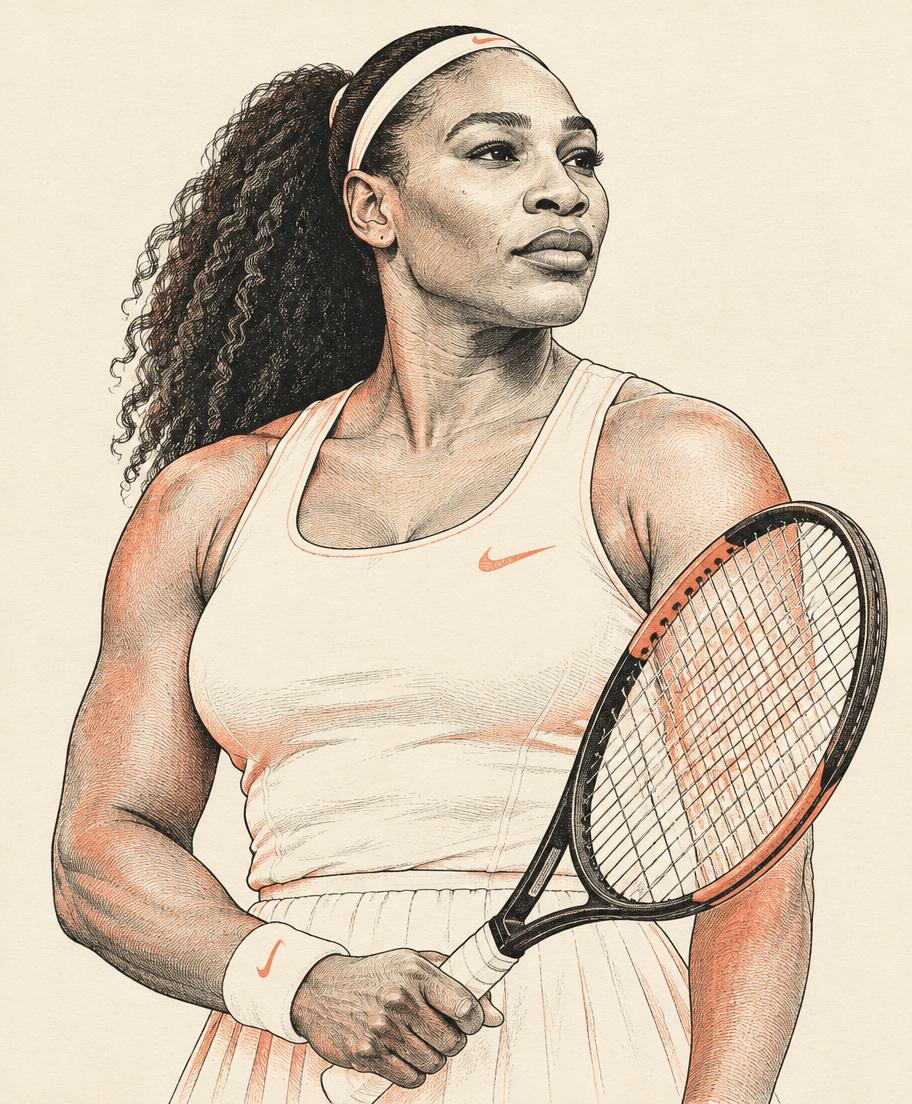
Tennis player
Serena Williams
One of the most successful tennis players in the history of the sport, with 23 Grand Slam singles titles.
Read biography ↗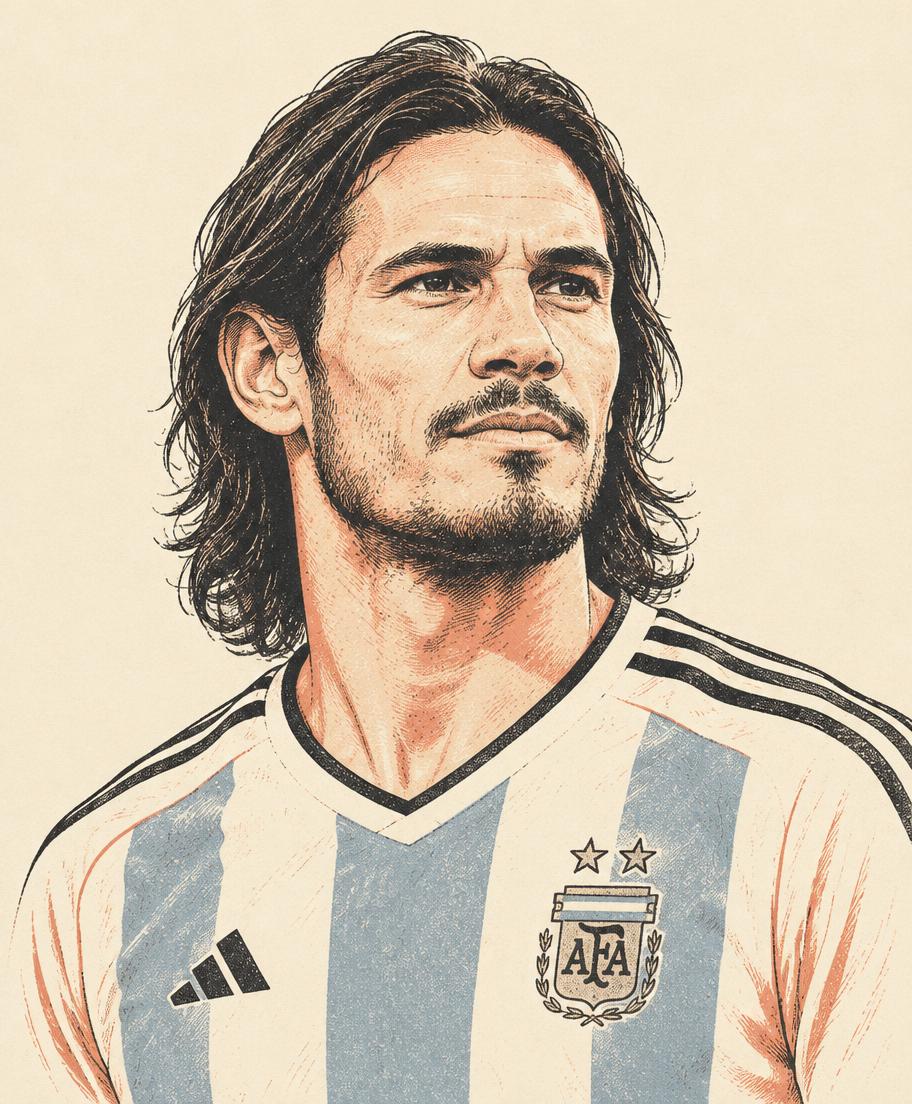
Footballer
Lionel Messi
An Argentine footballer whose record haul of individual honours is matched by a World Cup title in 2022.
Read biography ↗
Argentine association football player (born 1987)
Lionel Messi
Lionel Andrés "Leo" Messi is an Argentine professional footballer who plays as a forward for the Major League Soccer club Inter Miami, which he captains, and the Argentina national team.
Read biography ↗